


A ruptured appendix is a medical emergency. With prompt surgical treatment, nearly all patients recover fully. Without treatment, the infection spreads and requires urgent intervention within days.
How long someone can survive after their appendix bursts depends almost entirely on one factor: how quickly they receive emergency care. This article breaks down the survival timeline stage by stage, explains what happens inside the body after a rupture, and covers who faces the highest risk of complications so readers can recognize what is happening and act on it.
At a Glance
| Topic | Key Facts |
|---|---|
| Condition | Ruptured (perforated) appendix — a complication of untreated appendicitis |
| How it happens | Blocked appendix becomes infected; walls weaken and leak bacteria into the abdomen |
| Time to rupture | Can occur as quickly as 48 to 72 hours after symptoms begin |
| Survival with early treatment | Mortality rate under 1% when surgery occurs within 24 hours (Merck Manual) |
| Survival without treatment | Meaningful recovery is unlikely beyond a few days in most cases |
| Main complications | Peritonitis, abscess formation, sepsis |
| Highest-risk groups | Older adults, young children, pregnant women, people with diabetes or immunocompromising conditions |
| Standard treatment | Emergency appendectomy plus intravenous antibiotics |
| Recovery timeline | 5 to 10 days in hospital; 4 to 6 weeks to return to full activity |
| When to seek care | Immediately — any suspected rupture is an emergency |
What Happens When the Appendix Bursts
The appendix is a small, finger-shaped pouch attached to the large intestine in the lower right abdomen. When it becomes blocked and infected, pressure builds inside the organ. If that pressure is not relieved through surgical removal, the walls of the appendix weaken, develop small holes, and begin to leak.
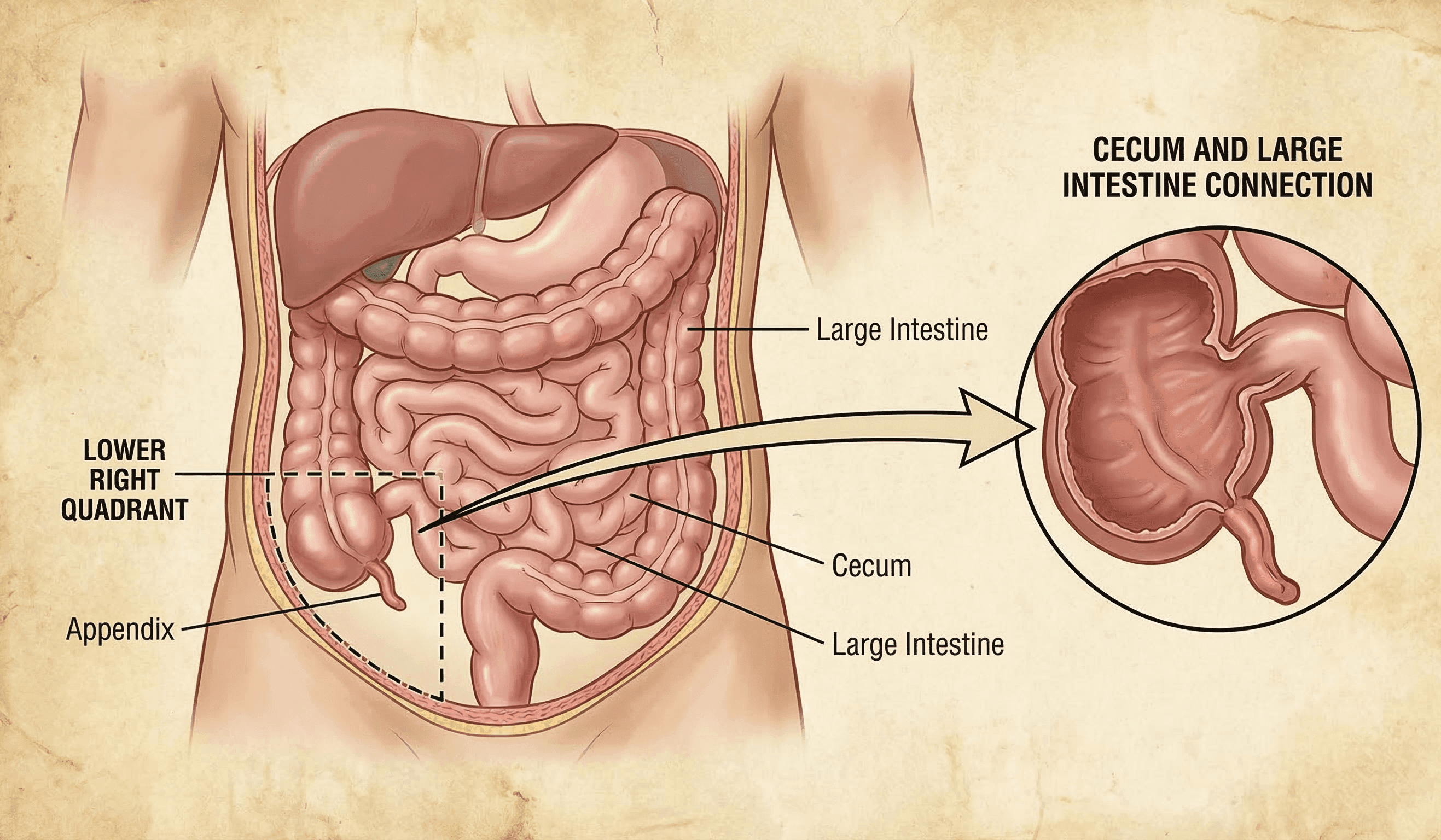
A ruptured appendix does not burst like a balloon. It oozes or leaks slowly, releasing bacteria, pus, and intestinal contents into the peritoneal cavity, the space surrounding the abdominal organs. That contamination sets off an inflammatory response that can spread to other organs if not treated promptly.
The risk of rupture becomes meaningful after the first 36 hours of untreated symptoms. Research published in the Journal of the American College of Surgeons found that rupture risk increases by approximately 5% for every 12-hour delay after that point.
The False Relief Warning
One of the most commonly misread features of a ruptured appendix is a temporary reduction in pain that can follow the moment of rupture. When the appendix leaks, the built-up pressure inside it is released, and the severe localized pain often eases for a few hours.
This is not a sign of improvement. It is a sign that rupture has likely occurred. Within hours, the pain typically returns, more widespread and more intense, as the infection spreads into the abdominal cavity. Anyone who experiences sudden relief from severe appendicitis pain should seek emergency care immediately, not wait to see if they continue to feel better.
The Survival Timeline: What the Data Shows at Each Stage
The most important variable in outcomes after appendix rupture is the time between rupture and surgical treatment. Medical evidence consistently shows a significant decline in prognosis the longer treatment is delayed.

Treated within 24 hours of rupture: Emergency surgery at this stage carries a mortality rate of less than 1%, according to the Merck Manual. Most patients recover fully without long-term complications.
Treated within 48 to 72 hours: The risk of complications increases significantly. More extensive surgical cleaning of the abdominal cavity is typically required. Survival remains high with appropriate care, but hospital stays are longer and recovery is slower.
Delayed 5 to 7 days without treatment: At this stage, widespread abdominal infection is near-certain. The risk of sepsis, multi-organ strain, and serious long-term harm rises considerably. Historical medical literature indicates that untreated cases at this stage very rarely resolved without intervention.
Without any treatment: Meaningful recovery without medical care is unlikely in most cases. Before modern surgery and antibiotics, a ruptured appendix was among the most common causes of death from abdominal infection. In rare cases, the body walls off the infection into a contained abscess, which can extend the window for treatment, but this cannot be counted on and outcomes are unpredictable.
If there is any concern that an appendix has ruptured, emergency medical care is the only appropriate response. A doctor can assess the situation and advise on the right course of treatment for individual cases.

Complications of a Ruptured Appendix
Peritonitis
Peritonitis is an infection of the peritoneum, the membrane lining the abdominal cavity and covering most abdominal organs. It develops when bacteria from the ruptured appendix reach that lining. Symptoms include severe and widespread abdominal pain, a rigid or board-like abdomen, high fever, and a rapid heart rate. Treatment involves surgical cleaning of the abdominal cavity and a course of intravenous antibiotics.
Abscess Formation
An abscess is a localized pocket of pus that forms when surrounding tissue attempts to wall off an infection. In some cases of appendix rupture, the body partially contains the bacterial contamination, and an abscess develops on or near the appendix rather than spreading into the wider peritoneal cavity. Abscesses can develop days or weeks after a rupture and are sometimes treated with drainage before surgery, rather than immediate appendectomy. Left without medical attention, an abscess can release and allow the infection it was containing to spread further.
Sepsis
Sepsis occurs when the infection from the ruptured appendix enters the bloodstream, triggering a systemic inflammatory response. Unlike peritonitis, which is confined to the abdomen, sepsis affects the entire body simultaneously. Early warning signs include fever, rapid heart rate, rapid breathing, and confusion. Without treatment, sepsis can progress to septic shock, a state of critically low blood pressure and serious strain on multiple organ systems. Treatment requires intensive care, intravenous antibiotics, and medications to stabilize blood pressure and oxygen levels.

Who Is at the Highest Risk of Serious Complications
Most people who receive prompt treatment recover fully. Certain groups face meaningfully higher risk of poor outcomes when diagnosis is delayed or when the body's ability to fight infection is reduced.
Older adults face a significantly higher risk when treatment is delayed. A prospective cohort study published in BMC Surgery (2023) found a mortality rate of 26% in elderly patients with perforated appendicitis who presented late, compared to an overall mortality rate of approximately 4.8% across all age groups. Older adults are also more likely to have less pronounced symptoms, less abdominal tenderness, lower or absent fever, which can delay diagnosis.
"Delayed presentations in an elderly population with underlying comorbid conditions associated with severe peritoneal contamination were associated with higher mortality in perforated appendicitis." — BMC Surgery, 2023
Young children, particularly those under five, have higher rates of rupture at diagnosis because they have more difficulty describing their symptoms clearly. Pain in younger children is often diffuse rather than localized to the lower right abdomen, which can further delay recognition.
People who are immunocompromised, including those on long-term corticosteroids, immunosuppressants, or living with conditions that affect immune function, may not mount a typical inflammatory response. This can mask the usual signs of appendicitis and allow infection to advance before it is identified.
People with diabetes face impaired immune response and slower wound healing, both of which can complicate surgical recovery and increase the risk of postsurgical infection.
Pregnant women have a higher rate of appendix rupture at diagnosis because the appendix shifts upward during pregnancy, causing pain to appear in the upper right abdomen rather than the lower right. This atypical presentation overlaps with other pregnancy-related conditions, making early diagnosis more difficult. The American College of Surgeons notes that ruptured appendicitis is more common in pregnancy for this reason.
A doctor can advise on individual risk based on health history, age, and other factors.
Treatment for a Ruptured Appendix
Emergency Surgery
While uncomplicated appendicitis is almost always treated with minimally invasive laparoscopic surgery, a ruptured appendix may require an open surgical approach. However, many surgeons still successfully use laparoscopy to remove a ruptured appendix and thoroughly wash out the abdominal cavity (peritoneal lavage), converting to an open procedure only if the infection is too severe or the anatomy is obscured
Antibiotics Before, During, and After Surgery
Intravenous antibiotics are started as soon as a ruptured appendix is suspected and continued through and after surgery. For patients with complicated appendicitis, including perforated cases or those with abscess formation, a postoperative course of antibiotics is standard practice per current clinical guidelines. The antibiotic regimen typically targets gram-negative and anaerobic bacteria that originate in the gut. Completing the full course is important, as stopping early can allow residual infection to persist.
Interval Appendectomy
In select cases, particularly when a contained abscess is present rather than free peritoneal contamination, doctors may choose to drain the abscess and administer antibiotics first, then perform an appendectomy weeks later. This approach is called an interval appendectomy. It is a sequenced strategy to manage infection before the definitive procedure, not a substitute for surgery. A doctor will determine which path is appropriate based on imaging findings and the extent of infection.
Recovery After a Ruptured Appendix
Recovery from a ruptured appendix takes longer than recovery from a straightforward appendectomy. The extent of the original infection, the surgical approach used, and the patient's baseline health all affect the timeline.
Hospital stay: Most patients with a ruptured appendix remain in hospital for 5 to 10 days after surgery, compared to 1 to 3 days for uncomplicated cases. During this time, intravenous antibiotics continue and doctors monitor for signs of ongoing or new infection.
Home recovery: Return to normal activity typically takes 4 to 6 weeks after open surgery. Laparoscopic procedures allow faster recovery, often 1 to 2 weeks, but are less commonly used when the appendix has already ruptured. Rest, limited lifting, and wound care are recommended during recovery at home.
Long-term complications: Most people recover completely and live normally without their appendix. A subset of patients develop long-term complications, including adhesions (bands of internal scar tissue that can cause chronic discomfort or bowel obstruction), intra-abdominal abscess, or wound infection. A prospective cohort study published in BMC Surgery (2023) found surgical site infection was the most common early complication following perforated appendicitis, and intestinal obstruction the most common late complication. In women, infection that spreads to the fallopian tubes can, in rare cases, affect fertility.
Follow-up care: Regular check-ups after discharge allow a doctor to confirm the infection has cleared completely and to identify any emerging complications early.
If there are any concerns about symptoms during recovery, speaking with a doctor promptly is the right step. A doctor near you can assess recovery progress and advise on next steps.
Frequently Asked Questions
How long can you live after your appendix bursts without treatment? Without treatment, the infection from a ruptured appendix becomes a serious systemic health threat within days. The infection spreads to the abdominal lining and, without intervention, can progress to sepsis within 24 to 72 hours of rupture. Meaningful recovery without medical care is unlikely in most cases.
Can a ruptured appendix heal on its own? A ruptured appendix cannot resolve without medical treatment. In rare cases, the body forms a contained abscess around the infection, which may temporarily slow its spread, but this is unpredictable and does not resolve the underlying condition. Medical and surgical treatment is required.
How do you know if your appendix has already ruptured? Common signs that the appendix may have ruptured include a sudden, temporary easing of severe localized pain followed by a return of more widespread abdominal pain, a rigid or board-like abdomen, high fever, and rapid heart rate. A CT scan or ultrasound performed by a physician is the definitive way to confirm rupture.
What does it feel like when your appendix bursts? Many people experience a brief period of relief from intense lower-right abdominal pain as the pressure inside the appendix releases. This is followed within hours by a return of pain that is typically more diffuse, spreading across the abdomen as the infection extends. Fever and nausea usually worsen at this stage.
Does a burst appendix always require surgery? In most cases, yes. Once the appendix has ruptured, surgery is the standard treatment to remove the appendix and clean the abdominal cavity. In select cases where a contained abscess has formed, doctors may drain the abscess first and schedule surgery later. A doctor will determine the appropriate approach based on imaging and the extent of infection.
Does having the appendix removed affect long-term health? Removing the appendix does not affect life expectancy or require changes to diet or exercise in the long term. Most people recover completely and have no lasting impact on their quality of life after a successful appendectomy.
A ruptured appendix is serious, but outcomes with prompt care are consistently good. The key is acting quickly when symptoms appear, rather than waiting. For general questions about symptoms before speaking with a clinician, Momentary Lab's AI healthcare navigator can provide initial guidance. Any symptoms consistent with appendicitis should be evaluated in person as an emergency.
For anyone with concerns about abdominal symptoms, connecting with a doctor is the right first step.


