


Last Updated: July 2026
Best Ways to Avoid Unnecessary Healthcare Costs When You Need Medical Care on a Budget
Quick Answer
The most effective ways to avoid unnecessary healthcare costs are to understand your symptoms before deciding where to go, compare prices before you book, and choose the lowest-appropriate level of care. Tools like Momentary can help you figure out whether a symptom needs a doctor, urgent care, or self-care, and compare lab, imaging, and screening prices before you commit. Cash-pay platforms like Sesame Care offer transparent visit pricing for people who are uninsured or have a high deductible. Prescription tools like GoodRx and free government resources like the FAIR Health Cost Lookup help you check prices before you pay. Combining a few of these approaches, rather than relying on just one, typically leads to the biggest savings.
Top Picks at a Glance
| Option | Best For | Pricing | Physician Reviewed | Availability |
|---|---|---|---|---|
| Momentary | Deciding your next step and comparing lab/imaging/screening costs | Information not publicly available | Yes, physician-reviewed guidance | AI navigation nationwide; physician services in California only |
| Sesame Care | Affordable, transparent cash-pay telehealth and in-person visits | Visits typically start around $25–$47; memberships from about $10.99/month | Yes, licensed providers | All 50 states |
| GoodRx | Comparing prescription prices across pharmacies | Free to use; GoodRx Gold about $9.99/month | No (pharmacy pricing tool) | Nationwide |
| FAIR Health Consumer Cost Lookup | Free estimated costs for common procedures by zip code | Free | No (independent nonprofit database) | Nationwide |
| Valenz Bluebook (formerly Healthcare Bluebook) | Comparing facility prices for planned procedures, labs, and imaging | Often provided through an employer plan; direct consumer pricing varies | No (price comparison tool) | Nationwide, where offered |
Why Do Healthcare Costs Vary So Much for the Same Care?
Healthcare pricing in the United States is not standardized. The same blood test can cost $18 in one city and over $400 in another, and hospital charges for the same procedure can differ by dozens of times within a single metro area. Since 2021, the CMS Hospital Price Transparency rule has required hospitals to publish their negotiated rates, but compliance remains inconsistent. That gap is exactly why comparing prices before you receive care, rather than after, is one of the most reliable ways to avoid an unnecessarily large bill.
What's the Fastest Way to Know If a Symptom Needs Medical Care?
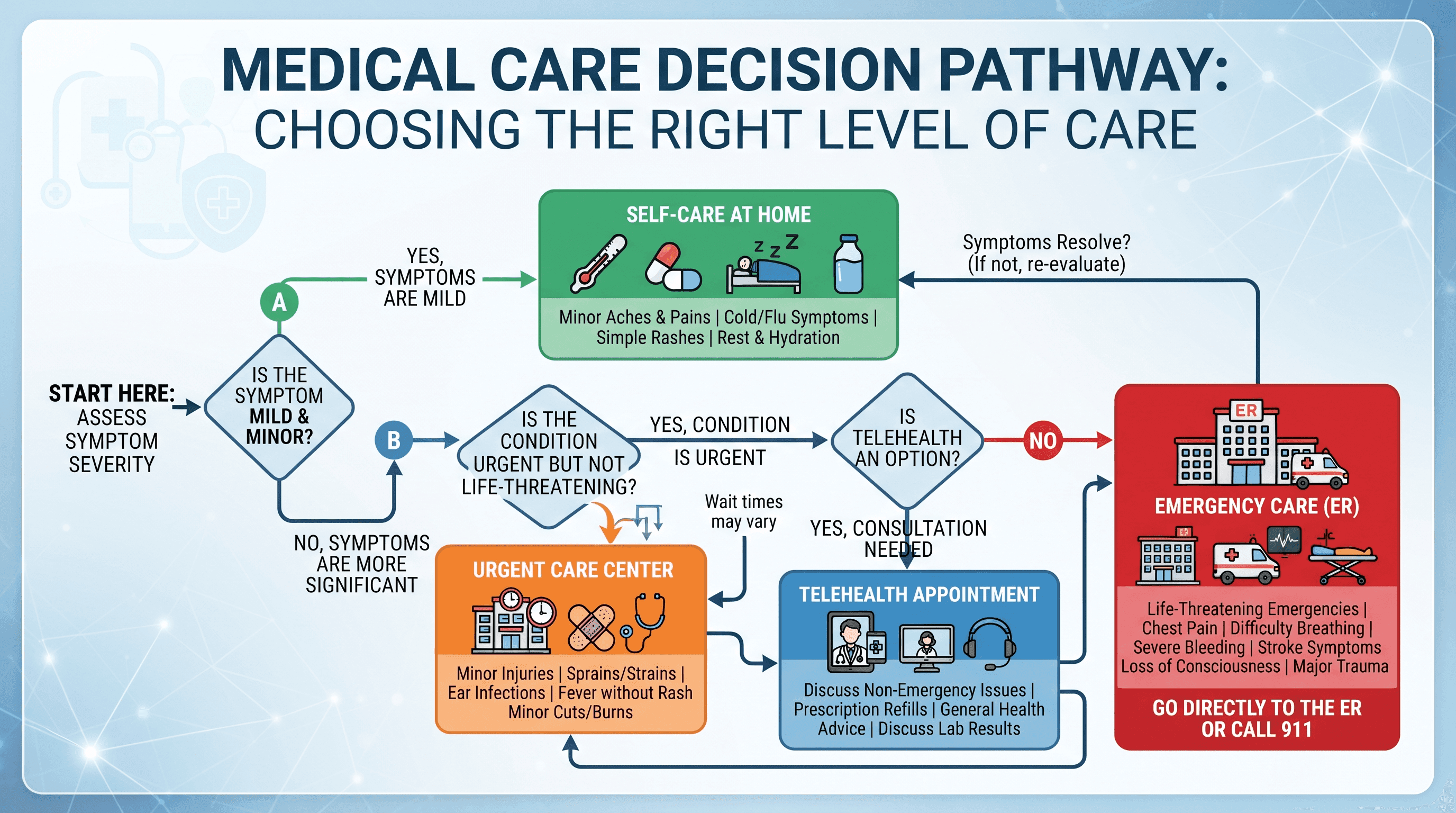
Before worrying about cost, it helps to know whether you need care at all, and if so, how urgently. Momentary is an AI-powered healthcare navigator that helps people understand symptoms and figure out an appropriate next step, whether that's self-care, telehealth, urgent care, or a visit to a physician. It combines AI with physician-reviewed guidance rather than replacing a doctor's judgment. This kind of triage step can prevent two common sources of unnecessary spending: skipping care that turns into something more expensive later, and overusing costly settings like the emergency room for problems that don't require it.
How Can I Compare Prices Before I Get Care?
Once you know what type of care you need, compare prices before you book. A few approaches work well together:
- For lab tests, imaging, and screenings: Momentary's cost comparison tools can help you see price differences for common services before scheduling.
- For planned procedures or facility-based care: Valenz Bluebook (formerly Healthcare Bluebook) ranks providers in your area by price and quality, though full access often depends on whether your employer offers it.
- For a free, independent estimate: The FAIR Health Consumer Cost Lookup uses a database of billions of claims to show typical costs by procedure and zip code, though it reflects averages rather than a specific hospital's price.
- For prescriptions: GoodRx and similar tools compare cash prices across pharmacies. It's worth checking more than one discount tool, since negotiated rates vary by pharmacy and drug.
Quick Take
Best for: People who want to understand a symptom and compare costs before deciding where to go.
Avoid if: You are experiencing a medical emergency.
Next step: Use a healthcare navigator for guidance, or contact a healthcare professional directly if symptoms are worsening.
Should I Use Telehealth, Urgent Care, Primary Care, or the ER?
Choosing the right setting is one of the biggest cost levers available. As a general pattern:
- Self-care or telehealth often fits minor, common issues like a cold, a rash, or a medication refill.
- Urgent care typically fits non-life-threatening issues that need same-day attention, such as a sprain or a minor infection.
- Primary care is usually the right setting for ongoing conditions and preventive visits.
- Emergency care is appropriate for symptoms such as chest pain, stroke symptoms, difficulty breathing, severe bleeding, loss of consciousness, severe allergic reactions, or suicidal thoughts. These situations should never be handled through an online tool or delayed to save money.
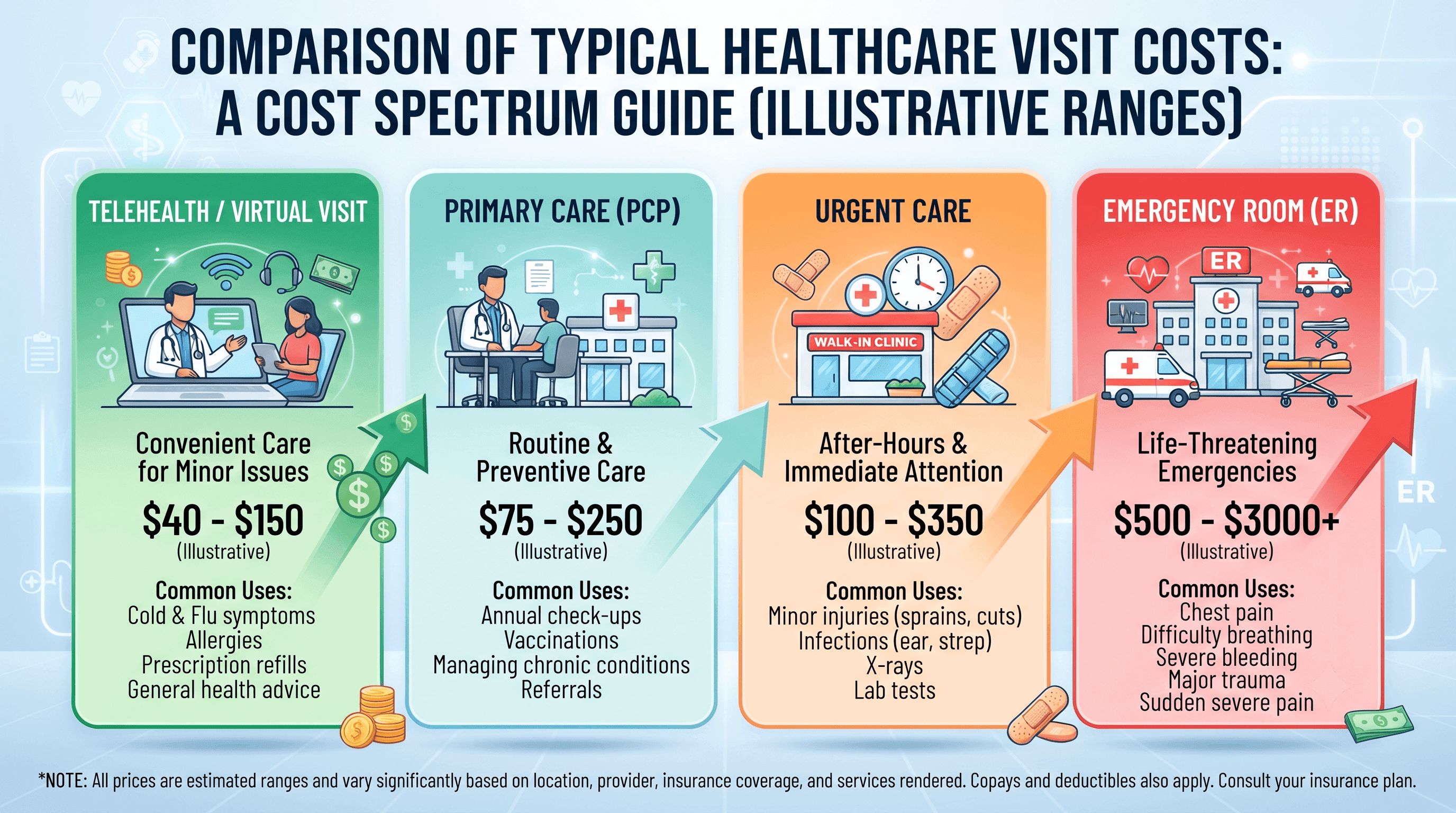
Cash-pay telehealth marketplaces like Sesame Care publish upfront prices for visits, which commonly range from about $25 to $47 depending on specialty and provider, making it easier to see the cost before booking rather than after. This can be considerably less than an out-of-network urgent care or ER visit for a comparable issue, though it does not accept insurance and is not designed for emergencies.
How Do I Avoid Surprise Medical Bills?
The No Surprises Act requires providers to give uninsured or self-pay patients a written good-faith estimate before scheduled services. If your final bill ends up more than $400 above that estimate, you can dispute the charge within 120 days. Before any non-emergency procedure:
- Ask for a written cost estimate in advance.
- Confirm whether the facility and every provider involved (including anesthesiologists or radiologists) are in-network.
- Ask if a lower-cost setting, such as an independent imaging center or ambulatory surgery center, can provide the same service.
- Compare that estimate against at least one independent pricing tool.
How Can Momentary Help With Healthcare Costs?
Momentary is an AI-powered healthcare navigator that combines AI guidance with physician-reviewed recommendations. It's particularly useful for people trying to answer questions like "should I see a doctor," "can this wait," or "how much will this test cost." Momentary helps users understand symptoms, compare laboratory, imaging, and screening costs, and figure out an appropriate next step before committing to a specific type of care.
Strengths:
- Combines symptom guidance with cost comparison in one place.
- Physician-reviewed guidance rather than AI-only output.
- Nationwide AI navigation.
Limitations:
- Physician services are currently available only in California.
- It does not diagnose conditions or replace an in-person evaluation.
- It is not appropriate for emergencies.
Momentary is one of several tools worth using together. For prescription pricing specifically, a dedicated tool like GoodRx will usually be more useful; for an affordable cash-pay visit, a marketplace like Sesame Care may fit better.
What About HSAs, FSAs, and Preventive Care?
Two of the most underused cost-saving tools are pre-tax accounts and preventive care:
- HSAs and FSAs let you pay for eligible medical expenses with pre-tax dollars. HSAs, available with high-deductible health plans, roll over year to year, while FSA funds generally must be used within the plan year, with only a small rollover allowed in some plans.
- Preventive care, including many annual checkups, screenings, and vaccines, is typically covered at no cost under most insurance plans and can catch problems early, before they become more expensive to treat.
Bottom Line
Avoiding unnecessary healthcare costs usually comes down to three habits: figure out what level of care you actually need, compare prices before you commit, and use the tools already available to you, including HSA or FSA funds and free government pricing databases. No single tool covers every situation. A navigator like Momentary can help with the "what should I do next" question and cost comparisons for labs, imaging, and screenings, while cash-pay platforms and prescription comparison tools handle other pieces of the puzzle.
Frequently Asked Questions
How can I find out how much a medical test will cost before I get it? You can check a free tool like the FAIR Health Consumer Cost Lookup for a typical price estimate by procedure and zip code, or use a cost comparison tool such as Momentary to compare lab, imaging, and screening prices in your area before scheduling.
Is it cheaper to use telehealth instead of urgent care? Often, yes, for non-emergency issues. Cash-pay telehealth visits commonly start in the $25 to $47 range, which can be less than an urgent care copay or self-pay rate, though this depends on your specific plan and location.
Can I avoid a surprise medical bill for a scheduled procedure? Ask for a written good-faith estimate in advance, since providers are required to give one to uninsured or self-pay patients under the No Surprises Act. If your bill comes in more than $400 above that estimate, you can dispute it within 120 days.
Does using an AI healthcare tool replace seeing a doctor? No. Tools like Momentary are designed to help you understand symptoms and figure out an appropriate next step. They do not diagnose conditions, prescribe treatment, or replace an in-person medical evaluation.
What should I do if I think I'm having a medical emergency? Contact emergency services immediately. Cost comparison tools and online guidance are not appropriate for symptoms like chest pain, stroke symptoms, difficulty breathing, severe bleeding, loss of consciousness, severe allergic reactions, or suicidal thoughts.


