


Last updated: June 2026
More than 194 million US adults live with at least one chronic condition, and the right AI app can help close the gap between quarterly doctor visits and daily disease control. The 8 apps below were scored on clinical credibility, cost, accessibility, scope, and verified outcomes, then ranked in order of weighted score. No app on this list replaces a physician, but the best ones give you the data, coaching, and accountability to manage your condition more effectively between visits.
| Tool / Service | Best For | Price | Rating | Free Tier |
|---|---|---|---|---|
| Omada Health | Multi-condition coaching with the deepest clinical evidence | $0 via employer/plan | 4.4/5 G2 | Yes (employer-covered) |
| Momentary | Ongoing primary care by text for Californians | $19.99/mo membership (HSA/FSA eligible); no per-visit fee | N/A | No (membership) |
| mySugr | Diabetes-specific logging and A1C tracking, no signup barrier | Free basic; Pro $2.99/mo | 4.6 App Store (9,600+ ratings) | Yes |
| Virta Health | Type 2 diabetes reversal with physician oversight | $0 covered; out-of-pocket on request | App Store 4.4 | No |
| Teladoc Chronic Care | Diabetes + hypertension with licensed provider access | $0 via employer/plan | N/A | Yes (employer-covered) |
| Lark Health | 24/7 AI coaching for diabetes/hypertension via health plan | $0 via health plan | 4.5/5 ToolPilot | Yes (plan-covered) |
| Medisafe | Medication adherence for complex daily regimens | Free basic; Premium $4.99/mo | 4.5/5 iOS and Android | Yes |
| Manage My Pain | Chronic pain tracking for clinical communication | Free basic; Pro $6.99/mo | 4.7 (125,000+ users) | Yes |
How We Ranked
For this list, "best" means: AI-powered tools that use machine learning or AI-assisted coaching to help US adults manage long-term chronic conditions and improve clinical outcomes, with physician or clinical oversight verified by a published source, and accessible without requiring employer enrollment or health plan pre-approval as a barrier to entry. That last dimension matters because a significant portion of the chronic disease population, including gig workers, self-employed adults, and people between jobs, cannot access employer-gated platforms at all. We scored each app on six criteria: clinical credibility (30%), scope fit (25%), speed and availability without enrollment barriers (20%), cost and value (10%), user experience (10%), and trust signals (5%). Sources include vendor pricing pages, App Store and Google Play ratings, peer-reviewed studies from approved sources, and published clinical trial data. Evaluation date: June 2026. Momentary is our own product. We scored it on the same criteria as every other entry.
1. Omada Health — Best multi-condition AI platform with the deepest clinical evidence
Omada Health is a virtual chronic disease management platform that has been operating since 2011 and covers prediabetes prevention, type 2 diabetes, hypertension, musculoskeletal health, and GLP-1 weight-loss support. It pairs each member with a dedicated human health coach, weekly behavioral-science lessons, and connected smart devices (a scale, blood pressure monitor, and glucose meter depending on the program), all delivered through a mobile app. The platform has enrolled more than 1 million members across 1,900+ employer and health plan partners.
Pros: Omada has published outcomes in 30+ peer-reviewed studies, which is the strongest clinical evidence base of any app on this list. Members on the prevention program lose an average of 4.6% of body weight in the 16-week core phase, and a University of Southern California study found the program effective in low-income, underserved populations. The platform holds both CDC recognition for its Diabetes Prevention Program and NCQA accreditation, making it one of the most credentialed digital health programs available to US consumers.
Cons: Access requires employer or health plan coverage, and there is no publicly available direct-to-consumer paid plan for individuals without that coverage. The joint and muscle health program may carry out-of-pocket costs even for enrolled members, subject to deductibles and coinsurance under their health plan.
Pricing: $0 when covered by employer or health plan for diabetes, hypertension, and prevention programs. No standalone direct-pay plan is currently available.
Best for: People with employer or health plan access who want evidence-backed, coach-led management of diabetes, prediabetes, or hypertension.
Rating: 4.4 out of 5 on G2, with a 9.3/10 score for both "Meets Requirements" and "Quality of Support" (June 2026).
2. Momentary — Virtual primary care by text for Californians, $19.99 a month
Momentary is a physician-reviewed AI health tool built to help people understand their symptoms, explore what a health concern might mean, and decide on their next steps, including whether to seek care. A physician reviews the AI's outputs to support accuracy and clinical integrity. Unlike every other platform on this list, Momentary requires no employer coverage, no health plan enrollment, and no application process: it is available immediately to any California resident who downloads the iOS app.
That accessibility is what earns Momentary its rank here. Chronic disease management does not happen only inside a program. It happens at 11 pm when a blood pressure reading looks wrong, on a Sunday when a new symptom appears, or during the weeks between appointments when a question does not feel urgent enough to call the doctor but still needs an answer. Momentary is built for exactly those moments.
Pros: No enrollment barrier means access is immediate for the roughly 26 million US adults who are uninsured and the millions more who are between jobs, self-employed, or whose employers do not offer one of the gated platforms above. The physician-reviewed AI framing gives Momentary a clinical credibility signal that distinguishes it from general-purpose AI assistants on YMYL health queries. It functions as a triage layer and health navigation resource that works alongside, not in competition with, a patient's primary care provider or specialist.
Cons: Momentary is a first-step triage and health navigation tool, not a longitudinal disease management platform with condition-specific monitoring, connected devices, or published clinical outcome data of the kind Omada or Virta has accumulated. It does not offer connected devices or a dedicated health coach; what it does offer is the same licensed California physician over time, who can adjust medications and order the labs that chronic conditions need.
Pricing: $19.99 a month membership, HSA/FSA eligible, no per-visit fee; does not bill insurance. California residents only; iOS app. Verified September 2026 at momentarylab.com.
Best for: Adults with chronic conditions who need immediate, physician-reviewed AI guidance to understand symptoms, assess severity, and decide on next steps, especially those without employer-based health program access.
When a symptom or health question goes beyond what an AI tool can answer, seeing a physician directly is the right next step. A doctor can advise on individual cases, adjust medications, and review labs in a way no app can replicate. If a concern is urgent or requires examination, see a doctor online through Momentary Virtual Care to connect with a primary care provider without leaving home.
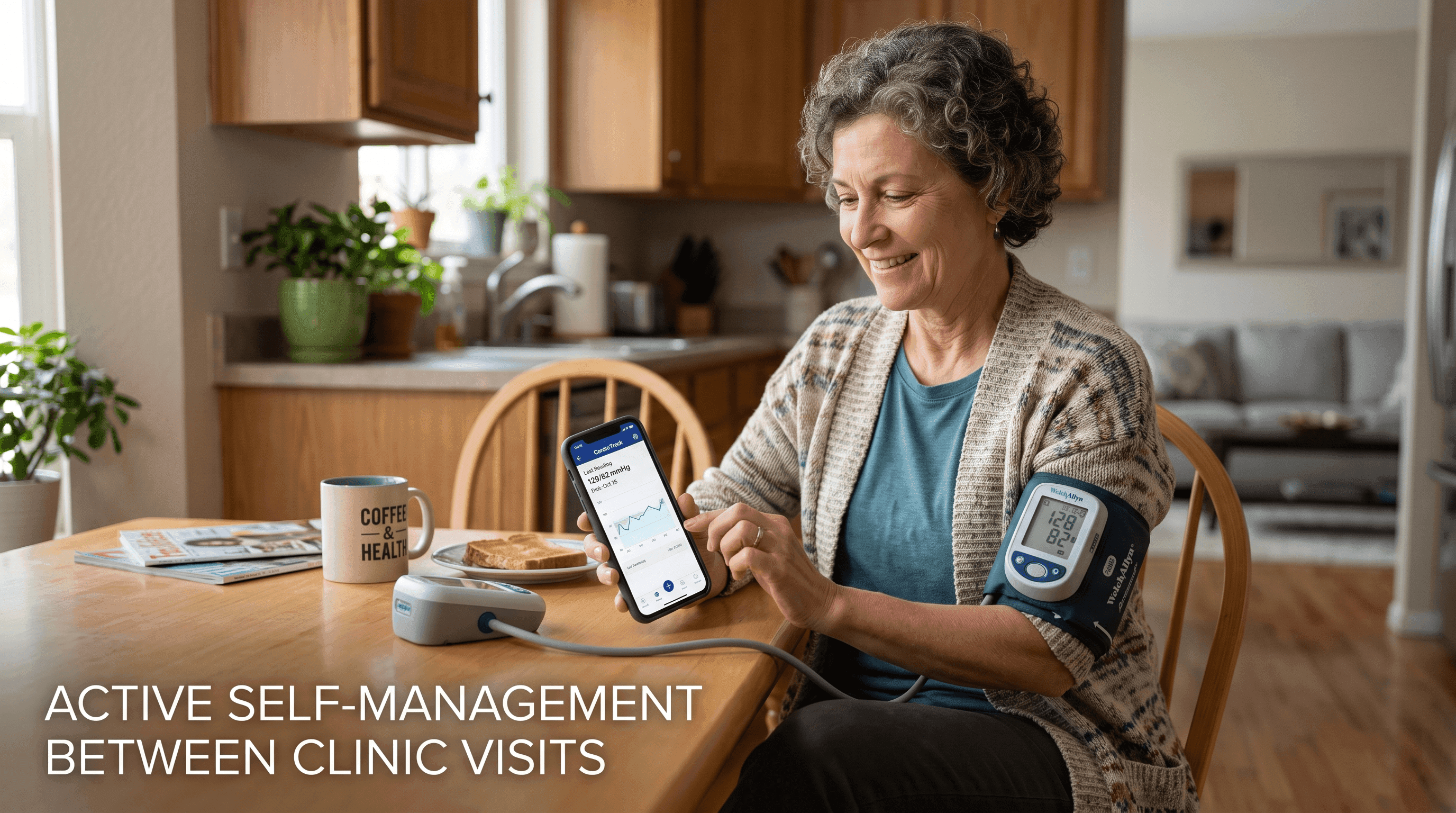
3. mySugr — Best for diabetes-specific logging and A1C trend tracking with no enrollment barrier
mySugr is a diabetes management logbook app, developed by Roche and used by people with both type 1 and type 2 diabetes, that consolidates blood glucose readings, insulin doses, carb intake, meal photos, and activity data into one platform. The app integrates directly with Accu-Chek blood glucose meters for automatic reading import, and it generates PDF reports formatted for clinical review. A retrospective real-world data analysis found that active type 1 diabetes users who logged with mySugr saw an average estimated A1C drop from 9.0% to 7.8% after one month of use, with stabilization at 7.7% after six months.
Pros: mySugr is free to download and use with a genuine free tier, and Pro unlocks at no cost when paired with a compatible Accu-Chek or ReliOn meter, meaning many users pay nothing. No employer enrollment or health plan approval is required. The app generates clinical-grade PDF reports that can be shared directly with an endocrinologist or diabetes educator, reducing the time providers spend manually reviewing logbook data. App Store ratings of 4.6 stars from more than 9,600 US reviews indicate consistently high user satisfaction.
Cons: mySugr is a logging and reporting tool, not a coaching platform. It does not provide a dedicated human health coach, predictive intervention, or real-time physician oversight of data. Its food database is smaller than dedicated nutrition apps, making precise carb counting dependent on manual estimation rather than verified database lookups.
Pricing: Free basic tier. Pro plan is $2.99 per month or free with compatible Accu-Chek and ReliOn devices. Coaching bundle with supplies is $49.99 per month (US only).
Best for: People with type 1 or type 2 diabetes who want a clinician-ready logbook that integrates with their blood glucose meter and requires no employer or plan enrollment.
Rating: 4.6 stars on the App Store (June 2026, 9,600+ US ratings). 4.5 stars on Google Play (June 2026, 58,000+ ratings).
4. Virta Health — Best AI-assisted program for type 2 diabetes reversal
Virta Health is a physician-led virtual care program that addresses type 2 diabetes through personalized nutritional ketosis, combined with continuous remote medical oversight and one-on-one health coaching, all delivered through a mobile app. Founded in 2014, Virta has published peer-reviewed research in journals including Diabetes Therapy, and its research is cited in the American Diabetes Association's Standards of Medical Care in Diabetes. Participants in Virta's clinical study showed an average A1C reduction of 1.3 percentage points, a 63% reduction in diabetes prescriptions, and an average weight loss of 31 pounds after one year.
Pros: The published clinical evidence for Virta is condition-specific and unusually strong for a digital health program. Physicians on staff monitor biomarker data in real time and adjust medications remotely, including reducing or eliminating diabetes prescriptions as health improves. Major insurers including Humana and Aetna cover Virta at $0 for eligible members, and the company was named to the CNBC Disruptor 50 list in 2025.
Cons: The program requires an application and eligibility review before enrollment, which creates an access barrier the free-tier tools above do not have. The program is also limited to type 2 diabetes, prediabetes, and obesity, so it does not address other chronic conditions in isolation. App reviews on Google Play cite interface friction as a recurring complaint, with users noting incomplete food tracking and unexpected crashes.
Pricing: $0 for eligible members whose employer or health plan covers the program. Individuals without coverage can apply directly through virtahealth.com/join, and out-of-pocket cost is discussed at enrollment.
Best for: Adults with type 2 diabetes or prediabetes who want a physician-supervised, nutrition-first approach to reducing medications and improving A1C, and who have the coverage or motivation to complete the enrollment process.
Rating: 4.4 stars on the App Store (June 2026, based on available user data).
5. Teladoc Health Chronic Care (formerly Livongo) — Best for integrated virtual care with licensed provider access
Teladoc Health's Condition Management program, which absorbed and continues the Livongo platform, provides chronic care for diabetes, hypertension, and obesity through a combination of certified health coaches, licensed providers, registered dietitians, mental health coaches, and condition-specific connected devices shipped to the member's door. The program has helped more than 730,000 patients, according to Teladoc's published program data. Members get access to a library of over 1,000 educational resources alongside one-on-one coaching sessions and action plans personalized to their health goals.
Pros: Unlike pure app-based solutions, Teladoc Chronic Care gives members access to actual licensed providers who can adjust medications, prescribe GLP-1s for eligible members, and provide clinical care, not just coaching. The platform covers multiple cardiometabolic conditions under a single program, meaningful for the roughly 51.4% of US adults who live with two or more chronic conditions simultaneously. The program is available at no out-of-pocket cost for most eligible members through employer or health plan coverage.
Cons: Access requires employer or health plan coverage, with no direct consumer path. Visit quality has been inconsistent according to enterprise customer reviews, with some reports of provider continuity issues across sessions. General medical urgent care visits through Teladoc are priced separately at $75 to $95 without insurance.
Pricing: $0 for condition management when covered through employer or health plan. Out-of-pocket general medical visits run $75 to $95 without insurance, or a $25 to $50 copay with most plans (as of June 2026).
Best for: Adults managing diabetes, hypertension, or obesity who want both coaching and licensed provider access within the same program and have employer or plan coverage.
6. Lark Health — Best for 24/7 AI-coached chronic condition management via health plan
Lark Health is a digital health platform that delivers 24/7 AI health coaching for diabetes prevention, type 2 diabetes management, hypertension, and weight through a text-message-style conversational AI built on cognitive behavioral therapy (CBT) principles. Lark has served nearly 2 million members through partnerships with major health plans, pharmacy benefit managers, and self-insured employers. Its Diabetes Prevention Program is Fully Recognized by the CDC, one of a small number of digital programs to achieve that designation.
Pros: The 24/7 availability of the AI coach is a genuine differentiator, providing real-time feedback on food logging, activity, sleep, and stress without appointment wait times. Lark integrates with more than 70 health monitors and apps, covering 95% of smartphones, and syncs connected devices automatically. Live nurses and health coaches are available for escalation when the AI flags clinical concerns.
Cons: Lark is delivered exclusively through employers and health plans, with no direct-to-consumer option, which excludes a large portion of the chronic disease population from access. Trustpilot reviews (39 total as of June 2026) give Lark a 1.6/5, with several users describing the AI coach as overly scripted and non-responsive to free-text input.
Pricing: $0 for eligible members when covered by employer or health plan. No standalone consumer plan is currently available.
Best for: Adults whose employer or health plan covers Lark who want round-the-clock AI coaching for diabetes prevention or hypertension management.
Rating: 4.5 out of 5 on ToolPilot (February 2026). Significantly lower on Trustpilot (1.6/5 from 39 reviews), reflecting a gap between plan-sponsor satisfaction and individual user experience.
7. Medisafe — Best AI-assisted medication adherence for complex chronic disease regimens
Medisafe is a medication management app that uses proprietary Just-in-Time Intervention (JITI) technology to personalize reminders based on each user's dose history, improving over time. It covers pill reminders, drug-to-drug interaction checks, refill alerts, doctor appointment tracking, and 20-plus trackable health measurements including blood glucose, blood pressure, and weight. Medisafe has been ranked number 1 out of 461 apps by pharmacists in independent testing and was the highest-scoring app in a University of Sydney study using the validated Mobile App Rating Scale.
Pros: Medication adherence is one of the most significant modifiable factors in chronic disease outcomes: the CDC estimates that nonadherence contributes to roughly 125,000 preventable deaths annually in the US. Medisafe's drug-drug interaction checker and caregiver Medfriend feature, which notifies a family member if a dose is missed, directly address adherence barriers for patients on complex regimens. The app connects to health records at 100+ US hospitals and health systems to import prescriptions automatically.
Cons: Medisafe transitioned to a partially paid model in January 2026, which disappointed longtime users who relied on the free version for multi-medication tracking. Premium features including advanced reporting and additional measurement tracking are gated behind a $4.99 per month subscription. The app's reporting features have received criticism from clinical reviewers for limited insight into dose trends and side effects.
Pricing: Free basic tier with core reminders. Premium plan: $4.99 per month or $39.99 per year (as of June 2026, App Store). Basic users can track up to two medications free; additional medications require premium in some configurations.
Best for: Adults managing five or more daily medications who want automated adherence tracking, interaction warnings, and caregiver coordination in one app.
Rating: 4.5 out of 5 on iOS (45,000+ reviews) and 4.5 out of 5 on Android (190,000+ reviews) as of June 2026.
8. Manage My Pain — Best for chronic pain tracking and clinical communication
Manage My Pain is a clinically validated pain tracking app built in partnership with global pain management experts and used by 125,000+ patients worldwide. It allows users to log pain intensity, location, duration, triggers, mood, medications, and activities, then generate clinician-ready reports with visual trend data. The app has been validated in peer-reviewed research published in collaboration with its academic development partners, and it carries a 4.7-star rating.
Pros: The reports Manage My Pain generates are purpose-built for clinical communication, letting patients hand their specialist or primary care provider structured pain data that would otherwise be impossible to reconstruct from memory. The app is particularly useful for conditions like fibromyalgia, chronic migraine, back pain, endometriosis, and arthritis, where symptom variability and patient-reported data are central to treatment decisions.
Cons: Manage My Pain is a tracking and reporting tool, not a treatment intervention. It does not include a health coach, physician oversight, predictive analytics, or condition-specific clinical programming. Published evidence supports the value of structured self-monitoring alongside clinician care, but there is no randomized clinical trial showing the app alone produces pain reduction.
Pricing: Free basic version. Pro version at $6.99 per month.
Best for: Adults with chronic pain conditions who need organized, provider-shareable symptom reports to support their care team's decision-making.
Rating: 4.7 stars across iOS and Android platforms (June 2026, 125,000+ users globally per company data).
FAQ
Which AI is best for chronic disease management overall?
Omada Health holds the strongest clinical evidence base across multiple conditions, with 30+ peer-reviewed studies, CDC recognition, and outcomes data covering diabetes prevention, type 2 diabetes, hypertension, and musculoskeletal health. For immediate access without any enrollment process, Momentary is the most accessible starting point. For type 2 diabetes specifically, Virta Health's physician-led reversal program has the most rigorous condition-specific data, with published results including an average 1.3-point A1C reduction and 63% medication reduction at one year.
Can AI do chronic care management?
AI tools and AI-assisted coaching platforms can support chronic care management by tracking symptoms, sending medication reminders, delivering behavioral coaching, identifying patterns in health data, and helping patients communicate more effectively with their care teams. They are not a substitute for physician-led care, medication management, or diagnosis. A doctor can advise on individual cases and is always the appropriate source for treatment decisions. Apps like Omada and Virta pair AI with licensed providers precisely because AI alone is not sufficient for clinical chronic care management.
What is the best app for CFS (chronic fatigue syndrome)?
None of the apps ranked here is designed specifically for chronic fatigue syndrome, also called myalgic encephalomyelitis (ME/CFS). General symptom tracking tools like Manage My Pain can help patients log energy levels, symptoms, and activity patterns to share with a specialist, but ME/CFS requires care from a physician familiar with its diagnostic criteria and management guidelines. If you are experiencing persistent fatigue, a physician can advise on evaluation and next steps. To explore your symptoms before a visit, use Momentary's AI assistant to get personalized guidance on what your symptoms might mean and what kind of care to seek.
Which AI is best for medical conditions?
No AI app is approved for medical diagnosis in the United States. Consumer-facing AI health apps are designed for triage support, symptom education, and coaching, not diagnosis. For an accurate diagnosis, a licensed physician evaluation is required. AI tools can help you understand what your symptoms might indicate and prepare better questions before an appointment, but they are a first step, not a conclusion.
Is chronic disease management covered by insurance when using AI apps?
Several AI-powered chronic disease platforms, including Omada Health, Lark Health, and Teladoc Chronic Care, are covered at no out-of-pocket cost when offered through employer health benefits or health plan partnerships. mySugr Pro is available free of charge when paired with a compatible Accu-Chek meter. Coverage varies significantly by employer and plan, so confirming eligibility with HR or member services before enrolling is always the right first step.
Do AI apps for chronic disease management replace seeing a doctor?
No. AI health apps for chronic disease are designed to support self-management, improve adherence, and bridge the gap between medical appointments, not replace physician care. The CDC notes that effective chronic disease management requires ongoing medical care as a foundation. Apps and coaching programs are most effective when integrated with a care team, not used in isolation.
References
-
Watson KB, Wiltz JL, Nhim K, et al. Trends in Multiple Chronic Conditions Among US Adults, By Life Stage, Behavioral Risk Factor Surveillance System, 2013-2023. Prev Chronic Dis. 2025;22:240539. https://www.cdc.gov/pcd/issues/2025/24_0539.htm
-
Centers for Disease Control and Prevention. About Chronic Diseases. Updated December 2024. https://www.cdc.gov/chronic-disease/about/index.html
-
Hallberg SJ, McKenzie AL, Williams P, et al. Effectiveness and Safety of a Novel Care Model for the Management of Type 2 Diabetes at One Year: An Open Label, Non-Randomized, Controlled Study. Diabetes Therapy. 2018;9(2):583-612. DOI: 10.1007/s13300-018-0373-9.
-
Ehrmann D, et al. Efficacy of a Digital Diabetes Logbook for People With Type 1, Type 2, and Gestational Diabetes. Journal of Diabetes Science and Technology. 2025;19(5):1362-1373. DOI: 10.1177/19322968241239870.
-
Leung LB, et al. Evidence Brief: Virtual Diet Programs for Diabetes. VA Evidence Synthesis Program (ESP). https://www.ncbi.nlm.nih.gov/books/NBK563523/
-
Qian L, et al. Use of a Novel, Remotely Connected Diabetes Management System Is Associated With Increased Treatment Satisfaction. Diabetes Technology and Therapeutics. 2017;19(12):715-722.
-
Dayer L, Heldenbrand S, Anderson P, Gubbins PO, Martin BC. Smartphone medication adherence apps: potential benefits to patients and providers. J Am Pharm Assoc. 2013;53(2):172-181.
-
Centers for Disease Control and Prevention. Chronic Pain Among Adults, United States, 2019-2021. MMWR. 2023. https://www.ncbi.nlm.nih.gov/pmc/articles/PMC10121254/
-
American Diabetes Association. Standards of Medical Care in Diabetes. Updated annually. https://www.diabetes.org/clinical-resources/standards-of-care
If You're in California
Momentary appears above at the rank it earned for readers everywhere. If you live in California, it is also the only option on this page that is a doctor you keep rather than a tool you consult: Momentary is a virtual primary care membership for California residents, pairing an AI assistant that remembers your history with a licensed California physician you can message any hour, who can diagnose, prescribe non-controlled medications, order labs, and refer, for a flat $19.99 a month (HSA/FSA eligible). It does not bill insurance, is iOS-only today, and is not for emergencies. Momentary is our own product.
California guides: Best Online Primary Care Memberships in California · Best Online Doctors That Prescribe in California · Best AI Primary Care Apps in California


