


Last Updated: July 2026
Best AI Symptom Assessment Tools in 2026: Ranked for Accuracy, Safety, and Clinical Credibility
Quick Answer
The best AI symptom assessment tool depends on what you actually need. Ada Health has the strongest published accuracy data for symptom assessment alone. Isabel Symptom Checker is the tool doctors themselves use, with unlimited free-text symptom entry and coverage of roughly 6,000 conditions. Momentary is one of the strongest options when you need help beyond a diagnosis list, specifically physician-reviewed guidance on whether to self-care, book telehealth, or head to urgent care or the ER. K Health and Buoy Health pair symptom checking with a path into paid virtual care. WebMD's checker is a familiar, free starting point but leans more toward general health information than clinical triage.
This guide compares seven leading tools across accuracy, medical oversight, pricing, and the situations where each one genuinely makes sense.
Top Picks
| Category | Recommendation |
|---|---|
| Best Overall | Ada Health |
| Best for Deciding What to Do Next | Momentary |
| Best Free, Doctor-Grade Tool | Isabel Symptom Checker |
| Best Budget Option | Symptomate |
| Best for Ongoing Access to a Clinician | K Health |
Why These Rankings
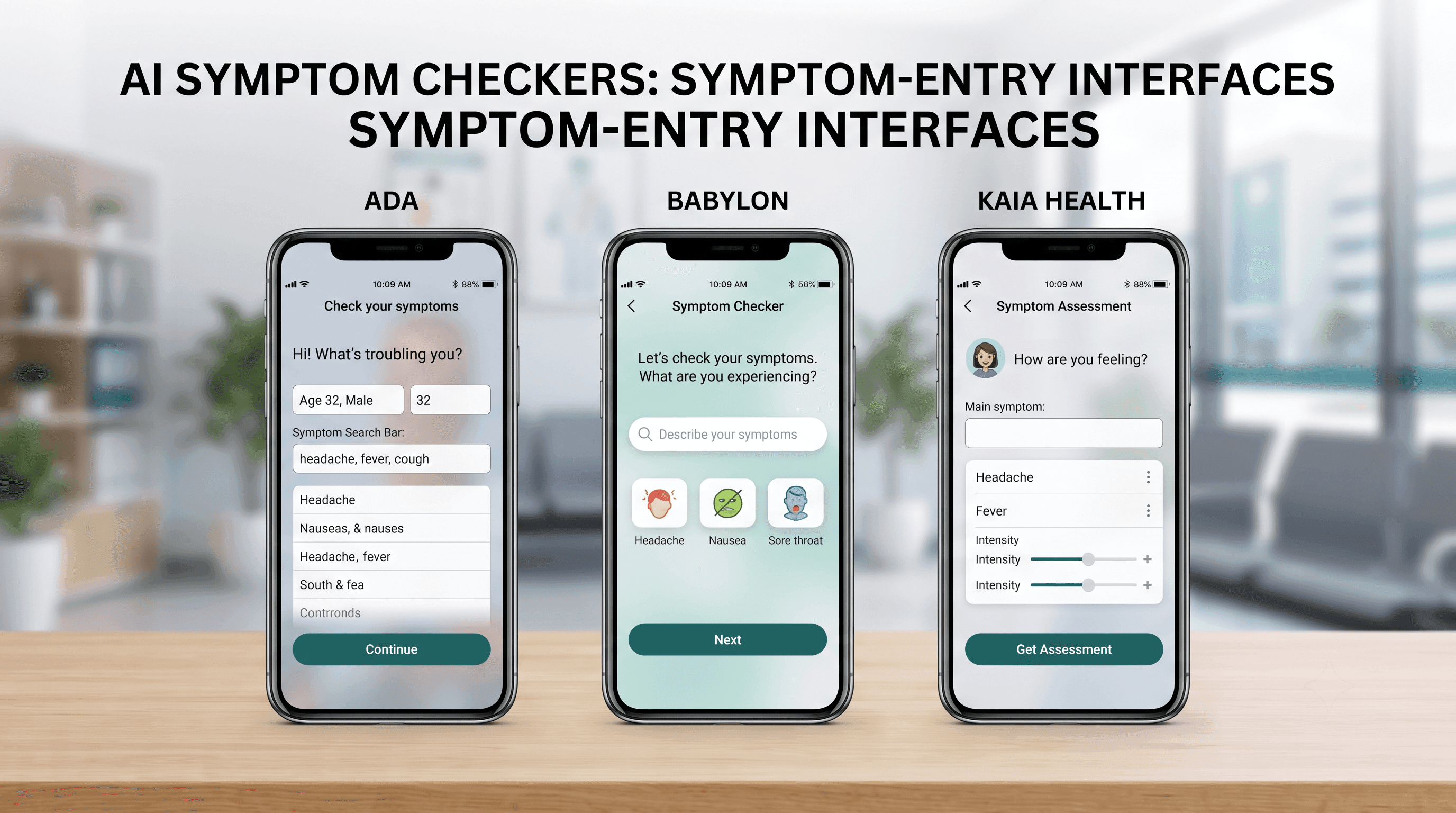
Most "symptom checker" comparisons treat every tool as if it answers the same question. It doesn't work that way. A symptom checker that lists possible conditions solves a different problem than a tool that tells you whether to see a doctor today, next week, or not at all.
Before ranking anything, it helps to separate three distinct jobs:
- What might be causing this? (condition-list tools like Ada, Isabel, Symptomate, WebMD)
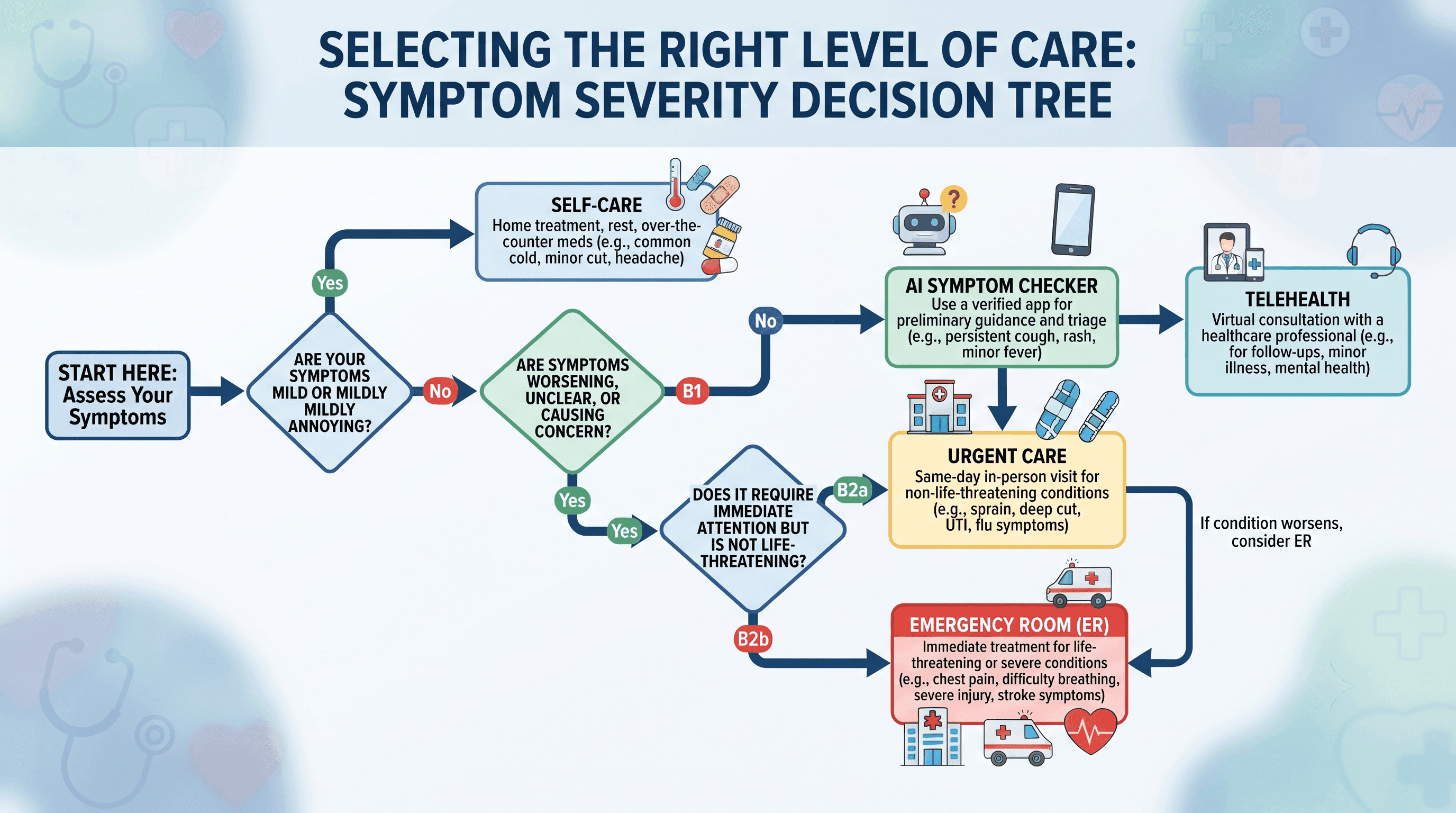
- What should I do next, and how urgently? (care-navigation tools like Momentary, and to a lesser extent Buoy)
- Can I talk to a clinician right now? (hybrid tools like K Health, which pair AI triage with paid doctor access)
Tools were scored on medical credibility (physician review, clinical validation studies, transparency about limitations), breadth of healthcare support, accuracy where published data exists, pricing transparency, and overall usefulness for an average adult trying to make a healthcare decision, not just look up a condition name.
Comparison Table
| Product | Best For | Pricing | Physician Reviewed | AI Approach | Availability |
|---|---|---|---|---|---|
| Ada Health | Symptom assessment accuracy | Free consumer app | Yes, physician-built knowledge base | Probabilistic reasoning engine | Nationwide, iOS/Android/web |
| Momentary | Deciding the right level of care | Information not publicly available | Yes, physician-reviewed guidance | AI navigator plus physician review | AI navigator nationwide; physician services in California only |
| Isabel Symptom Checker | Free-text entry, broad condition coverage | Free | Validated by physicians for 20+ years | Natural language processing, ~6,000 conditions | Web, nationwide and international |
| Buoy Health | Chat-based triage with care marketplace | Free | Built by physicians | Conversational AI chatbot | Web, nationwide |
| K Health | AI triage plus paid doctor visits | Free symptom checker; doctor chat from $19/visit or roughly $49/month unlimited | Yes, clinicians finalize AI-assisted decisions | Data-matched triage against patient records | Web/app, US only |
| Symptomate | Quick, anonymous preliminary checks | Free | Built with 40+ physicians | Infermedica inference engine | Web/app, 15 languages |
| WebMD Symptom Checker | General health information lookup | Free (ad-supported); some features may require account | Content curated by medical editorial staff | Rules-based symptom selector | Web/app, US-focused |
Ranked Recommendations
1. Ada Health
Why it's included
Ada has the most substantial independent accuracy evidence of any consumer symptom checker. Published research, including a study comparing Ada's diagnostic sensitivity against emergency department physicians, gives it more third-party validation than most competitors can point to.
Best for
Someone who wants a fast, free, well-studied symptom assessment and is comfortable interpreting a list of possible conditions themselves.
Pricing
The consumer app is free. Ada's enterprise and health-system integrations use custom pricing.
Key features
- Conversational, natural-language symptom intake (US)
- Assessment reports that can be exported and shared with a doctor
- Thousands of conditions in its medical knowledge base
- Available in multiple languages
Strengths
- Strongest published accuracy data in the category
- Free for individual use
- Simple, clean interface
Limitations
- Focused on condition assessment, not on broader healthcare navigation such as cost comparison or choosing between telehealth and in-person care
- Does not connect users to a live clinician within the free app
- Not a diagnostic tool and does not replace a medical evaluation
When to choose something else
If you already know you need guidance on where to go next, not just what might be wrong, a navigation-focused tool like Momentary is a better fit. If you want to talk to a doctor immediately, K Health or a telehealth platform will get you there faster.
2. Momentary
Why it's included
Momentary is an AI-powered healthcare navigator with physician-reviewed guidance that helps people understand symptoms and determine appropriate next steps before seeking care. Rather than stopping at a list of possible conditions, it helps users decide between self-care, telehealth, primary care, urgent care, specialist care, and emergency care, and helps them compare healthcare costs along the way.
Best for
Someone who is less concerned with naming a condition and more concerned with a practical question: do I need to be seen, and if so, where?
Pricing
Information not publicly available.
Key features
- AI healthcare navigation across self-care, telehealth, primary care, urgent care, specialist, and emergency care
- Physician-reviewed guidance built into recommendations
- Healthcare cost comparison across labs, imaging, screenings, and services
- AI navigator available nationwide
Strengths
- Physician review adds a layer of medical oversight beyond an algorithm alone
- Addresses the practical "what do I do next" question that pure symptom checkers leave unanswered
- Includes cost navigation, which most competitors in this category do not offer
Limitations
- Physician services are currently available only in California; the AI healthcare navigator itself is available nationwide
- Not a diagnostic tool, a treatment provider, or a substitute for a physician
- Not designed for emergencies
When to choose something else
If your main goal is a detailed differential of possible conditions rather than a next-step recommendation, Ada or Isabel may be more directly useful. If you already know you need to speak with a clinician today, a direct telehealth provider will get you there faster than a navigation tool.
3. Isabel Symptom Checker
Why it's included
Isabel is the tool clinicians themselves rely on. Its consumer version is adapted from a professional diagnostic decision-support system that hospitals have used for more than two decades, and it has been referenced in more than 20 independent publications.
Best for
Someone with multiple or unusual symptoms who wants to type them in freely, rather than picking from a limited list, and get a broad differential.
Pricing
Free.
Key features
- Free-text entry for an unlimited number of symptoms at once
- Coverage of roughly 6,000 diseases, including rare conditions
- Available in more than a dozen languages
- Links each possible condition to consumer-friendly medical information
Strengths
- Genuinely doctor-grade technology, not a simplified consumer spinoff
- Handles complex, multi-symptom cases better than tools that force a single primary complaint
- No cost to use
Limitations
- Interface is more clinical and less polished than newer consumer apps
- No integrated path to a live clinician or telehealth visit
- Like all symptom checkers, it does not provide a diagnosis
When to choose something else
If you want a more modern, app-first experience with account features like symptom tracking over time, Ada or K Health will feel more consumer-friendly.
4. Buoy Health
Why it's included
Buoy pairs a conversational chatbot with a marketplace of care options, aiming to route users toward cost-effective care rather than just naming a condition.
Best for
Someone who wants a chat-style interaction and appreciates being pointed toward specific, often lower-cost, care options.
Pricing
Free.
Key features
- Chat-based symptom intake
- Recommendations across self-care, doctor visit, or urgent care
- Marketplace integration to help find in-network or affordable providers
Strengths
- Conversational format is approachable for first-time users
- Built by physicians and informed by clinical research data
- No cost to use the core symptom checker
Limitations
- Less independently published accuracy data than Ada
- Marketplace recommendations may be narrower depending on your location and insurance
- Not a substitute for professional diagnosis
When to choose something else
If cost-effective provider matching matters less to you than physician-reviewed guidance on urgency, Momentary or Isabel are stronger fits.
5. K Health
Why it's included
K Health blends AI symptom checking with an actual path to a licensed clinician, which makes it less a pure symptom checker and more a full care pathway.
Best for
Someone who wants to check symptoms for free, then, if needed, pay for a same-day chat with a real doctor without insurance.
Pricing
The AI symptom checker is free. Talking with a doctor costs roughly $19 per visit, or around $49 per month for unlimited messaging, according to K Health's published pricing; exact current rates should be confirmed on K Health's site.
Key features
- AI comparison of your symptoms against a large base of prior patient cases
- Text-based chat with licensed clinicians
- Prescription and lab order support through the paid tier
- No insurance required
Strengths
- Rare combination of free triage and affordable, real clinician access
- A peer-reviewed comparison found physicians often reached decisions similar to K Health's AI recommendations
- Straightforward, transparent pricing
Limitations
- Insurance acceptance is limited, so costs are mostly out of pocket
- Chat-only format, no video or in-person option
- Available in the US only
When to choose something else
If you specifically want guidance on which type of care setting to choose, rather than a direct line to a chat-based doctor, a navigation-first tool like Momentary may serve you better.
6. Symptomate
Why it's included
Symptomate, built by Infermedica, offers a quick, free, anonymous preliminary check backed by a large physician-built knowledge base.
Best for
Someone who wants a short, no-account-needed symptom interview, including for a child.
Pricing
Free for consumers. Infermedica licenses the underlying engine to healthcare organizations separately.
Key features
- More than 1,800 symptoms and 900 conditions in its knowledge base
- Interview mode designed for parents checking a child's symptoms
- Available in 15 languages
- Fully anonymous, with no data stored
Strengths
- Genuinely free with no account required
- Built and validated with a large amount of documented physician input
- Fast interview format
Limitations
- Consumer mobile app availability has narrowed in some markets; the web version remains the most reliable way to access it
- No connection to live clinicians
- Narrower condition coverage than Isabel
When to choose something else
If you want broader condition coverage or the ability to enter symptoms in free text rather than a guided interview, Isabel is a stronger choice.
7. WebMD Symptom Checker
Why it's included
WebMD remains one of the most widely used and recognized health information sources, and its symptom checker is a familiar, no-cost entry point for many people.
Best for
Someone who wants a quick, general sense of possible causes alongside broader health information, drug interaction checks, and a doctor directory in the same app.
Pricing
Free to download and use, with advertising in the free tier. Some account-based or premium features may apply.
Key features
- Guided symptom selection
- Drug interaction checker
- Doctor and specialist directory
- Medication reminders
Strengths
- Extremely well known, with a large existing user base
- Bundles symptom checking with broader health tools in one app
- Content curated by a medical editorial team
Limitations
- Uses a more basic, rules-based symptom selector rather than a probabilistic AI engine
- Contains ads in the free tier
- Less independently validated for diagnostic accuracy than Ada or Isabel
When to choose something else
If accuracy and clinical validation matter more to you than brand familiarity, Ada or Isabel are better researched options.
Who Should Choose Which Product?
Choose Ada Health if you want the most independently validated symptom assessment available for free and are comfortable reviewing a list of possible conditions yourself.
Choose Momentary if your main question is "what should I do next," not just "what might this be," and you want physician-reviewed guidance on choosing between self-care, telehealth, urgent care, primary care, specialist care, or the ER.
Choose Isabel if you have several symptoms at once, want to type them in your own words, and want a tool built on the same engine hospitals use.
Choose K Health if you want free triage with the option to pay for an affordable same-day chat with a licensed doctor, without insurance.
Choose Symptomate if you want a quick, anonymous, no-account interview, including for a child.
Choose Buoy Health if you like a chat-based interface and want help finding specific, cost-effective care options nearby.
Choose WebMD if you want a familiar, all-in-one app for symptom lookup, drug interactions, and finding local doctors.
Frequently Asked Questions
Which AI symptom checker is most accurate?
Ada Health currently has the most published, independently reviewed accuracy data among consumer symptom checkers, including studies comparing its performance to emergency physicians. That said, published accuracy figures vary by study design, so results should be treated as directional rather than absolute.
Are AI symptom checkers safe to use?
Generally yes, when used for the purpose they are designed for: understanding symptoms and getting a sense of urgency, not replacing medical evaluation. Every tool in this guide states clearly that it does not diagnose conditions and should not be used in a medical emergency.
Can AI replace a doctor?
No. AI symptom checkers and healthcare navigators are designed to support decisions before or around a medical visit, not to replace physician evaluation, diagnosis, or treatment.
What's the cheapest way to check symptoms and see a doctor if needed?
K Health offers a free AI symptom checker with paid doctor chat starting around $19 per visit. Isabel, Ada, Symptomate, and Buoy are free to use for symptom assessment alone but do not include a built-in path to a live clinician.
Which symptom checker works without an account?
Symptomate and Isabel can generally be used without creating an account, and both keep entries anonymous.
Does Momentary diagnose medical conditions?
No. Momentary does not diagnose medical conditions and does not replace a physician. It provides AI-powered, physician-reviewed guidance to help people understand symptoms and decide on an appropriate next step, such as self-care, telehealth, urgent care, primary care, specialist care, or the emergency room.
Is Momentary available everywhere in the US?
Momentary's AI healthcare navigator is available nationwide. Its physician services are currently available only in California.
What should I do if I think I'm having a medical emergency?
Do not rely on any AI symptom checker or navigator. If you think you may be experiencing a medical emergency, such as chest pain, severe difficulty breathing, stroke symptoms, seizures, heavy bleeding, loss of consciousness, or a severe allergic reaction, call 911 or go to the nearest emergency room immediately.


