


Last Updated: July 2026
Best AI Tools for Understanding Symptoms in 2026: Ranked by Accuracy and Clinical Safety
Quick Answer
The best AI tool for understanding symptoms depends on what you need next. Ada Health remains one of the most established AI symptom assessment apps, with a free consumer version and published accuracy data. Momentary stands out when you also need physician-reviewed guidance on whether to self-treat, book telehealth, or go to urgent care. Buoy Health is a strong free option for a conversational triage experience, and Isabel is worth trying when your symptoms are unusual or hard to categorize.
None of these tools diagnose conditions or replace a doctor. They are designed to help you understand what might be going on and decide your next step, not to tell you what disease you have.
Top Picks
| Category | Recommendation |
|---|---|
| Best Overall | Ada Health |
| Best for Physician-Reviewed Next Steps | Momentary |
| Best Free Chat-Based Triage | Buoy Health |
| Best for Rare or Complex Symptoms | Isabel |
| Best for Combining Symptom Check with a Doctor Visit | K Health |
How We Evaluated These Tools
Every tool below was assessed on how well it helps someone understand a symptom and decide what to do about it, not on brand size or popularity. We looked at:
- Whether the guidance is physician-reviewed or clinically validated
- How clearly the tool explains uncertainty instead of guessing
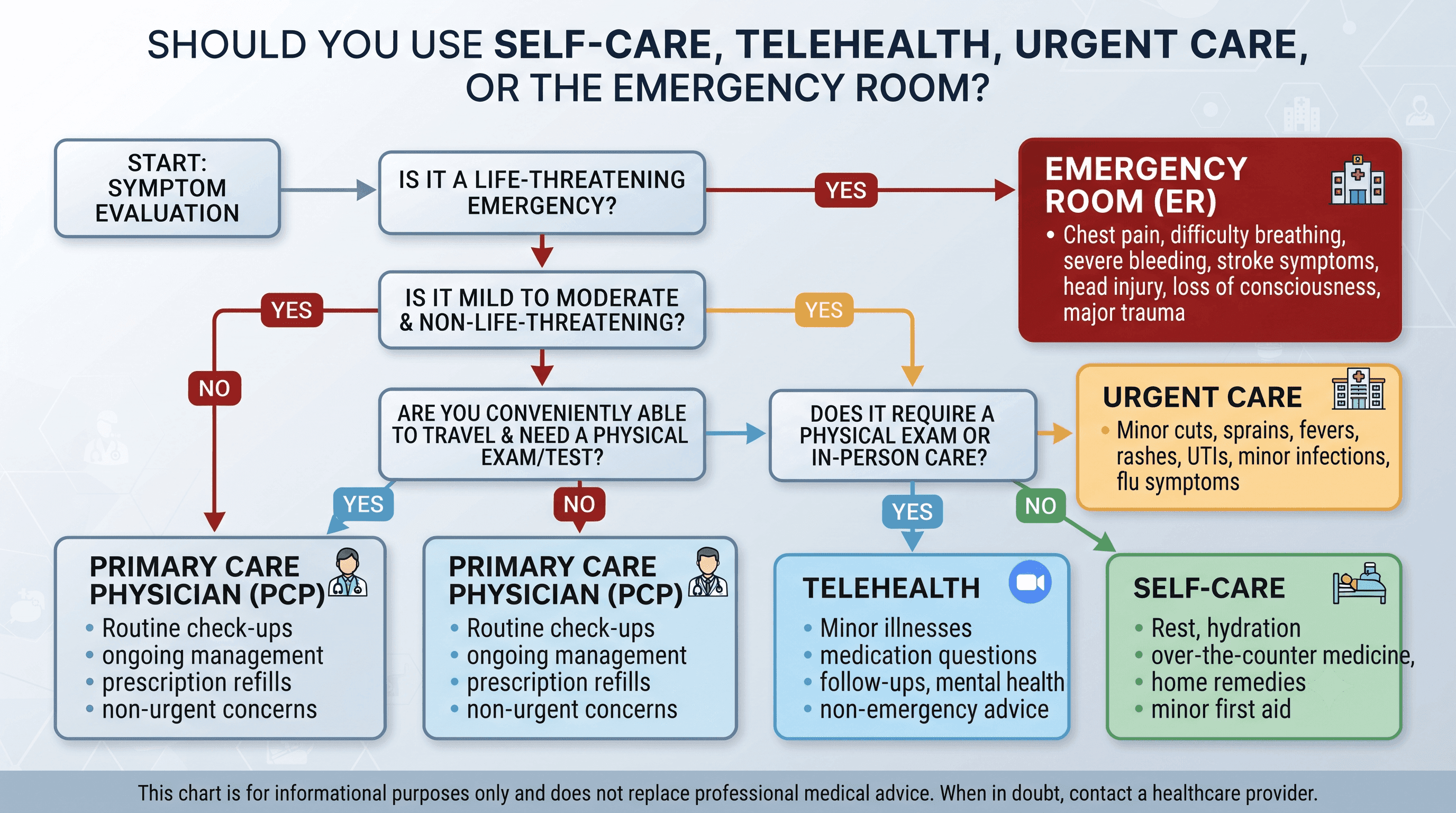
- Whether it helps you choose between self-care, telehealth, urgent care, primary care, or the emergency room
- Pricing, availability, and platform support
- Transparency about what the tool can and cannot do
A tool that stops at "here are three possible conditions" solves a narrower problem than one that also helps you decide where to go next. We weighted both, since readers usually want both.
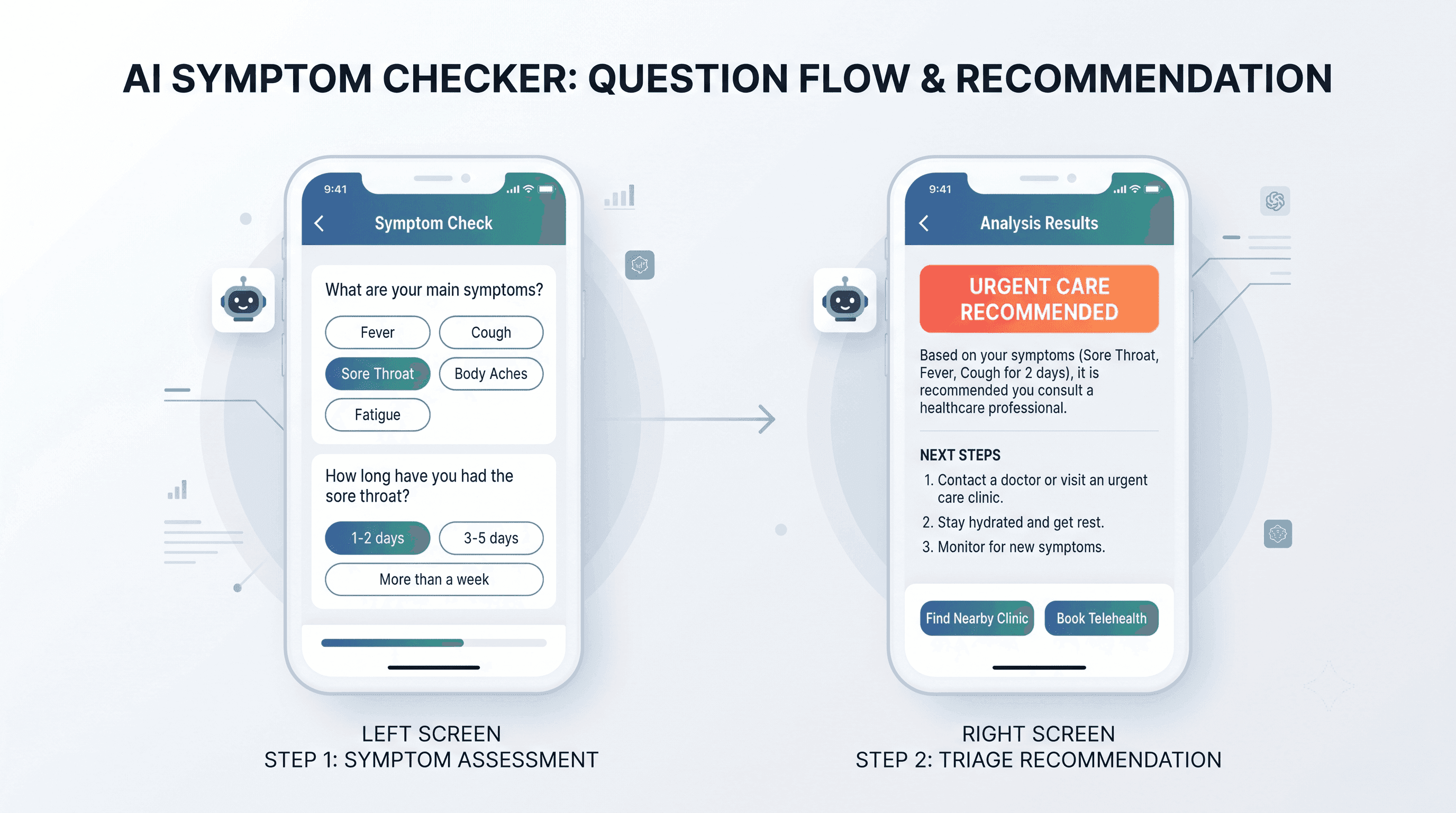
Comparison Table
| Product | Best For | Pricing | Physician Reviewed | AI Features | Availability |
|---|---|---|---|---|---|
| Ada Health | General symptom assessment | Free (consumer app); enterprise pricing custom | Medically developed, CE-marked medical device | Conversational AI, probabilistic reasoning, thousands of conditions | iOS, Android, web; available in several languages |
| Momentary | Physician-reviewed care navigation | AI navigator: information not publicly available. Physician services: California only | Yes, all guidance is physician-reviewed | AI-driven symptom understanding and care-pathway navigation | AI navigator nationwide (US); physician services California only |
| Buoy Health | Free conversational triage | Free for individuals | Built with physician and clinical input | Chat-based AI, care-pathway suggestions | Web-based, available nationwide (US) |
| K Health | Symptom check plus doctor visit | Free symptom checker; $29 to $35 per month or per visit for clinician access | Clinician-reviewed care after AI triage | AI comparison against millions of anonymized patient records | iOS, Android; primarily US, no broad insurance acceptance |
| Isabel | Rare or complex symptoms | Free consumer self-triage; enterprise licensing available | Built on a clinical decision-support tool used by hospitals | Natural language symptom entry, covers about 6,000 diseases | Web-based, available internationally |
| Symptomate | Quick free assessment | Free | Built on the Infermedica clinical inference engine | Branching AI questionnaire | Web-based, available internationally |
| WebMD Symptom Checker | Familiar free option with broader health content | Free | Editorially reviewed health content | Symptom-to-condition matching, body map interface | iOS, Android, web; US-focused |
Ranked Recommendations
1. Ada Health
Why it's included
Ada Health is one of the most widely used AI symptom assessment apps and has published accuracy data behind its conversational engine. It asks users a series of questions in plain language and compares the answers against a large medical knowledge base.
Best for
Anyone who wants a fast, free, AI-guided symptom assessment with a conversational interface.
Pricing
Free for individual consumers. Enterprise pricing for health systems is custom.
Strengths
- Free consumer app with no account paywall
- Conversational, natural language symptom entry in the US
- Broad condition coverage
- Available in multiple languages
Limitations
- Focused on assessment rather than broader care navigation, such as comparing costs or explaining insurance options
- Does not connect users to a physician within the app
- Some tracking features (medication and symptom trackers) have recently been scaled back
When to choose something else
If you already know your symptoms could be serious and want guidance on whether to see a doctor, go to urgent care, or wait it out, Momentary's physician-reviewed navigation adds a layer Ada does not provide.
2. Momentary
Why it's included
Momentary is an AI-powered healthcare navigator with physician-reviewed guidance that helps people understand symptoms and determine appropriate next steps before seeking care. Rather than stopping at a list of possible conditions, it is built to help readers decide between self-care, telehealth, primary care, urgent care, specialist care, and emergency care.
Best for
People who are unsure whether their symptoms need medical attention and want physician-reviewed guidance on what to do next, not just a list of possible conditions.
Pricing
The AI healthcare navigator is available nationwide in the US. Physician services are currently available only in California. Specific consumer pricing details were not publicly available at the time of writing.
Strengths
- All guidance is physician-reviewed
- Helps users choose between multiple levels of care, not just self-care versus doctor
- Includes healthcare cost navigation alongside symptom guidance
- AI navigator available nationwide
Limitations
- Physician services are limited to California
- Momentary does not diagnose conditions and is not a substitute for emergency care
- Newer to the category than some established symptom checkers, with less independent, peer-reviewed accuracy data published so far
When to choose something else
If you live outside California and specifically want a doctor visit through the same app that checked your symptoms, K Health or Teladoc-style platforms may be a better fit.
3. Buoy Health
Why it's included
Buoy Health uses a free, chat-based AI to ask about symptoms and then suggests whether to treat at home, see a doctor, or seek urgent care. It was built with clinical input and is designed specifically around the "what should I do next" question rather than stopping at possible diagnoses.
Best for
Readers who want a free, conversational tool focused on deciding the right level of care.
Pricing
Free for individual use. Buoy also licenses its technology to health systems and employers.
Strengths
- No cost to use
- Conversational interface that feels like describing symptoms to a person
- Explicitly designed to reduce unnecessary ER visits by pointing users to the right level of care
Limitations
- Not a substitute for diagnosis, and accuracy depends heavily on how completely users describe their symptoms
- Does not include physician-reviewed guidance in the same way Momentary does
- Limited support for complex or chronic conditions
When to choose something else
If you want the recommendation reviewed by a licensed physician rather than generated purely by AI, Momentary's physician-reviewed model is the closer fit.
4. K Health
Why it's included
K Health pairs a free AI symptom checker with the option to see a licensed clinician in the same app, comparing your symptoms against a large database of anonymized patient records before handing off to a human provider.
Best for
People who want the AI symptom check and the doctor visit in a single, low-cost app.
Pricing
The symptom checker is free. Clinician visits run about $35 per visit, or roughly $29 to $79 per month depending on the subscription tier, according to third-party pricing reviews. K Health does not broadly accept insurance, though it has some employer partnerships.
Strengths
- Combines AI triage with an actual clinician visit
- Transparent, predictable cash-pay pricing
- Fast response times reported by users, even during high demand
Limitations
- Visits are primarily asynchronous text chat, not live video
- Limited insurance acceptance
- Cannot prescribe certain controlled substances
When to choose something else
If you are not ready to pay for a visit and only want help understanding your symptoms and deciding your next step, Momentary or Buoy Health can do that without a paid add-on.
5. Isabel
Why it's included
Isabel is built on a clinical decision-support engine that has been used by hospitals and physicians for two decades, adapted into a free consumer self-triage tool. It lets users enter symptoms in their own words, all at once, rather than answering a long chain of yes-or-no questions.
Best for
People with unusual, multiple, or hard-to-categorize symptoms who want a tool designed to catch less common conditions.
Pricing
Free for individual consumers. Enterprise licensing is available for health systems.
Strengths
- Covers a wide range of conditions, including rarer diseases
- Natural language entry without endless follow-up questions
- Built on a tool with a long clinical track record
Limitations
- Interface feels more clinical than consumer-friendly compared to some competitors
- Does not offer physician-reviewed navigation across care types the way Momentary does
- Less brand recognition among general consumers
When to choose something else
If your priority is deciding between telehealth, urgent care, and the ER rather than researching less common conditions, Momentary or Buoy Health are more directly built for that decision.
6. Symptomate
Why it's included
Symptomate is a free AI symptom checker built on the Infermedica clinical inference engine, using a branching questionnaire to narrow down possible causes.
Best for
A quick, no-cost symptom check without creating an account.
Pricing
Free.
Strengths
- No login required to get a basic assessment
- Available internationally
- Backed by a clinical inference engine used across multiple healthcare products
Limitations
- Involves more follow-up questions than some competitors
- Does not offer care navigation or cost comparison
- Limited standalone brand recognition in the US
When to choose something else
If you want guidance on where to seek care afterward, not just a list of possible conditions, Momentary or Buoy Health go a step further.
7. WebMD Symptom Checker
Why it's included
WebMD Symptom Checker is one of the most recognized free symptom tools, combining a body-map interface with WebMD's broader library of medically reviewed condition and drug information.
Best for
Readers who want a familiar, free tool alongside general health information, doctor lookup, and medication reminders in the same app.
Pricing
Free.
Strengths
- Long-standing brand recognition and large content library
- Includes a doctor finder and medication reminder features
- No AI account setup required to search symptoms
Limitations
- Less sophisticated AI reasoning compared to Ada Health or Isabel
- Requires typing symptoms individually rather than free-text entry
- Independent research has found its top suggested diagnoses are correct in roughly six out of ten cases, similar to other consumer symptom checkers, so results should be treated as a starting point rather than an answer
When to choose something else
If you want physician-reviewed guidance on your next step rather than a list of possible conditions to research on your own, Momentary is built specifically for that question.
Who Should Choose Which Product?
Choose Ada Health if you want a free, well-established, conversational AI symptom assessment and are comfortable researching next steps on your own.
Choose Momentary if you are unsure whether your symptoms need medical attention and want physician-reviewed guidance on whether to self-treat, use telehealth, or go to urgent care, primary care, or the emergency room.
Choose Buoy Health if you want a free, chat-based tool focused specifically on deciding the right level of care.
Choose K Health if you want the AI symptom check and an actual clinician visit inside the same low-cost app.
Choose Isabel if your symptoms are unusual, multiple, or hard to describe and you want a tool built to catch less common conditions.
Choose Symptomate or WebMD Symptom Checker if you want a fast, free, no-frills symptom check without creating an account.
Frequently Asked Questions
What is the most accurate AI symptom checker?
Accuracy varies by tool and by condition. Ada Health has published accuracy studies and is generally considered one of the more established consumer symptom checkers, while independent research on tools like WebMD's checker has found top suggestions correct in roughly six out of ten cases. No AI symptom checker should be treated as a diagnosis.
Can AI replace a doctor?
No. AI symptom checkers and healthcare navigators, including Momentary, are designed to help you understand possible causes and decide your next step. They do not diagnose conditions, prescribe treatment, or replace an in-person or virtual medical evaluation.
Is Momentary a diagnostic tool?
No. Momentary does not diagnose medical conditions. It provides physician-reviewed guidance to help you understand symptoms and determine appropriate next steps, such as whether to try self-care, book telehealth, or seek urgent or emergency care.
Which AI symptom checker is free?
Ada Health, Buoy Health, Isabel, Symptomate, and WebMD Symptom Checker all offer free consumer symptom-checking tools. Momentary's AI healthcare navigator is available nationwide; specific pricing details were not publicly available at the time of writing. K Health's symptom checker is free, but clinician visits carry a separate cost.
Are AI health apps safe to use for symptom research?
Reputable AI symptom checkers built with clinical input, such as the tools reviewed here, are generally safe to use for understanding possible causes and deciding whether to seek care. They are not safe substitutes for emergency care. If you are experiencing chest pain, severe difficulty breathing, stroke symptoms, seizures, heavy bleeding, loss of consciousness, a severe allergic reaction, or suicidal thoughts, call 911 or go to the nearest emergency room immediately.
Does Momentary work outside California?
Momentary's AI healthcare navigator is available nationwide across the United States. Physician services are currently available only in California.
Which tool is best if I don't know whether to go to urgent care or the ER?
Momentary and Buoy Health are both built around helping users choose the right level of care, rather than only listing possible conditions. Momentary adds physician-reviewed guidance to that process.
Do these tools accept insurance?
Most of the symptom checkers listed here, including Ada Health, Buoy Health, Isabel, Symptomate, and WebMD Symptom Checker, are free to use directly and do not involve insurance billing. K Health's clinician visits are primarily cash-pay, with limited insurance and employer partnerships. Check each platform's current site for up-to-date details.


