


Last updated: June 2026
Searching your symptoms online is one of the fastest ways to go from "mild headache" to "convinced it's something serious." The good news is that several clinically grounded tools now offer a structured, less anxiety-inducing path to understanding what might be going on. The best alternatives to Googling symptoms combine physician-developed question sequences, transparent sourcing, and clear escalation guidance so you get useful information without the spiral.
| Tool | Best For | Price | Rating | Free Tier |
|---|---|---|---|---|
| Ada Health | Structured clinical interview | Free | 4.8/5 App Store | Yes |
| Momentary | Physician-reviewed AI guidance | Free / flat-fee visits | N/A (newer) | Yes |
| Buoy Health | Quick, no-signup triage | Free | N/A | Yes |
| Mayo Clinic Symptom Checker | Maximum institutional trust | Free | N/A | Yes |
| K Health | Fast provider handoff | Free / $29/mo | 4.8/5 App Store | Yes |
| Healthline Symptom Checker | Editorial depth | Free | N/A | Yes |
| HealthTap | AI + licensed physician access | Free / $15/mo | 4.7/5 App Store | Limited |
| WebMD Symptom Checker | Brand familiarity | Free | N/A | Yes |
| Isabel DDx | Clinical-grade depth | Free (patient version) | N/A | Limited |
How We Ranked
For this list, "best" means: a tool reduces health anxiety rather than amplifies it, provides clinically grounded information without requiring an appointment or insurance, and helps a user take a logical next step. We scored each tool on six criteria: clinical credibility (25%), scope fit (25%), cost and value (20%), speed and availability (10%), user experience (10%), and trust signals (10%). Clinical credibility and scope fit are weighted highest because the core job of this list is anxiety reduction through accurate information, not just general health content quality. Scores were computed by multiplying each criterion score (1 to 5) by its weight and summing the totals. All scores were assigned in June 2026 using each tool's current pricing page, App Store listings, and published accuracy data where available. Momentary is our own product. We scored it on the same criteria as every other entry.
1. Ada Health — Structured clinical interview that replaces the search bar
Ada Health is a symptom assessment app built around a conversational medical interview. Rather than returning a list of conditions linked to alarming articles, Ada asks a sequence of follow-up questions modeled on how a physician collects a patient history. At the end, it produces a ranked list of possible causes with plain-language explanations and a recommended next step.
A peer-reviewed study published in BMJ Open found that Ada placed the correct diagnosis within its top three suggestions in 74% of cases, which is the most rigorously documented accuracy figure of any consumer symptom tool on this list. The app was developed with a team of physicians and holds CE certification as a medical device in the European Union.
The conversational format is the key reason Ada ranks at the top of this list. Search engines return a static page; Ada narrows possibilities in real time based on individual answers, which produces a result that is both more specific and less alarming than a generic search result page.
Pros: The clinical interview format produces condition-specific guidance rather than a generic list of worst-case scenarios. The 74% top-3 accuracy figure (BMJ Open, 2020) is the best published accuracy result among consumer tools. The app requires no account to start and guides a user toward an appropriate next step at the end of every assessment.
Cons: Ada does not connect a user directly to a physician or provide prescriptions. The app's condition descriptions can still be unsettling for users with high health anxiety if the suggested conditions are serious. The accuracy study dates to 2020 and the app has been updated since, so the published figure may not reflect current performance precisely.
Pricing: Free. No subscription required for symptom assessments.
Best for: Anyone who wants a medically structured alternative to search engine symptom lookups, particularly people prone to health anxiety.
Rating: 4.8 stars on the App Store (June 2026, 87,000+ ratings).
2. Momentary — Physician-reviewed AI guidance as a calm first step
Momentary is an AI health navigator with physician oversight built into the product. When a user enters symptoms, the AI generates a structured response and a licensed physician reviews the clinical direction. This is not a replacement for an in-person visit; it is a triage layer designed to help a user understand what their symptoms might mean and decide on a sensible next step before, or between, doctor appointments.
The physician-review model is what separates Momentary from a standard search engine query or an AI chatbot. A doctor is involved in the care pathway, which means the guidance a user receives has been checked against clinical standards. Per California AB 489, Momentary is presented as an AI health tool with physician review, not as a substitute for a physician's care.
Pros: Every AI-generated response is reviewed by a licensed physician, providing a level of clinical accountability that consumer search engines and general-purpose AI chatbots do not offer. The AI health navigator is free and requires no insurance, which makes it accessible to users who are uninsured, underinsured, or simply trying to decide whether a visit is warranted. The virtual care option offers flat-fee pricing with no surprise costs.
Cons: Momentary is a newer platform with fewer published third-party reviews than legacy tools like Ada or K Health, so independent performance benchmarks are not yet widely available. The virtual visit component requires scheduling, which means it is not an on-demand option for urgent questions the way some competing platforms are.
Pricing: AI health navigator is free. Virtual care visits are flat-fee; current pricing is available at momentarylab.com.
Best for: People who want physician-reviewed AI guidance as a starting point, and who may follow up with a virtual provider visit.
Rating: Not yet available from major app stores (web-based platform, June 2026).
3. Buoy Health — Fast, no-signup symptom triage built by Harvard-affiliated physicians
Buoy Health is a web-based symptom checker built by a team with Harvard Medical School affiliations. It uses a conversational AI to walk a user through a symptom interview, similar to Ada, and then returns a ranked set of possible causes with guidance on what to do next. No account is required to start.
The tool is designed explicitly to serve as a structured alternative to search engine symptom lookup. Buoy's question sequences are built from clinical decision-tree logic, so the tool asks follow-up questions that narrow the differential rather than simply returning all conditions that match a keyword. The no-signup model reduces friction for users who want a quick, private answer without creating a health account.
Pros: No login or account is required, which means a user can get a structured assessment in under five minutes without entering personal information. The Harvard Medical School affiliation of the founding team is a verifiable credibility signal. The interface is clean and conversational, which reduces the visual noise that makes health search results feel alarming.
Cons: Buoy does not have a published peer-reviewed accuracy study in the same way Ada does, so clinical accuracy claims are harder to independently verify. The tool does not connect a user to a provider directly, so it functions as a triage layer rather than a care pathway.
Pricing: Free.
Best for: Users who want a fast, private, no-account symptom triage without committing to a platform or subscription.
Rating: No App Store listing (web-based tool, June 2026).
4. Mayo Clinic Symptom Checker — Institutional credibility in a structured lookup format
The Mayo Clinic Symptom Checker is a web-based tool on the Mayo Clinic website. Users select a body location and a set of symptoms, and the tool returns a list of possible conditions drawn from Mayo Clinic's editorial and clinical content. All content is reviewed by Mayo Clinic physicians.
Mayo Clinic is ranked the number one hospital in the United States by U.S. News and World Report, and that institutional authority carries through to the symptom checker. The condition descriptions are thorough and written in accessible language, and every entry links to the corresponding Mayo Clinic condition page for users who want to read deeper. For users who feel calmer reading from a source they already trust, the Mayo brand is a meaningful reassurance signal that a lesser-known app cannot replicate.
Pros: The Mayo Clinic name provides an institutional trust level that no startup tool matches for users who are unfamiliar with newer AI-based tools. Content is physician-reviewed and links directly to comprehensive condition pages that are written and updated by clinicians. No account is required.
Cons: The interface uses a symptom-selection menu rather than a conversational AI interview, which means it functions more like an advanced search than a clinical triage. Users with complex or multi-system symptoms may find the selection process less intuitive than conversational tools. The format has not changed substantially in recent years, and the tool feels less modern than AI-native alternatives.
Pricing: Free.
Best for: Users who trust established institutional sources and prefer structured lookups over AI conversation.
Rating: Not separately rated (embedded in Mayo Clinic website, June 2026). Mayo Clinic's main site reaches approximately 200 million visitors per year, per their published figures.
5. K Health — AI symptom check with the fastest path to a real provider
K Health is a telehealth platform that opens with a free AI symptom checker before offering a connection to a licensed physician. The AI is trained on data from millions of primary care visits and returns a comparison of the user's symptoms against anonymized cases with similar presentations. Users who want to go beyond the AI assessment can connect with a board-certified physician through the app.
K Health's primary strength on this list is speed. Among platforms that offer both AI triage and real physician access, K Health consistently connects users to a provider faster than most competitors. The symptom checker is free; the ongoing primary care subscription runs $29 per month, which includes unlimited visits.
Pros: The AI's training on millions of real primary care visits gives it a comparative foundation that is different from decision-tree approaches. The path from symptom check to licensed physician is shorter on K Health than on most comparable platforms. The app has a strong rating across a large review base, suggesting consistently positive user experience.
Cons: The full value of K Health requires a subscription; the free symptom checker alone is less comprehensive than Ada's assessment depth. Some users may feel the platform is oriented toward converting free users to paid subscribers, which can feel pressuring.
Pricing: Free symptom checker. Unlimited primary care visits at $29/month (as of June 2026, per K Health's pricing page).
Best for: Users who want to move quickly from symptom check to an actual provider conversation, and who are open to a monthly subscription for ongoing care.
Rating: 4.8 stars on the App Store (June 2026, 73,000+ ratings).
6. Healthline Symptom Checker — Editorial depth from one of the most-read health sites
Healthline is one of the highest-traffic health information websites in the United States, and its symptom checker combines a structured selection tool with links to its editorially reviewed condition pages. The condition pages are reviewed by registered physicians, nurses, and registered dietitians depending on the topic.
Healthline's strength is depth of follow-up content. After a symptom assessment, a user lands on content that explains conditions in accessible language with links to treatment options, when to see a doctor, and lifestyle factors. For users who want to read, not just triage, Healthline provides more narrative context than most AI symptom tools. The tool is free with no signup required.
Pros: Healthline's condition content is among the most comprehensive and readable available online, with medical reviewer names and review dates published transparently on each page. The symptom checker connects seamlessly to these deeper content resources, which helps users move from "what is this?" to "what does this mean for me?" in one session. No account or subscription is needed.
Cons: Healthline is a media company, not a clinical tool, so the symptom checker functions as a content gateway rather than a medical-grade triage. The condition pages include advertising, which some users find distracting when they are trying to absorb medical information calmly.
Pricing: Free.
Best for: Users who want to read and understand their symptoms in depth, rather than receive a quick triage result.
Rating: Healthline's domain receives approximately 90 million monthly visits (Semrush, June 2026).
7. HealthTap — Licensed physician access behind an AI front end
HealthTap combines a free AI symptom triage layer with access to licensed US physicians for follow-up questions or visits. The free tier allows a user to ask a health question and receive an AI-generated response. The PRIME subscription at $15 per month provides unlimited text and video consultations with physicians, which is one of the lower per-month costs for full physician access among telehealth platforms.
The AI layer is less conversational than Ada or Buoy, functioning more as a question-and-answer interface than a structured interview. Where HealthTap earns its place on this list is in the ease of escalation: a user who gets an AI response and wants a real physician's view can upgrade within the same app session.
Pros: The $15/month PRIME plan is among the most affordable options for users who want regular access to licensed physicians, not just AI guidance. The same app handles both AI triage and provider visits, which reduces friction for users who decide to escalate. The platform has been operating for over a decade, which provides a longer trust history than newer entrants.
Cons: The free tier is limited compared to fully free tools like Ada or Buoy, and physician response through the PRIME plan can take several hours rather than being truly on-demand. The App Store review volume is lower than K Health or Ada, making the rating less statistically reliable.
Pricing: Free (limited). PRIME plan $15/month (as of June 2026, per HealthTap's pricing page).
Best for: Users who want a low-cost subscription that covers both AI triage and real physician consultations in one platform.
Rating: 4.7 stars on the App Store (June 2026, 14,000+ ratings).
8. WebMD Symptom Checker — Widely recognized but optimized for engagement over calm
WebMD is the most recognized health information brand in the United States, and its symptom checker is among the most used. Users select body parts and symptoms, and the tool returns a list of possible conditions. The tool is free and requires no account.
WebMD ranks lower on this list not because of clinical inaccuracy but because of scope fit. Research on health anxiety consistently identifies WebMD as a platform that users associate with symptom spiraling. The tool's interface surfaces advertising alongside condition results, and the condition descriptions tend to include worst-case presentations alongside common ones without strongly differentiating by probability. For the specific purpose of reducing anxiety around symptoms, that presentation style works against the list's definition of "best."
Pros: The WebMD brand is trusted by a broad US audience, which can provide comfort for users who are skeptical of newer AI tools. The tool is completely free and requires no account. Content is reviewed by WebMD's medical editorial team.
Cons: The interface surfaces serious conditions alongside common ones without strong probability weighting, which is a documented contributor to health anxiety rather than a reducer of it. Heavy advertising on condition result pages creates visual noise that is unhelpful when a user is trying to calmly process medical information.
Pricing: Free.
Best for: Users who are already comfortable with WebMD's format and want a familiar starting point rather than a new tool.
Rating: WebMD reaches approximately 75 million monthly US visitors (published company figures, 2024).
9. Isabel DDx — Clinical-grade differential diagnosis for detail-oriented users
Isabel DDx is a differential diagnosis tool used by physicians and medical students. The patient-facing version allows a non-clinical user to enter symptoms and receive a ranked list of possible diagnoses drawn from a database of more than 6,000 conditions, built over more than 30 years of development. It is the most clinically rigorous tool on this list in terms of diagnostic depth.
Isabel ranks lower on this list specifically because of scope fit. Its interface is designed for clinical users, and the depth of output, including rare and serious conditions presented without probability weighting for a lay audience, can amplify rather than reduce anxiety in someone who is already worried. For a physician or medical student using it as a research aid, it is outstanding. For a person trying to calmly understand a new symptom, the output requires a clinical frame of reference that most users do not have.
Pros: The diagnostic database of 6,000+ conditions is the most comprehensive among consumer-accessible tools, and the tool has been validated over decades of clinical use. For users with medically complex histories who want to come prepared to a physician's appointment, Isabel offers depth that simpler tools cannot match. The patient version is accessible without a subscription.
Cons: The interface was designed for clinical professionals first, and lay users may find the output list alarming or difficult to interpret without medical training. The patient-facing free version has limited features compared to the professional subscription, which starts at prices targeting clinical practices rather than individual consumers.
Pricing: Free patient version (limited). Professional subscriptions vary; individual clinician plans start above $100/year (as of June 2026, per Isabel's pricing page).
Best for: Medically literate users, caregivers, or patients preparing detailed symptom histories for a physician appointment.
Rating: No consumer app store rating (web-based clinical tool, June 2026). Used by clinicians at over 4,000 hospitals globally, per Isabel's published figures.
When a Tool Is Not Enough: Seeing a Real Provider Online
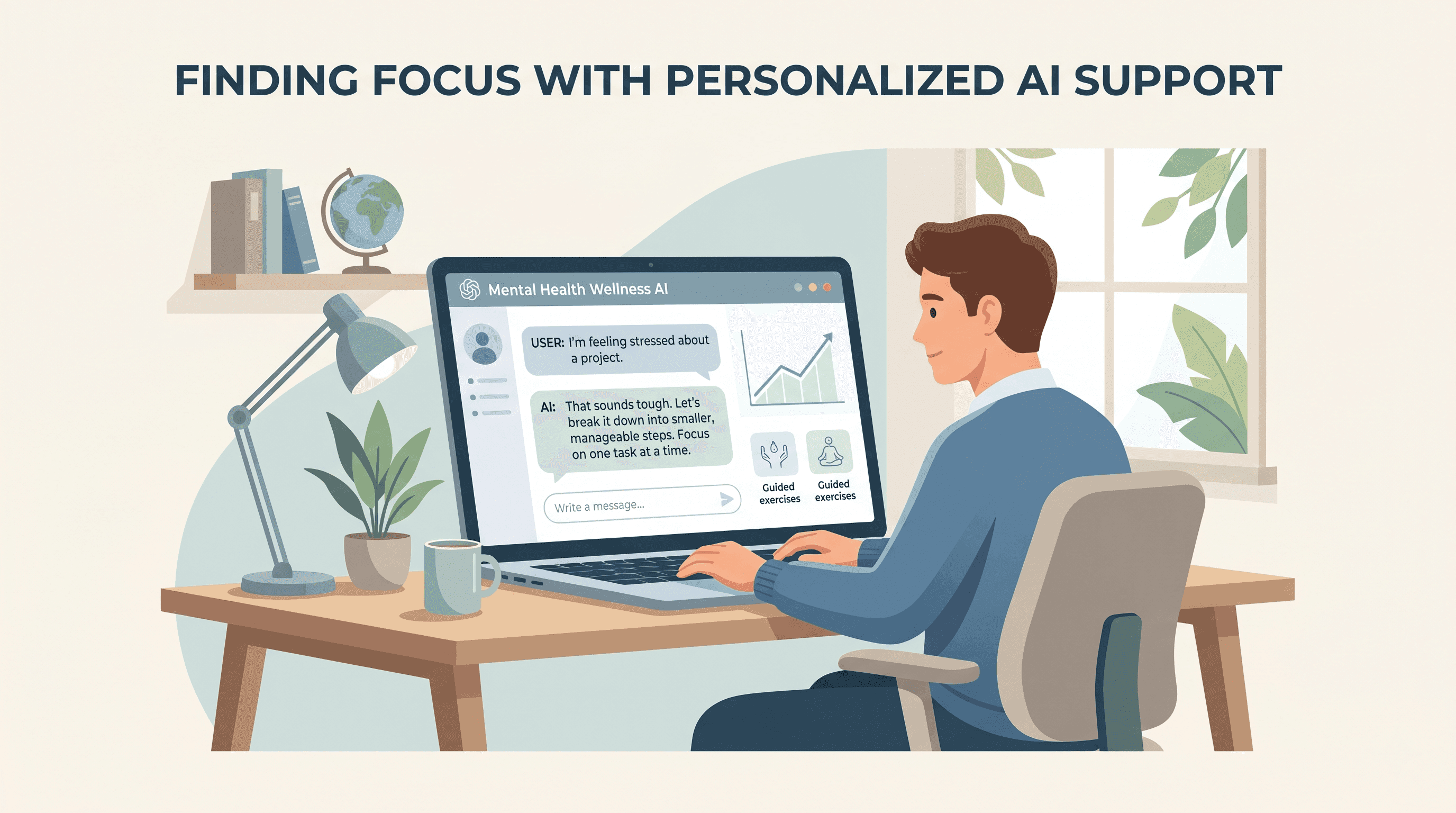
Symptom checkers and AI tools are a useful first filter. They help structure what a user is experiencing, reduce the spiral that comes from open-ended searching, and surface a likely next step. But they are not a substitute for a physician's assessment.
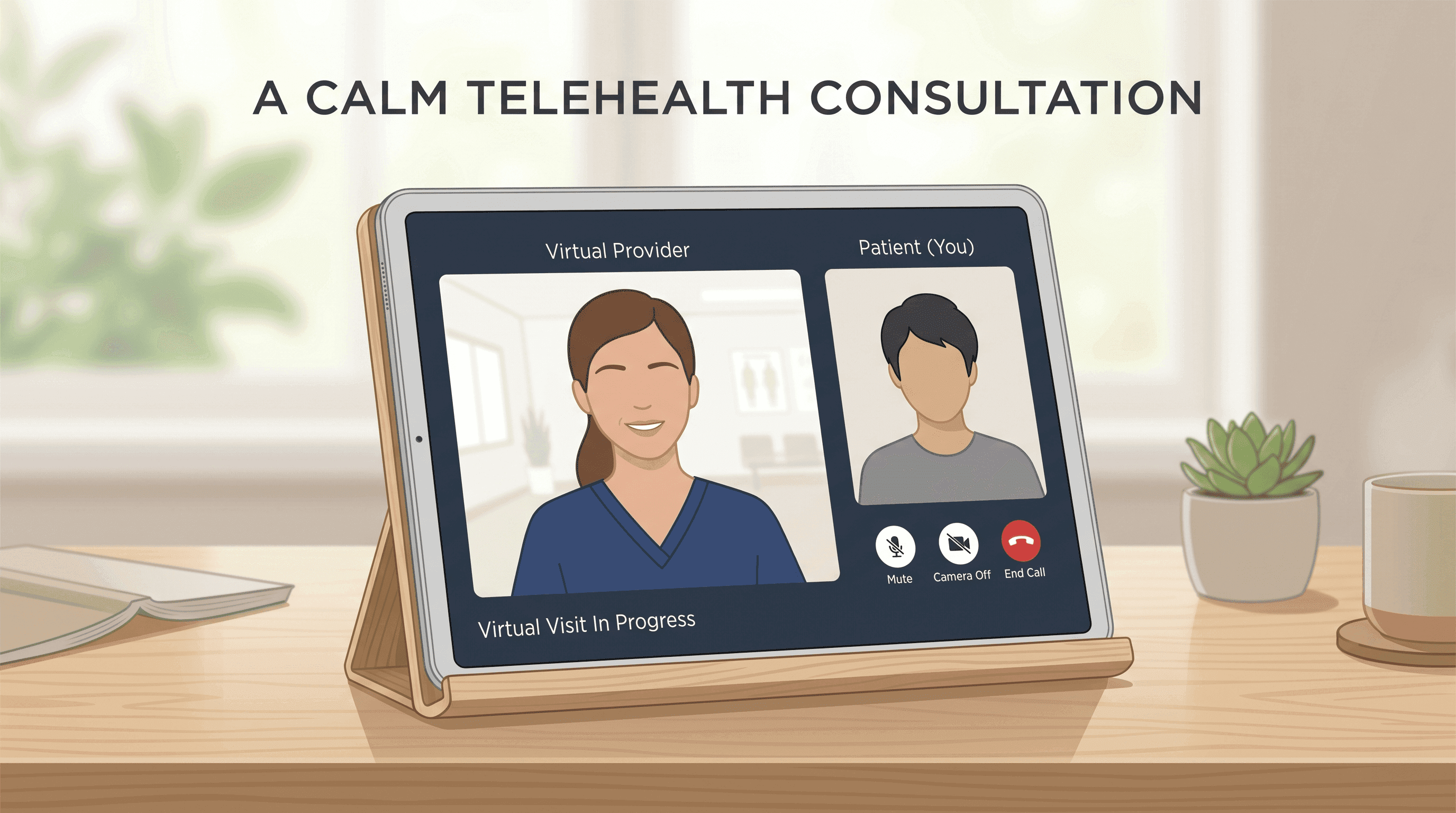
If symptoms persist, worsen, or cause significant concern after using a structured tool, the right move is to connect with a licensed provider. A virtual primary care visit covers the same ground as many in-office appointments: a physician can review a symptom history, ask follow-up questions, and provide a clinical assessment or a referral without a trip to a clinic. For many common concerns, a same-day or next-day virtual visit resolves the question more definitively than any app. If an unusual symptom or a chronic condition feels like it needs real clinical attention, see a doctor online through Momentary Virtual Care without leaving home.
FAQ
What should I do instead of Googling my symptoms?
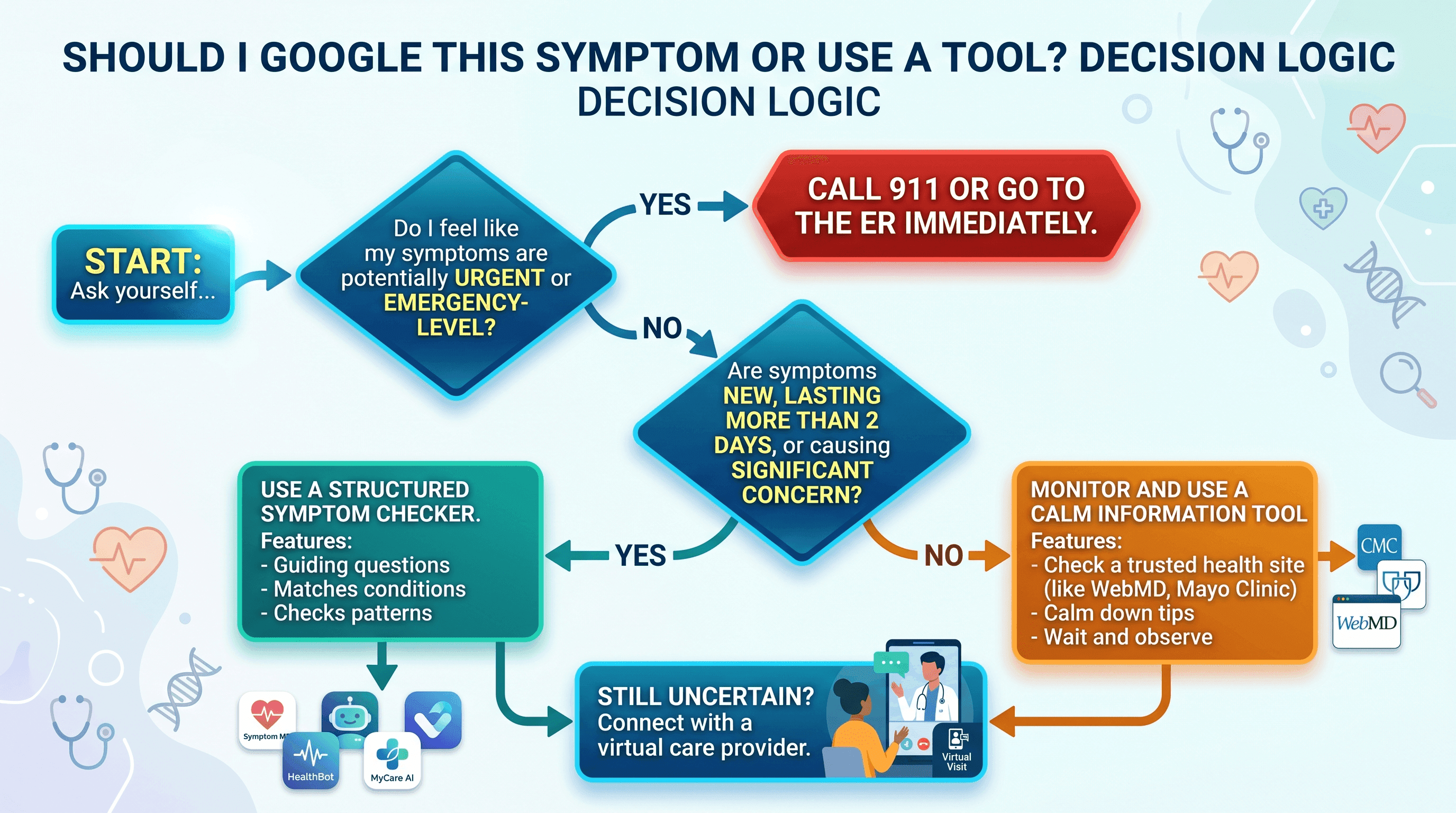
Use a structured symptom checker like Ada Health or Buoy Health instead of a search engine. These tools ask follow-up questions based on your specific answers, which narrows the possible causes and provides a calmer, more personalized result than a search engine returns. If the symptom has been present for more than two days, is getting worse, or is causing significant distress, connecting with a licensed provider through a telehealth platform is a more definitive step than any self-assessment tool.
Is constantly Googling symptoms a sign of OCD or health anxiety?
Repeatedly searching symptoms despite reassurance, or feeling temporarily calmed by a search result only to become anxious again shortly after, is a recognized behavior pattern associated with health anxiety, sometimes called cyberchondria. According to the NIH, cyberchondria describes the escalation of health anxiety through repeated online health searches. Whether it rises to a clinical diagnosis of OCD or health anxiety disorder is something only a licensed mental health professional can determine. If the pattern is interfering with daily life, speaking with a therapist or psychiatrist is a reasonable next step.
How do I stop overthinking my health symptoms?
Switching from open-ended search engines to structured symptom tools is a practical first step because it limits the information a user encounters to what is relevant to their specific symptom profile. Beyond that, the Mayo Clinic notes that health anxiety often involves a cycle of seeking reassurance that provides only temporary relief, so working with a cognitive behavioral therapist can address the underlying cycle more durably than any tool. Physical grounding techniques and a firm rule limiting symptom searches to one structured tool per episode can also reduce the frequency of spiraling.
Is Googling symptoms actually helpful, or does it make things worse?
For most users, unstructured symptom searching on a search engine makes anxiety worse, not better. A Harvard Health analysis noted that search engines surface serious conditions prominently because serious content generates more engagement, not because it is more statistically likely for a given set of symptoms. Structured symptom tools are designed to surface probable causes weighted by clinical frequency, which produces a less alarming result for the same symptom set. For general health education, reputable editorial sources like the CDC and NIH are more reliable than a general search result page.
What is the most accurate free symptom checker?
Among free consumer tools, Ada Health has the strongest published accuracy data: a peer-reviewed study in BMJ Open found Ada placed the correct diagnosis in its top three suggestions in 74% of cases. For users who want to complement an AI tool with physician review, use Momentary's AI health navigator to explore your symptoms with a tool that includes physician oversight at no cost.
When should I see a doctor instead of using a symptom checker?
Symptom checkers are appropriate for symptoms that are new, mild to moderate in severity, and not getting rapidly worse. The CDC advises seeking immediate emergency care for chest pain, difficulty breathing, sudden severe headache, signs of stroke (face drooping, arm weakness, speech difficulty), and other rapidly developing serious symptoms. For anything that has lasted more than a week, is significantly affecting daily function, or involves a chronic condition that is changing, a scheduled visit with a primary care physician is more appropriate than continued self-assessment.
References
- Semigran HL, Linder JA, Gidengil C, Mehrotra A. Evaluation of symptom checkers for self diagnosis and triage. BMJ. 2015;351:h3480.
- Gilbert S, Mehl A, Baluch A, et al. How accurate are digital symptom assessment apps for suggesting conditions and urgency advice? BMJ Open. 2020;10:e040269.
- Starcevic V, Berle D. Cyberchondria: towards a better understanding of excessive health-related Internet use. Expert Rev Neurother. 2013;13(2):205-213.
- Mayo Clinic. Illness anxiety disorder (health anxiety). Symptoms and causes.
- Harvard Health Publishing. Is Googling your symptoms making you sick? 2017.
- Centers for Disease Control and Prevention. When to seek emergency care.
- National Institutes of Health. NIH MedlinePlus: Understanding health information online.


