


Last Updated: July 2026
Best Anxiety Symptom Checker Apps When You Want to Understand Your Symptoms Before Seeking Professional Care
Quick Answer
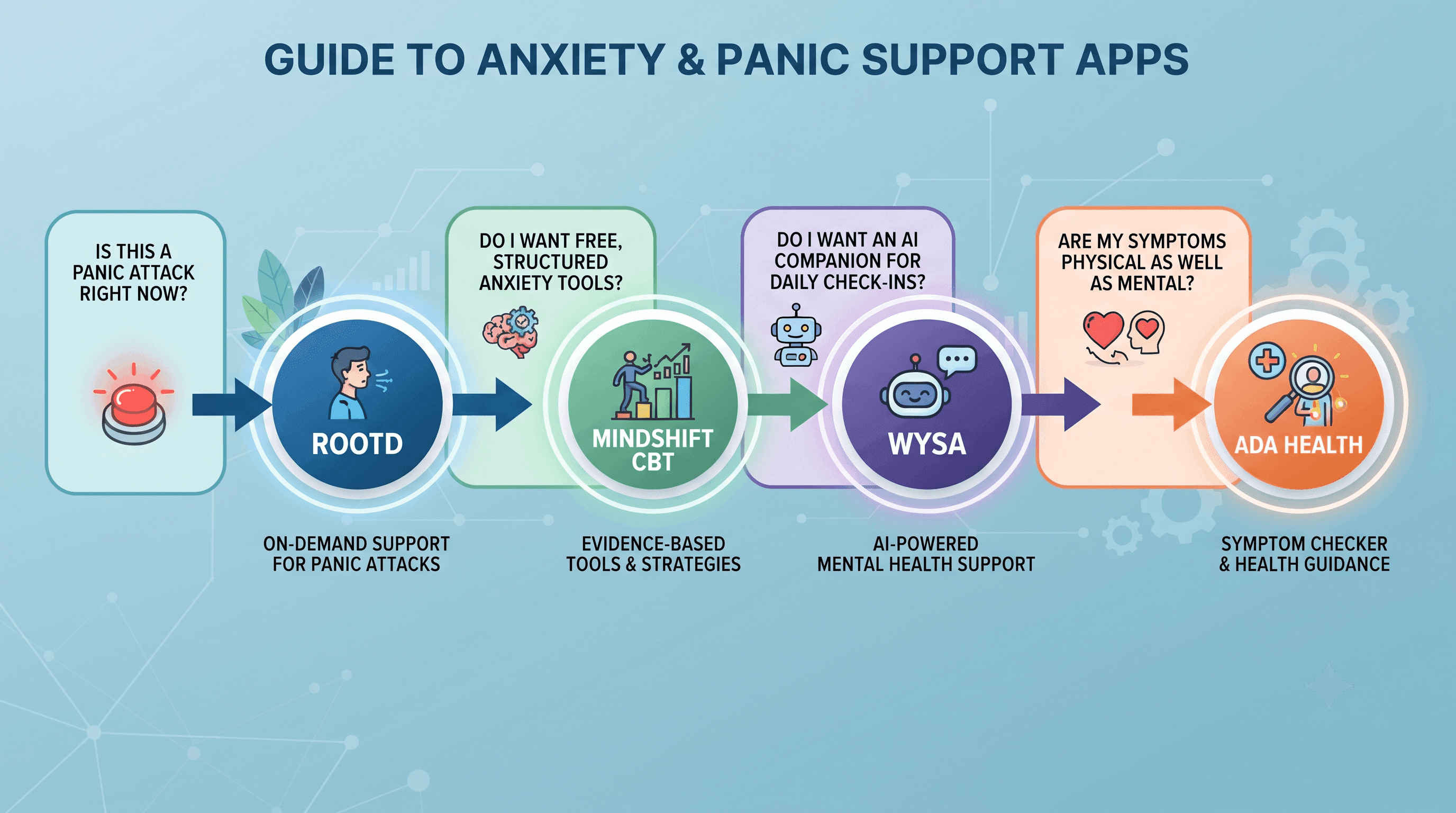
The best anxiety symptom checker app depends on what you need. Wysa is the strongest all-around option for AI-guided symptom check-ins and CBT-based coping tools. MindShift CBT is the best free, clinically developed option built specifically for anxiety. Rootd is the best choice if panic attacks are your main concern. Ada Health is the best general AI symptom checker if your anxiety comes with physical symptoms you want assessed alongside your mental health.
None of these apps diagnose anxiety disorders. They help you track symptoms, learn coping skills, and decide whether it's time to talk to a doctor or therapist. If your anxiety includes thoughts of harming yourself, or you're in crisis, call or text 988 (Suicide & Crisis Lifeline) right away.
Top Picks
| Category | Recommendation |
|---|---|
| Best Overall | Wysa |
| Best Free Option | MindShift CBT |
| Best for Panic Attacks | Rootd |
| Best for Physical + Anxiety Symptoms | Ada Health |
Comparison Table
| App | Best For | Pricing | Clinical Backing | Availability |
|---|---|---|---|---|
| Wysa | AI-guided symptom check-ins and CBT | Free tier; Premium ~$74.99/year | 45+ peer-reviewed studies; used by NHS | iOS, Android, Web |
| MindShift CBT | Free, structured anxiety tools | Free | Developed by Anxiety Canada | iOS, Android |
| Rootd | Panic attacks and acute anxiety | Free tier; Premium ~$69.99/year | Grounding and breathing techniques based on CBT | iOS, Android |
| Ada Health | Broader symptom assessment | Free | Peer-reviewed diagnostic accuracy studies | iOS, Android, Web |
| Headspace | Anxiety-related meditation and sleep | ~$69.99/year or $12.99/month | Founded by a meditation teacher; some published research | iOS, Android, Web |
| Calm | Sleep and stress-linked anxiety | ~$69.99/year or $14.99/month | Limited app-specific research; general mindfulness evidence | iOS, Android, Web |
Pricing reflects standard published rates as of mid-2026 and can change based on promotions or region. Check each app's store listing for current pricing.
Why People Look for Anxiety Symptom Checker Apps
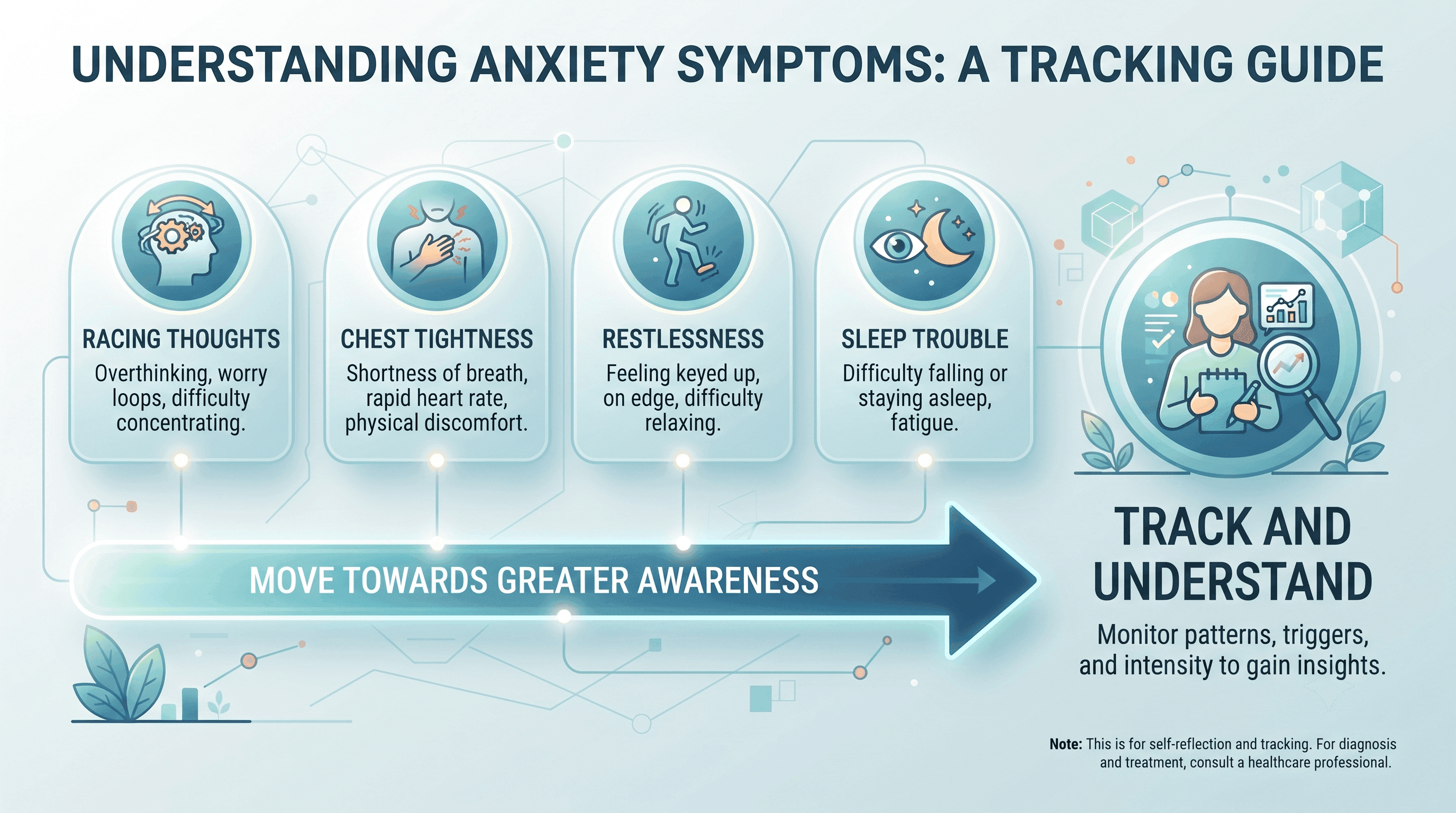
Anxiety shows up differently for different people. Some notice racing thoughts. Others notice a tight chest, a fast heartbeat, or trouble sleeping. Because the physical symptoms can look like other health problems, many people search for a symptom checker before they search for a therapist.
The goal of these apps is usually one of three things: figure out whether what you're feeling is anxiety, get quick relief during a spike, or track patterns over time to bring to a doctor or therapist. None of them replace a clinical evaluation, but the better ones make it easier to describe what's happening when you do see someone.
Ranked Recommendations
1. Wysa
Why it's included: Wysa combines an AI chatbot with structured CBT and DBT exercises, and it has one of the larger published research bases among consumer mental health apps.
Best for: People who want daily, judgment-free check-ins plus the option to add human coaching later.
Strengths: Free core chatbot and exercises. Anonymous by design, no real name required. Backed by more published research than most competitors. Optional paid coaching sessions with a human.
Limitations: The AI can feel repetitive in longer conversations. Full toolkit and human coaching require a paid plan. It does not diagnose or treat any condition.
Pricing: Free tier available. Premium self-care is roughly $74.99 per year; coaching is priced separately per session.
When to choose something else: If you want a completely free, no-subscription tool, MindShift CBT covers similar ground at no cost.
2. MindShift CBT
Why it's included: Built by Anxiety Canada, a nonprofit clinical organization, this is one of the few anxiety apps that is both free and developed specifically around anxiety, not general mental wellness.
Best for: Teens and adults who want structured, no-cost tools for worry, panic, perfectionism, and social anxiety.
Strengths: Completely free with no premium paywall. Built around evidence-based CBT techniques. Includes a "Chill Out" toolkit for in-the-moment anxiety and quick tips for acute situations.
Limitations: No AI chat feature. Simpler interface than paid competitors. No option to add human coaching or therapy through the app.
Pricing: Free.
When to choose something else: If you want a conversational AI experience or ongoing symptom tracking with pattern analysis, Wysa or Ada Health may fit better.
3. Rootd
Why it's included: Rootd is purpose-built for panic attacks, which is where many anxiety symptom searches start (racing heart, chest tightness, feeling unable to breathe).
Best for: People whose anxiety shows up as acute panic attacks or intense physical symptoms.
Strengths: A one-tap "panic button" launches immediate grounding and breathing exercises. Designed around interrupting the panic cycle in real time.
Limitations: Less useful for generalized, ongoing worry. Lighter journaling and tracking features than competitors.
Pricing: Free tier; Premium is roughly $69.99 per year.
When to choose something else: If your anxiety is more of a constant background hum than acute panic episodes, MindShift CBT or Wysa are better matches.
4. Ada Health
Why it's included: Ada is a general AI symptom checker with stronger published accuracy data than most competitors, which matters if your anxiety comes bundled with physical symptoms (fatigue, digestive issues, chest discomfort) you want assessed together.
Best for: People unsure whether their symptoms are anxiety, a physical condition, or both.
Strengths: Peer-reviewed studies have found Ada's diagnostic sensitivity approaches that of emergency physicians for top-list suggestions. Covers physical and mental health symptoms in one assessment.
Limitations: Not built specifically for anxiety management day to day. No ongoing coping tools like breathing exercises or CBT modules.
Pricing: Free.
When to choose something else: If you already know your symptoms are anxiety and want coping tools rather than a broad symptom assessment, choose Wysa, MindShift CBT, or Rootd instead.
5. Headspace
Why it's included: Anxiety and sleep are closely linked, and Headspace's structured meditation courses are frequently recommended by clinicians as a supplementary tool.
Best for: Beginners who want a guided, course-based introduction to managing anxiety through mindfulness.
Strengths: Structured "Basics" course for new meditators. Anxiety-specific content and sleep tools. Family and student pricing available.
Limitations: Not a symptom checker or tracking tool. Free version is limited. Not designed for acute panic symptoms.
Pricing: Roughly $69.99 per year or $12.99 per month, with discounted family and student plans.
When to choose something else: If you need active coping tools during an anxiety spike rather than daily meditation practice, Rootd or Wysa are a better fit.
6. Calm
Why it's included: Calm is one of the most widely used apps for anxiety-linked sleep problems and general stress, though it has less anxiety-specific clinical research than some competitors.
Best for: People whose anxiety mainly disrupts sleep or shows up as general stress rather than acute panic.
Strengths: Large library of sleep stories and soundscapes. Simple, atmosphere-first design. Lifetime purchase option available.
Limitations: Free version is limited. Less structured than Headspace for people who want a step-by-step course. Not built for symptom tracking or acute anxiety relief.
Pricing: Roughly $69.99 per year or $14.99 per month; lifetime option around $399.99.
When to choose something else: If you want structured lessons rather than an open library, Headspace fits better. If you want in-the-moment panic relief, choose Rootd.
Who Should Choose Each Option
- Want a daily AI companion and don't mind a subscription for full access: Wysa
- Want a completely free, clinically developed tool: MindShift CBT
- Having panic attacks right now: Rootd
- Unsure if symptoms are anxiety or something physical: Ada Health
- New to meditation and want structure: Headspace
- Anxiety mainly disrupts your sleep: Calm
If your symptoms are severe, persistent, or affecting your work, relationships, or daily functioning, an app is not a substitute for a licensed mental health professional. A primary care doctor or therapist can properly evaluate your symptoms and discuss treatment options, including therapy or medication.
FAQ
Is there a free anxiety symptom checker app? Yes. MindShift CBT is fully free and built specifically for anxiety. Ada Health, a broader symptom checker, is also free to use.
Can an app diagnose anxiety disorder? No. These apps can help you track and understand symptoms, but only a licensed clinician can diagnose an anxiety disorder.
What's the best app for panic attacks specifically? Rootd is designed specifically around interrupting panic attacks with immediate grounding and breathing tools.
Are anxiety apps covered by insurance? Some are. Certain apps, including Wysa, are offered free through employers, universities, or health plans. Check with your insurer or HR department before paying out of pocket.
Is Wysa or Calm better for anxiety? Wysa is built specifically around CBT-based anxiety and mood support with an AI chatbot. Calm is a broader meditation and sleep app that can help with anxiety-related stress but isn't anxiety-specific.
When should I stop using an app and see a professional? If anxiety is interfering with sleep, work, relationships, or daily functioning, or if it comes with thoughts of self-harm, it's time to talk to a doctor or therapist. If you are in crisis, call or text 988 in the US.
Do these apps work for severe anxiety disorders? Apps are generally most effective for mild to moderate anxiety. Severe anxiety disorders typically need professional treatment, with an app used as a supplement rather than a substitute.


