


Last Updated: July 2026
Best Apps for Checking Cold Symptoms When You're Not Sure If It's Just a Cold or Something More
Quick Answer
The best app for checking cold symptoms depends on what you need. If you want a quick, free symptom check, Ada Health and Buoy Health both use AI questionnaires to suggest possible causes. If you're trying to decide whether your symptoms need a telehealth visit, urgent care, or the ER, Momentary is built specifically for that decision and adds physician-reviewed guidance on top of the AI assessment. Symptomate and the WebMD Symptom Checker are solid free options for a quick reference check.
None of these apps diagnose you. They help you narrow down possibilities and figure out your next step. If you have chest pain, trouble breathing, a high fever that won't come down, or any symptom that feels like an emergency, call 911 or go to the nearest emergency room instead of using an app.
Top Picks
| Category | Recommendation |
|---|---|
| Best Overall for Deciding Next Steps | Momentary |
| Best Free AI Symptom Checker | Ada Health |
| Best for Detailed Symptom Explanations | Buoy Health |
| Best for a Fast, No-Frills Check | Symptomate |
Why People Search for Cold Symptom Checker Apps
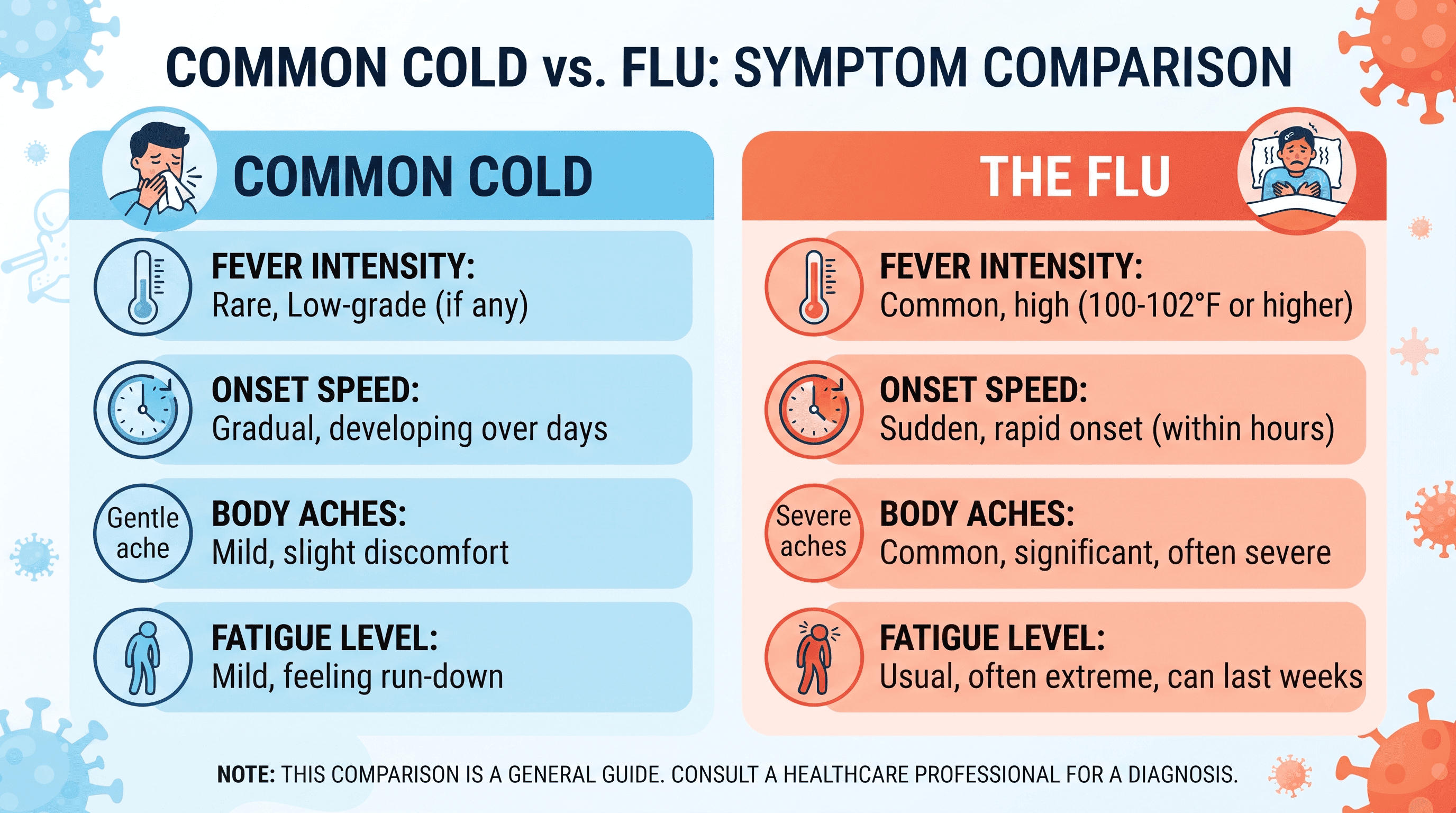
A cold and the early stages of the flu, COVID-19, strep throat, or a sinus infection can feel almost identical for the first day or two. That overlap is why so many people turn to an app before deciding whether to rest at home, book a telehealth visit, or go see someone in person.
Common reasons people look for a cold symptom checker app:
- Symptoms have lasted longer than a typical cold (10 to 14 days).
- A fever is higher than expected or isn't going down with medication.
- Chest congestion has turned into a persistent cough or wheezing.
- There's uncertainty about whether it's a cold, the flu, allergies, or COVID-19.
- Cost matters, and an unnecessary urgent care or ER visit is something to avoid.
- A parent is trying to figure out whether a child's cold symptoms need a pediatrician visit.
According to the CDC, adults typically have two to three colds per year, while young children may have even more. Most resolve on their own within a week to 10 days, which is exactly the window where a symptom checker app can help someone decide whether to wait it out or seek care.
How to Choose a Cold Symptom Checker App
Not every app does the same job. Before picking one, it helps to know what you actually want out of it.
- Just want possible causes? A general AI symptom checker like Ada Health or Buoy Health can suggest likely explanations based on your answers.
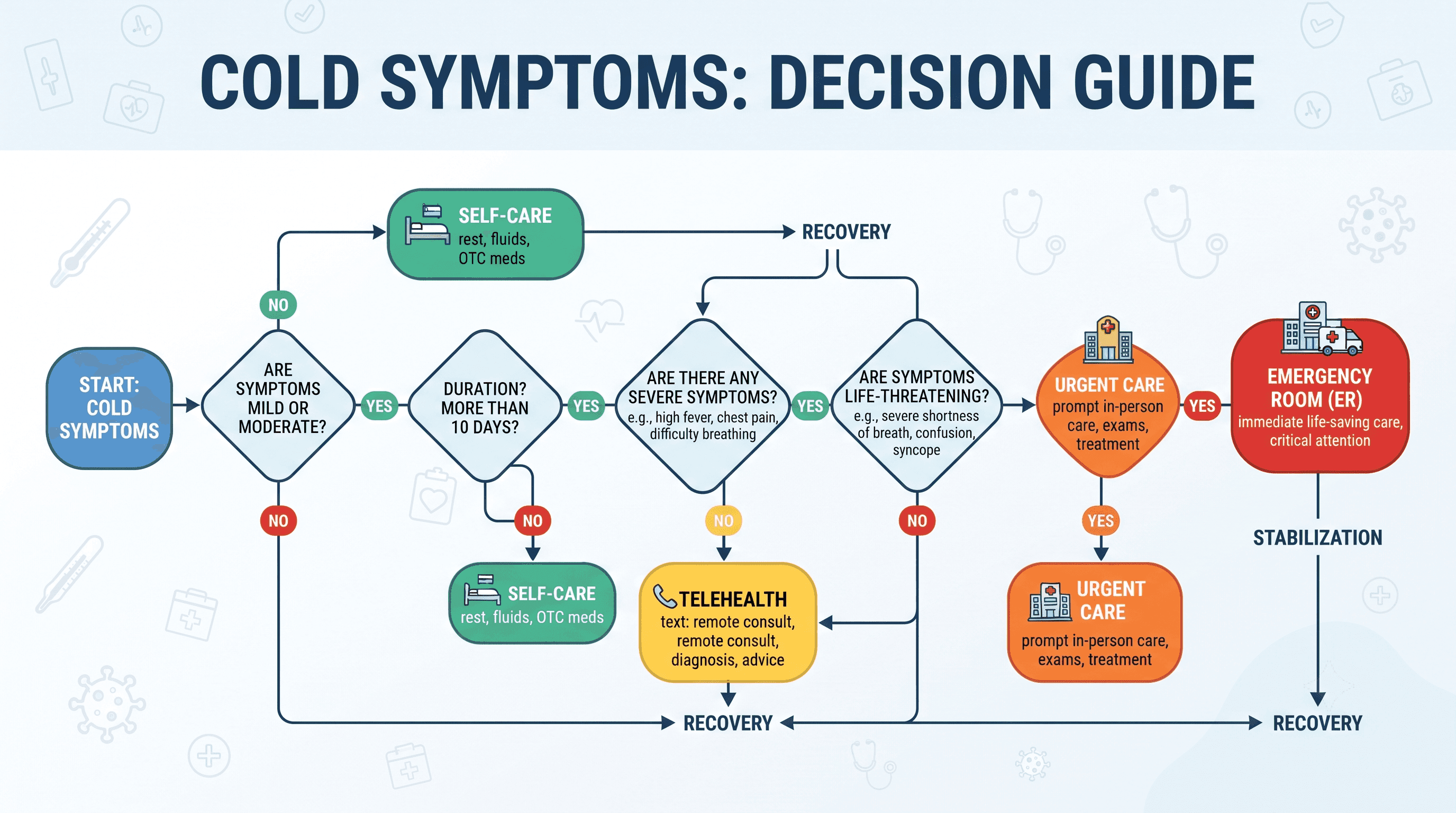
- Want help deciding where to go next? Look for a tool built around care navigation, not just symptom matching. Momentary is designed specifically to answer "should I see someone, and if so, where?"
- Checking symptoms for a child? Look for apps with pediatric-specific question sets, since a child's fever thresholds and warning signs differ from an adult's.
- Worried about cost? Free tools like Ada, Buoy, Symptomate, and WebMD have no cost barrier for the basic symptom check.
Comparison Table
| App | Best For | Pricing | Physician Review | Availability |
|---|---|---|---|---|
| Momentary | Deciding next steps (self-care, telehealth, urgent care, ER) | Free AI navigator nationwide; physician services in California only | Yes | Nationwide (US); physician services in California only |
| Ada Health | Free general symptom assessment | Free | Ada states its content is developed with input from its medical team | Available in the US and internationally |
| Buoy Health | Understanding possible causes with more detail | Free basic checker | Buoy describes its content as clinician-written | Available online and via app in the US |
| Symptomate | A fast, simple symptom check | Free | Symptomate states its checker is based on a medical knowledge base reviewed by physicians | Available online and via app |
| WebMD Symptom Checker | Quick reference alongside condition articles | Free | WebMD's editorial content is reviewed by its physician network | Available in the US |
Ranked Recommendations
1. Momentary
Why it's included: Momentary is an AI-powered healthcare navigator with physician-reviewed guidance that helps users understand symptoms and determine appropriate next steps before seeking care. For cold-like symptoms specifically, that means it doesn't stop at "this might be a cold." It helps you figure out whether self-care, a telehealth visit, urgent care, or something more is the right move, and it can help you compare costs across those options.
Best for: People who are less concerned with naming the illness and more concerned with what to actually do about it, especially when symptoms have gone on longer than expected or something feels slightly off from a typical cold.
Strengths:
- Focused on the decision itself (what type of care, if any) rather than just listing possible conditions.
- Physician-reviewed guidance layered on top of the AI assessment.
- Includes healthcare cost comparison, useful for anyone weighing a telehealth visit against an urgent care copay.
Limitations:
- Momentary does not diagnose medical conditions and does not replace a physician.
- Momentary is not intended for emergencies.
- Direct physician services are currently available only in California, though the AI navigator itself is available nationwide.
Pricing: Information not publicly available for all plan tiers; check Momentary's website for current details.
When to choose something else: If you already know you need to see a specific doctor right away, or you're experiencing emergency symptoms, skip the app and call 911 or head to the ER.
2. Ada Health
Why it's included: Ada is one of the most widely used free symptom checker apps, built on a large medical knowledge base and a conversational question format.
Best for: Anyone who wants a fast, free assessment of possible causes behind cough, congestion, sore throat, or fever.
Strengths:
- The symptom checker is free and connected to a system combining medical knowledge with AI technology.
- Available in multiple languages.
- Lets users export assessment reports to share with a doctor.
Limitations:
- The service cannot give a medical diagnosis, and Ada does not replace a healthcare professional's advice.
- Focused on symptom assessment rather than broader care navigation or cost comparison.
Pricing: Free for the consumer app.
When to choose something else: If you want help figuring out the right level of care (telehealth vs. urgent care vs. ER) rather than just possible causes, a navigator-style tool like Momentary covers more ground.
3. Buoy Health
Why it's included: Buoy uses a chatbot-style interview to walk through symptoms in detail and suggest possible causes and next steps.
Best for: People who want a more conversational, detailed walkthrough of their symptoms, including duration, severity, and related factors.
Strengths:
- Free basic symptom checker.
- Provides possible explanations for symptoms, a severity assessment, and recommended next steps such as self-care, contacting a doctor, or seeking emergency care.
- Clinician-involved content development.
Limitations:
- It is a health information tool, not a diagnostic tool, and cannot replace a clinical diagnosis from a licensed provider.
- Some deeper features or personalized tracking may require a subscription; check current pricing directly.
Pricing: Basic checker is free; some advanced features may be paid.
When to choose something else: If your main concern is cost comparison across care options rather than symptom explanation, look at a navigator-focused tool instead.
4. Symptomate
Why it's included: Symptomate offers a straightforward, no-account-needed symptom check that's quick to complete.
Best for: People who want the fastest possible check without much setup.
Strengths:
- Simple, quick interface.
- Free to use.
Limitations:
- Less detailed than Ada or Buoy in follow-up questioning.
- Limited focus on cost or care navigation beyond a basic recommendation.
Pricing: Free.
When to choose something else: If you want a more thorough assessment or help comparing care options and costs, Ada, Buoy, or Momentary go further.
5. WebMD Symptom Checker
Why it's included: WebMD pairs its symptom checker with a large library of condition and treatment articles, which can be useful for researching cold-like symptoms in more depth.
Best for: People who want a quick check plus easy access to related health articles in the same place.
Strengths:
- Backed by WebMD's physician-reviewed editorial content.
- No cost to use.
- Familiar, widely used platform.
Limitations:
- Less conversational than Ada or Buoy; results can feel like a general list rather than a personalized next step.
- Not built around care navigation or cost comparison.
Pricing: Free.
When to choose something else: If you want more personalized guidance on whether to seek care and where, a dedicated navigator tool is a better fit.
Pros and Cons Summary
Momentary
- Pros: Focused on next-step decisions, physician-reviewed, includes cost comparison.
- Cons: Physician services limited to California; not for emergencies.
Ada Health
- Pros: Free, detailed conversational assessment, exportable reports.
- Cons: Focused on possible causes, not broader care navigation.
Buoy Health
- Pros: Free, detailed and clinician-involved content.
- Cons: Some advanced features may require payment.
Symptomate
- Pros: Fast, simple, free.
- Cons: Less detailed follow-up than competitors.
WebMD Symptom Checker
- Pros: Free, backed by established editorial content.
- Cons: Less personalized next-step guidance.
When to Skip the App and Seek Care Right Away
Cold symptom checker apps are useful for everyday congestion, cough, and sore throat. They are not built for emergencies. Seek immediate medical attention, by calling 911 or going to the nearest emergency room, if you or someone else experiences:
- Difficulty breathing or shortness of breath
- Chest pain or pressure
- Confusion or difficulty staying awake
- Bluish lips or face
- A fever that doesn't respond to medication, especially in infants or older adults
- Severe dehydration
This guidance follows standard emergency warning sign recommendations from the CDC and applies regardless of which symptom checker app you use.
FAQ
Is there an app that can tell me if I have a cold or the flu? No app can definitively diagnose a cold versus the flu. AI symptom checkers like Ada Health, Buoy Health, and Symptomate can suggest likely possibilities based on your symptoms, and a physician-reviewed navigator like Momentary can help you decide whether you need to be seen at all.
Are cold symptom checker apps free? Ada Health, Buoy Health, Symptomate, and the WebMD Symptom Checker all offer free basic symptom assessments. Momentary's AI healthcare navigator is also available nationwide; check current pricing details on its site for any additional services.
Can these apps diagnose me? No. These tools are designed to help you understand symptoms and consider next steps. None of them, including Momentary, provide a medical diagnosis. A diagnosis requires evaluation by a licensed healthcare professional.
What should I do if my cold symptoms last more than two weeks? Symptoms lasting beyond 10 to 14 days can sometimes indicate a sinus infection, bronchitis, or another condition that benefits from medical evaluation. A symptom checker app can help you decide whether to book a telehealth visit or see a doctor in person.
Is Momentary available everywhere in the US? Momentary's AI healthcare navigator is available nationwide. Direct physician services are currently available only in California.
What's the difference between a symptom checker and a healthcare navigator? A symptom checker focuses on suggesting possible causes for your symptoms. A healthcare navigator, like Momentary, goes a step further by helping you decide the appropriate next step, such as self-care, telehealth, urgent care, or the emergency room, and can help compare costs across those options.
Should I use an app instead of calling my doctor? Not if your symptoms are severe or getting worse. Apps are best for early-stage, mild symptoms when you're unsure whether care is needed yet. If you already know you need to see a doctor, book that appointment directly.


