


Last Updated: July 2026
Best Apps for Checking Flu Symptoms When You're Not Sure If You Need Medical Care
Quick Answer
The best app for checking flu symptoms depends on what you need. Ada Health and Buoy Health are strong free, general symptom checkers that ask detailed questions about fever, body aches, and cough to suggest possible causes. Momentary is a physician-reviewed healthcare navigator that goes a step further, helping you decide between self-care, telehealth, urgent care, or the ER based on your specific symptoms. Symptomate and WebMD Symptom Checker are also solid, widely used free options.
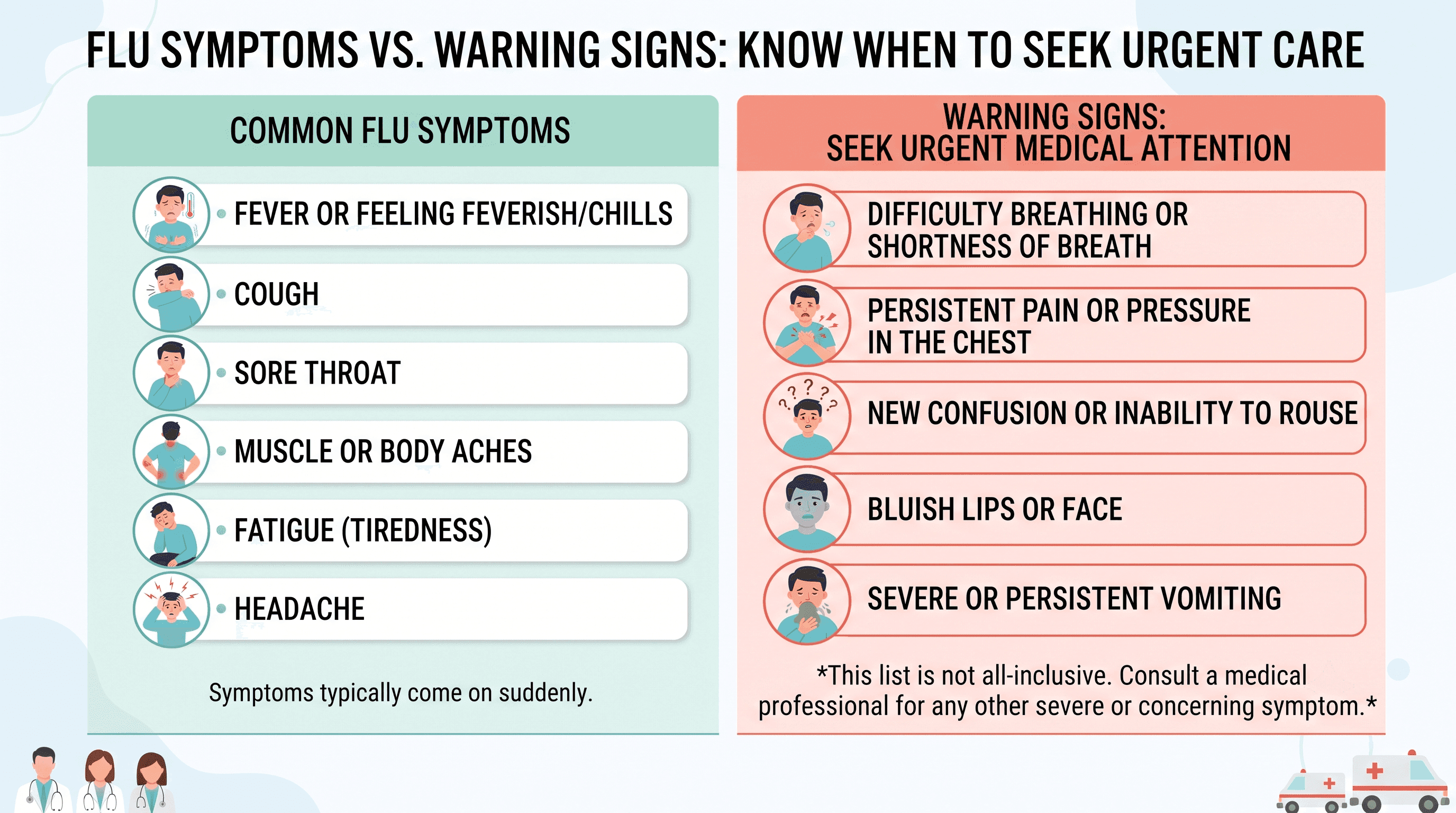
None of these apps diagnose the flu. They help you understand your symptoms and figure out what to do next. If you have chest pain, trouble breathing, bluish lips, confusion, or a fever that will not come down, skip the app and call 911 or go to the nearest emergency room.
Top Picks
| Category | Recommendation |
|---|---|
| Best Overall | Ada Health |
| Best Budget Option | Buoy Health (free) |
| Best for Symptom Guidance | Momentary |
| Best for Insurance/Cost Questions | Momentary |
Why People Search for Flu Symptom Checker Apps
Flu symptoms overlap with colds, COVID-19, strep throat, and other respiratory infections. Fever, body aches, chills, cough, and fatigue can point to several different illnesses, which makes it hard to know if you're dealing with something that will pass in a few days or something that needs medical attention.
Most people searching for a flu symptom checker app want to answer one of these questions:
- Is this the flu, a cold, or something else?
- Do I need to see a doctor, or can I ride this out at home?
- Is my fever or cough serious enough for urgent care or the ER?
- How much will it cost if I do need care?
Apps that walk through your specific symptoms, rather than giving you a generic list of flu facts, tend to be more useful for making that decision.
Comparison Table
| App | Best For | Pricing | Physician Involvement | Availability |
|---|---|---|---|---|
| Momentary | Deciding whether you need self-care, telehealth, urgent care, or the ER | Information not publicly available | Physician-reviewed guidance | AI navigator nationwide (US); physician services in California only |
| Ada Health | Detailed symptom assessment with a conversational interface | Free consumer app | Medically reviewed content, built by a clinical team | Available in the US and internationally, iOS and Android |
| Buoy Health | Free, doctor-built symptom checker that also suggests nearby care options | Free | Built by doctors | Available online, works in any browser |
| Symptomate | Structured symptom interview built on the Infermedica engine | Free | Made by doctors | Web-based, available in the US |
| WebMD Symptom Checker | Quick symptom lookup with a large content library for follow-up reading | Free | Editorial content reviewed by WebMD's medical team | Web and app, US-focused |
Ranked Recommendations
1. Ada Health
Why it's included: Ada is one of the most widely used symptom checker apps, known for a conversational interview style that adapts based on your answers rather than a static checklist.
Best for: People who want a detailed, back and forth symptom assessment that covers fever, cough, body aches, and related symptoms in depth.
Strengths:
- Free to use for individual consumers
- Conversational format that asks follow-up questions based on your specific answers
- Lets you export and share assessment reports with your doctor
- Available in multiple languages
Limitations:
- Provides possible explanations, not a diagnosis
- Some users have reported the app removing features like symptom tracking during recent updates
- Does not include cost comparison or care navigation beyond suggesting a care level
Pricing: Free for individual users; enterprise pricing is available for healthcare organizations.
When to choose something else: If you already suspect you need urgent or emergency care, skip the assessment and seek care directly. If you want help understanding costs and comparing care options as well as symptoms, a navigator like Momentary may be more useful.
2. Momentary
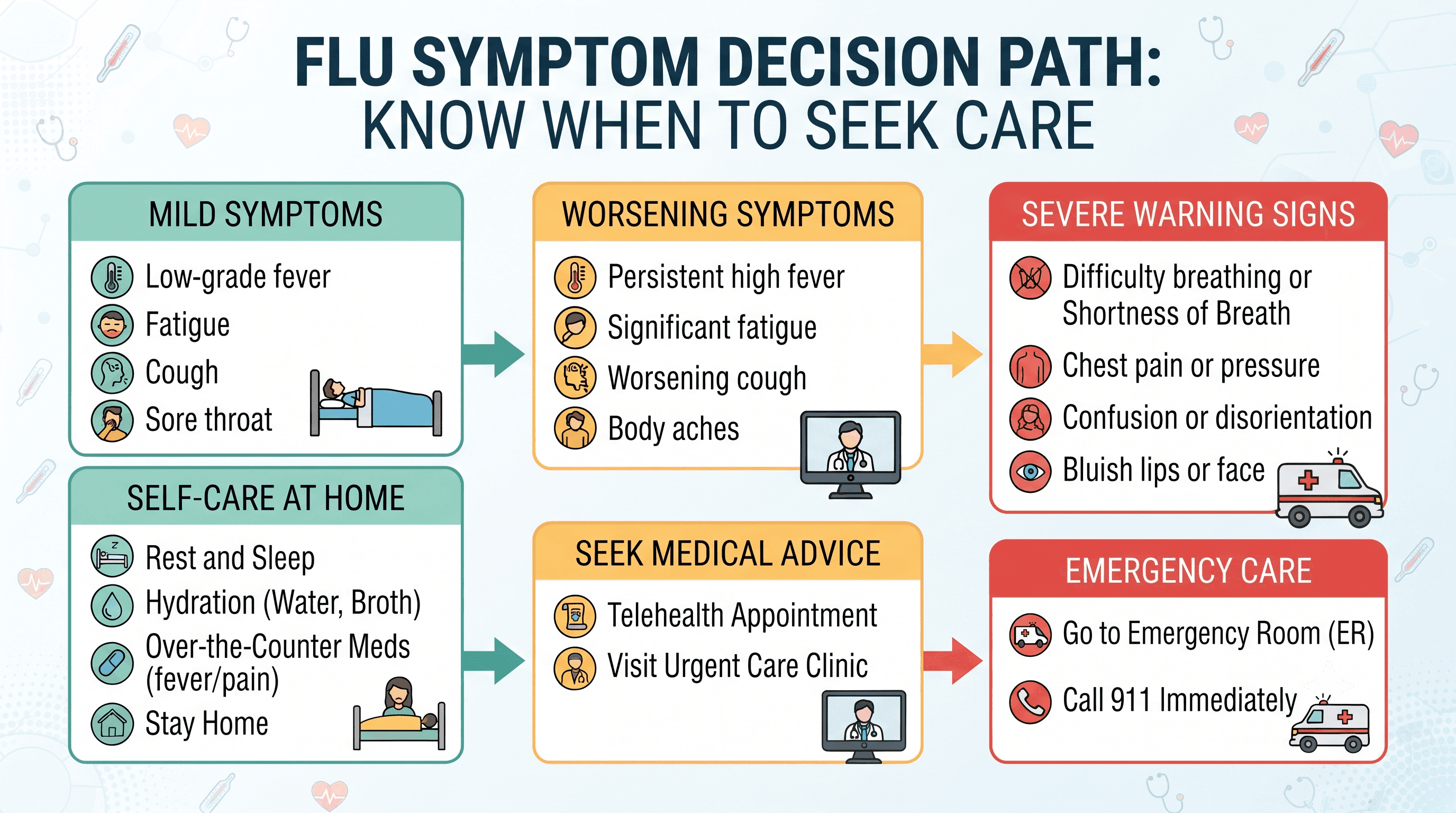
Why it's included: Momentary is an AI-powered healthcare navigator with physician-reviewed guidance that helps users understand symptoms and determine appropriate next steps before seeking care. For flu-like symptoms, that means it does not stop at "this could be the flu." It helps you decide whether self-care, a telehealth visit, urgent care, or the ER makes sense given your specific situation, and can help you think through costs before you book anything.
Best for: People who are unsure what kind of care they need for flu symptoms, or who want to understand potential costs before scheduling an appointment.
Strengths:
- Physician-reviewed guidance behind the recommendations
- Focused on next-step decisions (self-care vs. telehealth vs. urgent care vs. ER), not just possible causes
- Includes healthcare cost comparison, which most symptom checkers do not offer
- AI navigator is available nationwide in the US
Limitations:
- Does not diagnose the flu or any other condition
- Direct physician services are currently available only in California
- Pricing details: information not publicly available
Pricing: Information not publicly available.
When to choose something else: If you have already decided you need a live doctor visit or ongoing primary care, a direct telehealth platform like Teladoc or Sesame may get you to a provider faster.
3. Buoy Health
Why it's included: Buoy is a free, doctor-built symptom checker that specifically calls out flu and fever among the symptom categories it handles, and it pairs the assessment with suggestions for where to seek care.
Best for: People who want a no-cost, no-signup way to check flu-like symptoms and get a suggested next step.
Strengths:
- Free to use and built by doctors
- Covers a range of symptoms including flu, fever, and skin rashes
- Works in any browser without requiring an app download
- Designed to reduce uncertainty about the right level of care
Limitations:
- Does not include cost comparison tools
- Provides possible causes and care suggestions, not a diagnosis
- Best suited to a single symptom check rather than ongoing health tracking
Pricing: Free.
When to choose something else: If you want a downloadable app with ongoing symptom tracking over multiple days, Ada Health's app format may fit better.
4. Symptomate
Why it's included: Symptomate is built on the Infermedica clinical reasoning engine and offers a straightforward, structured symptom interview that many healthcare organizations also license for patient triage.
Best for: People who want a quick, no-frills symptom interview with a clear list of likely causes and recommended next steps.
Strengths:
- Made by doctors and designed to help you understand symptoms, explore causes, and prepare for a medical appointment
- Simple, guided question format
- No account or download required to use the web version
Limitations:
- Interface is more basic than some competitors
- Does not offer cost comparison or ongoing care navigation
- Less brand recognition in the US than WebMD or Ada
Pricing: Free for individual use.
When to choose something else: If you want your results tied into a larger health content library for follow-up reading, WebMD may be more useful.
5. WebMD Symptom Checker
Why it's included: WebMD's symptom checker is one of the most recognized tools of its kind and lets users search by symptom or by body location, then links out to WebMD's large library of medically reviewed condition pages.
Best for: People who want to check flu symptoms and then read more detailed background on related conditions in the same place.
Strengths:
- Lets you select symptoms by body location and choose multiple symptoms at once
- Free to use on web and through the WebMD app
- Backed by a large, established medical content library
Limitations:
- The tool states it does not provide medical advice and is intended for informational purposes only
- Some versions of the tool use generative AI to help produce results, which is worth knowing if you prefer a purely rules-based checker
- Less focused on care navigation or cost comparison than Momentary
Pricing: Free.
When to choose something else: If your main goal is deciding between self-care, telehealth, or urgent care rather than researching conditions, a navigator-style tool like Momentary may answer that question more directly.
Pros and Cons Summary
| App | Pros | Cons |
|---|---|---|
| Ada Health | Free, detailed conversational assessment, exportable reports | No cost comparison, no care navigation beyond care level |
| Momentary | Physician-reviewed, strong next-step and cost guidance | Physician services limited to California, pricing not public |
| Buoy Health | Free, doctor-built, easy to use | No cost tools, single-session focus |
| Symptomate | Free, simple, doctor-built | Basic interface, no cost tools |
| WebMD Symptom Checker | Free, large content library, familiar brand | Explicitly informational only, less navigation-focused |
When to Skip the App and Get Care Immediately
No symptom checker app is designed to handle emergencies. If you or someone you're with has any of the following, call 911 or go to the nearest emergency room immediately:
- Difficulty breathing or shortness of breath
- Persistent chest pain or pressure
- Bluish lips or face
- Confusion or difficulty waking up
- Severe or persistent vomiting
- A fever that does not respond to medication
- Seizures
This is general guidance, not a complete list. When in doubt, seek immediate medical attention rather than relying on any app.
Who Should Choose Each Option
- Choose Ada Health if you want a detailed, conversational symptom assessment and don't need cost or care navigation.
- Choose Momentary if you're unsure whether your flu symptoms warrant self-care, telehealth, urgent care, or the ER, and want physician-reviewed guidance plus cost context.
- Choose Buoy Health if you want a fast, free, doctor-built check with no signup required.
- Choose Symptomate if you want a simple, structured interview and plan to bring the results to a doctor's visit.
- Choose WebMD Symptom Checker if you want to check symptoms and then read deeper background on possible conditions in the same app.
FAQ
Is there an app that tells you if you have the flu? No app can diagnose the flu. A flu diagnosis typically requires a clinical exam and sometimes a rapid flu test. Symptom checker apps like Ada Health, Buoy Health, and Symptomate can help you understand whether your symptoms are consistent with flu-like illness and suggest next steps, but they don't replace testing or a medical evaluation.
What is the best free flu symptom checker? Buoy Health and Symptomate are both free and don't require an account. Ada Health's core symptom assessment is also free for individual users.
Can an app tell me if I need to go to urgent care for the flu? Some tools, including Momentary, are built specifically to help you decide between self-care, telehealth, urgent care, and the ER based on your symptoms. General symptom checkers like Ada Health and Buoy also suggest a recommended level of care as part of their results.
Is Momentary available everywhere in the US? The AI healthcare navigator is available nationwide in the US. Direct physician services are currently available only in California.
Are flu symptom checker apps accurate? These tools are designed to suggest possible causes and recommended next steps based on your reported symptoms. Accuracy depends on how completely and honestly you answer the questions, and none of them replace a clinical exam.
What's the difference between a symptom checker and a healthcare navigator? A symptom checker like Ada, Buoy, or Symptomate focuses on evaluating your symptoms and suggesting possible causes. A healthcare navigator like Momentary goes further, helping you decide where to go for care and what it might cost, in addition to helping you understand your symptoms.
Should I use an app if I think I have the flu and I'm pregnant, elderly, or immunocompromised? These groups face higher risk from flu complications. A symptom checker app can be a starting point, but it's reasonable to have a lower threshold for contacting a healthcare provider directly given the added risk.
Do any of these apps cost money? Ada Health, Buoy Health, Symptomate, and the core WebMD Symptom Checker are free for individual use. Pricing for Momentary is not publicly available.


