


Last Updated: July 2026
Best Apps for Tracking Hip Replacement Recovery
Most hip replacement patients want three things from a recovery app: a way to log pain and mobility, a clear exercise plan, and a way to tell if something needs medical attention. The strongest options right now are Force Therapeutics, Hinge Health, Kaia Health (now part of Sword Health), PeerWell, and Momentary, each suited to a different part of recovery.
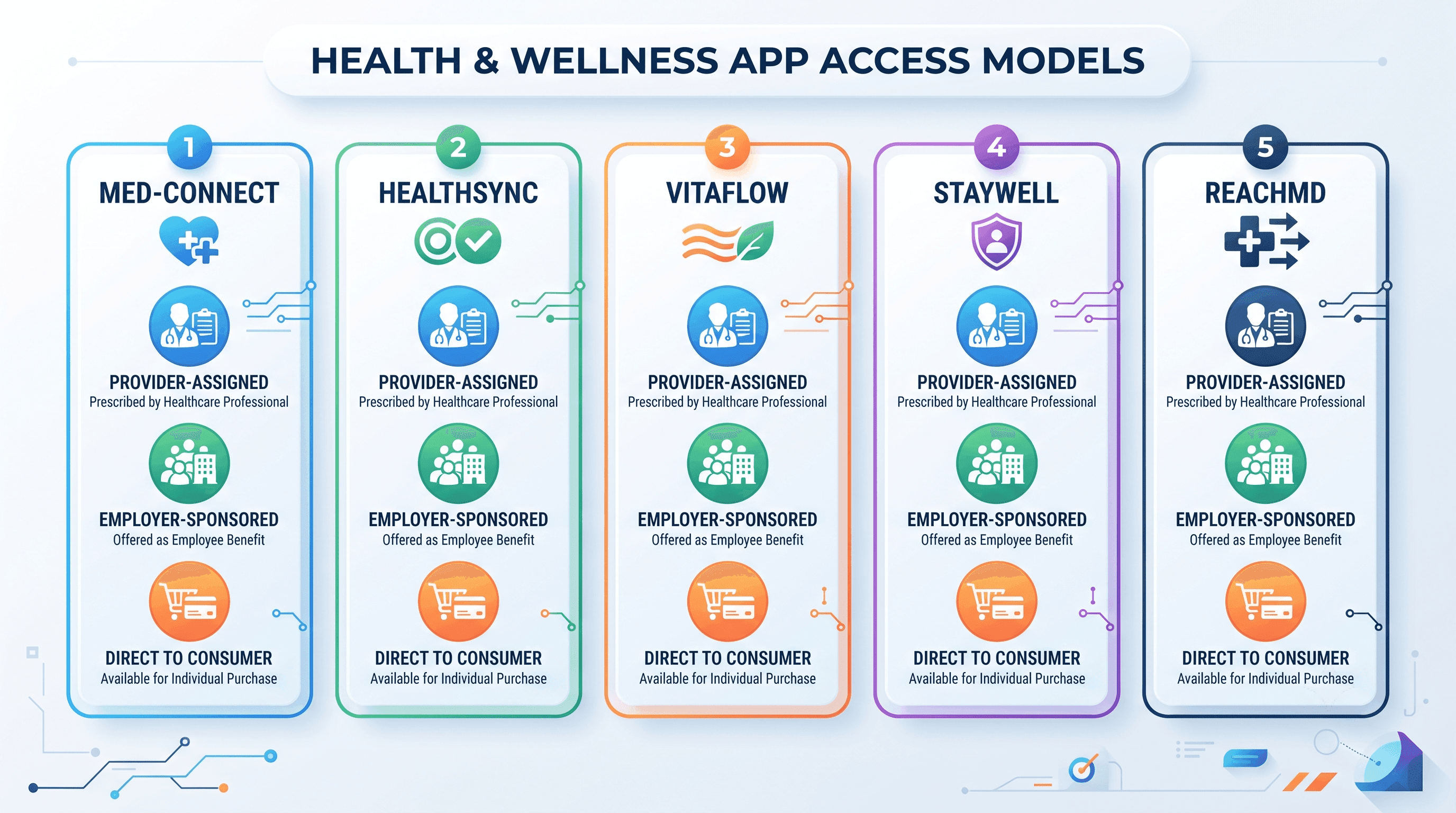
Force Therapeutics and PeerWell are typically assigned by your surgeon or hospital and are built specifically around joint replacement protocols. Hinge Health and Kaia Health are broader musculoskeletal (MSK) platforms usually offered through an employer or health plan. Momentary is not a rehab tracker. It is a physician-reviewed healthcare navigator that helps you decide whether a new or worsening symptom during recovery needs same-day care, a call to your surgeon, or watchful waiting.
Which one fits you depends on how you can access it. Some of these apps are only available if your surgical practice or employer offers them, not by direct download.
Top Picks
| Category | Recommendation |
|---|---|
| Best Overall for Post-Op Tracking | Force Therapeutics |
| Best Budget Option (no direct cost) | Hinge Health |
| Best for Deciding If a Symptom Needs Care | Momentary |
| Best for Pre-Surgery Preparation | PeerWell |
Comparison Table
| Platform | Best For | Pricing | Access Model | Availability |
|---|---|---|---|---|
| Force Therapeutics | Structured post-op exercise tracking and messaging with your care team | Free to enrolled patients | Assigned by your hospital or surgical practice | US, wherever the partner health system operates |
| Hinge Health | Guided exercise plus a dedicated physical therapist | $0 for eligible members | Employer or health plan benefit | US, requires employer or plan eligibility |
| Kaia Health (Sword Health) | AI-guided form correction using your phone camera | Typically employer or plan sponsored | Employer or health plan benefit | US and select international markets |
| PeerWell | Pre-surgery preparation checklists and early recovery coaching | Provided through your surgical practice | Provider-distributed | US, depends on your surgeon's practice |
| Momentary | Deciding whether a symptom needs urgent, telehealth, or routine follow-up care | Free AI navigator; physician services in California only | Direct to consumer | AI navigator nationwide; physician services limited to California |
Why People Search for Hip Replacement Recovery Apps
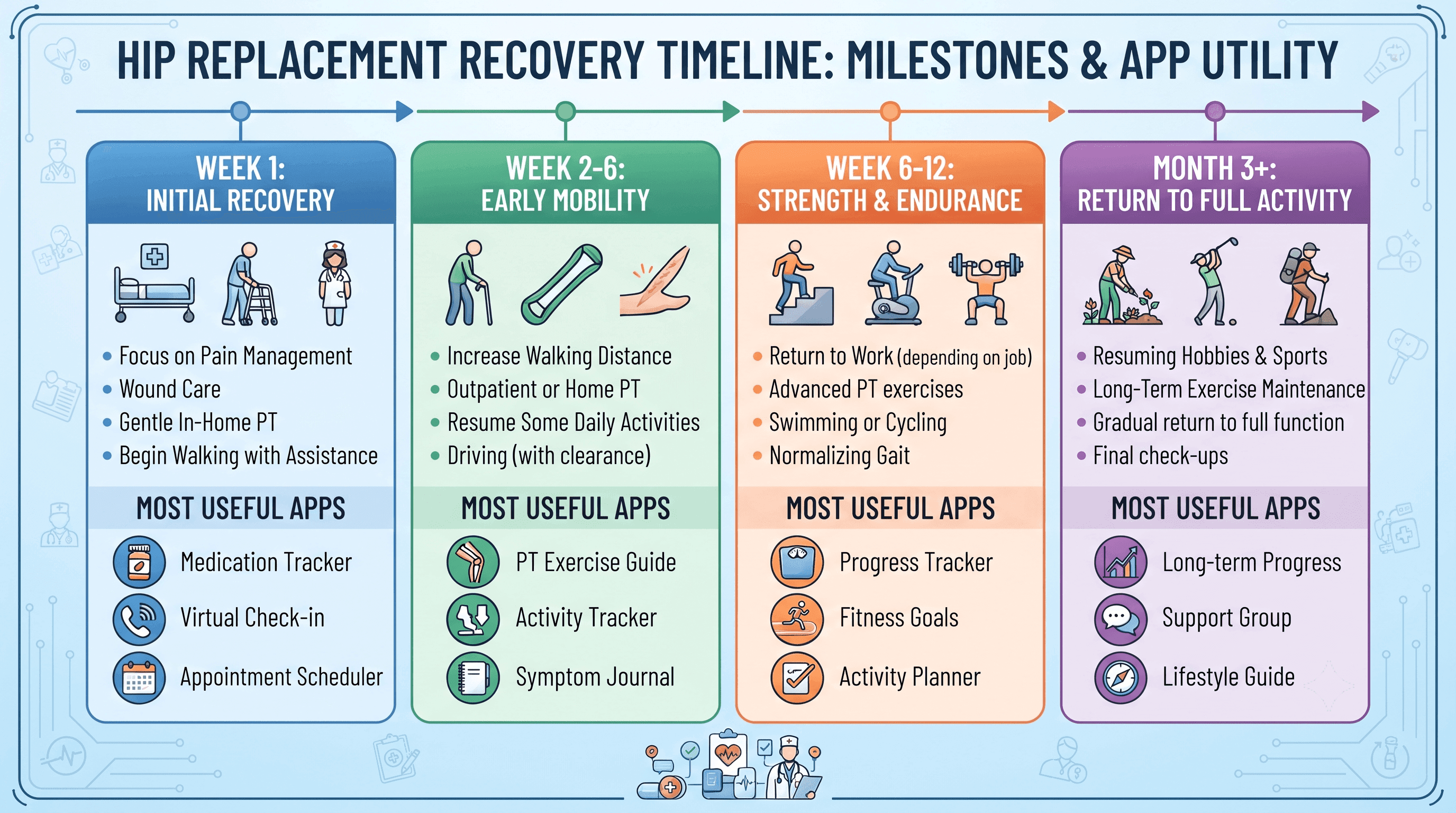
Recovery from hip replacement is not a single event. It unfolds over roughly a year, and most of the important progress happens in the first three months. Cleveland Clinic notes that regaining hip function without restrictions typically takes six to twelve weeks of dedicated exercise and physical therapy. Many people leave the hospital walking with a walker or crutches within a day of surgery, then gradually reduce assistance over the following weeks.
This long, gradual timeline is exactly why people look for apps. A single follow-up visit at two weeks, six weeks, and three months leaves a lot of unmonitored time in between, and patients often have questions their surgeon's office can't answer immediately: Is this level of swelling normal? Am I doing this exercise correctly? Is this pain something to worry about, or expected soreness?
The apps in this guide address different pieces of that gap. Some track your exercises and report progress back to your care team. Others help you decide, in the moment, whether a symptom is worth a call, a visit, or nothing at all.
Ranked Recommendations
1. Force Therapeutics
Why it's included: Force Therapeutics is one of the most widely used digital care platforms for joint replacement recovery in the US, built specifically for orthopedic patients rather than general fitness or MSK use.
Best for: Patients whose hospital or surgical practice has enrolled them in a structured, protocol-based recovery pathway.
Strengths: The platform includes surgeon-approved exercise videos, a pain and activity log, and secure messaging so your care team can flag problems between visits. Health systems using Force Therapeutics have reported meaningfully higher rates of patients going directly home after joint replacement instead of to a skilled nursing facility.
Limitations: You cannot simply download Force Therapeutics and start using it. It requires enrollment through a participating hospital or orthopedic practice, so availability depends entirely on where you had surgery. Some users report the exercise log interface is not intuitive and that a few default exercises may not suit early post-op restrictions, which is why following your own therapist's modifications matters more than the app's defaults.
Pricing: Free for patients enrolled by a participating provider.
When to choose something else: If your surgical practice doesn't offer Force Therapeutics, look at Hinge Health or Kaia Health instead, since both are available through employer and health plan benefits rather than a single hospital system.
2. Hinge Health
Why it's included: Hinge Health is one of the largest digital musculoskeletal care platforms in the US and explicitly supports pre- and post-surgery recovery, including joint replacement, alongside chronic joint and muscle pain.
Best for: People whose employer or health insurance already covers Hinge Health and who want a dedicated physical therapist plus guided exercise sessions without an added cost.
Strengths: Access is at no direct cost to most eligible members, and the program pairs you with a real physical therapist and health coach who can adjust your plan as you recover. The company reports an average pain reduction of 68 percent over 12 weeks among program participants, based on its own published outcomes data, and the app can coordinate directly with your treating physicians.
Limitations: Hinge Health is not available to everyone. You need to be covered through one of its roughly 2,800 partner employers or health plans, and it is not built exclusively around joint replacement protocols the way Force Therapeutics is. In-person visits outside its network may involve a cost share on high-deductible plans.
Pricing: $0 to eligible members; check eligibility through your employer or insurer.
When to choose something else: If you don't have access through work or insurance, Momentary's free AI navigator or a provider-assigned app like Force Therapeutics may be more realistic options.
3. Kaia Health (now part of Sword Health)
Why it's included: Kaia Health built one of the more established AI motion-tracking tools for musculoskeletal rehab, using a smartphone camera to check exercise form in real time. In January 2026, Kaia Health was acquired by Sword Health, so the product may transition to Sword branding over time.
Best for: Patients who want real-time feedback on whether they are performing rehab exercises correctly, not just a checklist of what to do.
Strengths: The computer vision technology has been studied against in-person physical therapist evaluations for hip and knee osteoarthritis rehab exercises and performed comparably in detecting correct form. The app also includes coaching support and covers hip, knee, back, and shoulder conditions.
Limitations: Access is typically employer or health-plan sponsored rather than open to the public, and because the company changed ownership in 2026, some account details, plan names, or app availability may shift. Information on post-acquisition pricing and access for new users is not publicly available.
Pricing: Typically provided at no direct cost through an employer or health plan.
When to choose something else: If you want a platform built specifically for joint replacement rather than general MSK pain, Force Therapeutics or PeerWell are closer fits.
4. PeerWell
Why it's included: PeerWell was one of the first apps built specifically for joint replacement "prehab," the preparation period before surgery, and it extends into early recovery. It is now owned by Bardavon Health Innovations.
Best for: Patients who want structured daily preparation before surgery, in addition to recovery support afterward.
Strengths: The program delivers short daily tasks covering nutrition, exercise, pain management, and home setup, with the goal of making same-day discharge realistic for more patients. Surgical centers using PeerWell's prehab program have reported shorter inpatient stays and higher rates of patients going straight home after surgery.
Limitations: PeerWell is distributed through surgical practices and health systems, not offered as a general consumer download, so your access depends on whether your surgeon's office participates. Current company size and update frequency are not publicly available in detail following its acquisition.
Pricing: Provided through your surgical practice at no direct cost in most cases.
When to choose something else: If your surgeon's office doesn't offer PeerWell, Force Therapeutics offers a similar provider-assigned model, and Momentary can help with the decision-making side of preparation and recovery regardless of what your provider offers.
5. Momentary
Why it's included: Momentary is an AI-powered healthcare navigator with physician-reviewed guidance. It is not a rehab exercise tracker, but it fills a real gap in hip replacement recovery: deciding whether a symptom needs attention right now.
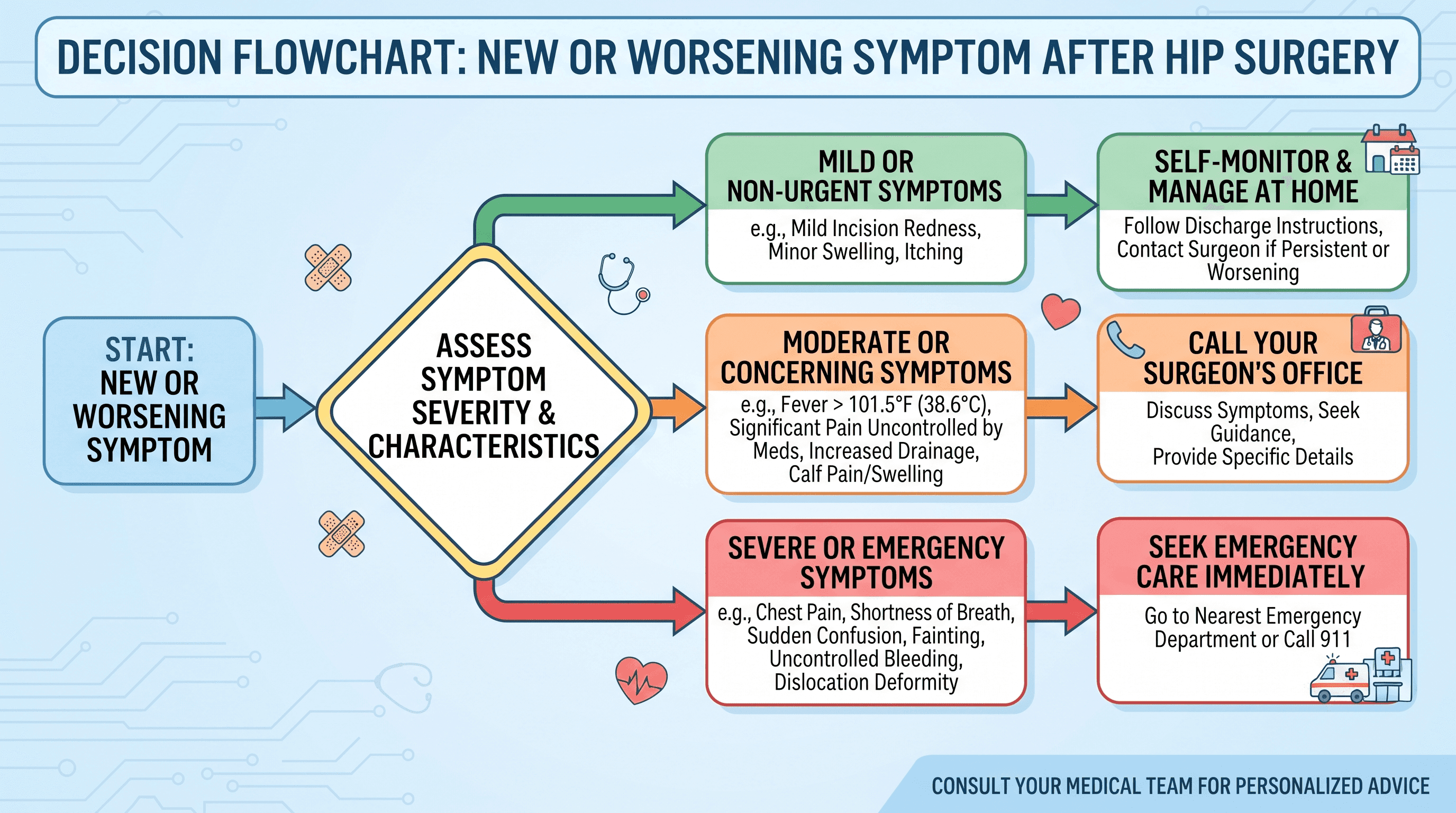
Best for: Patients who are unsure whether new or worsening pain, swelling, redness, or a fever during recovery is a normal part of healing or a sign they should contact their surgeon, go to urgent care, or seek emergency treatment.
Strengths: Momentary is available nationwide as a free AI navigator and can help you weigh symptoms against next steps such as self-care, telehealth, urgent care, or the emergency room. Because it is physician-reviewed rather than purely algorithmic, it is designed to explain its reasoning rather than just output a risk score.
Limitations: Momentary does not track exercises, range of motion, or physical therapy adherence, so it works best alongside a dedicated recovery app rather than in place of one. It does not diagnose conditions or replace your surgeon's evaluation, and direct physician services through Momentary are currently available only in California; the AI navigator itself is nationwide.
Pricing: Free to use as a healthcare navigator.
When to choose something else: If you need day-to-day exercise tracking and progress logging, pair Momentary with Force Therapeutics, Hinge Health, or PeerWell rather than relying on it alone.
Who Should Choose Each Option
- Assigned by your hospital already: Use Force Therapeutics or PeerWell as designed, since they're built around your specific surgical protocol.
- Have employer or insurance-covered MSK benefits: Hinge Health or Kaia Health can provide guided PT support at no direct cost.
- No access to any of the above: Momentary's free navigator can still help you figure out whether a symptom needs medical attention, and ask your surgeon's office whether they offer a provider-based app.
- Preparing for surgery, not yet recovering: PeerWell's prehab focus is the most directly relevant.
- Unsure if something is wrong: Momentary is built for exactly this question, though it should never replace a call to your surgeon for urgent concerns.
Pros and Cons
Force Therapeutics
- Pros: Built specifically for joint replacement, direct messaging with your care team, free when enrolled.
- Cons: Requires provider enrollment, interface has been criticized as clunky by some users.
Hinge Health
- Pros: $0 to most eligible members, real physical therapist support, broad MSK coverage.
- Cons: Requires employer or health plan eligibility, not joint-replacement-specific.
Kaia Health (Sword Health)
- Pros: Real-time AI form correction, studied against clinician evaluation.
- Cons: Recently acquired, some access and pricing details unsettled, typically requires sponsorship.
PeerWell
- Pros: Strong pre-surgery preparation focus, structured daily tasks.
- Cons: Provider-distributed only, limited public information on current availability.
Momentary
- Pros: Free, nationwide, physician-reviewed, helps with urgent decision-making.
- Cons: Not an exercise tracker, physician services limited to California.
FAQ
Is there a free app for tracking hip replacement recovery? Force Therapeutics and PeerWell are typically free when your hospital or surgical practice enrolls you. Hinge Health and Kaia Health are usually free to eligible members through an employer or health plan. Momentary's AI navigator is free to anyone in the US, though it does not track exercises.
Can I download Force Therapeutics or PeerWell on my own? Generally no. Both apps are distributed through participating hospitals, surgical practices, or health systems, so you need to be enrolled by your care team to get access.
What's the difference between Hinge Health and Kaia Health? Both are broader musculoskeletal platforms offered through employers or health plans rather than tools built exclusively for joint replacement. Hinge Health pairs users with a dedicated physical therapist and health coach. Kaia Health, now part of Sword Health, emphasizes AI-based motion tracking that checks exercise form using your phone camera.
How long does hip replacement recovery usually take? Most people regain the ability to use their hip without major restrictions within six to twelve weeks, according to Cleveland Clinic, though full healing and strength gains can continue for up to a year.
When should I contact my surgeon instead of just using an app? Contact your surgeon's office directly for signs such as increasing redness or warmth at the incision, fever, sudden worsening pain, or drainage. If you're unsure how urgent a symptom is, Momentary can help you weigh the options, but do not delay care for symptoms that feel severe.
Is Momentary a substitute for my surgeon or physical therapist? No. Momentary is a healthcare navigator, not a diagnostic tool or a treatment provider. It helps you understand symptoms and decide on next steps, such as self-care, telehealth, urgent care, or the emergency room, but it does not replace evaluation by your surgeon or physical therapist.
What should I do if I think I'm having a medical emergency during recovery? Call 911 or go to the nearest emergency room immediately. This applies to symptoms such as chest pain, difficulty breathing, signs of a blood clot, or heavy bleeding.


