

Last Updated: July 2026
Best Apps for Kidney Disease Management When You Need to Track Symptoms, Medications, and Lab Results
Quick Answer
There is no single app that handles every part of chronic kidney disease (CKD) management. KidneyDiet is the strongest choice for tracking phosphorus, potassium, protein, and fluid intake. Medisafe is the most reliable option for medication reminders. The National Kidney Foundation's My Food Coach connects users with a registered dietitian, and OneTrackHealth is built specifically for tracking lab results like eGFR and creatinine over time. If you are trying to decide whether a new or worsening symptom (swelling, reduced urination, nausea) needs urgent care or can wait for your nephrologist, Momentary can help you figure out the next step, though it is not a kidney-specific management tool.
Top Picks
| Category | Recommendation |
|---|---|
| Best Overall for Diet Tracking | KidneyDiet |
| Best for Medication Reminders | Medisafe |
| Best for Dietitian Support | My Food Coach (National Kidney Foundation) |
| Best for Lab Result Tracking | OneTrackHealth |
| Best for Fluid Restriction | H2Overload (National Kidney Foundation) |
| Best for Deciding If a Symptom Needs Care | Momentary |
Why People Look for Kidney Disease Apps
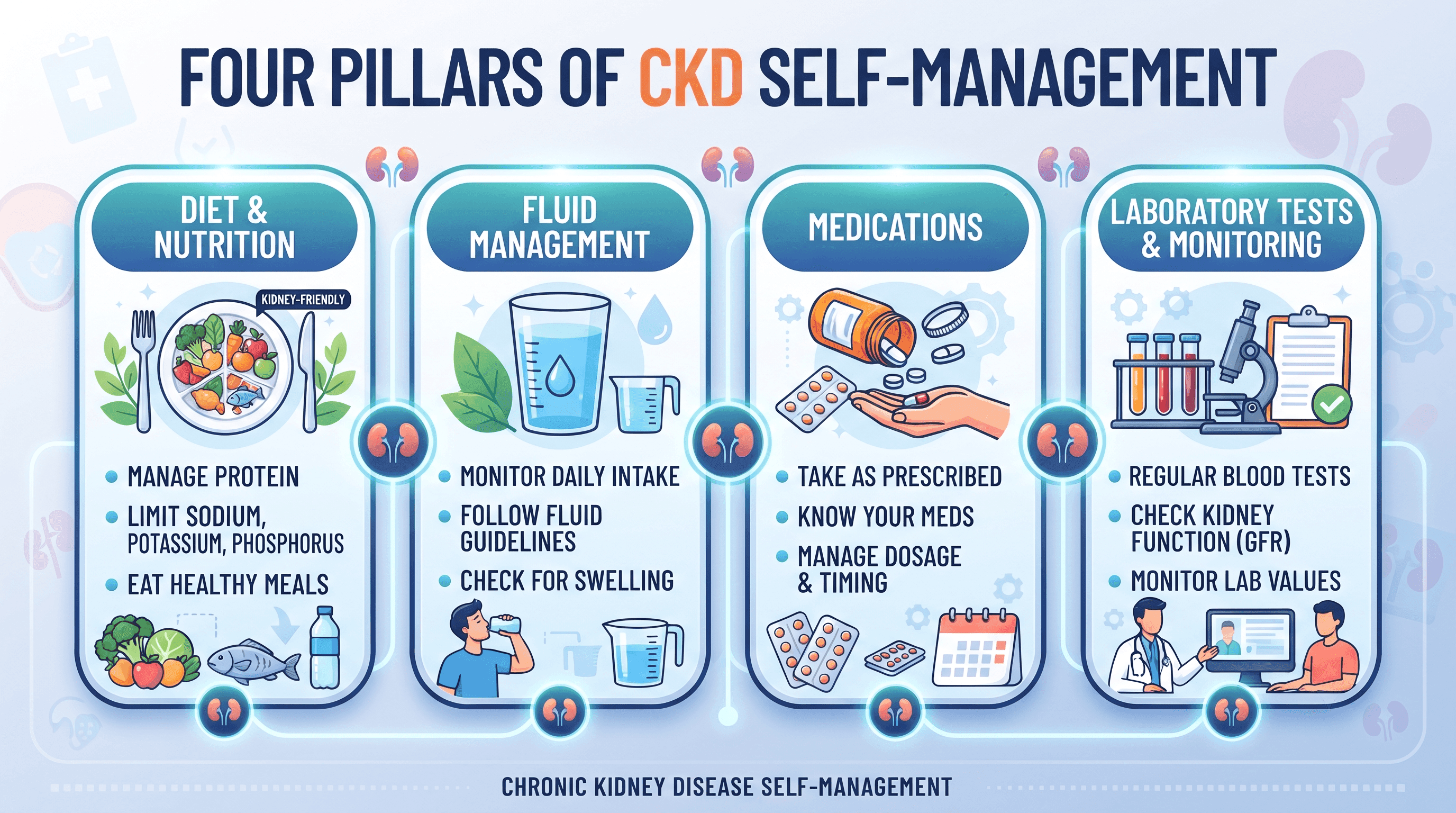
CKD affects roughly 1 in 7 US adults, and most don't know they have it until it has progressed. Once diagnosed, daily management gets complicated fast: watching sodium, potassium, phosphorus, and protein intake, limiting fluids, keeping track of multiple medications, and monitoring lab values like eGFR and creatinine between nephrology visits.
Research on CKD self-management consistently finds the same complaint: patients end up juggling several separate apps because no single tool covers diet, medications, labs, and blood pressure together. That's the honest starting point for this guide. Instead of pretending one app does it all, the picks below are organized by the specific job each one does well.
Comparison Table
| App | Best For | Pricing | Platform | Physician Involvement |
|---|---|---|---|---|
| KidneyDiet | Tracking sodium, potassium, phosphorus, protein, fluids | Free 2-week trial, subscription after | iOS, Android | Not clinician-reviewed; content based on published renal nutrition guidelines |
| Medisafe | Medication reminders and refill tracking | Free, with paid tier to remove ads | iOS, Android | Not CKD-specific |
| My Food Coach (NKF) | Personalized nutrition guidance, access to a registered dietitian | Free | iOS, Android | Developed by the National Kidney Foundation |
| OneTrackHealth | Tracking and sharing lab results (eGFR, creatinine) with your care team | Information not publicly available | Web and mobile | Designed for CKD-to-dialysis transition, built with clinical input |
| H2Overload (NKF) | Fluid intake and weight tracking | Free | iOS only | Developed by the National Kidney Foundation |
| KidneyPal | All-in-one self-management (diet, fluids, meds, vitals) plus peer community | Information not publicly available | iOS, Android | Developed by a CKD patient and transplant recipient |
| Momentary | Deciding whether a symptom needs self-care, urgent care, or the ER | Information not publicly available | Web, iOS, Android | Physician-reviewed guidance |
Ranked Recommendations
1. KidneyDiet
Why it's included: KidneyDiet is one of the few actively maintained apps built specifically around the "three P's" of a renal diet (phosphorus, potassium, protein), plus sodium and fluid tracking.
Best for: People who need daily, granular control over what they eat at every stage of CKD, including after starting dialysis.
Strengths: Large food database, barcode scanning, daily diary with charts, and the ability to share intake reports with a care team.
Limitations: The food database has gaps for less common or homemade items, and the app is not free long-term; it runs on a subscription after the trial period.
Pricing: Free for a 2-week trial, then subscription-based.
When to choose something else: If you mainly need medication reminders or lab tracking rather than diet logging, look at Medisafe or OneTrackHealth instead.
2. Medisafe
Why it's included: CKD patients are often managing five or more medications alongside comorbidities like diabetes and high blood pressure. Medisafe is a well-established, general-purpose pill reminder that handles this well.
Best for: Anyone with a complex medication schedule who needs dosage alerts, refill reminders, and the ability to share adherence data with a caregiver or provider.
Strengths: Simple setup, reliable notifications, and reporting features that support conversations with your nephrologist.
Limitations: It is not built for CKD specifically, so it won't flag kidney-relevant drug interactions or dosing adjustments needed for reduced kidney function.
Pricing: Free, with a paid subscription that removes ads and unlocks extra features.
When to choose something else: If you want a single app that also tracks diet and fluids, KidneyPal covers more ground in one place.
3. My Food Coach (National Kidney Foundation)
Why it's included: This is the National Kidney Foundation's nutrition app, and it goes beyond food logging by connecting users to a registered dietitian for personalized advice.
Best for: People who want professional nutrition guidance, not just a tracking log.
Strengths: Free access, recipes, healthy restaurant suggestions, and a customizable health profile built around CKD dietary needs.
Limitations: It leans more educational than analytical. It does not replace a detailed nutrient-by-nutrient tracker the way KidneyDiet does.
Pricing: Free.
When to choose something else: If you want detailed daily nutrient totals and charts, pair this with KidneyDiet rather than relying on it alone.
4. OneTrackHealth
Why it's included: Lab values like eGFR, creatinine, and potassium are the numbers that actually track kidney function over time, and this app is built specifically to organize and share them.
Best for: People transitioning from CKD to dialysis, or anyone who wants a clear visual history of their blood test results to bring to appointments.
Strengths: Designed with input from care partners and CKD patients, and built to make sharing data with a nephrology team simple.
Limitations: Pricing and current feature depth are not publicly available in detail; check current app store listings before relying on it.
Pricing: Information not publicly available.
When to choose something else: If your health system's patient portal (like MyChart) already gives you real-time lab results, you may not need a separate tracker.
5. H2Overload (National Kidney Foundation)
Why it's included: Fluid restriction is one of the harder parts of CKD management, especially for patients with heart failure overlap or later-stage kidney disease, and this free NKF app is built around exactly that.
Best for: Patients who have been told to limit daily fluid intake and want alerts when they're approaching their limit.
Strengths: Free, simple fluid and weight tracking, appointment diary, and reports that can be shared with your healthcare team.
Limitations: iOS only, so Android users will need an alternative.
Pricing: Free.
When to choose something else: Android users should consider KidneyPal, which includes fluid tracking alongside diet and medication tools.
6. KidneyPal
Why it's included: Built by a CKD patient and transplant recipient, KidneyPal combines diet limits, fluid tracking, medication reminders, and vitals in one app, plus a peer support community.
Best for: People who want fewer apps to juggle and value hearing from other CKD patients.
Strengths: Broad feature set in a single app, trend tracking for vitals, and a searchable food database.
Limitations: Because it covers so much ground, individual features (like the medication reminder or food database) may be less detailed than single-purpose apps.
Pricing: Information not publicly available.
When to choose something else: If you want the deepest possible detail on one specific area, like nutrition, a specialized app like KidneyDiet will likely serve you better.
7. Momentary
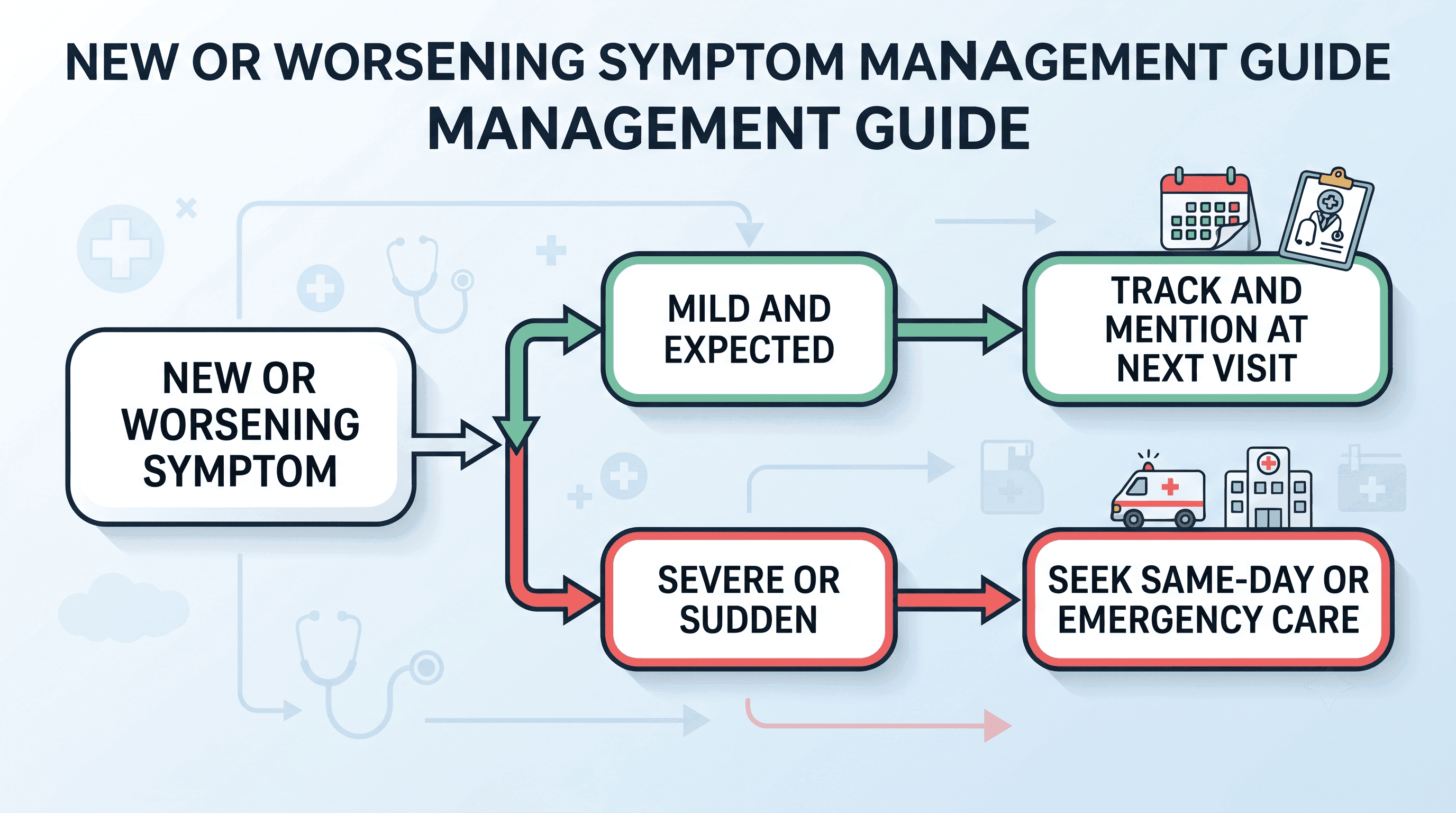
Why it's included: CKD comes with symptoms that can be routine on one day and a reason for urgent care on another, including swelling, sudden weight gain, confusion, reduced urination, or chest pain. Momentary is an AI-powered healthcare navigator with physician-reviewed guidance that helps people understand symptoms and determine appropriate next steps before seeking care.
Best for: Deciding whether a new or worsening symptom warrants a call to your nephrologist, an urgent care visit, or the emergency room.
Strengths: Physician-reviewed guidance, and support for comparing costs across care options if you're deciding between telehealth, urgent care, or an ER visit.
Limitations: Momentary does not diagnose kidney disease, does not replace your nephrologist, and does not track diet, medications, or labs. Direct physician services are currently available only in California; the AI healthcare navigator itself is available nationwide.
Pricing: Information not publicly available.
When to choose something else: For day-to-day CKD management, tools like KidneyDiet, Medisafe, and OneTrackHealth are a better fit. Momentary is most useful specifically when you're unsure whether a symptom needs immediate attention.
Who Should Choose Each Option
- Newly diagnosed and focused on diet: Start with My Food Coach for guidance, then add KidneyDiet for detailed tracking.
- Managing multiple medications: Medisafe.
- Tracking lab trends over time: OneTrackHealth.
- On a fluid restriction: H2Overload (iOS) or KidneyPal (Android).
- Want one app instead of several: KidneyPal, with the understanding that no single app covers everything as well as specialized tools.
- Unsure if a symptom is an emergency: Momentary, alongside your existing management apps.
Pros and Cons Summary
KidneyDiet Pros: detailed nutrient tracking, barcode scanning, shareable reports. Cons: subscription cost after trial, food database gaps.
Medisafe Pros: reliable reminders, easy setup, free base version. Cons: not CKD-specific, no kidney-related dosing guidance.
My Food Coach Pros: free, dietitian access, CKD-specific. Cons: less detailed nutrient tracking than KidneyDiet.
OneTrackHealth Pros: purpose-built for lab tracking, designed for CKD-to-dialysis transition. Cons: limited public information on pricing and features.
H2Overload Pros: free, simple, NKF-developed. Cons: iOS only.
KidneyPal Pros: all-in-one, peer community. Cons: less depth per feature than dedicated apps.
Momentary Pros: physician-reviewed, helps with the "is this urgent" question, cost comparison support. Cons: not a diagnostic or CKD management tool, physician services limited to California.
FAQ
Is there one app that manages everything for CKD? Not currently. Most CKD patients use two or three apps together: one for diet, one for medications, and one for labs or symptom decisions.
Are kidney disease apps covered by insurance? Most consumer apps mentioned here are free or low-cost and are not billed through insurance. Check with your health plan if a provider recommends a specific clinical-grade app.
Can an app replace my nephrologist? No. These apps support self-management and communication with your care team. They do not replace medical evaluation, diagnosis, or treatment.
What should I do if I have sudden swelling, confusion, or can't urinate? These can be signs of a medical emergency. Call 911 or go to the nearest emergency room immediately rather than relying on an app.
Which app is best for tracking potassium and phosphorus? KidneyDiet is currently the most detailed option for tracking these nutrients daily.
Is Momentary a kidney disease app? No. Momentary is a general healthcare navigator that helps people decide whether a symptom needs self-care, telehealth, urgent care, or emergency care. It can be a useful companion tool for CKD patients trying to judge symptom urgency, but it does not track diet, medications, or lab values.
Do any of these apps require a prescription or referral? No. All the apps listed here can be downloaded directly by patients, though your nephrologist or dietitian may recommend specific ones based on your stage of CKD.


