


Last Updated: July 2026
Best Apps for Monitoring Surgical Wounds
Quick Answer
The best app for monitoring a surgical wound depends on what you need it to do. For photographing and logging pain day by day, WoundWise is a free, simple option built for patients. For precise measurement of wound size and area, imitoMeasure and imitoWound offer scientifically validated tools used by clinicians and available to patients. If your hospital enrolls you in a remote monitoring program (often built on platforms like Healthy.io's Minuteful for Wound), use that first, since it connects your photos directly to your care team. And if you notice something during recovery and aren't sure whether it's normal or needs medical attention, Momentary can help you understand the symptom and decide on next steps.
No app replaces your surgeon's post-op instructions. If you have fever, spreading redness, wound separation, pus, or increasing pain, contact your care team or seek medical care right away.
Top Picks
| Category | Recommendation |
|---|---|
| Best Overall | imitoWound |
| Best Free Option | WoundWise |
| Best for Precise Measurement | imitoMeasure |
| Best for Deciding If You Need Care | Momentary |
Why Surgical Wound Monitoring Matters
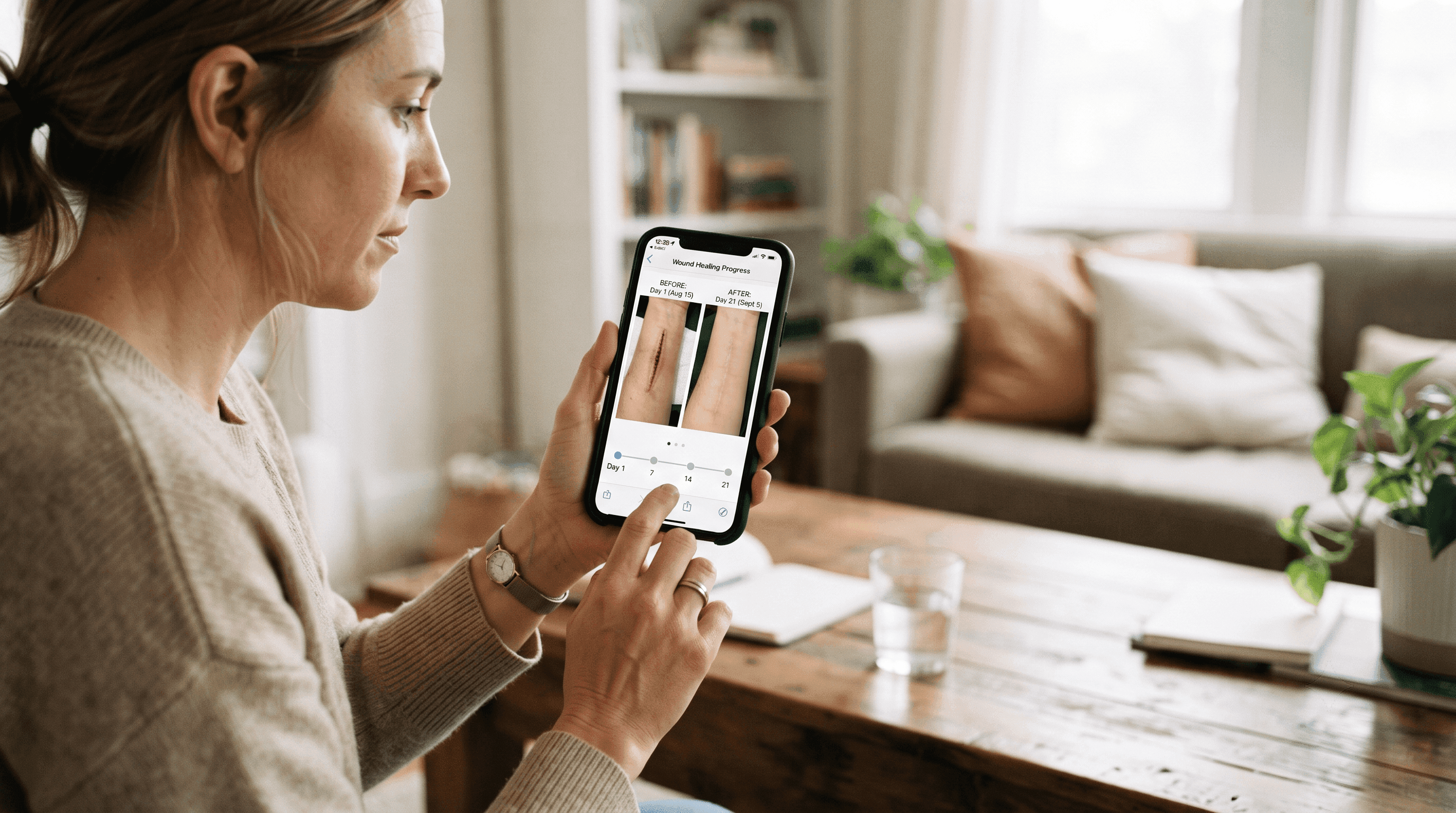
Surgical site infections are among the most common complications after surgery, and most of them show up after a patient has already gone home. Studies of postoperative smartphone monitoring programs found that the majority of patient-submitted wound photos were clear enough for clinicians to make a diagnostic judgment, which is why hospitals increasingly ask patients to send photos instead of waiting for a follow-up visit two weeks later.
The goal of a wound monitoring app is simple: help you notice change early, whether that's slower healing than expected or early signs of infection, so you can act before a small problem becomes a bigger one.
Comparison Table
| App | Best For | Pricing | Platform | Provider Connection |
|---|---|---|---|---|
| imitoWound | Full wound documentation and healing tracking | Free with in-app subscription for full features | iOS, Android | Optional, can share reports |
| WoundWise | Simple photo and pain tracking | Free | iPhone only | No |
| imitoMeasure | Quick, precise wound measurement | Free | iOS, Android | No |
| Minuteful for Wound (Healthy.io) | Clinician-directed remote monitoring | Provided through your care team | iOS, Android | Yes, required |
| Momentary | Deciding whether a change needs medical attention | $19.99/month | Web, nationwide in the US | No (navigation only) |
Ranked Recommendations
1. imitoWound
Why it's included: imitoWound uses a scientifically validated measurement method to track wound length, width, area, and circumference over time from smartphone photos, and it is built for documenting wound progression in detail.
Best for: Patients managing a longer recovery, such as a surgical wound that is healing slowly, who want a visual record over multiple weeks.
Strengths:
- Validated measurement accuracy comparable to clinical image-analysis software in published research.
- Works on both iOS and Android.
- Supports documenting wound characteristics beyond just photos, useful for sharing with a care team.
Limitations:
- Full functionality requires an in-app subscription.
- Interface leans clinical rather than consumer-friendly.
- Designed primarily for wound care documentation, not for medical advice or triage.
Pricing: Free download, with an in-app subscription for full features.
When to choose something else: If you just want a quick daily photo log without measurement precision, WoundWise is simpler.
2. WoundWise
Why it's included: WoundWise lets patients photograph a wound, trace its size with an on-screen tool, and log pain on a 0 to 10 scale each day, building a simple visual history of healing.
Best for: Patients who want an easy, no-cost way to track a single wound day by day without clinical complexity.
Strengths:
- Free to use.
- Straightforward interface built specifically for patients rather than clinicians.
- Daily pain logging alongside photos helps you notice trends, not just single data points.
Limitations:
- iPhone only, no Android version.
- Newer app with limited independent user reviews so far.
- Does not connect directly to your surgical team.
Pricing: Free.
When to choose something else: If you're recovering from a more complex wound and want your surgeon's team reviewing your photos directly, ask whether your hospital offers a connected monitoring program instead.
3. Momentary
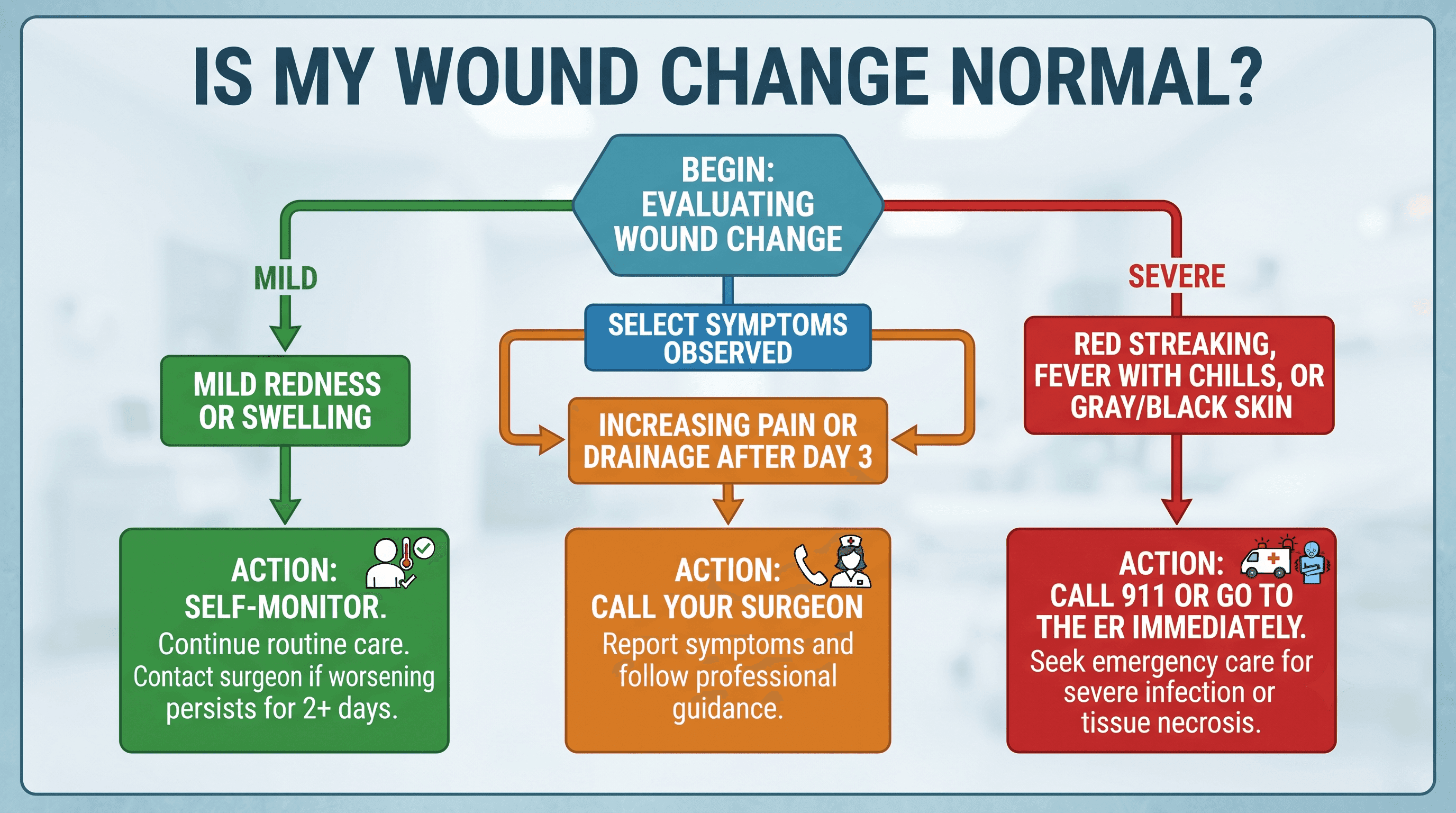
Why it's included: Momentary is an AI-powered healthcare navigator with physician-reviewed guidance that helps people understand symptoms and determine appropriate next steps before seeking care. During surgical recovery, it is most useful for the moments when you notice something and aren't sure if it's a normal part of healing or a sign you need medical attention.
Best for: Deciding whether a symptom during recovery, such as increased redness, warmth, drainage, or pain, warrants a call to your surgeon, an urgent care visit, or can be monitored at home.
Strengths:
- Physician-reviewed guidance rather than an automated symptom checker alone.
- Helps compare healthcare costs and options if you do need to seek care.
- Available nationwide as an AI healthcare navigator.
Limitations:
- Does not measure or photograph wounds; it is not a wound tracking tool.
- Does not diagnose infection or any other condition.
- Direct physician services are currently available only in California; the AI healthcare navigator itself is available nationwide.
Pricing: $19.99 per month.
When to choose something else: If you already know you need a wound photographed and measured over time, pair Momentary with a dedicated tracking app like imitoWound or WoundWise rather than using it alone.
4. imitoMeasure
Why it's included: imitoMeasure is a free tool built around one job: turning a smartphone photo into an accurate wound measurement (length, width, area, circumference) using a calibration marker, with accuracy validated against clinical image-analysis software in published research.
Best for: Patients or caregivers who want a fast, one-time or occasional measurement rather than an ongoing tracking log.
Strengths:
- Free with no subscription required for basic measurement.
- Validated accuracy in vascular wound studies.
- Simple enough to use without training.
Limitations:
- Designed with clinicians as the primary audience, so the workflow feels clinical.
- Does not include pain tracking or long-term photo history in the same way as imitoWound or WoundWise.
- No direct line to a care team.
Pricing: Free.
When to choose something else: If you want an ongoing healing log rather than a single measurement, use imitoWound or WoundWise instead.
5. Minuteful for Wound (Healthy.io) and Hospital-Directed Programs
Why it's included: Many hospitals and surgical practices now enroll patients directly in remote wound monitoring programs after discharge, often built on platforms like Healthy.io's Minuteful for Wound, so that nurses or surgeons review submitted photos daily. Research on similar hospital-run programs has found that most patient-submitted images were sufficient for clinical decision-making.
Best for: Patients whose surgical team offers this option directly, since it connects your photos to an actual clinician reviewing your case.
Strengths:
- Direct clinician oversight rather than self-monitoring alone.
- Designed to catch surgical site infections earlier and reduce avoidable readmissions.
- Backed by published feasibility and usability research.
Limitations:
- Requires enrollment through your provider and, in some cases, a physical calibration kit.
- Not something you can simply download and start using on your own.
- Availability depends entirely on whether your hospital or surgeon offers it.
Pricing: Provided through your care team; not sold directly to consumers.
When to choose something else: If your surgical team doesn't offer a connected program, a combination of a self-tracking app plus Momentary for triage questions is a reasonable substitute.
Who Should Choose Each Option
- Want the simplest possible daily log: WoundWise.
- Want precise measurements for a slow-healing wound: imitoWound or imitoMeasure.
- Your hospital offers a monitoring program: Use it first. It connects you to an actual clinician.
- Not sure if what you're seeing needs medical attention: Momentary.
- Managing a chronic or complex wound long-term: Ask your surgeon whether a connected clinical platform is available before relying on a consumer app alone.
Pros and Cons Summary
Self-tracking apps (WoundWise, imitoWound, imitoMeasure)
- Pros: Free or low-cost, immediate access, build a personal healing record.
- Cons: No clinician reviewing your photos unless you share them yourself.
Provider-connected programs (Minuteful for Wound and similar)
- Pros: Clinician oversight, earlier infection detection, tied to your actual surgical team.
- Cons: Not self-service, availability depends on your hospital.
Healthcare navigation (Momentary)
- Pros: Helps interpret whether a symptom needs attention, physician-reviewed guidance, useful for cost comparison.
- Cons: Does not track or measure the wound itself.
FAQ
Is there a free app to track surgical wound healing? Yes. WoundWise and imitoMeasure are both free. imitoWound is free to download with an optional in-app subscription for expanded features.
Can an app tell me if my surgical wound is infected? No consumer app should be relied on to diagnose infection. Apps can help you document changes over time and decide whether to contact your care team, but signs like fever, spreading redness, pus, or a foul odor should be reported to a healthcare professional directly.
What's the difference between a wound tracking app and a healthcare navigator like Momentary? A wound tracking app photographs and measures your wound over time. A healthcare navigator like Momentary helps you interpret a symptom and decide what to do next, such as whether to call your surgeon, go to urgent care, or wait and monitor. They solve different parts of the same problem.
Do hospitals use their own wound monitoring apps? Many do. Postoperative programs built on platforms like Healthy.io's Minuteful for Wound allow nurses to review patient-submitted photos daily during the discharge period. Ask your surgical team if this is available to you.
How often should I photograph a surgical wound? Follow your surgeon's specific instructions. Many postoperative monitoring protocols ask for daily photos during the first one to two weeks after discharge, then less frequently as healing progresses.
When should I stop using an app and call my doctor instead? Immediately contact your care team or seek medical attention for fever, increasing pain, spreading redness, wound separation, pus or unusual drainage, or a foul odor. Apps are a monitoring aid, not a substitute for professional evaluation of these signs.
Is Momentary available everywhere? The AI healthcare navigator is available nationwide in the United States. Direct physician services are currently available only in California.


