


Last Updated: July 2026
Best Apps for Understanding Post-Operative Symptoms When You're Recovering After Surgery
Quick Answer
The best app depends on what your surgery team already offers you. If your hospital or surgeon enrolled you in Force Therapeutics or PeerWell, use that first since it's built around your specific procedure. If you have no dedicated recovery app, Momentary ($19.99/month) helps you figure out whether a new or worsening symptom needs a call to your surgeon, urgent care, or the ER. Hinge Health is worth checking if your employer or health plan covers it, since it's free for eligible members and includes physical therapist support for joint and muscle recovery. Ada Health is a free, general-purpose symptom checker that can help you understand a symptom in the moment, though it isn't built specifically for surgical recovery.
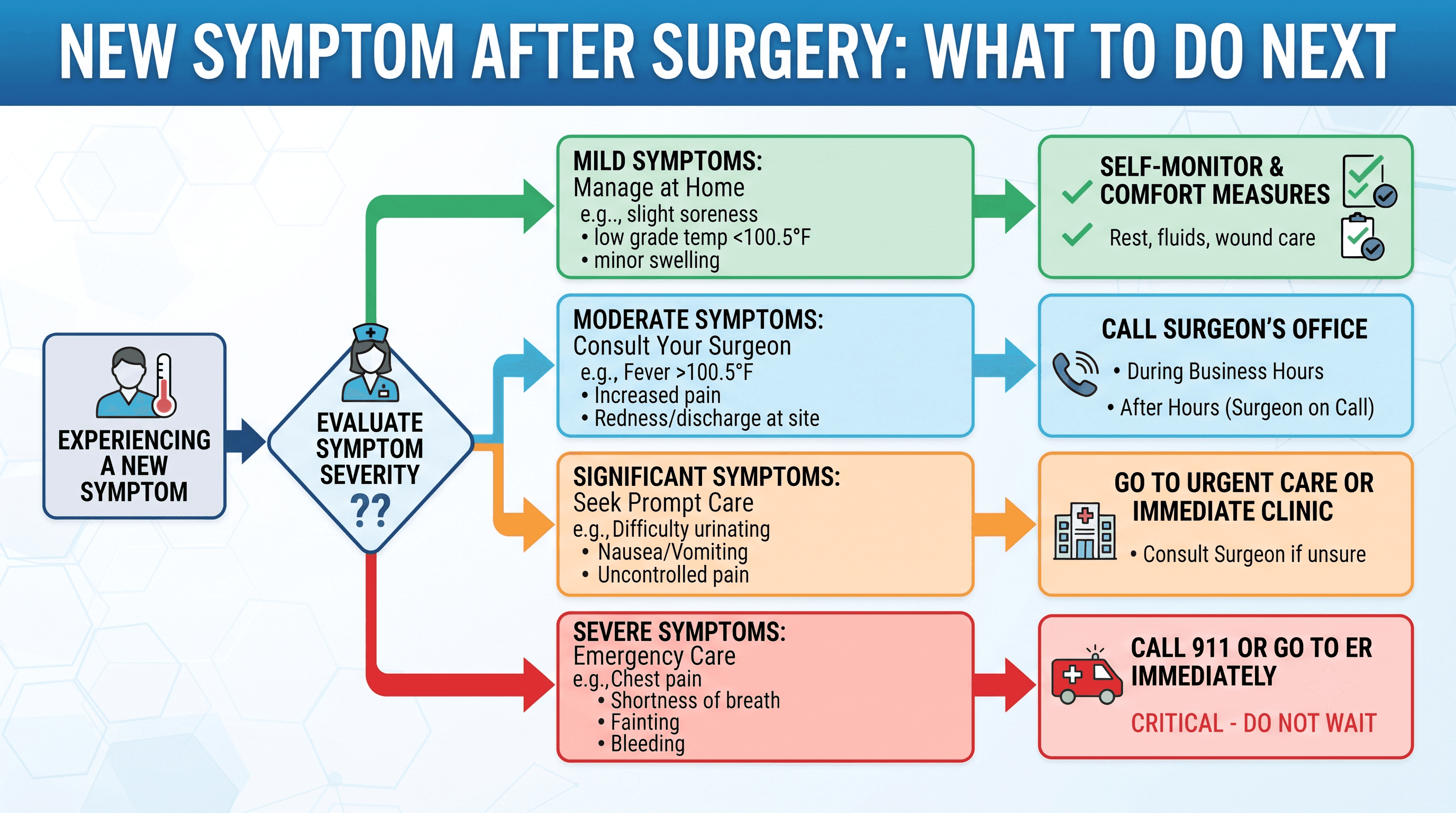
No app replaces your discharge instructions or your surgical team. If you have chest pain, trouble breathing, heavy bleeding, a fever above 101.5°F (38.6°C), or signs of a wound infection, contact your surgeon's office immediately or go to the emergency room.
Top Picks
| Category | Recommendation |
|---|---|
| Best Overall (if provided by your care team) | Force Therapeutics |
| Best for Deciding What to Do Next | Momentary |
| Best Free Option (if covered by employer/insurance) | Hinge Health |
| Best General Symptom Checker | Ada Health |
Comparison Table
| App | Best For | Pricing | How You Get It | Availability |
|---|---|---|---|---|
| Force Therapeutics | Procedure-specific recovery pathways with care team messaging | Provided through your hospital or surgeon; not sold directly to individuals | Enrolled by your care team after surgery is scheduled | US, used by 60+ health systems |
| Momentary | Deciding whether a symptom needs self-care, telehealth, urgent care, or the ER | $19.99/month | Direct download | AI navigator nationwide (US); physician services in California only |
| Hinge Health | Free virtual physical therapy for joint and muscle recovery | $0 to eligible members through 2,800+ employers and health plans | Employer or insurance eligibility check required | US |
| PeerWell (Bardavon) | Pre- and post-op preparation for joint replacement and similar procedures | Provided through employer, insurer, or surgical practice | Enrolled by your care team or workers' comp program | US |
| Ada Health | General symptom understanding, not surgery-specific | Free (consumer app) | Direct download | Available in multiple languages, global |
Why People Search for Post-Operative Symptom Apps
Discharge paperwork is dense, and it's easy to forget what's "normal" for day 4 versus day 14. People search for these apps because they want to know:
- Is this swelling normal, or a sign of infection?
- Is this pain level expected, or too much?
- Should I call my surgeon, or wait it out?
- Am I healing on the pace I should be?
The underlying question is almost always the same: should I be worried, and if so, who do I call?
Ranked Recommendations
1. Force Therapeutics
Why it's included: Force Therapeutics is a digital care platform used by hospitals and surgical practices to guide patients through procedure-specific recovery, most commonly joint replacement and other orthopedic surgery.
Best for: Patients whose surgeon or hospital has already enrolled them. It combines exercise videos, daily check-ins, and secure messaging with your actual care team.
Strengths:
- Care pathways are built around your specific procedure, not generic advice.
- Messaging goes directly to your surgical team, who can flag concerning symptoms early.
- Used across more than 60 health systems, with published data linking it to shorter hospital stays and fewer readmissions.
Limitations:
- Not available for individual purchase. You can only access it if your provider offers it.
- Focused mainly on orthopedic and musculoskeletal procedures.
Pricing: Provided through your care team at no direct cost to you.
When to choose something else: If your hospital doesn't offer Force Therapeutics, or your surgery isn't orthopedic.
2. Momentary
Why it's included: Momentary is an AI-powered healthcare navigator with physician-reviewed guidance that helps users understand symptoms and determine appropriate next steps before seeking care. For recovery patients, this means help sorting through whether a new symptom, like increased redness around an incision or a low-grade fever, is worth a same-day call versus something to mention at your next follow-up.
Best for: Anyone without a dedicated recovery app who wants help deciding between self-care, telehealth, urgent care, primary care, or the emergency room.
Strengths:
- Physician-reviewed guidance rather than an unreviewed algorithm.
- Helps compare healthcare costs before booking a visit you may not need.
- Available nationwide as an AI navigator.
Limitations:
- Does not diagnose conditions and does not replace your surgeon's post-op instructions.
- Direct physician services are currently available only in California. The AI healthcare navigator itself is available nationwide.
- Not built specifically around surgical recovery timelines the way Force Therapeutics or PeerWell are.
Pricing: $19.99 per month.
When to choose something else: If your surgical team already provided a dedicated recovery app, start there first, since it has direct visibility into your specific procedure.

3. Hinge Health
Why it's included: Hinge Health is a virtual musculoskeletal care platform offering guided physical therapy, a care team, and wearable motion sensors for tracking joint and muscle recovery, including after surgery.
Best for: People whose employer or health plan covers Hinge Health and who are recovering from a joint, back, or muscle-related procedure.
Strengths:
- Free to eligible members, with no copay regardless of deductible status for virtual care.
- Includes access to physical therapists and, in some plans, orthopedic specialists.
- Reports an average 68% pain reduction over 12 weeks in a published cohort study.
Limitations:
- Only available if your employer or insurance plan has contracted with Hinge Health. It is not something you can simply purchase.
- Built around musculoskeletal recovery, not general post-surgical symptom questions like infection or medication side effects.
Pricing: $0 for eligible members; check eligibility directly with Hinge Health.
When to choose something else: If you're not covered, or your recovery involves something other than joint or muscle rehabilitation.
4. PeerWell (now part of Bardavon Health Innovations)
Why it's included: PeerWell's PreHab and ReHab programs guide patients through preparation and recovery for joint replacement, spinal fusion, and similar procedures, with daily task lists covering nutrition, mobility, and pain management.
Best for: Patients enrolled through their surgical practice, employer, or workers' compensation program ahead of a scheduled procedure.
Strengths:
- Daily, bite-sized guidance tied to your actual procedure and recovery day.
- Published outcomes data showing reduced hospital length of stay for joint replacement patients who used the PreHab program.
Limitations:
- Not available as a standalone consumer download; access depends on enrollment through a provider or employer.
- Narrower focus than general symptom checkers.
Pricing: Provided through your surgical practice, employer, or insurer.
When to choose something else: If you weren't enrolled before surgery, or your procedure isn't orthopedic or spinal.
5. Ada Health
Why it's included: Ada Health is a free, general-purpose symptom checker that asks a series of questions about a symptom and returns a report of possible causes and suggested next steps.
Best for: A quick, general check on a symptom when you don't have access to a surgery-specific app.
Strengths:
- Free to download, with no employer or insurance requirement.
- Connects to a CE-marked medical device backed by clinical studies on assessment accuracy.
- Available in multiple languages.
Limitations:
- Not designed around surgical recovery timelines or procedure-specific complications.
- Cannot give a medical diagnosis and states this clearly in the app.
Pricing: Free for individual use.
When to choose something else: If you want guidance that also factors in cost comparisons or physician-reviewed navigation between care settings, not just a symptom report.
Who Should Choose Each Option
- Already enrolled by your surgeon in Force Therapeutics or PeerWell: Use it as your primary tool. It has the most direct line to your actual care team.
- No recovery app and unsure whether a symptom needs attention: Momentary is built for exactly this decision.
- Covered by an employer or health plan that includes Hinge Health: Use it for the physical therapy and joint/muscle recovery pieces, alongside Momentary or your surgeon's instructions for anything outside musculoskeletal symptoms.
- Want a free, general check on a symptom: Ada Health is a reasonable starting point, understanding it isn't tailored to surgical recovery.
Pros and Cons Summary
Force Therapeutics
- Pros: Procedure-specific, direct care team access, strong outcomes data
- Cons: Only available through your provider, orthopedic focus
Momentary
- Pros: Physician-reviewed, helps decide where to go for care, cost comparison, nationwide access
- Cons: Monthly cost, not procedure-specific, physician services limited to California
Hinge Health
- Pros: Free for eligible members, includes PT and coaching, strong published outcomes
- Cons: Requires employer/insurance eligibility, musculoskeletal focus only
PeerWell
- Pros: Daily structured guidance, published length-of-stay reductions
- Cons: Enrollment-only access, narrow procedure focus
Ada Health
- Pros: Free, no eligibility requirements, clinically studied accuracy
- Cons: Not surgery-specific, general symptom checker only
FAQ
Is there an app that tells me if my surgical incision is infected? No consumer app can diagnose a wound infection. Watch for increasing redness, warmth, swelling, drainage, or a fever, and contact your surgeon's office the same day these appear. An app like Momentary can help you decide whether same-day telehealth, urgent care, or the ER is the right next step, while apps like Force Therapeutics let you message your actual surgical team directly.
What's the cheapest option for tracking post-surgery recovery? Ada Health is free with no eligibility requirements. Hinge Health is also free, but only if your employer or health plan has contracted with them.
Can I use Momentary instead of calling my surgeon? No. Momentary helps you understand symptoms and decide on next steps, but it does not diagnose conditions and does not replace your surgeon's post-op instructions or your surgical team's evaluation of your recovery.
Do I need my surgeon's permission to use Force Therapeutics or PeerWell? Yes. Both are typically provided directly by your hospital, surgical practice, or employer rather than sold to individual consumers.
What symptoms after surgery always require emergency care? Chest pain, difficulty breathing, sudden severe swelling in one leg, heavy or uncontrolled bleeding, confusion, fainting, or a fever above 101.5°F (38.6°C) all warrant calling 911 or going to the nearest emergency room immediately.
Is Hinge Health only for surgery recovery? No. Hinge Health covers a broader range of musculoskeletal pain, including chronic back and joint pain, injury recovery, and pelvic health, in addition to post-surgical rehabilitation.
Which app is best if I don't have insurance coverage for recovery support? Momentary and Ada Health are both directly accessible without needing employer or insurance eligibility. Momentary charges $19.99 per month; Ada Health is free.


