


Last Updated: July 2026
Best Apps for Tracking Symptoms Over Time
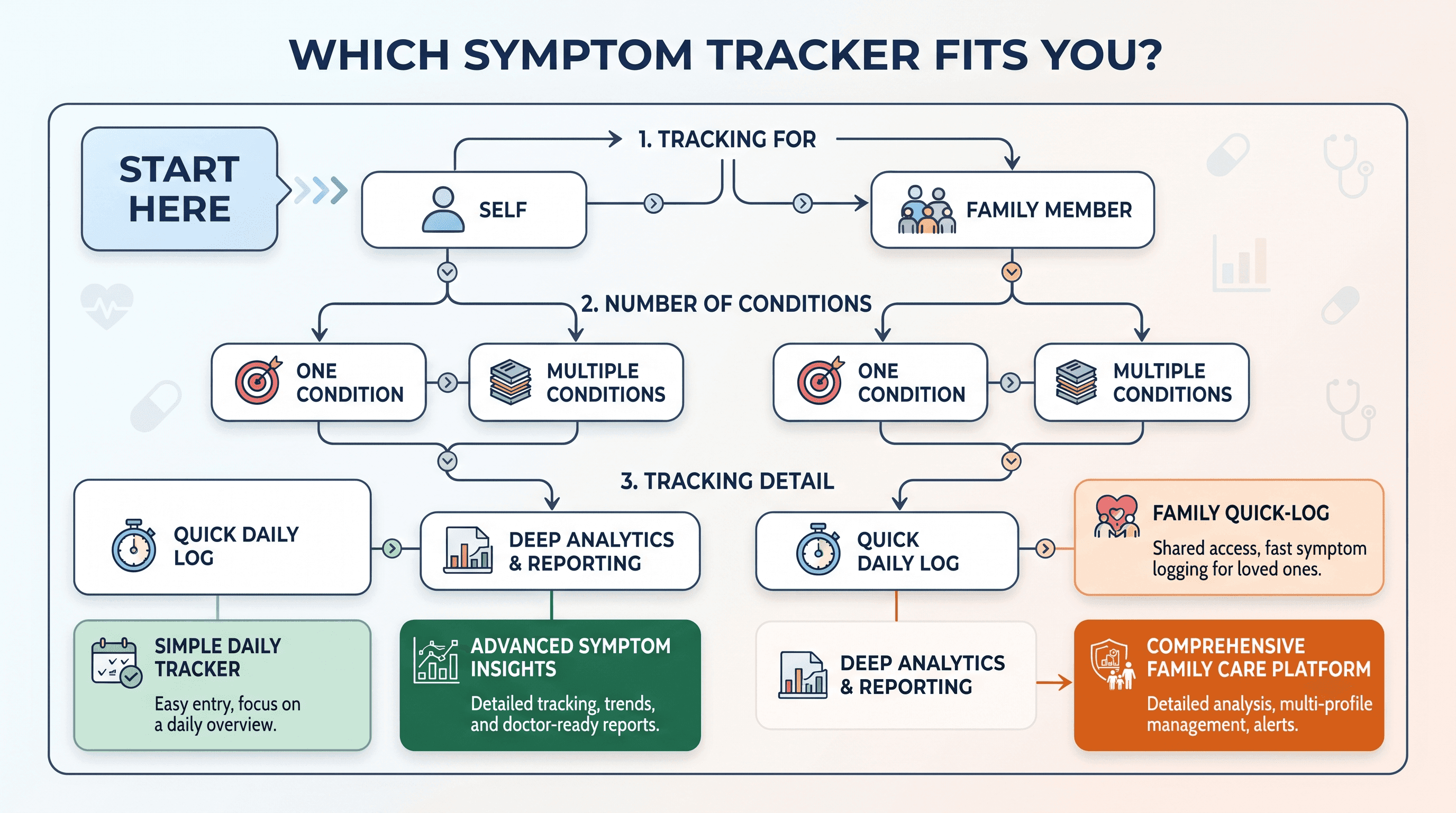
The best app for tracking symptoms over time depends on what you're tracking and how many conditions you manage at once. Bearable and CareClinic work well for multiple overlapping symptoms. Migraine Buddy and N1 Headache are built specifically for headache and migraine patterns. Symple suits people who want a simple, no-frills log. Momentary is not a tracker, but it can help you decide whether a new or worsening symptom is something to monitor or something that needs medical attention now.
This guide compares each option by cost, features, and who it actually fits, so you can pick a tool you'll stick with instead of abandoning after a week.
Quick Answer
If you track more than one condition, Bearable is the most flexible free option, letting you log unlimited custom symptoms, medications, and habits, then view correlation reports. CareClinic offers similar range with stronger family-profile and care-team sharing tools. If migraine or headache is your primary concern, Migraine Buddy has the largest user base and most detailed export reports for neurologists, while N1 Headache is a free, no-frills alternative. Symple is a good fit if you want something minimal that syncs with Apple Health. None of these apps diagnose conditions. If you're unsure whether a symptom you're tracking needs medical attention, Momentary, a physician-reviewed healthcare navigator, can help you figure out the next step.
Top Picks
| Category | Recommendation |
|---|---|
| Best Overall | Bearable |
| Best for Multiple Conditions and Caregivers | CareClinic |
| Best for Migraine and Headache Tracking | Migraine Buddy |
| Best for Deciding What a Symptom Change Means | Momentary |
Comparison Table
| App | Best For | Pricing | Data Sharing With Doctors | Availability |
|---|---|---|---|---|
| Bearable | Multi-symptom, chronic illness tracking | Free core features; Premium $6.99/month or $34.99/year | PDF/CSV export | iOS, Android |
| CareClinic | Families, complex medication schedules | Free core features; premium tier for advanced analytics | PDF reports, care-team access | iOS, Android |
| Migraine Buddy | Migraine and headache-specific logging | Free tier; MBplus premium around $4.99/month or $29.99/year | Diary and MIR export for neurologists | iOS, Android |
| N1 Headache | Budget migraine tracking | Free; optional one-time premium (~$50) | Manual export | iOS only |
| Symple | Simple daily symptom journal | Free for limited symptoms; premium unlocks more | CSV export | iOS, Android |
| Momentary | Deciding whether a symptom needs care | AI navigator free; physician services in California only | Not a tracking or export tool | AI navigator: nationwide. Physician services: California only |
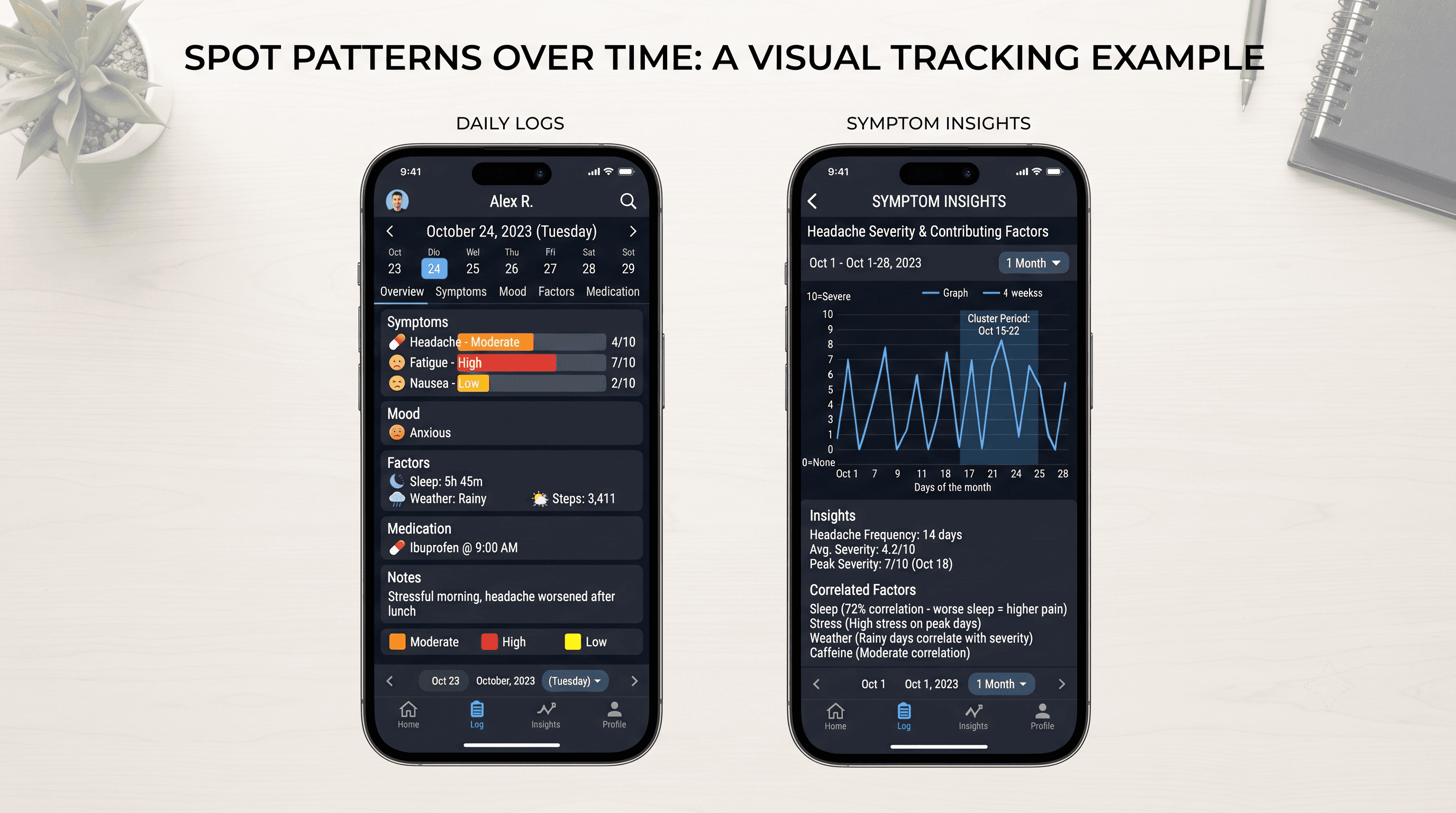
Why People Track Symptoms Over Time
Most people don't start tracking symptoms out of curiosity. They start because something keeps happening and they can't tell if it's getting worse, staying the same, or connected to something else, like sleep, stress, food, or weather.
Common reasons people track symptoms:
- Preparing for a doctor's appointment with real data instead of guesswork
- Identifying triggers for migraines, IBS flares, or allergic reactions
- Monitoring a chronic condition between checkups
- Watching a new symptom to see if it's improving or worsening
- Documenting medication side effects or effectiveness
A good tracker turns vague memories ("I've had headaches a lot lately") into specific patterns ("12 headaches in the last 30 days, 8 of them within a day of poor sleep"). That kind of detail makes medical visits shorter and more useful.
Ranked Recommendations
1. Bearable
Why it's included: Bearable lets users log an unlimited amount of custom symptoms, moods, and other health metrics for free, with weekly reports and correlation graphs. It's built by people managing their own chronic conditions, which shows in how customizable the entry system is.
Best for: People tracking multiple overlapping symptoms (pain, fatigue, mood, sleep, digestive issues) who want to see how they relate to each other.
Strengths:
- Unlimited free custom tracking
- Correlation reports connecting habits to symptom changes
- Syncs with Apple Health and Fitbit
- No ads, and the company states it does not sell user data
Limitations:
- Full historic data access (beyond 30 days) requires the paid tier
- The volume of tracking options can feel overwhelming at first
- Not designed to tell you whether a symptom needs urgent care
Pricing: Free for core features. Premium is $34.99 per year or $6.99 per month, with frequent discounts.
When to choose something else: If you only care about one specific condition, like migraine, a specialist app will likely feel faster to use day to day.
2. CareClinic
Why it's included: CareClinic goes beyond symptom logging into full care coordination. It supports tracking over 3,500 conditions simultaneously, and multiple family profiles in one account, which makes it useful for people managing a parent's or child's health alongside their own.
Best for: Households managing multiple people's health, or anyone who wants medication tracking and symptom tracking combined into one care plan.
Strengths:
- Family profiles for caregivers
- Generates professional PDF reports for care teams
- Broad condition library with AI-suggested relevant trackers
Limitations:
- Several reviewers note that editing or deleting past entries and viewing analytics requires the paid subscription
- Some users report inconsistent syncing with wearables
- Interface has more depth than casual users may want
Pricing: Free core version. Premium plans unlock advanced analytics, unlimited care team members, and additional integrations. Exact current pricing is best confirmed on the CareClinic site, since it has changed across plan tiers.
When to choose something else: If you're tracking symptoms only for yourself and don't need caregiver or family features, Bearable is simpler to set up.
3. Migraine Buddy
Why it's included: Migraine Buddy is the most established migraine-specific tracker, with a large enough user base that its reports are widely recognized by neurologists. It logs triggers, symptoms, medications, and relief methods, plus automatic sleep recording and weather forecasting for pressure changes.
Best for: Anyone whose primary reason for tracking is migraine or recurring headache patterns.
Strengths:
- Detailed, specialist-recognized export reports
- Weather and barometric pressure correlation
- Large community and pattern database
Limitations:
- Some users find the logging process lengthy during an active migraine
- Advanced features, including unlimited weather forecasts and detailed analytics, require the premium subscription
- Less useful if migraine is only one of several things you're tracking
Pricing: Free tier for basic logging. Premium is $4.99 per month or $29.99 per year as of 2026, adding AI insights and weather correlation.
When to choose something else: If migraines are one symptom among several chronic issues, a general tracker like Bearable may be more efficient than running two separate apps.
4. N1 Headache
Why it's included: N1 Headache is a free, no-subscription-pressure option built specifically for migraine sufferers, including a dark mode for photosensitivity during attacks.
Best for: People who want dedicated migraine tracking without an ongoing subscription.
Strengths:
- Free to use, with an optional one-time premium purchase
- Dark mode designed for light sensitivity during migraine attacks
- Analyzes data to suggest possible triggers
Limitations:
- iOS only
- Smaller community and update cadence than Migraine Buddy
- Less integration with third-party health data than Bearable or CareClinic
Pricing: Free, with an optional one-time premium purchase around $50 that most users don't find necessary.
When to choose something else: If you use Android, this option isn't available to you.
5. Symple
Why it's included: Symple is a straightforward symptom journal with clean Apple Health integration, useful for people who want daily logging without a steep learning curve.
Best for: Users who want a simple, visually clean symptom diary rather than a full health-management platform.
Strengths:
- Easy to learn and use
- Interactive charts for spotting trends
- Imports Apple Health data like heart rate, steps, and sleep
Limitations:
- Free tier limits tracking to a small number of symptoms
- Fewer condition-specific templates than CareClinic or Bearable
- Update frequency and long-term support: Information not publicly available.
Pricing: Free for a limited number of symptoms; premium unlocks additional tracking.
When to choose something else: If you're managing several chronic conditions at once, Symple's free-tier symptom limit will likely feel restrictive.
6. Momentary
Why it's included: Momentary isn't a symptom-tracking app. It's an AI-powered healthcare navigator with physician-reviewed guidance that helps you understand a symptom you've noticed and figure out what to do about it, including whether it can wait, needs a telehealth visit, or needs in-person care. Reader value test: if you removed Momentary from this list, people who track a worsening symptom would still lack a clear answer to "does this need medical attention?" That gap is what Momentary addresses.
Best for: The moment when tracking shows a pattern you're unsure about, like a symptom that's increasing in frequency or severity, and you need help deciding what to do next.
Strengths:
- Physician-reviewed guidance on next steps
- Helps compare self-care, telehealth, urgent care, primary care, and emergency room options
- Available nationwide as an AI navigator
Limitations:
- Does not track, log, or graph symptoms over time
- Does not diagnose conditions
- Physician services are currently available only in California; the AI healthcare navigator is available nationwide
Pricing: Information not publicly available for current plan tiers; check Momentary's site for up-to-date pricing.
When to choose something else: If you already know your symptom pattern needs a doctor visit and just need scheduling or ongoing management, a specialist tracker or your existing care team is a more direct route.
If you think you may be experiencing a medical emergency, call 911 or go to the nearest emergency room immediately. No app on this list, including Momentary, is designed for emergency situations.
Who Should Choose Each Option
- Multiple chronic conditions, want free flexibility: Bearable
- Managing health for a family or care recipients: CareClinic
- Migraine is your main concern and you want deep reports for a neurologist: Migraine Buddy
- Migraine tracking without a subscription: N1 Headache
- Want something simple and visual: Symple
- Unsure whether a tracked symptom needs medical attention: Momentary, alongside whichever tracker you're already using
FAQ
What is the best free app for tracking symptoms? Bearable offers the most extensive free tier, allowing unlimited custom symptom tracking with weekly reports before any paywall applies.
Can a symptom tracker tell me if I need to see a doctor? Most tracker apps log and graph data but don't interpret whether a pattern requires medical care. For that kind of guidance, a physician-reviewed navigator like Momentary can help you understand appropriate next steps.
Is there a symptom tracker app made specifically for migraines? Yes. Migraine Buddy and N1 Headache are both built specifically for migraine and headache tracking, including weather-related trigger correlation.
Do symptom tracker apps sync with Apple Health or Fitbit? Bearable and Symple both integrate with Apple Health, and Bearable also syncs with Fitbit. CareClinic supports wearable integrations as well, though some users report inconsistent syncing.
Are symptom tracking apps private and secure? Most reputable apps in this category encrypt data and state they don't sell user information, but privacy practices vary by app. Always check the specific privacy policy before entering sensitive health details.
How much do symptom tracker apps cost? Most offer a free tier with a premium upgrade ranging roughly from $5 to $7 per month, or $30 to $50 per year, for advanced reports and unlimited history.
What should I do if my tracked symptoms are getting worse? If symptoms are worsening significantly or you're experiencing warning signs like chest pain, difficulty breathing, or severe pain, seek medical care right away rather than continuing to track. For less urgent uncertainty, a healthcare navigator can help you weigh options.


