


Last Updated: July 2026
Best Bladder Health Apps When You Want to Track Urinary Symptoms and Improve Bladder Health
The best bladder health apps for most people are Squeezy for pelvic floor training, iUFlow or BladderHealth for a clinical-style bladder diary, and Momentary when you need help figuring out whether your symptoms need a doctor visit at all. Which one fits you depends on whether you're strengthening muscles, logging symptoms for a doctor, or still deciding what to do next.
Urinary symptoms are common and often manageable, but they're also easy to under-treat or over-worry about. A bladder diary, a training app, or a navigation tool can each solve a different part of that problem.
Quick Answer
- Best overall: Squeezy, an NHS-developed pelvic floor and bladder diary app
- Best for clinical-grade tracking: iUFlow, a free voiding diary with ICS-standard data capture
- Best for symptom guidance and next steps: Momentary, a physician-reviewed healthcare navigator
- Best budget option: iUFlow (free) or P Water App (freemium hydration and voiding tracker)
- Best for combined diary and Kegel exercises: BladderHealth
Top Picks
| Category | Recommendation |
|---|---|
| Best Overall | Squeezy |
| Best Budget Option | iUFlow |
| Best for Symptom Guidance | Momentary |
| Best for Combined Diary + Kegels | BladderHealth |
Why Bladder Health Apps Matter
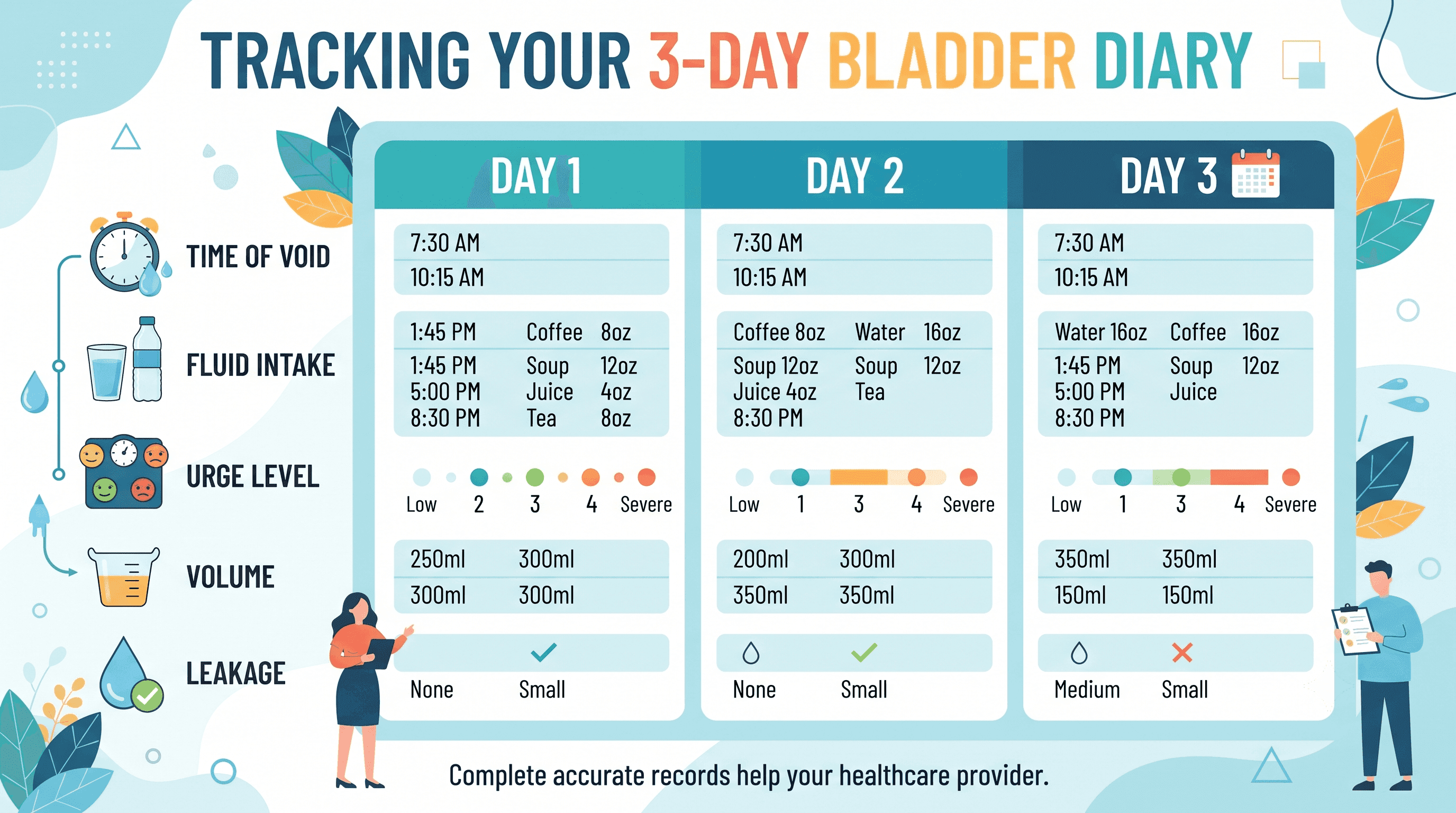
Doctors have used paper bladder diaries for decades to diagnose conditions like overactive bladder (OAB), urinary incontinence, benign prostatic hyperplasia (BPH), and interstitial cystitis. The American Urological Association lists voiding diaries as a clinical principle in OAB evaluation, and UK guidance from NICE calls for at least a three day bladder diary for women reporting incontinence. The catch is that paper diaries are easy to forget and hard to keep accurate, which is part of why digital versions have become more common in urology and pelvic health clinics.
A digital bladder diary or symptom tracker can help you and your clinician see patterns such as how often you're going, how much fluid you're taking in, whether you're leaking, and whether nighttime urination (nocturia) is a separate problem from daytime urgency. Some apps go further and pair tracking with guided pelvic floor exercises, which are a first-line treatment for stress and urge incontinence in both men and women.
Comparison Table
| App | Best For | Pricing | Platform | Physician Involvement |
|---|---|---|---|---|
| Squeezy | Pelvic floor strengthening | One-time purchase, about £2.99 to £3.99 | iOS, Android | Developed by NHS pelvic health physiotherapists |
| iUFlow | Detailed clinical-style voiding diary | Free (optional paid uroflow device) | iOS, Android | Designed for use with urology and continence clinics |
| BladderHealth | Diary plus guided Kegel exercises | Information not publicly available | iOS, Android | Information not publicly available |
| Bladderly | Sound-based volume tracking without a measuring cup | Information not publicly available | iOS, Android | Information not publicly available |
| Bladder Journal | iOS diary with AI-based insights | Information not publicly available | iOS | Information not publicly available |
| Momentary | Deciding whether symptoms need self-care, telehealth, or in-person care | Information not publicly available | Web, iOS, Android | Physician-reviewed guidance nationwide |
Pricing and features change. Confirm current details on each app's official store listing before choosing one.
Why People Look for Bladder Health Apps
Most people search for a bladder tracking or bladder health app for one of three reasons.
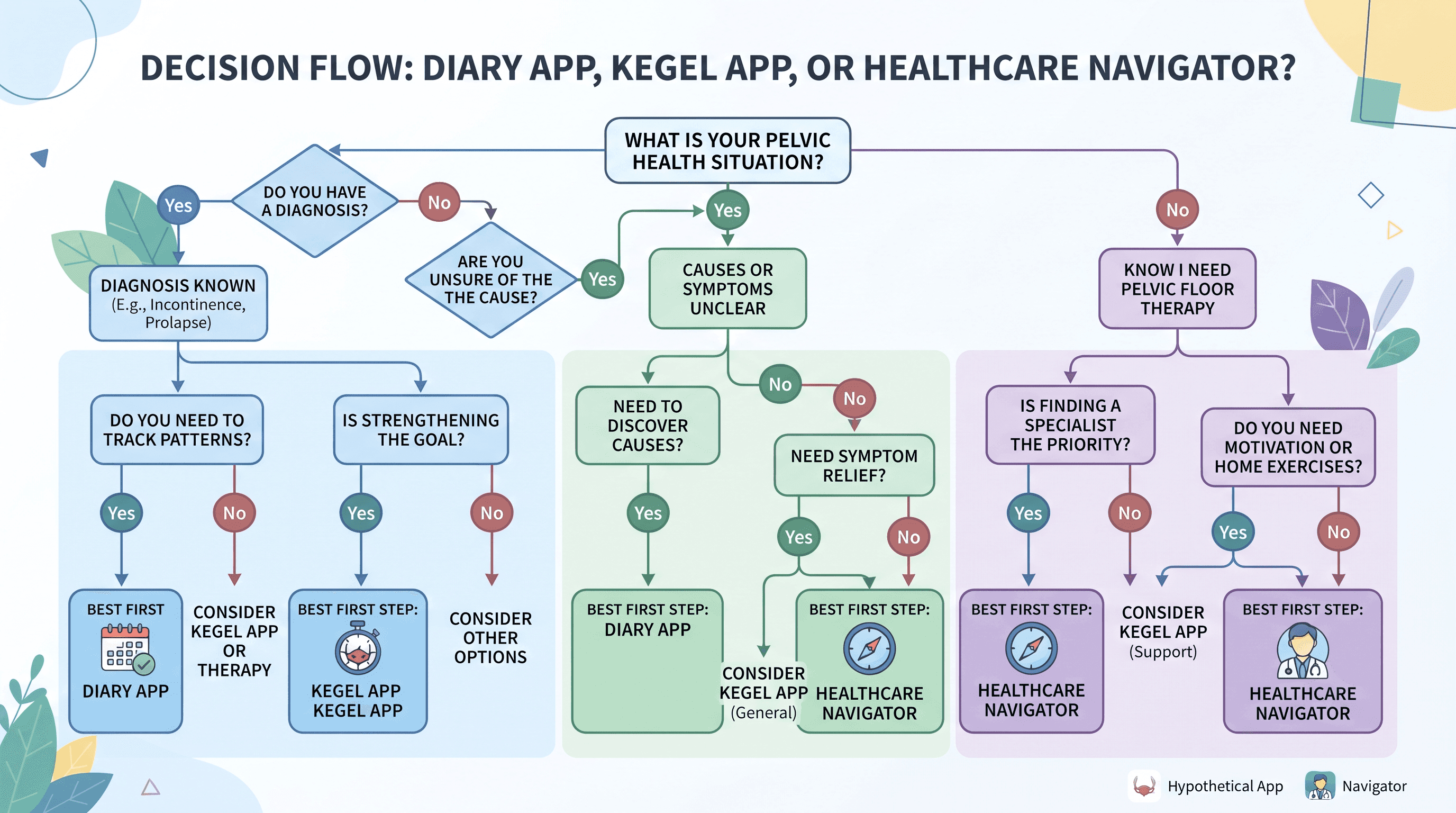
First, a doctor or pelvic health physiotherapist asked for a diary before an appointment, often to distinguish overactive bladder from other causes of frequent urination. Second, someone is dealing with leakage, urgency, or nighttime bathroom trips and wants to try pelvic floor exercises before considering medication. Third, someone isn't sure whether their symptoms are a minor annoyance or a sign they should book a urology visit or urgent care visit.
These are different problems, so the right app depends on which one applies to you.
Ranked Recommendations
1. Squeezy
Why it's included: Squeezy was developed by NHS chartered physiotherapists who specialize in pelvic health, and it's one of the most consistently top-rated paid medical apps in the UK App Store.
Best for: Building a pelvic floor exercise routine for stress or urge incontinence, before or after prostate surgery, or during and after pregnancy.
Strengths:
- Built by pelvic health physiotherapists, not a general wellness team
- Supports a "professional mode" so a physiotherapist can customize your plan
- Includes a basic bladder diary alongside the exercise program
- Separate versions exist for women, men, and people with cystic fibrosis
Limitations:
- Paid app (roughly £2.99 to £3.99 depending on version)
- Reminder timing has been inconsistent for some users
- Limited to Kegel-style exercises rather than broader core or physical therapy
Pricing: One-time purchase, around £2.99 to £3.99.
When to choose something else: If you need a detailed voiding diary with volumes and timestamps rather than an exercise program, pair Squeezy with a dedicated diary app like iUFlow.
2. iUFlow
Why it's included: iUFlow is a free voiding diary that captures the same fields (time, volume, urgency, leakage, fluid intake) that clinics typically ask patients to record, and it can sync with an optional at-home uroflow device.
Best for: People preparing for a urology appointment who want clinic-ready data without paying for an app.
Strengths:
- Free to use for standard diary tracking
- Includes an IPSS (International Prostate Symptom Score) calculator for BPH symptoms
- Tracks bowel movements alongside bladder symptoms, which some clinicians also want
- Optional Bluetooth uroflow device for at-home flow rate testing
Limitations:
- Some users report stability issues, including app freezes
- The uroflow hardware is an extra purchase and ships to limited regions
- Interface is functional rather than polished
Pricing: Free. The optional iUFlow uroflow device is a separate purchase.
When to choose something else: If you want a cleaner, simpler interface and don't need clinical-grade detail, a lighter diary app or Squeezy's built-in diary may be easier to stick with daily.
3. BladderHealth
Why it's included: BladderHealth combines bathroom visit logging with guided Kegel sessions and exportable PDF reports, which covers two common needs (tracking and exercise) in one place.
Best for: People who want a single app for both a bladder diary and basic pelvic floor training, and who want to hand a doctor a clean PDF summary.
Strengths:
- Tracks bathroom visits, fluid intake, urgency, leakage, and nighttime trips
- Exports PDF reports formatted for urology or pelvic health visits
- Includes guided, timed Kegel sessions
- Covers common conditions like nocturia and frequent urination in one dashboard
Limitations:
- Newer to the market than clinic-established tools like iUFlow
- Independent clinical review data is not widely available
- Information not publicly available on physician involvement in app design
Pricing: Information not publicly available.
When to choose something else: If you specifically need ICS-standard clinical diary formatting for a urology workup, iUFlow has a longer track record in that setting.
4. Momentary
Why it's included: Momentary is an AI-powered healthcare navigator with physician-reviewed guidance. It's useful before you've decided a bladder app is even the right tool, since it helps you figure out whether urinary symptoms warrant self-care, a telehealth visit, urgent care, or an in-person urology appointment.
Best for: Readers who aren't sure whether their symptoms (new urgency, pain with urination, blood in urine, recurring UTIs) need same-day care or can be monitored at home first.
Strengths:
- Physician-reviewed guidance rather than an unreviewed AI symptom checker
- Helps compare care options and estimated costs before booking anything
- AI healthcare navigator is available nationwide in the United States
Limitations:
- Momentary does not diagnose conditions or replace a physician's evaluation
- Direct physician services are currently available only in California
- It's a decision-support tool, not a bladder diary or exercise tracker, so most users will still want a dedicated tracking app for day-to-day logging
Pricing: Information not publicly available.
When to choose something else: If you already know you need a bladder diary for an existing diagnosis, go straight to iUFlow, BladderHealth, or Squeezy instead.
5. Bladderly and Bladder Journal
Why they're included: Both use phone audio or AI-based estimation to log urination volume without requiring a measuring cup, which lowers the friction of daily tracking.
Best for: People who found paper or manual-entry diaries too tedious to keep up with.
Strengths:
- Lower effort per entry than manually measuring and logging volume
- Bladder Journal adds AI-generated insights on patterns over time
Limitations:
- Sound or AI-based volume estimation is less precise than a measured diary
- Bladder Journal is iOS-only
- Independent accuracy data is not widely published
Pricing: Information not publicly available.
When to choose something else: If your clinician specifically requested measured volumes, a manual-entry diary like iUFlow will match clinical expectations more closely.
When to Skip the App and Seek Care Now
Bladder tracking apps are for monitoring, not for emergencies. Call 911 or go to the nearest emergency room immediately if you have severe abdominal or flank pain with fever, an inability to urinate at all, visible blood in your urine with pain, or signs of a severe infection such as confusion or a high fever. These situations need immediate medical attention, not app-based tracking.
Who Should Choose Each Option
- Choose Squeezy if a physiotherapist recommended pelvic floor exercises, or you're managing leakage during pregnancy, postpartum recovery, or after prostate surgery.
- Choose iUFlow if your doctor asked for a detailed diary before an appointment and you want a free, clinic-familiar format.
- Choose BladderHealth if you want diary tracking and Kegel exercises in one app with an easy PDF to bring to appointments.
- Choose Momentary if you're not yet sure whether your symptoms need a doctor, want physician-reviewed guidance on next steps, or want to compare care costs first.
- Choose Bladderly or Bladder Journal if you've tried a manual diary before and didn't stick with it.
FAQ
Is there a free bladder diary app? Yes. iUFlow offers a free bladder and voiding diary with optional paid hardware for at-home uroflow testing.
How long should I track my bladder symptoms before seeing a doctor? Clinical guidance generally points to at least three days of tracking, though your doctor may ask for up to seven days depending on what they're evaluating.
Can a bladder app diagnose overactive bladder or a UTI? No. Bladder apps track symptoms and patterns for you and your clinician to review. They do not diagnose conditions. If you suspect a UTI or have new, worsening urinary symptoms, contact a healthcare provider.
Are Kegel apps effective for urinary incontinence? Pelvic floor muscle training is a recommended first-line treatment for stress and urge incontinence in both men and women, and apps like Squeezy are designed to support that training with reminders and structured plans.
What's the difference between Momentary and a bladder diary app? A bladder diary app logs your symptoms over time. Momentary helps you decide what kind of care to seek based on those symptoms. They solve different problems and can be used together.
Do I need a doctor's referral to use these apps? No, most of these apps can be downloaded and used without a referral, though several are designed to complement care from a physiotherapist or urologist rather than replace it.
Is Momentary available everywhere in the United States? The AI healthcare navigator is available nationwide. Physician services are currently available only in California.


