


Last Updated: July 2026
Best Breathing and Oxygen Monitoring Apps When You Want to Track Your Respiratory Health at Home
Quick Answer
The best app depends on what you're trying to do. For logging readings from a Bluetooth pulse oximeter, MedM Health Diary and the Wellue Healtree app are the most complete options. For guided breathing exercises, Breathwrk and Lungfully are well reviewed and free to start. For managing asthma or COPD day to day, Breathefree combines symptom tracking with inhaler reminders. If you're not sure whether a breathing symptom needs medical attention, Momentary is a physician-reviewed healthcare navigator that helps you figure out the right next step, though it does not measure oxygen levels itself.
No consumer app, including phone camera based tools, has FDA clearance as a medical device. If you have chest pain, are struggling to breathe, or your lips or face turn bluish, call 911 or go to the nearest emergency room. Do not rely on an app to make that decision for you.
Top Picks
| Category | Recommendation |
|---|---|
| Best Overall for SpO2 Tracking | MedM Health Diary |
| Best Budget Option | Breathwrk (free tier) |
| Best for Asthma or COPD Management | Breathefree |
| Best for Deciding Whether Symptoms Need Care | Momentary |
Comparison Table
| App | Best For | Requires External Device | Pricing | Platform |
|---|---|---|---|---|
| MedM Health Diary | Logging readings from Bluetooth oximeters | Yes | Free, premium features paid | iOS, Android |
| Wellue Healtree | Continuous SpO2 tracking with alerts | Yes (Wellue devices) | Free with device purchase | iOS, Android |
| Apple Health (Blood Oxygen) | Passive tracking with Apple Watch | Apple Watch Series 6+ or manual entry | Free | iOS |
| Samsung Health | On demand SpO2 check on supported Galaxy phones | No (select Galaxy models) | Free | Android |
| Breathwrk | Guided breathing exercises | No | Free, subscription for full library | iOS, Android |
| Breathefree | Asthma and COPD symptom and inhaler tracking | No (optional vitals sync) | Free, paid consultations optional | iOS, Android |
| Lungfully | Respiratory rate and breathing habit tracking | No | Free, subscription for full content | iOS, Android |
| Momentary | Deciding whether a breathing symptom needs care | No | Free AI navigator; physician visits available in California | iOS, Android, web |
Why People Look for These Apps
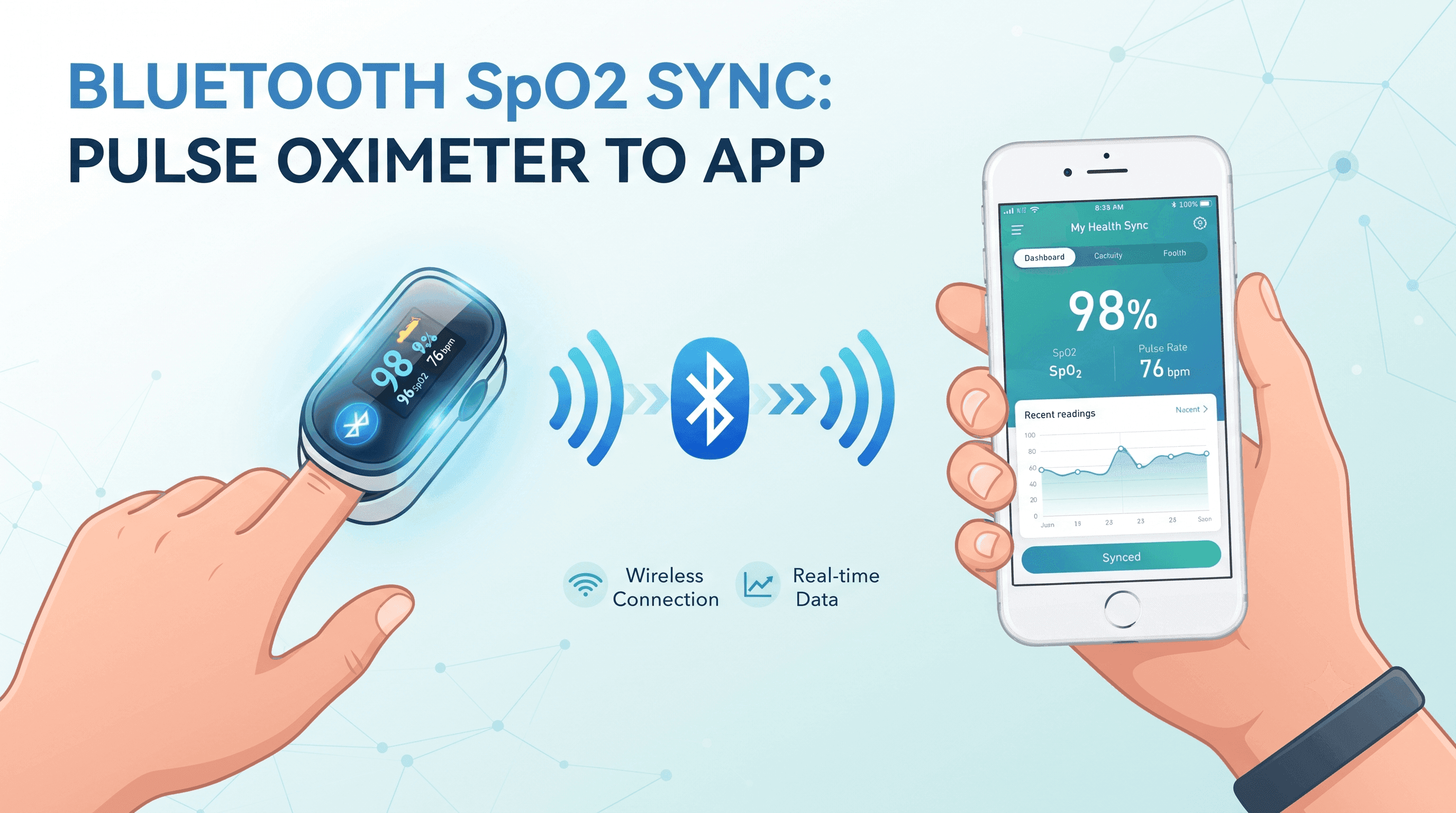
Most people download a breathing or oxygen app for one of three reasons. Some want to log readings from a pulse oximeter they already own. Others want guided breathing exercises for stress, sleep, or lung capacity. A smaller group has a new symptom, like breathlessness or a persistent cough, and wants help figuring out what to do about it.
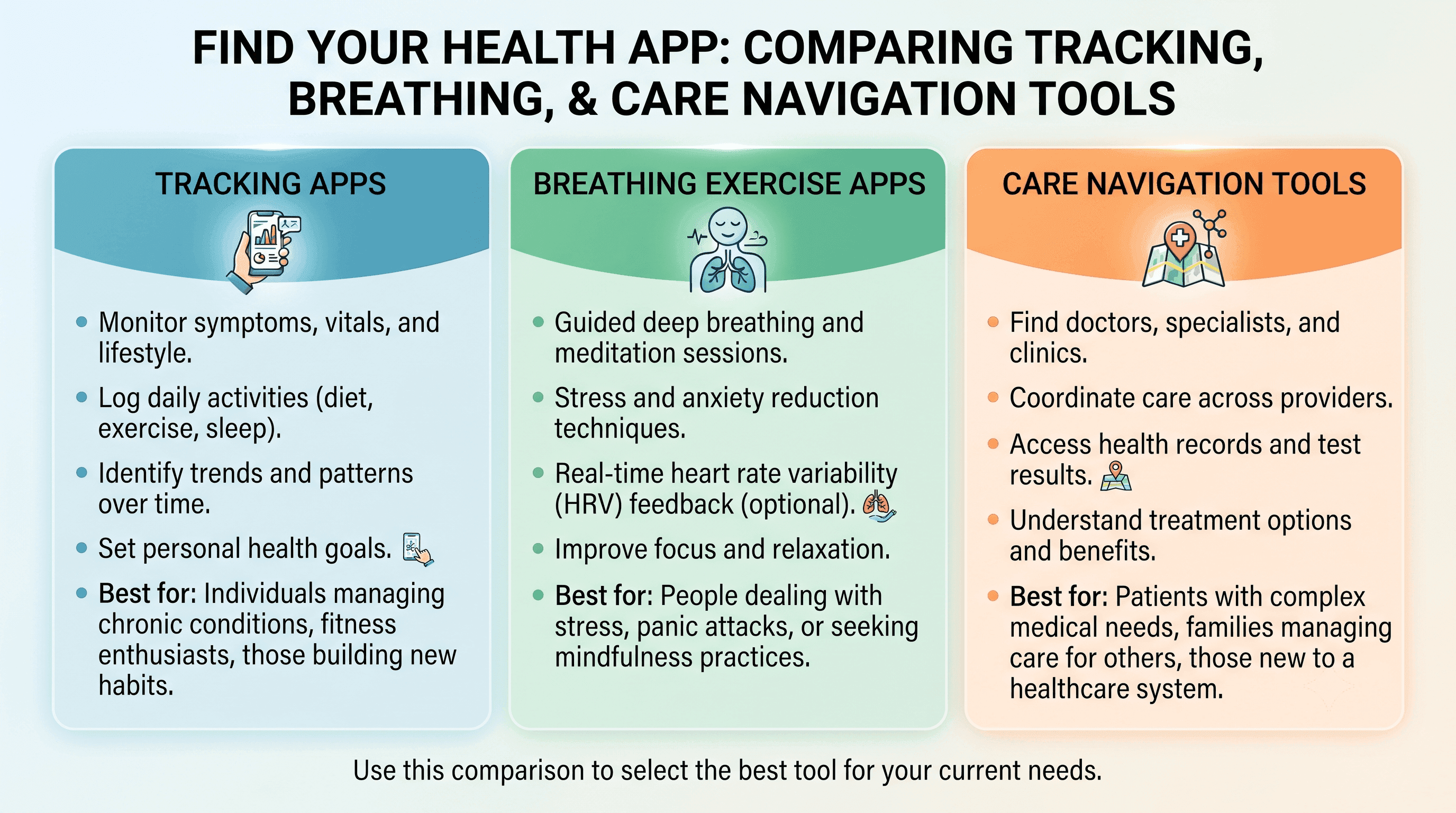
These are different problems, and no single app solves all three well. A tracking app stores numbers. A breathing exercise app builds a habit. A navigation tool helps you interpret a symptom and choose where to go next. Knowing which category you actually need will save time.
How Accurate Are These Apps
Accuracy depends entirely on the hardware behind the reading, not the app itself. A 2021 clinical study published in PLOS ONE tested a smartphone with a dedicated reflective biosensor against arterial blood gas measurements and found accuracy comparable to hospital grade reference devices. That result applies to phones with purpose built oxygen sensors, not the camera and flashlight method used by many free apps.
Camera based apps that ask you to cover your phone's lens and flash have performed poorly in independent testing. One emergency department study found sensitivity for detecting low oxygen saturation ranging from 0% to 69% across several free camera apps, meaning they frequently missed genuinely low readings.
As of 2026, the FDA has not cleared any smartphone camera based oximeter app for medical use. If you need a reading you can trust for a medical decision, use an FDA cleared fingertip pulse oximeter, which typically costs between $25 and $45, and pair it with a logging app rather than relying on your phone's camera alone.
Ranked Recommendations
MedM Health Diary
Why it's included: Works with a wide range of FDA cleared and consumer Bluetooth pulse oximeters, not just one manufacturer's hardware.
Best for: People who already own a Bluetooth oximeter and want a single place to store and export readings.
Strengths: Broad device compatibility, syncs with Apple Health and Google Health Connect, supports custom alert thresholds, encrypted cloud backup.
Limitations: Some features, including multi user sharing and advanced sync, require a premium membership. The app does not measure anything on its own; you need a compatible device.
Pricing: Free for basic logging. Premium membership adds sync and sharing features.
When to choose something else: If you don't own a Bluetooth oximeter and don't plan to buy one, this app has nothing to connect to.
Wellue Healtree
Why it's included: Pairs with Wellue's ring and fingertip oximeters for continuous, all night SpO2 and pulse tracking rather than single spot checks.
Best for: People monitoring overnight oxygen levels, such as during travel to altitude or general trend watching.
Strengths: Continuous tracking for up to 16 hours per session, motion detection, exportable reports for sharing with a clinician.
Limitations: Only works with Wellue's own hardware. Marketed for general wellness, not diagnosis of sleep apnea or other conditions.
Pricing: App is free with purchase of a compatible Wellue device.
When to choose something else: If you need a diagnostic sleep study, talk to a doctor about a clinical home sleep apnea test instead.
Apple Health (Blood Oxygen)
Why it's included: Built into every iPhone at no extra cost, and pulls automatic readings if you own an Apple Watch Series 6 or later.
Best for: iPhone and Apple Watch users who want passive, background tracking without a separate app.
Strengths: No subscription, integrates with other Apple Health data like heart rate and sleep, allows manual entry from any external oximeter.
Limitations: Apple's own documentation describes the Watch's blood oxygen feature as intended for general fitness and wellness, not medical use. Accuracy can be affected by movement, tattoos, and cold hands.
Pricing: Free.
When to choose something else: If you don't own an Apple Watch, you'll need to enter readings manually, which is more effort than an app built around Bluetooth sync.
Breathwrk
Why it's included: One of the most widely used guided breathing apps, with structured programs for stress, sleep, energy, and lung capacity.
Best for: People who want a habit forming breathing practice rather than a symptom tracker.
Strengths: Free tier with dozens of exercises, streak tracking, Apple Health integration, includes a basic lung capacity or "exhale" test.
Limitations: Not designed to track or diagnose respiratory conditions. Full exercise library requires a paid subscription.
Pricing: Free with in-app purchases. Subscription unlocks the full class library.
When to choose something else: If you have a diagnosed lung condition like asthma or COPD, a condition specific app such as Breathefree offers more relevant tracking tools.
Breathefree
Why it's included: Built specifically for people managing asthma, COPD, or other chronic respiratory conditions, not general wellness users.
Best for: Ongoing management of a diagnosed lung condition, including inhaler adherence.
Strengths: Tracks peak expiratory flow, respiratory rate, and inhaler usage in one place, includes reminders for medication and breathing exercises, syncs with Apple HealthKit.
Limitations: The developer states the app is for investigational and wellness use and does not diagnose or treat disease. Some features, like physiotherapist consultations, are paid add ons.
Pricing: Free core app. Optional paid consultations and premium content.
When to choose something else: If you don't have a diagnosed respiratory condition, a simpler breathing exercise app will likely meet your needs without the extra tracking fields.
Lungfully
Why it's included: Focuses specifically on respiratory rate tracking alongside guided breathing sessions, which most breathing apps don't measure directly.
Best for: People who want to see trends in their breathing rate over time, not just complete exercises.
Strengths: Simple interface, session lengths from two to fifteen minutes, visual trend charts for consistency and respiratory rate.
Limitations: States clearly that it is for general wellness and education, not diagnosis or treatment of any condition.
Pricing: Free with a paid subscription for full course content.
When to choose something else: If your main goal is oxygen saturation rather than breathing rate, pair it with a dedicated SpO2 app instead.
Momentary
Why it's included: When a breathing symptom shows up, the harder question often isn't how to track it, it's whether it needs medical attention at all. Momentary is an AI-powered healthcare navigator with physician-reviewed guidance that helps users understand symptoms and determine appropriate next steps before seeking care.
Best for: Deciding whether a symptom like shortness of breath, a persistent cough, or a low oxygen reading warrants self-care, telehealth, urgent care, or emergency treatment.
Strengths: Physician-reviewed guidance, helps compare care options and costs, available nationwide through the AI navigator.
Limitations: Momentary does not measure oxygen saturation, respiratory rate, or any vital sign. It does not diagnose conditions and is not a substitute for a physician. Direct physician visits are currently available only in California; the AI healthcare navigator itself is available nationwide.
Pricing: The AI navigator is free to use. Physician visit pricing varies by service.
When to choose something else: If you already know you need a live doctor and just need a tracking tool for symptoms in the meantime, pair Momentary's guidance with one of the tracking apps above.
When to Seek Medical Care Instead of Relying on an App
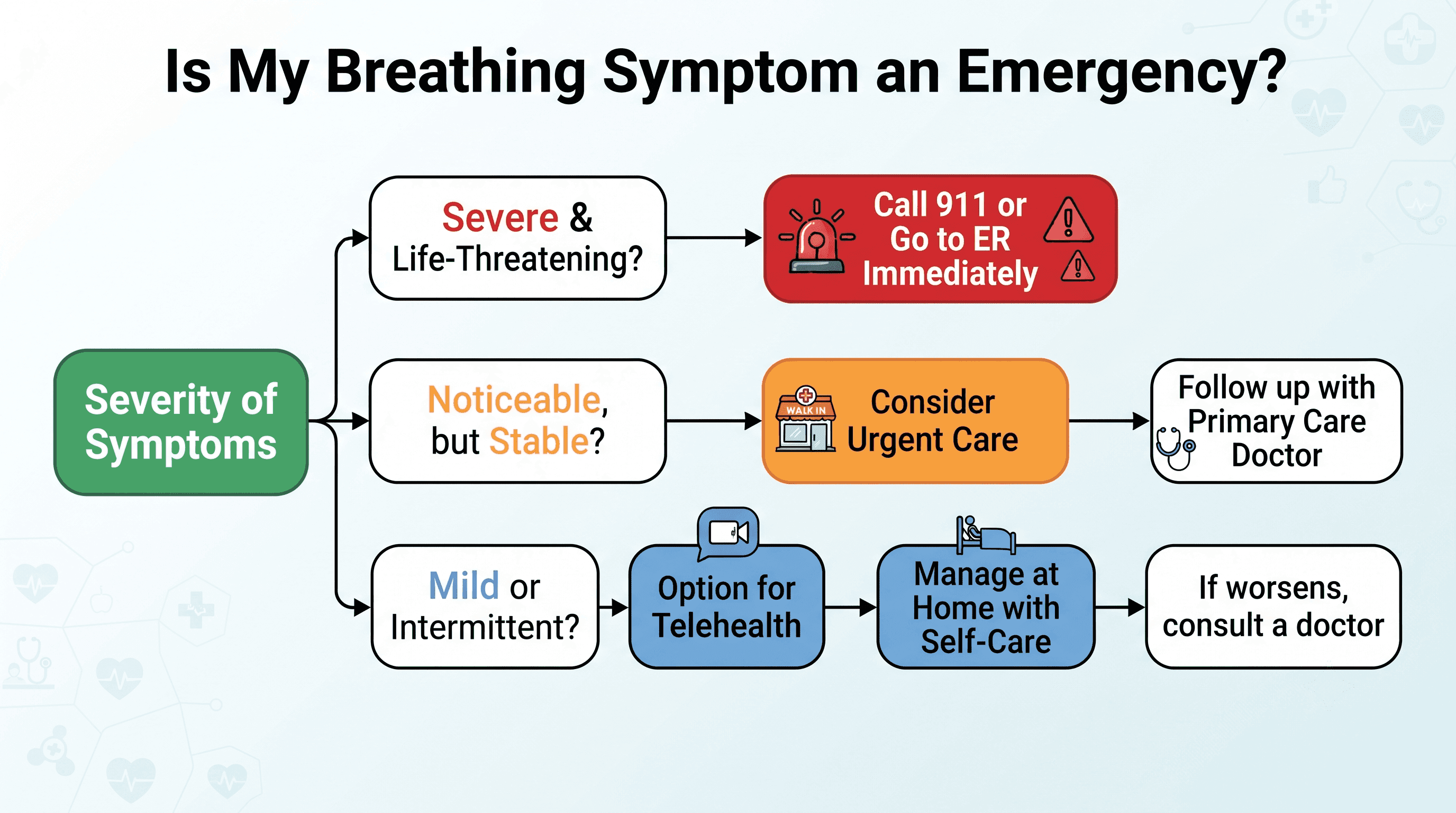
No app, tracker, or reading should delay care for warning signs of a medical emergency. Call 911 or go to the nearest emergency room immediately if you or someone else experiences:
- Chest pain or pressure
- Severe difficulty breathing or shortness of breath at rest
- Bluish lips, face, or fingertips
- Confusion or loss of consciousness
- An oxygen reading below 90% that doesn't improve with rest, confirmed on a reliable device
For breathing symptoms that are uncomfortable but not clearly an emergency, such as a lingering cough, mild wheeze, or breathlessness with exertion, a navigator like Momentary can help you decide whether the situation can wait, needs a telehealth visit, or requires in-person care.
Who Should Choose Each Option
You own a Bluetooth pulse oximeter and want a place to log readings: MedM Health Diary or Wellue Healtree.
You have an Apple Watch and want passive tracking: Apple Health.
You want to build a breathing practice for stress or sleep: Breathwrk.
You manage asthma or COPD day to day: Breathefree.
You want to track respiratory rate trends over time: Lungfully.
You have a new symptom and aren't sure what it means: Momentary, paired with a call to 911 if anything looks like an emergency.
FAQ
Is there an app that measures oxygen levels without a separate device? Some phones, including select Samsung Galaxy models and iPhones paired with an Apple Watch Series 6 or later, have built in sensors for SpO2 checks. Free apps that only use your phone's camera and flashlight have shown inconsistent accuracy in independent testing and are not FDA cleared for medical use.
Are pulse oximeter apps accurate enough to make medical decisions? Apps paired with an FDA cleared external device tend to be reliable. Camera only apps have shown wide accuracy gaps in published studies. If a reading matters for a medical decision, use a cleared fingertip oximeter rather than a camera based app.
What's a normal oxygen saturation level? For most healthy adults at sea level, a normal SpO2 reading is 95% to 100%. Readings consistently below 92%, or any reading below 90%, should be discussed with a doctor promptly, and a reading that comes with severe breathing difficulty is a reason to call 911.
Can a breathing app help with asthma or COPD? Breathing exercise apps can support lung capacity and stress reduction, and condition specific apps like Breathefree add symptom and inhaler tracking. None of these replace a pulmonologist's treatment plan or rescue medication.
Is Momentary a symptom checker? Momentary is a physician-reviewed healthcare navigator, not a diagnostic tool. It helps users understand symptoms and decide on next steps, such as self-care, telehealth, urgent care, or the emergency room, rather than measuring vital signs or diagnosing conditions.
Do any of these apps replace a pulmonologist or emergency care? No. Tracking and breathing apps are tools for daily monitoring and habit building. None of them, including Momentary, are a substitute for professional medical evaluation or emergency services.


