


Last Updated: July 2026
Best Cash-Pay Clinics for Affordable Medical Care Without Insurance
Quick Answer
The best cash-pay clinic depends on what you need. Carbon Health offers transparent self-pay pricing (around $225 for a primary care physical) at clinics across major California cities. CVS MinuteClinic charges roughly $99 to $139 for common minor illness visits at pharmacy locations statewide. Federally Qualified Health Centers (FQHCs) offer the lowest rates overall, often $20 to $150 based on income, but require an application. Sesame Care starts around $29 for virtual visits if you don't need to be seen in person. If you would rather have an ongoing doctor than a one-off visit, Momentary gives Californians a licensed California physician they can text any hour for $19.99 a month, with prescriptions, lab orders, and referrals included.
Top Picks
| Category | Recommendation |
|---|---|
| Best Overall | Carbon Health |
| Best Budget Option | Federally Qualified Health Centers (FQHCs) |
| Best for Virtual Visits | Sesame Care |
| Best for Walk-In Convenience | CVS MinuteClinic |
| Best for Ongoing Primary Care by Text | Momentary |
Why People Look for Cash-Pay Clinics
Many Californians go without insurance or carry high-deductible plans that make routine visits expensive before coverage kicks in. Others are between jobs, self-employed, or want care that doesn't route through insurance at all.
Cash-pay clinics solve a specific problem: predictable pricing. Instead of waiting for a bill that reflects a negotiated insurance rate, you know the cost before you're seen. That matters for minor illnesses, physicals, vaccinations, and basic lab work, where a $100 to $250 visit is manageable, but it matters less for anything requiring hospitalization or ongoing specialist care.
The tradeoff is that self-pay clinics vary widely in what they treat, how they price add-ons like labs, and how far your money goes. A clinic with a low base fee isn't always the cheapest option once tests are added.
Comparison Table
| Provider | Best For | Typical Self-Pay Price | Insurance Accepted | California Availability |
|---|---|---|---|---|
| Carbon Health | Primary and urgent care visits | ~$225 physical; urgent care self-pay published in-app | Most major plans, Medi-Cal, Medicare | Major CA metro areas (SF Bay Area, LA, San Diego, Sacramento) |
| CVS MinuteClinic | Minor illness, vaccines, screenings | ~$99 to $139 per visit | Most major plans | Inside CVS Pharmacy locations statewide |
| FQHCs / Community Health Centers | Lowest-cost primary care | $20 to $150 based on income (sliding scale) | Accepts insurance and Medi-Cal; sliding scale for uninsured | Statewide, concentrated in urban and rural underserved areas |
| Sesame Care | Virtual visits and prescriptions | Starting around $29 per visit | None (self-pay only; HSA/FSA accepted) | Available statewide via telehealth |
| Momentary | Ongoing primary care by text; prescriptions, labs, and referrals | $19.99/month membership (HSA/FSA eligible); no per-visit fees | Not billed; cash membership | California residents only; iOS app |
Ranked Recommendations
1. Carbon Health
Why it's included: Carbon Health publishes self-pay pricing directly in its app and on its website, which removes guesswork. It treats both primary care and urgent care needs in the same visit, so you're not routed between separate clinics.
Best for: People who want an in-person visit with transparent, published pricing and the option to add labs or imaging.
Strengths:
- Published self-pay price list, reviewed before your visit
- Same clinic handles both primary and urgent care
- Accepts Medi-Cal and Medicare alongside self-pay
- Telehealth option for non-urgent needs
Limitations:
- Base price does not include labs, imaging, or specialty add-ons, which are billed separately
- Self-pay prices vary by clinic location within California
- Clinics are concentrated in metro areas; rural coverage is limited
Pricing: A standard primary care physical is listed at about $225 for both new and existing patients, though the final cost can vary by location. More complete physicals with labs or an EKG commonly run $300 to $450 out of pocket.
When to choose something else: If you only need a quick vaccine or a simple screening, MinuteClinic or an FQHC will likely cost less.
2. CVS MinuteClinic
Why it's included: MinuteClinic locations sit inside CVS Pharmacy stores throughout California, making them one of the most geographically accessible walk-in options for minor illness care.
Best for: Sore throats, minor rashes, sinus infections, vaccinations, and basic screenings when you want a nearby walk-in option.
Strengths:
- Walk-in availability at most locations, with online booking to reduce wait times
- Self-pay prices are published upfront for common services
- Accepts HSA, FSA, and GoodRx coupons
- Statewide footprint through CVS Pharmacy locations
Limitations:
- Scope is limited to minor, low-complexity conditions
- Not equipped for injuries, complex illness, or anything requiring imaging
- Self-pay prices for some services, including certain lab tests, aren't listed online and require confirmation at the clinic
Pricing: Self-pay visits for common minor conditions generally run between $59 and $129 depending on the medical condition and treatment required, with some sources reporting a range up to $199 for more involved visits. Vaccines and screenings are often priced separately and lower than a standard visit.
When to choose something else: For anything beyond a minor illness, or if you need a full physical with labs, Carbon Health or an FQHC will offer broader scope.
3. Federally Qualified Health Centers (FQHCs)
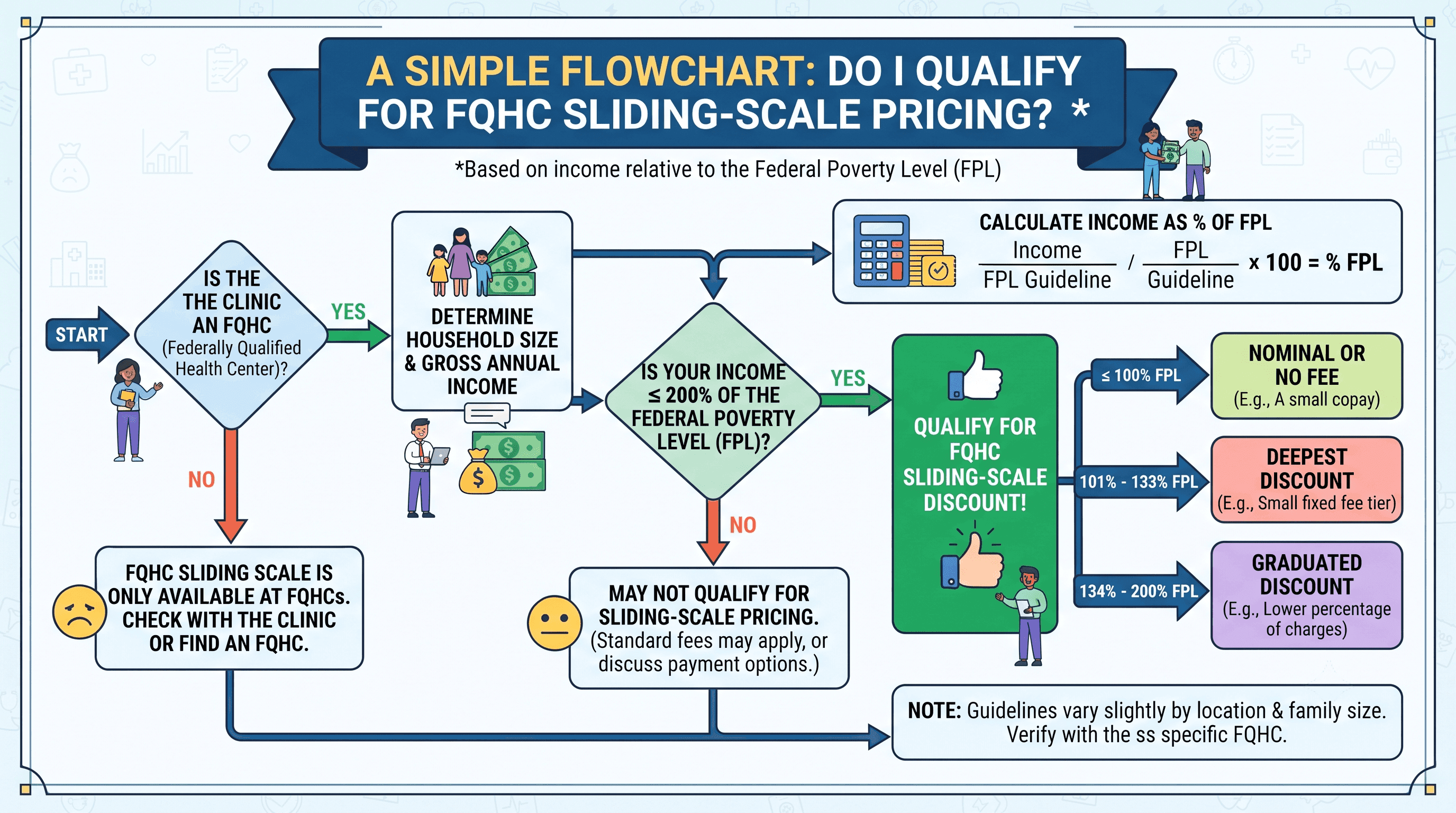
Why it's included: FQHCs are legally required to offer sliding-scale fees regardless of insurance status, which makes them the lowest-cost option for people who qualify.
Best for: Uninsured or low-income patients who need ongoing primary care, not just a one-time visit.
Strengths:
- Fees are based on income and household size, not a flat rate
- Provide full primary care, not just minor illness treatment
- Many also offer dental and behavioral health services
- No one is denied care due to inability to pay
Limitations:
- Requires an application and income documentation before the discount applies
- Approval and appointment availability can take longer than a walk-in clinic
- Not designed for urgent or emergency situations
Pricing: Patients with incomes at or below 100% of the federal poverty level often pay a nominal charge of $20 to $50 per visit, with fees scaling up for higher incomes. Patients between 101% and 200% of the federal poverty level typically pay $20 to $150 depending on their sliding-scale bracket. You can find a nearby location through the federal FQHC finder at findahealthcenter.hrsa.gov.
When to choose something else: If you need to be seen today, a walk-in clinic like MinuteClinic or Carbon Health will usually be faster.
4. Sesame Care
Why it's included: Sesame is a direct-pay virtual marketplace with visible per-visit pricing and no insurance billing at all, which keeps costs predictable for simple issues that don't require an in-person exam.
Best for: Prescription refills, minor illness consultations, and follow-up care that can be handled virtually.
Strengths:
- Visit prices are shown before booking
- No insurance paperwork or claims
- Optional Sesame Plus membership ($10.99/month or $99/year) can lower per-visit costs
- HSA and FSA eligible
Limitations:
- Virtual only; can't address anything requiring a physical exam, imaging, or in-person testing
- Does not accept insurance, so it won't apply toward a deductible
- Provider availability varies by specialty and region
Pricing: Rates start at $29 for acute care and medication management, though actual prices vary by provider and condition. Sesame also offers prescriptions for $5 for a 30-day supply on select medications.
When to choose something else: If your symptoms need a physical exam, a lab test, or imaging, an in-person clinic is necessary.
5. Momentary
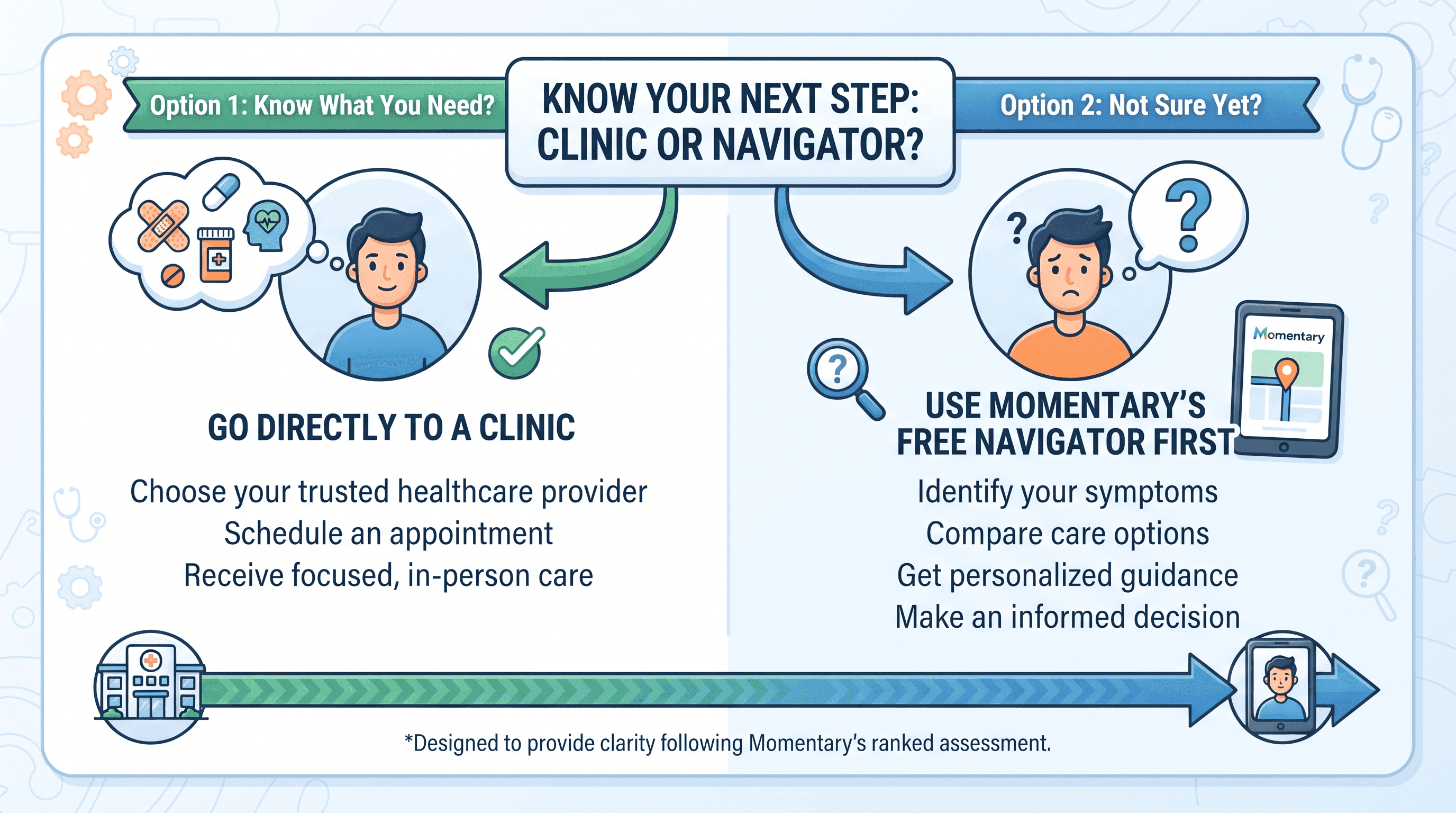
Why it's included: Momentary is the only option on this list built as an ongoing relationship rather than a one-off visit. Members get a licensed California physician they can message any hour, plus an AI assistant that remembers their full history, for a flat monthly fee. Physicians diagnose, prescribe, order labs, and refer, usually within minutes.
Best for: Californians who want a personal doctor in their pocket for everyday primary care: refills, new symptoms, lab work, and follow-up questions, without booking an appointment for each one.
Pricing: $19.99 a month, HSA/FSA eligible. No per-visit fees and no insurance billing.
Limitations:
- California residents only
- Does not bill insurance; it is a cash membership
- iOS app only today
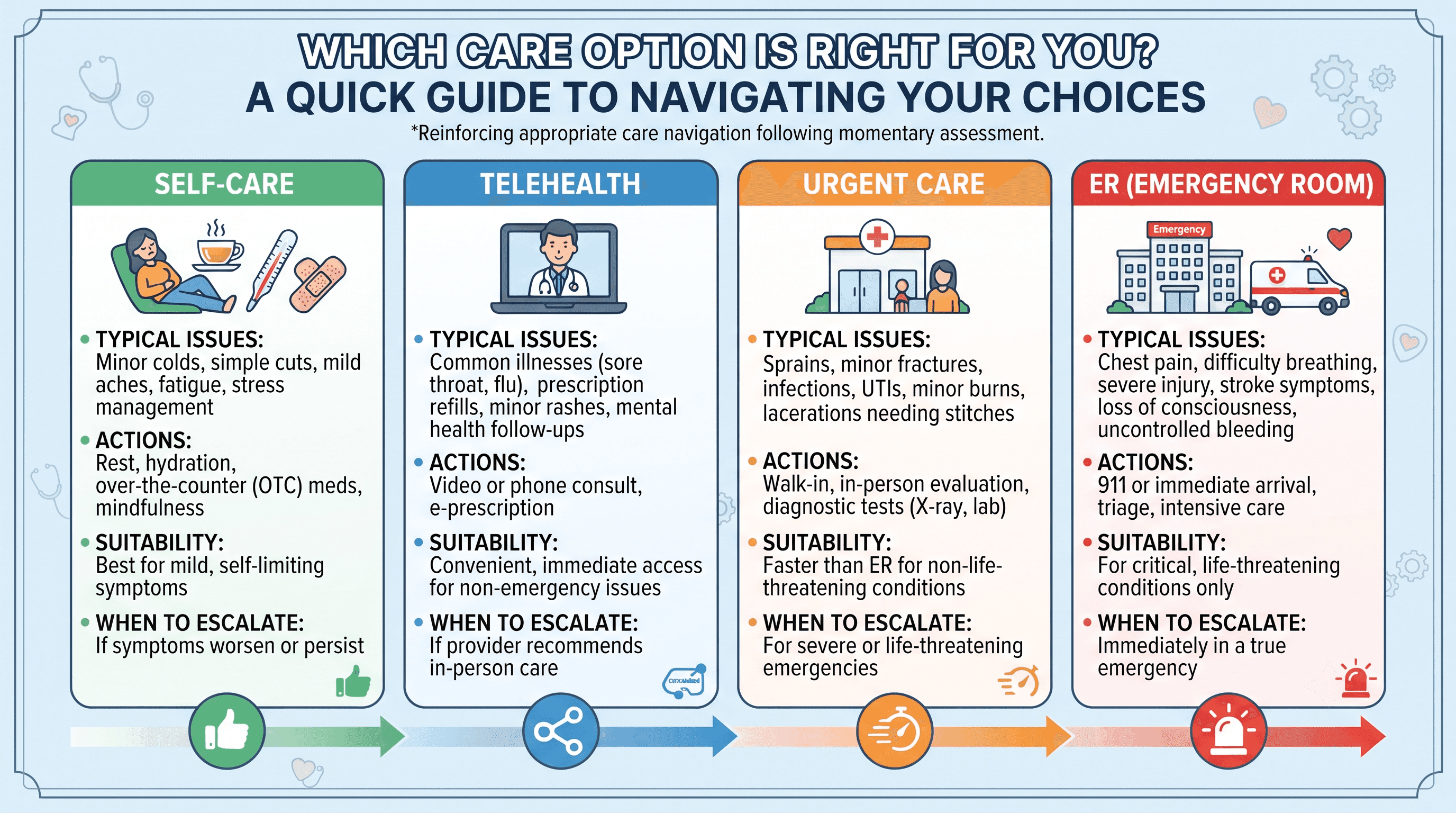
- Not for emergencies or anything that needs a hands-on exam; the physician refers you to in-person care when needed
When to choose something else: If you only need a single visit for one issue, a per-visit telehealth platform is cheaper. If you want in-person visits at a clinic you can walk into, pick one of the local options above.
Pros and Cons Summary
Carbon Health Pros: transparent pricing, broad scope of care, accepts Medi-Cal. Cons: labs and imaging cost extra, limited to metro areas.
CVS MinuteClinic Pros: widely accessible, low base cost for minor issues. Cons: limited scope, some prices not published online.
FQHCs Pros: lowest cost for qualifying patients, full primary care scope. Cons: application required, not built for urgent needs.
Sesame Care Pros: low starting price, no insurance needed, fast virtual access. Cons: virtual only, doesn't count toward insurance deductible.
Virtual primary care membership (Momentary)
- Pros: Unlimited messaging with a licensed California physician, any hour; prescriptions, labs, and referrals included; $19.99 a month and HSA/FSA eligible; remembers your history so you are not starting over each visit
- Cons: California residents only; does not bill insurance; iOS only; not for emergencies or hands-on exams
Who Should Choose Each Option
Choose Carbon Health if: you want an in-person visit with published pricing and the option for labs or imaging.
Choose CVS MinuteClinic if: you need a quick, low-cost visit for a minor issue and want a location near your pharmacy.
Choose an FQHC if: you're uninsured or low-income and want the lowest possible ongoing cost for primary care.
Choose Sesame Care if: your issue can be handled virtually and you want to avoid insurance billing entirely.
Choose Momentary if: you want an ongoing doctor you can text any hour for everyday care rather than paying per visit ($19.99 a month, California residents only).
FAQ
What is the cheapest cash-pay clinic option in California? Federally Qualified Health Centers generally offer the lowest cost for people who qualify for the sliding-scale program, with fees as low as $20 to $50 for patients at or below the federal poverty level.
How much does a cash-pay urgent care visit cost in California? Self-pay urgent care visits at clinics like Carbon Health commonly range from $150 to $300 before labs or imaging, though exact pricing varies by clinic and location.
Do cash-pay clinics accept Medi-Cal or Medicare? Some do. Carbon Health and most FQHCs accept Medi-Cal and Medicare in addition to self-pay. Sesame Care does not accept any insurance.
Can I use HSA or FSA funds at a cash-pay clinic? Most cash-pay clinics, including CVS MinuteClinic and Sesame Care, accept HSA and FSA cards as payment.
Is Momentary a substitute for going to a clinic? Yes. Momentary is a virtual primary care membership for California residents: for $19.99 a month you can message a licensed California physician any hour and get a diagnosis, prescriptions, lab orders, and referrals, with an AI assistant that remembers your history between conversations. It is HSA/FSA eligible, does not bill insurance, and is not for emergencies.
What should I do if my symptoms feel like an emergency? Call 911 or go to the nearest emergency room immediately. Cash-pay clinics are not equipped to handle emergencies.
Are FQHC prices really based on income? Yes. By federal law, FQHCs must offer sliding-scale fees based on household income and size, regardless of insurance status.
Does cash-pay always cost less than using insurance? Not always. If you have insurance with a low copay, using it is typically cheaper than paying cash. Cash-pay tends to help most when you're uninsured or have a high-deductible plan.


