


Last Updated: July 2026
Best Depression Tracking Apps When You Want to Monitor Mood, Symptoms, and Treatment Progress
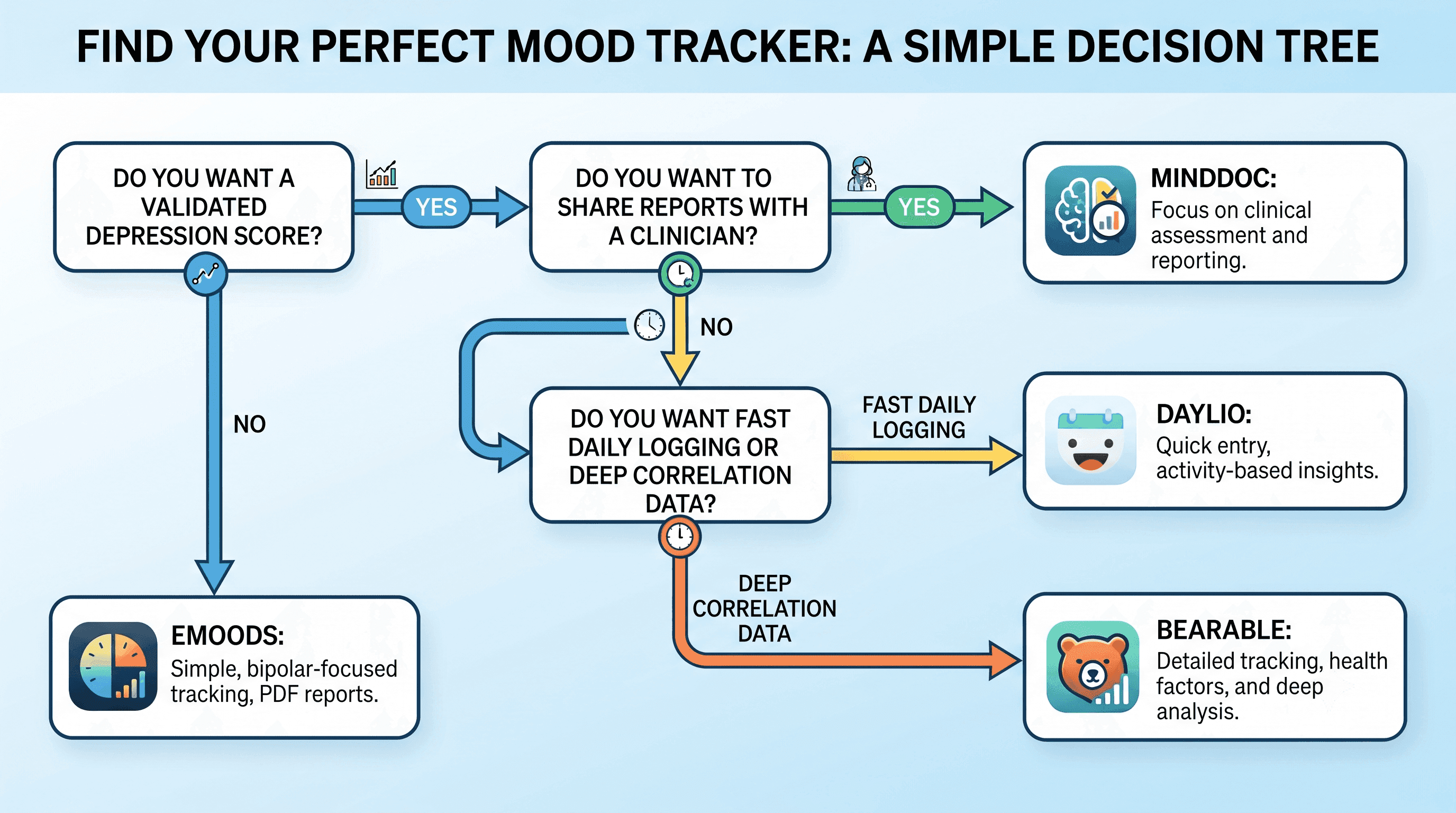
The best depression tracking app depends on what you need it to do. Bearable is the strongest overall pick because it connects mood with sleep, medication, and other factors that affect depression. Daylio works best if you want a 30-second daily log. eMoods and MindDoc are built for people who want data to bring to a doctor or therapist. How We Feel is the best free, no-frills option.
This guide compares seven depression tracking apps on cost, clinical screening tools (like the PHQ-9), data export, and privacy, so you can pick the one that matches how you actually want to track your symptoms.
A note on safety: if you are having thoughts of suicide or self-harm, a tracking app is not the right tool for that moment. Call or text 988 (Suicide and Crisis Lifeline) in the US, or call 911 if you or someone else is in immediate danger. This article is for general information only and is not a substitute for professional mental health care.
Top Picks
| Category | Recommendation |
|---|---|
| Best Overall | Bearable |
| Best Free Option | How We Feel |
| Best for Clinical Screening (PHQ-9/GAD-7) | MindDoc |
| Best for Sharing Data with a Clinician | eMoods |
| Best for Fast Daily Logging | Daylio |
| Best for Combining Tracking with CBT Tools | Moodfit |
Comparison Table
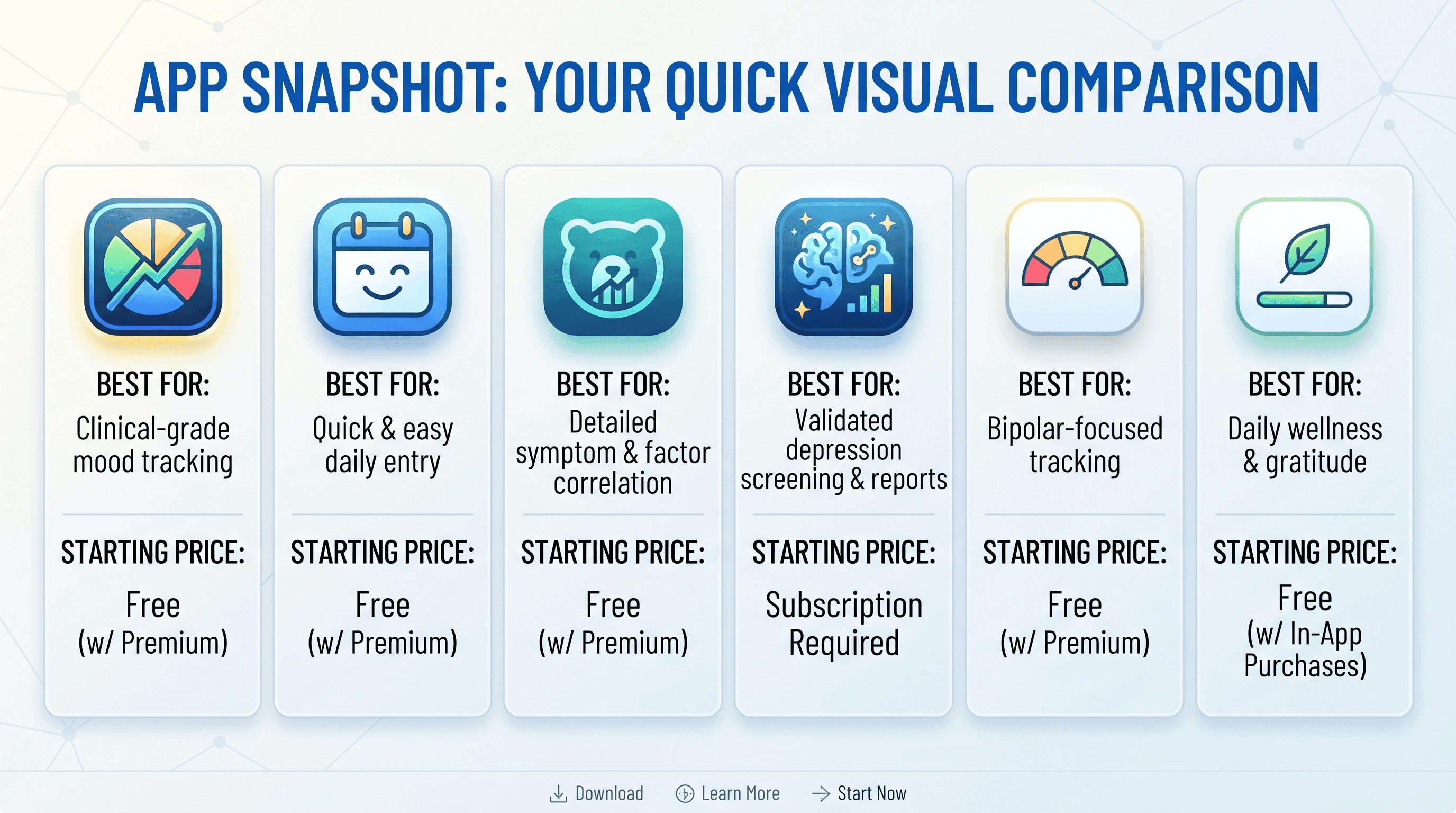
| App | Best For | Pricing | Clinical Assessments | Data Export | Platforms |
|---|---|---|---|---|---|
| Bearable | Correlating depression with sleep, meds, and lifestyle | Free tier; Premium $6.99/month or $34.99/year | No formal PHQ-9/GAD-7 | CSV export | iOS, Android |
| Daylio | Quick, low-friction daily check-ins | Free tier; Premium roughly $3 to $5/month | None built in | PDF and CSV export | iOS, Android |
| eMoods | Clinician-ready mood and symptom reports | Free core version; optional Pro from about $1.99/month | None built in | Monthly PDF report by email | iOS, Android, web |
| MindDoc | Structured depression and anxiety screening | Free tier; Premium roughly €7 to €10/month | PHQ-9 and GAD-7 style questions | Shareable summary report | iOS, Android |
| Moodfit | Mood tracking plus CBT exercises | Free tier; Premium roughly $9.99 to $19.99 | PHQ-9 and GAD-7 | Limited, varies by plan | iOS, Android |
| How We Feel | Free daily emotion tracking | Free, no premium tier | None | Information not publicly available | iOS |
Pricing and features change over time. Check each app's store listing before subscribing.
Why People Look for Depression Tracking Apps
Depression often shows up as a pattern, not a single bad day. A tracker turns vague feelings ("I've been off lately") into a timeline you and a clinician can actually look at.
People typically start tracking to:
- Notice whether sleep, medication timing, or specific events line up with low mood days
- Prepare for a therapy or psychiatry appointment with real data instead of memory
- Monitor whether a new medication or treatment plan is working
- Catch early warning signs before a depressive episode gets worse
- Build a daily self-care habit that takes seconds, not minutes
None of these apps diagnose depression. A diagnosis requires a licensed clinician. What these tools do is make the pattern visible.
Ranked Recommendations
1. Bearable
Why it's included: Bearable lets you log mood, energy, sleep, symptoms, and custom factors like caffeine or social activity, then shows you which factors correlate with your mood over time.
Best for: People who suspect their depression is tied to sleep, medication, or other health factors and want to see the connection in data.
Strengths:
- Free tier covers unlimited symptom and mood logging plus 30-day trend reports
- Correlation reports show which factors move with your mood, not just what your mood was
- CSV export for sharing with a clinician or analyzing yourself
Limitations:
- No built-in PHQ-9 or other validated depression screening
- Correlation reports, comparison views past 30 days, and unlimited custom experiments require Premium
- The number of tracking options can feel like a lot for someone in a low-energy period
Pricing: Free with a robust base feature set. Premium is $6.99 a month or $34.99 a year, with a 7-day free trial.
When to choose something else: If you want a validated depression score like the PHQ-9, MindDoc or Moodfit are a better fit.
2. Daylio
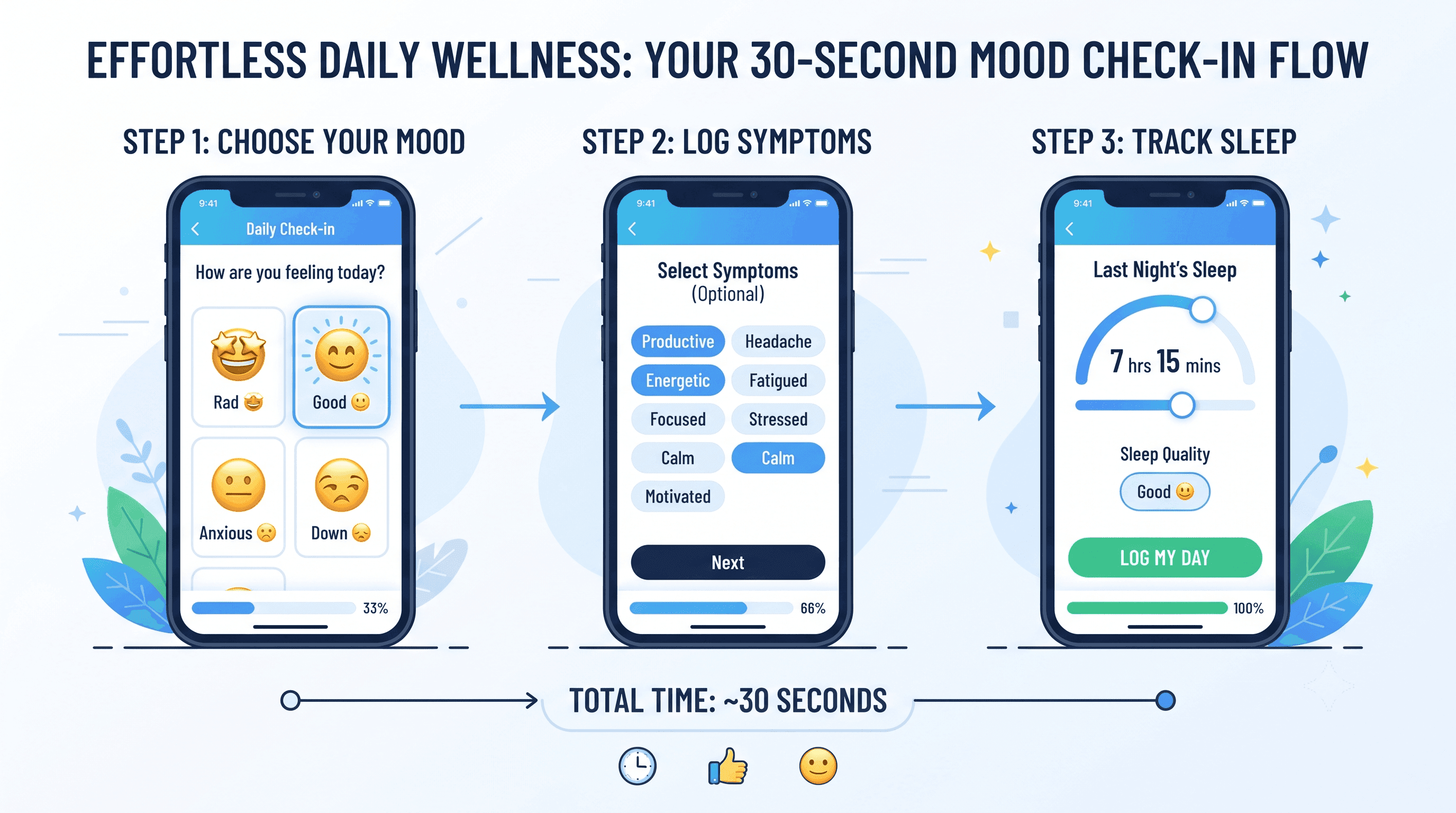
Why it's included: Daylio uses icons and a mood scale instead of typing, so logging takes about 30 seconds. That low effort matters on days when depression makes journaling feel impossible.
Best for: Anyone who wants to build a daily tracking habit without writing full entries.
Strengths:
- Two-tap logging: pick a mood, pick your activities
- Weekly and yearly charts, including a "Year in Pixels" mood map
- PDF and CSV export, and local or Google Drive backup
Limitations:
- Mood scale has only 5 levels, which is less nuanced than symptom-specific trackers
- No clinical depression screening built in
- Deeper stats, like mood stability tracking, are locked behind Premium
Pricing: Free with core logging and basic charts. Premium runs roughly $3 to $5 a month depending on the plan.
When to choose something else: If you want the app to also correlate mood with physical symptoms like fatigue or appetite changes, Bearable offers more depth.
3. eMoods
Why it's included: eMoods was built specifically for mood disorders, including depression and bipolar disorder, and its core purpose is generating a clean report you can hand to a psychiatrist or therapist.
Best for: People already working with a clinician who wants a structured, printable record of daily mood, sleep, and medication.
Strengths:
- Tracks daily highs and lows, sleep, medication, and custom symptoms
- Sends a monthly PDF report by email, formatted for a doctor's visit
- All data stays on the device by default and is never sent to the cloud without permission
Limitations:
- Functional, no-frills interface without gamification or streak features
- Only logs one entry per day rather than multiple check-ins
- No built-in CBT tools or coping exercises
Pricing: Free core version. An optional Pro upgrade adds custom symptoms and unlimited notes, priced around $1.99 a month or $9.99 a year in the classic app; newer tiers range up to about $10 a month for advanced options.
When to choose something else: If you want daily coping tools alongside tracking, Moodfit combines both in one app.
4. MindDoc
Why it's included: MindDoc runs short check-ins several times a day using questions adapted from validated screening tools like the PHQ-9 and GAD-7, then builds a two-week assessment report.
Best for: People who want a structured, clinically grounded picture of their depression symptoms rather than a simple daily mood log.
Strengths:
- Two-week assessment reports modeled on PHQ-9 and GAD-7 style screening
- CBT-based courses on topics like rumination, sleep, and self-esteem
- Developed by clinical psychologists and researchers, with GDPR-level data protection
Limitations:
- Three check-ins a day can feel repetitive over months
- The assessment is a structured screening result, not a clinical diagnosis
- Full course library requires a Premium subscription
Pricing: Free tier with core mood tracking and limited courses. Premium runs roughly €7 to €10 a month, with annual discounts.
When to choose something else: If multiple daily prompts feel like too much, Daylio or Bearable ask for input once a day instead.
5. Moodfit
Why it's included: Moodfit pairs mood tracking with cognitive behavioral therapy (CBT) tools, so you can log a low mood and immediately work through a thought record or breathing exercise in the same app.
Best for: People who want tracking and hands-on coping tools in one place, especially alongside therapy.
Strengths:
- PHQ-9 and GAD-7 assessments to monitor depression and anxiety symptoms over time
- CBT thought records, gratitude journaling, and guided breathing exercises
- Insights that connect mood to sleep, exercise, nutrition, and medication
Limitations:
- Interface has more moving parts than a simple mood log, which can feel like a lot during a depressive episode
- Some users report bugs, like entries not syncing correctly
- Full CBT tool library and detailed insights require Premium
Pricing: Free tier available. Premium subscriptions are typically priced between $9.99 and $19.99, with occasional annual or lifetime promotions.
When to choose something else: If you specifically want a doctor-ready PDF report, eMoods is built around that use case more directly.
6. How We Feel
Why it's included: Built on an emotion-science framework developed with Yale researchers, How We Feel is free with no ads and helps users name what they're feeling with more precision than a basic mood scale.
Best for: People who want a completely free, simple daily check-in and are more interested in emotional vocabulary than symptom correlation.
Strengths:
- Entirely free, with no premium paywall
- Emotion wheel with a much wider vocabulary than most mood trackers
- Clean, ad-free interface
Limitations:
- No depression-specific symptom tracking, medication logging, or clinical screening
- iOS only, no Android version
- No streaks or long-term habit-building features
Pricing: Free.
When to choose something else: If you need to track physical depression symptoms like appetite, energy, or sleep alongside mood, Bearable or Moodfit will give you more to work with.
Who Should Choose Each Option
- Want the most complete picture of what's affecting your mood? Bearable.
- Want something you'll actually open every day? Daylio.
- Already seeing a psychiatrist and need a clean report? eMoods.
- Want a validated depression score over time? MindDoc.
- Want tracking plus CBT tools in one app? Moodfit.
- Want a free, simple option with no subscription pressure? How We Feel.
FAQ
Are depression tracking apps free? Yes. Daylio, Bearable, eMoods, MindDoc, Moodfit, and How We Feel all offer usable free versions. Most paid upgrades unlock deeper analytics, correlation reports, or expanded content rather than basic daily tracking.
Can a depression tracking app diagnose depression? No. These apps can screen for symptoms using tools like the PHQ-9, but only a licensed clinician can make a diagnosis. Treat app results as information to discuss with a professional, not a diagnosis on their own.
Which app is best for sharing data with a therapist or psychiatrist? eMoods is built specifically around generating a monthly PDF report for clinicians. Bearable and Daylio also support CSV or PDF export if your provider prefers raw data.
What's the difference between a mood tracker and a symptom tracker? A mood tracker, like Daylio or How We Feel, mainly logs how you feel each day. A symptom tracker, like Bearable, also logs physical and behavioral factors, such as sleep, appetite, or medication, and can show how they relate to your mood.
Do these apps use the PHQ-9? MindDoc and Moodfit both include assessments modeled on the PHQ-9 and GAD-7. Bearable, Daylio, eMoods, and How We Feel do not include a formal clinical screening tool.
Is my data private in these apps? eMoods stores data locally on the device by default and does not transmit it without permission. Bearable states it encrypts user data and does not sell it. MindDoc operates under GDPR as a Germany-based company. Always review an app's current privacy policy before entering sensitive health information, since practices can change.
Can I use more than one app at the same time? Some people do, for example pairing Daylio for quick daily logging with MindDoc for periodic PHQ-9 style screening. This works, but consistency matters more than which app you use, so most people get more value from sticking to one tool.


