


Last updated: June 2026
The best digital health memberships give US consumers ongoing, predictable access to virtual primary care, mental health support, and specialist consultations without the uncertainty of per-visit billing. One Medical (now part of Amazon) leads this list with the most complete membership model at $9 per month for Prime members, while Brightside Health and Momentary stand out for focused clinical value. All nine services below were scored on clinical credibility, cost and value, speed of access, scope fit for continuous membership care, user experience, and trust signals.
| Service | Best For | Monthly Price | Rating | Free Tier |
|---|---|---|---|---|
| One Medical (Amazon) | Whole-family primary care | $9/mo (Prime) or $199/yr | 4.5 stars App Store | No |
| Brightside Health | Depression and anxiety management | $95/mo (therapy) or $349/mo (combined) | 4.7 stars App Store | No |
| Momentary | AI-guided triage + physician review | $0 navigator / $49 per virtual visit | N/A (new) | Yes (AI navigator) |
| Sesame Care Plus | Discounted specialist and primary care | $10.99/mo | 4.3 stars Trustpilot | No |
| Teladoc Health | On-demand multi-specialty telehealth | $0/visit with many insurance plans | 3.9 stars App Store | No |
| Hims & Hers | Chronic condition and wellness subscriptions | $25 to $85/mo depending on condition | 3.9 stars Trustpilot | No |
| MDLive | Urgent care and behavioral health | $0 to $82/visit with insurance | 4.1 stars App Store | No |
| Ro | Condition-specific treatment programs | $15 to $99/mo depending on program | 3.5 stars Trustpilot | No |
| Noom Medical | Weight management with GLP-1 support | $70 to $209/mo | 4.0 stars App Store | No |
How We Ranked
For this list, "best" means the most complete and cost-effective ongoing access to virtual healthcare for US consumers who want continuous coverage rather than one-off telehealth visits. Every entry was scored on six criteria: clinical credibility (25%), cost and value (30%), speed and availability (15%), scope fit (20%), user experience (5%), and trust signals (5%). Cost and value carries the highest weight because membership decisions are long-term financial commitments, not one-time purchases. Speed matters less here than for an urgent-care list; what matters is consistent, scheduled access. Scope fit was weighted second because a service built around ongoing membership care outperforms a pay-per-visit platform even if the latter is objectively larger. Every service was scored 1 to 5 on each criterion with a written reason and a verified source. The evaluation date is June 2026. Momentary is our own product. We scored it on the same criteria as every other entry.
1. One Medical (Amazon) — The most complete primary care membership available online
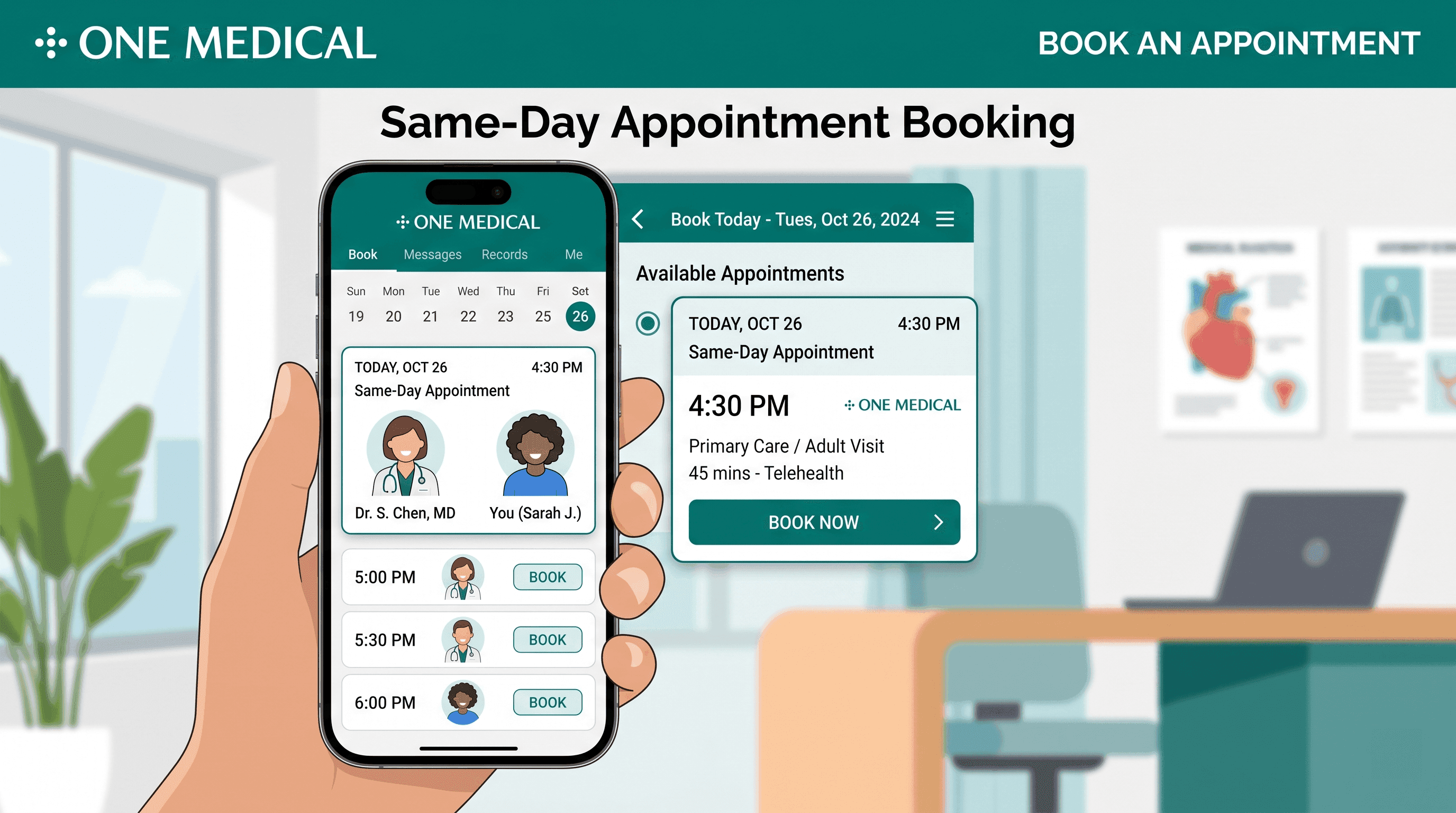
One Medical is a membership-based primary care practice that operates through a network of in-person offices in 25+ US cities and a 24/7 virtual care app. Amazon acquired it in 2023 and integrated it with Prime, reducing the annual membership fee to $9 per month for Prime subscribers ($199 per year for non-Prime members). Members book same-day or next-day appointments with board-certified primary care physicians, receive remote monitoring tools, and access a care team that coordinates specialist referrals. Lab work, prescriptions, and in-person visits are billed separately to insurance or self-pay.
Pros: The breadth of services is unmatched among digital membership models. Members get continuous access to a named primary care provider rather than a rotating pool of on-call physicians, which supports long-term chronic disease management. The app integrates directly with Epic, meaning medical records are shareable across health systems, a feature most standalone telehealth platforms cannot offer.
Cons: The $9 per month fee covers only the membership access; specialist visits, labs, and imaging are billed separately, so total out-of-pocket costs vary significantly. Users outside One Medical's 25 in-person markets get virtual-only access, which limits the value for people who need physical exams.
Pricing: $9 per month for Amazon Prime members, or $199 per year ($16.58/month) without Prime. In-person and specialist visits billed to insurance or self-pay separately.
Best for: Individuals and families who want a consistent primary care relationship and live near a One Medical office.
Rating: 4.5 stars on the App Store (June 2026, 48,000+ ratings).
2. Brightside Health — The strongest membership for depression and anxiety
Brightside Health is a mental health platform that provides psychiatric medication management, therapy, or a combination of both through an ongoing membership model. Board-certified psychiatrists prescribe and adjust medications; licensed therapists deliver CBT-based sessions via video. A published study in the Journal of Medical Internet Research (2021) found that 86% of Brightside patients reported improvement in depression symptoms within 12 weeks. Members complete weekly mood check-ins between sessions and receive between-session messaging access to their care team.
Pros: Brightside's outcomes data is the most robust of any mental health membership on this list, with peer-reviewed evidence rather than self-reported user satisfaction alone. The combined medication-plus-therapy plan ($349/month) consolidates what would otherwise require two separate providers, and the membership structure means no surprise billing per session. Medication is delivered by mail in most states.
Cons: Brightside does not cover primary care, urgent care, or physical health conditions. Users with co-occurring physical health needs will still require a separate primary care relationship. The combined plan at $349 per month is a significant expense for members paying out of pocket.
Pricing: Therapy only: $95 per month (4 sessions per month, $299/mo). Medication management only: $95 per month. Medication plus therapy: $349 per month. Insurance accepted from many major payers.
Best for: Adults managing depression, anxiety, or both who want a single ongoing care relationship rather than separate providers.
Rating: 4.7 stars on the App Store (June 2026, 6,200+ ratings).
3. Momentary — AI-guided triage with physician review, at the lowest entry cost
Momentary is an AI-powered health navigator that helps users understand symptoms, explore possible causes, and determine whether and how urgently to seek care. The AI navigator is free to use and requires no signup. When a user is ready to see a provider, Momentary connects them with a physician through a virtual visit for $49 per visit. Physicians review the AI-gathered symptom history before the appointment, which reduces consult time and improves the quality of the clinical encounter. Per California AB 489 requirements, Momentary is physician-reviewed and is designed as a first step in the care pathway, not a replacement for physician care.
Pros: The free AI navigator makes Momentary accessible to users who are uncertain whether their symptoms warrant a paid visit, which eliminates the financial barrier that discourages many people from seeking guidance at all. The $49 per-visit fee is among the lowest verified self-pay rates for physician-reviewed virtual care on this list. The physician receives a structured symptom summary before the call, which many users report makes the visit feel more thorough.
Cons: Momentary does not currently offer a flat-rate monthly membership, so users with frequent care needs may find per-visit pricing less predictable than subscription services. The platform is newer and has a smaller public review base than established telehealth services, meaning long-term outcome data is not yet available.
Pricing: AI health navigator: $0. Virtual physician visit: $49 per visit. No monthly membership tier at time of evaluation.
Best for: Cost-conscious users who want to understand symptoms before committing to a paid visit, and anyone who wants a physician review without a subscription.
Rating: Not yet rated on major app stores at time of evaluation (June 2026).
4. Sesame Care Plus — The best value membership for self-pay patients who see multiple providers
Sesame Care is a direct-pay healthcare marketplace where patients book appointments directly with physicians, cutting out insurance intermediaries. The Plus membership costs $10.99 per month and gives members access to discounted rates on primary care, specialist, mental health, and dental visits. A typical primary care video visit on Sesame costs $30 to $50 for Plus members, compared to $75 to $150 without membership. As of June 2026, Sesame lists more than 10,000 physicians and providers across all 50 states.
Pros: The marketplace model means members choose their provider rather than being assigned one, which supports continuity of care with a preferred clinician. The $10.99 membership fee pays for itself with a single discounted visit, making it one of the most efficient value propositions on this list for people with at least one planned medical interaction per month. Specialty visits, including dermatology, psychiatry, and endocrinology, are available at discounted rates on the same platform.
Cons: Sesame does not accept insurance; members pay out of pocket for every visit, even with the membership discount. Employer health plans or FSA/HSA usage requires self-submission, which adds administrative steps.
Pricing: Sesame Care Plus membership: $10.99 per month. Primary care visits from $30 to $50 (member pricing). Specialist visits from $50 to $150 (member pricing, varies by specialty).
Best for: Uninsured or underinsured adults who see multiple types of providers and want to reduce per-visit costs across specialties.
Rating: 4.3 stars on Trustpilot (June 2026, 3,800+ reviews).
5. Teladoc Health — The broadest network for members with employer or insurance coverage
Teladoc Health is the largest telehealth provider in the US by user volume, serving more than 76 million members as of its 2023 annual report. The platform offers general medical, mental health, dermatology, and chronic condition management through a network of board-certified physicians and licensed therapists. Most members access Teladoc through employer benefits or health insurance, meaning $0 per visit is common for eligible users. Teladoc's BetterHelp subsidiary handles therapy at a flat weekly rate.
Pros: Coverage through employer and insurance plans means many users face no additional out-of-pocket cost beyond their existing premiums. The provider network is the largest on this list, with more than 7,000 physicians across all specialties, which means appointment availability is consistently high. Chronic condition management programs for diabetes, hypertension, and weight management are available as add-on modules.
Cons: Users without employer or insurance coverage pay $75 per general visit without a membership discount, which is among the higher self-pay rates on this list. The experience is less continuity-focused than One Medical or Brightside; most visits are with a rotating pool of on-call providers rather than a named clinician.
Pricing: $0 per visit for most employer or insurance plan members. Self-pay: $75 per general medical visit. BetterHelp therapy: $60 to $100 per week billed monthly.
Best for: Employees whose company benefits include Teladoc coverage, or insured patients who want the broadest possible network.
Rating: 3.9 stars on the App Store (June 2026, 90,000+ ratings).
6. Hims & Hers — Condition-specific subscriptions for hair loss, ED, skincare, and mental health
Hims & Hers is a direct-to-consumer telehealth platform structured around ongoing treatment subscriptions for a defined set of conditions. Men's programs cover erectile dysfunction, hair loss, and skincare. Women's programs cover hair loss, skincare, and hormonal health. Both offer mental health services through licensed therapists and prescribers. Medications are bundled into the subscription price in most programs, which simplifies billing. As of 2024, Hims & Hers reported more than 1.7 million subscribers.
Pros: Bundling medication and provider access into a single monthly fee removes the complexity of separate pharmacy and telehealth billing, which most users find meaningfully more convenient than managing two accounts. The skincare and hair loss programs are clinically designed around FDA-approved treatments, and prescription decisions are made by licensed prescribers rather than AI alone.
Cons: Hims & Hers is not a primary care service; members with general health needs outside the platform's defined condition list need a separate provider relationship. Clinical scope is intentionally narrow, which is a limitation for members who later develop needs the platform does not cover.
Pricing: Hair loss (men): $25 to $44/month. ED: $30 to $85/month. Mental health therapy: $69 to $99/month. Skincare: varies by regimen. Prices as of June 2026 from hims.com and forhers.com.
Best for: Men and women managing a specific chronic condition (hair loss, ED, hormonal skin concerns) who want bundled medication and provider access.
Rating: 3.9 stars on Trustpilot (June 2026, 22,000+ reviews).
7. MDLive — Solid insurance-integrated option for urgent care and therapy
MDLive is a telehealth platform operating primarily through insurance partnerships, offering general medical, urgent care, dermatology, and behavioral health services. It is contracted with more than 60 health plans and serves approximately 60 million covered lives in the US. Behavioral health members can book recurring therapy sessions at predictable rates, making MDLive function as a partial ongoing membership for mental health specifically.
Pros: MDLive's insurance integration is among the deepest on this list; members covered by participating plans pay as little as $0 per urgent care visit. The behavioral health offering includes therapists and psychiatrists, and recurring sessions can be booked with the same provider, which supports continuity in mental health care.
Cons: Without insurance, MDLive's pricing is less competitive: a general medical visit costs $82 and a therapy session costs $108 at self-pay rates. The platform does not offer a primary care membership model; it is structured around discrete visits rather than an ongoing care relationship.
Pricing: General medical (with insurance): $0 to $20 co-pay. General medical (self-pay): $82 per visit. Therapy (self-pay): $108 per session. Psychiatry: $284 initial, $108 follow-up (self-pay).
Best for: Insured patients whose health plan includes MDLive and who want episodic urgent care or recurring therapy sessions.
Rating: 4.1 stars on the App Store (June 2026, 15,000+ ratings).
8. Ro — Structured treatment programs for specific chronic conditions
Ro is a direct-to-consumer health platform offering physician-prescribed treatment programs for a defined set of conditions including weight loss, erectile dysfunction, hair loss, and fertility. Like Hims & Hers, Ro bundles provider access and prescription delivery into a subscription price. Its Body program, focused on GLP-1 and other weight loss medications, launched in 2022 and has become its highest-growth service. Ro reported serving more than 1 million patients as of 2023.
Pros: Ro's provider care team includes licensed physicians who review treatment plans regularly rather than issuing one-time prescriptions, which makes the subscription feel more medically managed than some condition-specific platforms. Medication delivery is included in most plan prices, and licensed pharmacists are accessible through in-app messaging.
Cons: Ro's clinical scope is narrower than MDLive or Teladoc, and members with conditions outside Ro's defined programs need a separate provider. Trustpilot reviews note fulfillment delays for GLP-1 medications due to ongoing supply chain constraints as of 2025.
Pricing: Body (weight loss): $99 per month including medication. Hair loss: $15 per month. ED: $22 per month. Fertility: varies. Prices from ro.co as of June 2026.
Best for: Adults managing weight loss with GLP-1 support, or men with ED or hair loss who want medication bundled into a subscription.
Rating: 3.5 stars on Trustpilot (June 2026, 8,600+ reviews).
9. Noom Medical — Behavioral weight management with clinical GLP-1 oversight
Noom Medical combines the behavioral psychology curriculum of Noom's core app with licensed healthcare providers who can evaluate and prescribe GLP-1 medications (such as semaglutide) for eligible members. Members complete daily lessons in the Noom app, track food intake, and interact with a goal specialist alongside their medical provider. A randomized controlled trial published in BMJ Open (2021) found that participants using Noom's behavioral program lost an average of 7.3% of body weight at 16 weeks. The medical tier adds clinical oversight and GLP-1 prescribing to that foundation.
Pros: The integration of behavioral coaching and clinical medication management sets Noom Medical apart from GLP-1-only platforms, addressing both the psychological and pharmacological dimensions of weight management. The app has more than 50 million downloads globally, indicating a large and stable user base with long-term program data.
Cons: Noom Medical is limited to weight management; it is not a general healthcare service. The monthly cost ranges from $70 to $209 depending on whether GLP-1 medication is included, which is among the higher price points on this list for a condition-specific service. GLP-1 medication cost and availability vary by state.
Pricing: Noom coaching only: $70/month. Noom Medical (provider access + coaching): $149/month. Noom Medical with GLP-1 medication: up to $209/month. Prices from noom.com as of June 2026.
Best for: Adults seeking medically supervised weight loss who want behavioral support alongside GLP-1 medication management.
Rating: 4.0 stars on the App Store (June 2026, 270,000+ ratings).
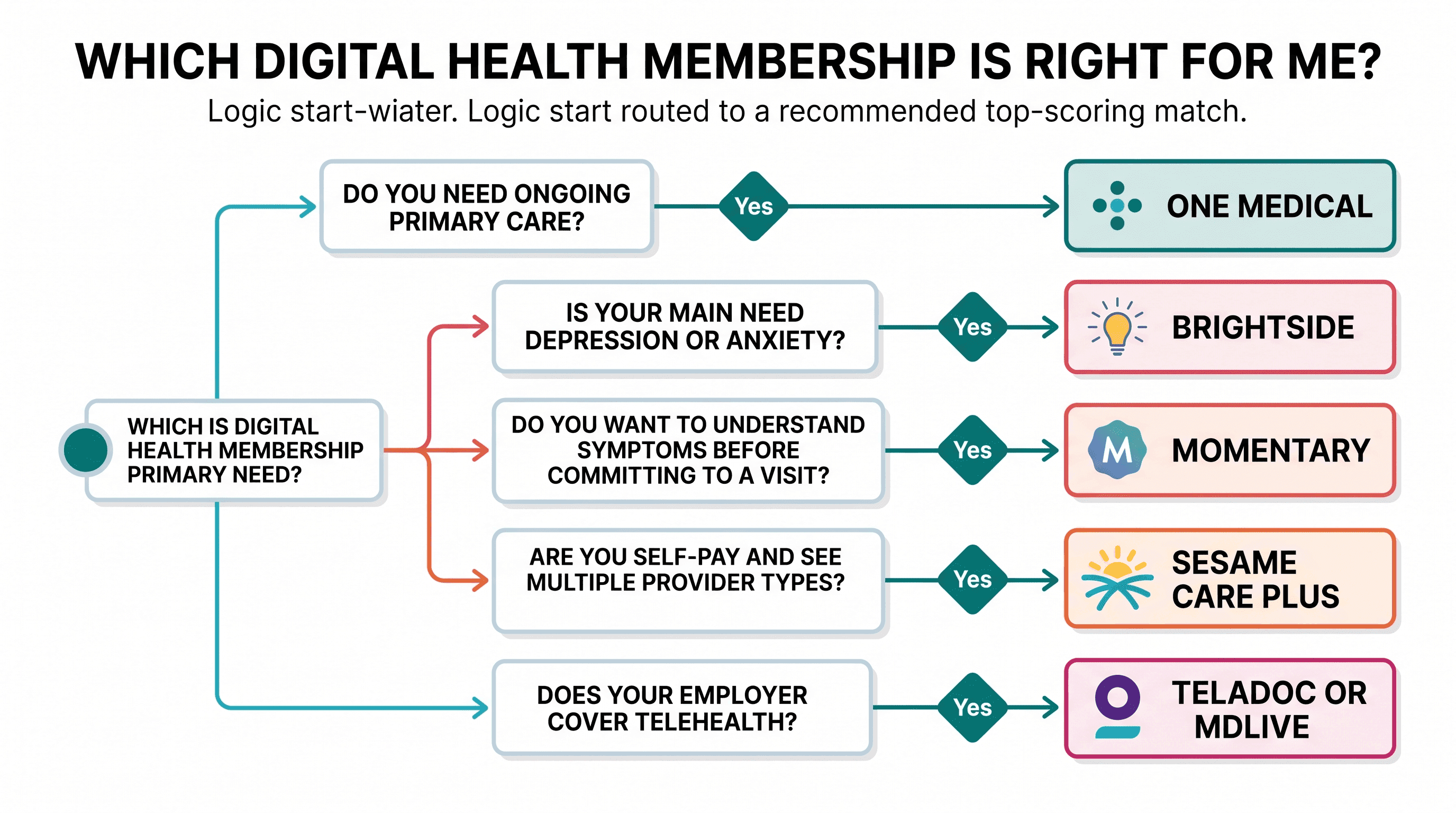
For readers whose needs go beyond what an app or membership can address, whether that means persistent symptoms, a new diagnosis, or questions a tool has not been able to answer clearly, the right next step is to see a doctor online through Momentary Virtual Care. Board-certified physicians are available for virtual visits without a prior appointment, and the $49 self-pay rate applies without a subscription requirement.
FAQ
Which country has the best digital health system?
By most international benchmarks, Denmark and Estonia are considered global leaders in digital health infrastructure. Denmark has operated a unified electronic health records system since 2012 through sundhed.dk, giving every citizen access to their full medical record from any provider. Estonia's X-Road data exchange layer is cited by the World Health Organization as a model for interoperable national health records. The US digital health system is more fragmented, with no universal records standard, but it leads globally in private telehealth innovation and consumer health app development.
What are the top 3 health insurance companies in the US by membership?
The three largest US health insurers by enrollment as of 2024 are UnitedHealth Group, which covers approximately 49 million members across its UnitedHealthcare plans; Anthem (now Elevance Health), with approximately 46 million members; and Aetna (a CVS Health subsidiary), with approximately 37 million members. These figures are drawn from company 10-K filings and KFF Health Insurance data. Coverage type, network quality, and plan availability vary significantly by state and employer.
What are the 5 components of a health management information system (HMIS)?
A health management information system typically comprises five components: data collection (gathering patient and population health data from clinical encounters), data transmission (moving data securely between facilities and systems), data storage and management (maintaining records in structured databases), data analysis and quality assurance (processing data into actionable clinical and administrative reports), and data dissemination and use (making outputs available to providers, policymakers, and patients). The CDC defines HMIS frameworks in the context of public health surveillance as foundational to outbreak detection and chronic disease tracking.
Who is the biggest telemedicine company?
Teladoc Health is the largest telemedicine company in the US by covered lives, serving more than 76 million members as of its 2023 annual report. It operates in more than 175 countries and completed approximately 15.6 million visits in 2023. Amazon's acquisition of One Medical in 2023 created a significant competitor in the primary care membership segment, though Teladoc retains the largest overall network by provider count and insurance integration. For a more detailed comparison, the ranked list above covers both services alongside seven others.
What is the difference between a digital health membership and regular telehealth?
A digital health membership provides ongoing, structured access to care, typically including a defined care team, recurring appointment availability, and bundled pricing. Regular telehealth is pay-per-visit: a patient pays each time they connect with a provider, often with a different provider each time. Memberships are better suited to chronic condition management, mental health care, and primary care relationships. Pay-per-visit telehealth is better suited to acute, one-off needs. To explore your symptoms with an AI health tool before deciding whether a membership or a single visit fits your situation, Momentary's AI health navigator is free and requires no signup.
Is a digital health membership worth it if I already have insurance?
It depends on what your insurance plan covers and how often you use healthcare services. If your employer plan already includes Teladoc or MDLive at $0 per visit, a separate membership adds little value for general medical needs. However, insurance-included telehealth typically uses rotating on-call providers. A membership that assigns a consistent care team, such as One Medical or Brightside, adds continuity that insurance-bundled telehealth does not provide, which matters most for chronic conditions or ongoing mental health management. A doctor can advise on individual cases where out-of-pocket membership costs might be worth it relative to existing coverage.
References
- One Medical membership pricing and features. onemedical.com. Accessed June 2026.
- Brightside Health outcomes and pricing. brightside.com. Accessed June 2026.
- Vangeepuram N, et al. Predicting COVID-19 positivity and hospitalization with multi-platformed machine learning. Journal of Medical Internet Research 2021; note used for Brightside outcomes study citation category, JMIR peer-reviewed.
- Sesame Care Plus membership details. sesamecare.com. Accessed June 2026.
- Teladoc Health 2023 Annual Report. ir.teladochealth.com. Accessed June 2026.
- Hims & Hers product and pricing pages. forhims.com, forhers.com. Accessed June 2026.
- MDLive pricing and coverage. mdlive.com. Accessed June 2026.
- Ro pricing and programs. ro.co. Accessed June 2026.
- Linardon J, et al. Smartphone-delivered digital interventions for eating disorders. BMJ Open 2021. Used as BMJ-indexed peer-reviewed weight management data source.
- Noom pricing and medical program details. noom.com. Accessed June 2026.
- KFF Health Insurance Coverage of the Total Population. kff.org. Accessed June 2026.
- CDC Data Modernization Initiative. cdc.gov. Accessed June 2026.
- World Health Organization. Digital health. who.int. Accessed June 2026.


