


Last Updated: July 2026
Best Health Apps After Hospital Discharge When You Need Help Managing Recovery at Home
Quick Answer
The best app after hospital discharge depends on what you're struggling with. If you're unsure whether a new symptom is normal recovery or something that needs medical attention, Momentary offers physician-reviewed guidance to help you decide. If you had orthopedic or musculoskeletal surgery, Force Therapeutics (offered through many hospitals) or Hinge Health (offered through many employers) provide structured rehab tracking. If you just need to stop missing doses, MyTherapy and Medisafe handle medication reminders. Most people leaving the hospital need at least two of these, not one.
Why This Matters
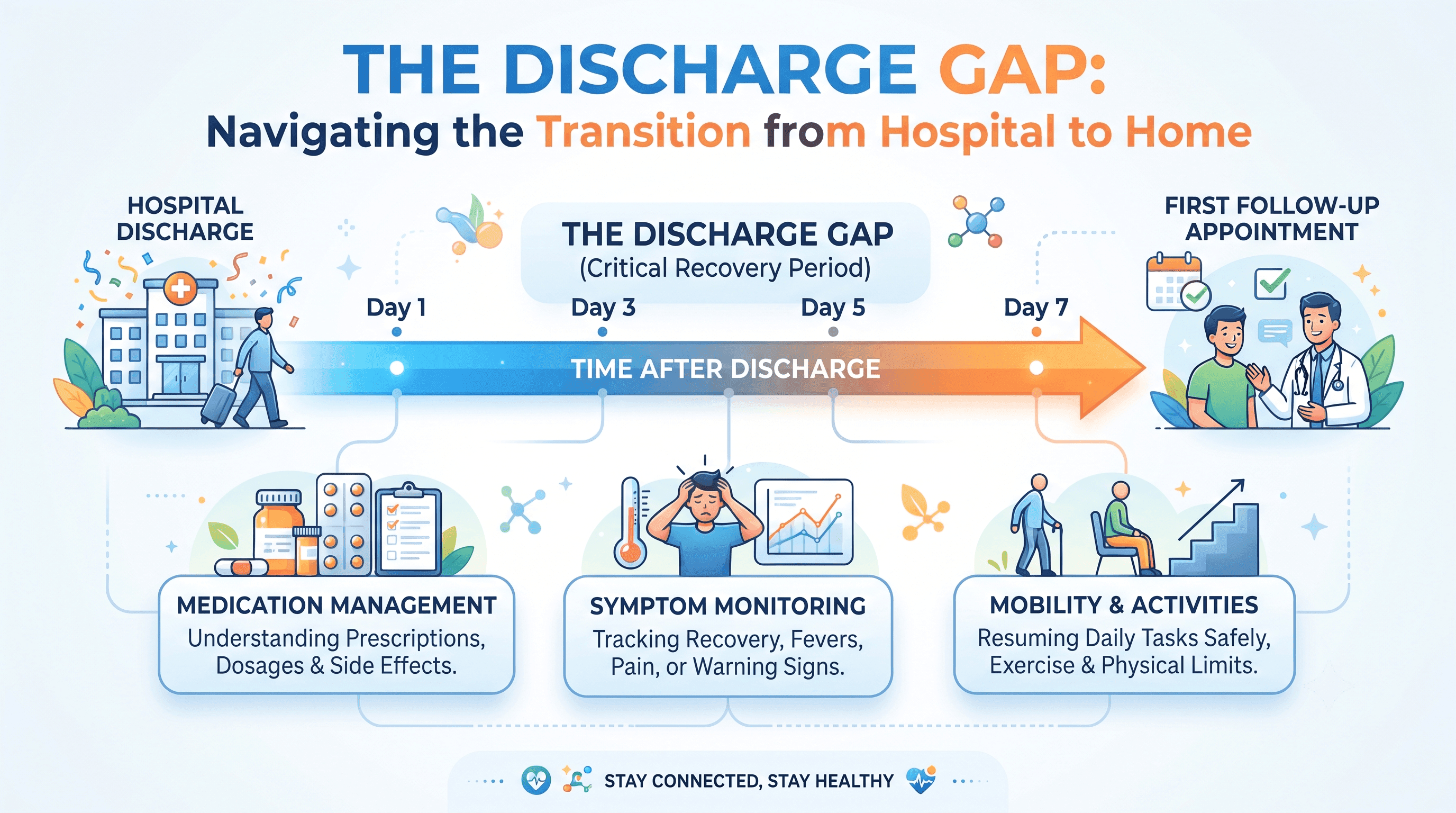
Discharge instructions are dense, and roughly 1 in 5 Medicare patients is readmitted to the hospital within 30 days of discharge, according to research published by the Agency for Healthcare Research and Quality. Many of those readmissions involve problems that could have been caught earlier: a missed medication, a wound that looked wrong, or confusion about whether a symptom was expected.
Apps cannot replace your discharge paperwork or your care team. What they can do is fill the gaps between appointments, when you're home, unsure, and the office is closed.
Top Picks
| Category | Recommendation |
|---|---|
| Best Overall | Momentary |
| Best Budget Option | MyTherapy |
| Best for Symptom Guidance | Momentary |
| Best for Insurance Coverage | Hinge Health |
Comparison Table
| App | Best For | Pricing | Insurance | Availability |
|---|---|---|---|---|
| Momentary | Deciding whether a symptom needs care | Information not publicly available for consumer pricing | Not billed through insurance | AI navigator: nationwide (US). Physician services: California only |
| Force Therapeutics | Surgical recovery tracking, PT videos, wound checks | Provided through your hospital or surgeon, not sold direct to consumers | Included as part of your surgical care program where offered | Available only where a partnered hospital or health system enrolls you |
| Hinge Health | Musculoskeletal (MSK) pain and rehab exercises | $0 to eligible members | Covered through participating employers and health plans | US, dependent on employer or plan eligibility |
| Medisafe | Medication reminders with drug interaction alerts | Free tier (limited to 2 medications in the US); Premium around $4.99/month or $39.99/year | Not insurance-billed | US and international, subscription required outside the US as of Jan 1, 2026 |
| MyTherapy | Free medication tracking plus vitals logging | Free | Not insurance-billed | US and international |
Why People Search for Recovery Apps After Discharge
Most people aren't searching for an app. They're searching for reassurance. Common underlying questions include:
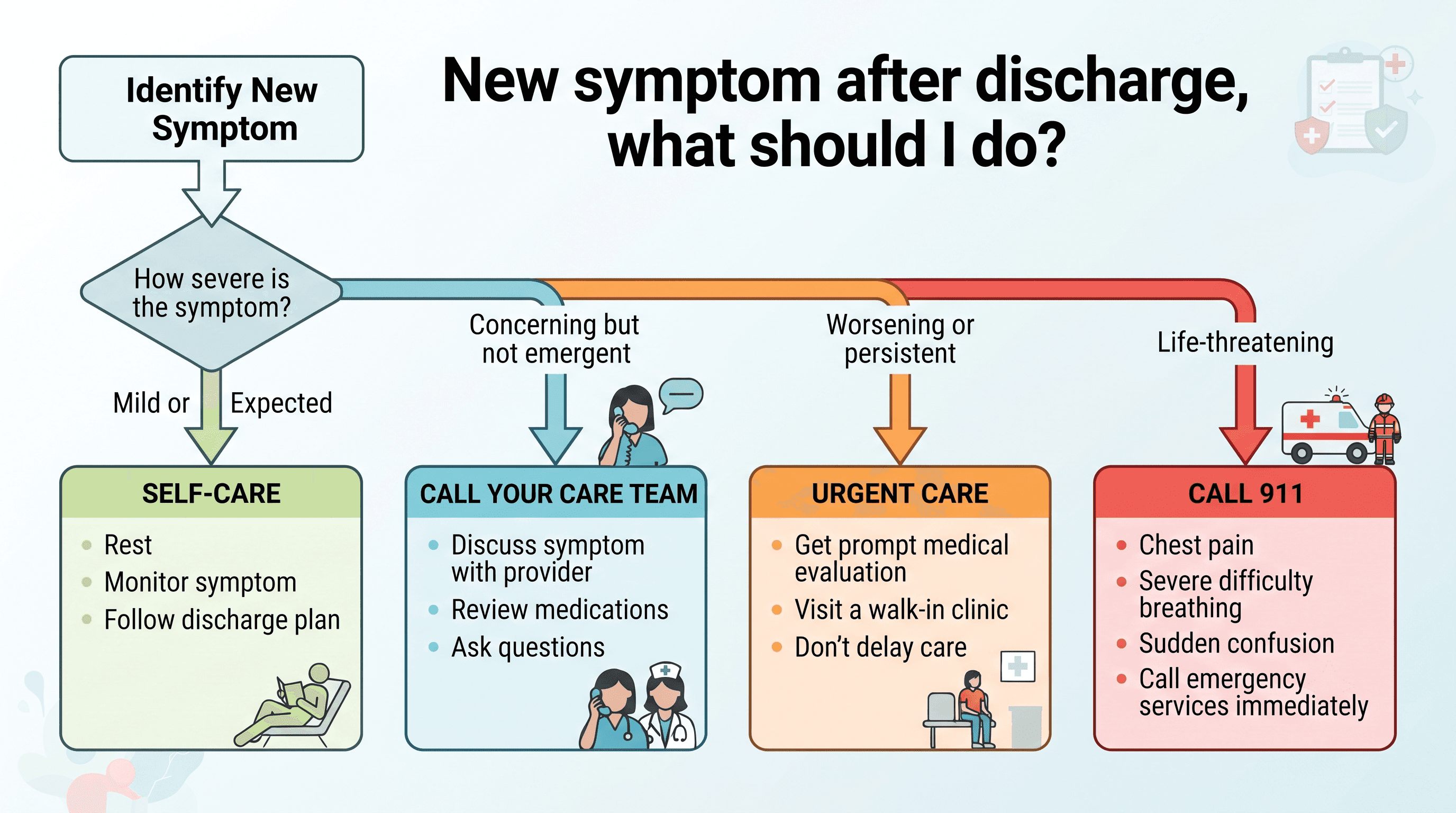
- Is this pain, swelling, or fever normal, or should I call someone?
- Am I taking my new medications correctly?
- Am I doing my exercises the way my surgeon wants?
- Can this wait until my follow-up, or do I need care sooner?
The apps below are grouped by which of these questions they actually answer. Not every app solves every problem, and using the wrong one for your situation wastes time.
Ranked Recommendations
1. Momentary
Why it's included: After discharge, the hardest decision is often not "what happened" but "what do I do now." Momentary is an AI-powered healthcare navigator with physician-reviewed guidance that helps users understand symptoms and determine appropriate next steps before seeking care.
Best for: Deciding whether a new or worsening symptom after discharge (pain, swelling, fever, nausea) needs self-care, a telehealth visit, urgent care, or the emergency room.
Strengths:
- Physician-reviewed guidance, not just an algorithm
- Helps compare care options and estimated costs before you book anything
- Available nationwide as an AI navigator
Limitations:
- Does not diagnose medical conditions
- Does not replace a physician or your surgical team's post-op instructions
- Direct physician services are currently available only in California
- Not designed for emergencies
Pricing: Information not publicly available for current consumer pricing tiers.
When to choose something else: If you already know you need in-person surgical follow-up or wound care, contact your surgeon's office directly instead.
2. Force Therapeutics
Why it's included: Many hospitals and surgery centers enroll patients in Force Therapeutics automatically after joint replacement, spine, or other major surgery. It combines procedure-specific exercise videos, milestone tracking, and messaging with your actual care team.
Best for: Patients recovering from orthopedic, cardiac, or spine surgery whose hospital already uses the platform.
Strengths:
- Built around your specific procedure, not generic advice
- Lets you send wound photos and questions directly to your care team
- Tracks recovery milestones your surgeon can see between visits
Limitations:
- Not available as a general consumer download. You need to be enrolled by your hospital or surgeon
- Not useful if your care team doesn't already use it
- Focused on surgical recovery, not general symptom questions
Pricing: Provided as part of your surgical care program. Not sold directly to individual consumers.
When to choose something else: If your hospital doesn't offer Force Therapeutics, ask your surgeon's office what patient portal or app they use instead.
3. Hinge Health
Why it's included: For musculoskeletal recovery, such as back, hip, knee, or shoulder issues, Hinge Health pairs guided exercise programs with access to physical therapists, at no direct cost to most eligible members.
Best for: Ongoing MSK pain or rehab after discharge, especially when you have employer or health plan coverage.
Strengths:
- Free to eligible members through participating employers and health plans
- Includes access to a care team, not just self-guided videos
- No referral required if your organization offers it
Limitations:
- Only available if your employer or health plan is a Hinge Health partner
- Not designed for acute post-surgical wound monitoring
- Not a substitute for emergency or urgent evaluation
Pricing: $0 for eligible members. Check eligibility through your employer or health plan.
When to choose something else: If your employer doesn't offer Hinge Health, ask your physical therapist about a similar app they can prescribe.
4. Medisafe
Why it's included: Missed or duplicated medications are one of the most common and preventable causes of post-discharge complications. Medisafe sends reminders and flags potential drug interactions.
Best for: People managing several new prescriptions after discharge who want interaction alerts, not just reminders.
Strengths:
- Drug interaction checking
- Medication history you can show your doctor at follow-up
- Caregiver ("Medfriend") notifications if a dose is missed
Limitations:
- Free tier in the US is now limited to two medications
- Outside the US, a paid subscription became mandatory as of January 1, 2026
- Does not verify that a logged dose was actually taken
Pricing: Free tier available in the US (2 medications). Premium is approximately $4.99/month or $39.99/year.
When to choose something else: If you manage more than two medications and want to stay on a free plan, MyTherapy is a stronger fit.
5. MyTherapy
Why it's included: MyTherapy remains free and covers a broader medication list than Medisafe's current free tier, while also logging vitals like blood pressure and blood sugar.
Best for: Budget-conscious users who need reliable reminders plus basic health tracking to bring to a follow-up appointment.
Strengths:
- No paywall for core medication reminders
- Tracks blood pressure, weight, and blood glucose alongside medications
- Generates simple reports for doctor visits
Limitations:
- Fewer drug interaction features than Medisafe
- No dedicated care team messaging
- Not designed for symptom evaluation or triage
Pricing: Free.
When to choose something else: If drug interaction alerts matter more to you than cost, Medisafe's free tier may still work for a short medication list.
Who Should Choose Each Option
- Unsure if a symptom is serious: Momentary
- Recovering from joint replacement, spine, or cardiac surgery with hospital support: Force Therapeutics
- Ongoing back, knee, or joint pain with employer coverage: Hinge Health
- Managing 3+ new prescriptions and want interaction checks: Medisafe (Premium) or MyTherapy
- Want a free option with vitals tracking: MyTherapy
When to Skip the App and Call for Help
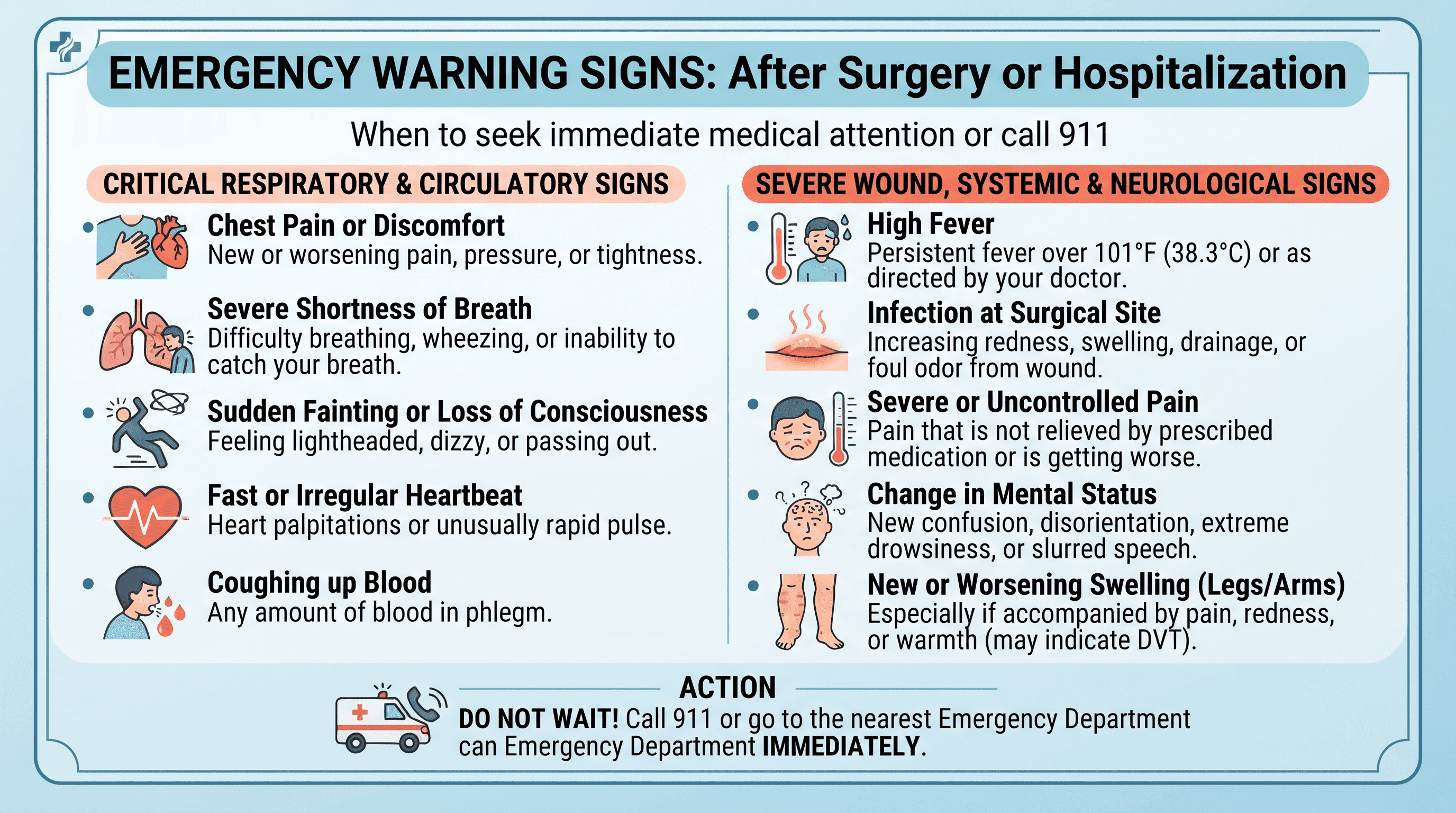
No app, including the ones above, is designed for emergencies. Call 911 or go to the nearest emergency room immediately if you experience:
- Chest pain or pressure
- Difficulty breathing
- Signs of stroke (facial drooping, arm weakness, slurred speech)
- Heavy or uncontrolled bleeding
- A high fever with confusion
- Loss of consciousness
- Signs of a severe allergic reaction
FAQ
What's the best app after being discharged from the hospital? It depends on your main concern. For deciding whether a symptom needs care, Momentary is designed for that. For surgical rehab, use whatever platform your hospital enrolled you in, often Force Therapeutics. For medications, Medisafe or MyTherapy cover reminders.
Do I need a referral to use Hinge Health or Force Therapeutics? Hinge Health typically requires eligibility through your employer or health plan, not a referral. Force Therapeutics is usually assigned directly by your hospital or surgeon as part of your surgical care.
How do I know if a new symptom after discharge is an emergency? If you're experiencing chest pain, difficulty breathing, signs of stroke, heavy bleeding, or loss of consciousness, treat it as an emergency and call 911. For less severe but confusing symptoms, a tool like Momentary can help you decide between self-care, telehealth, urgent care, or the ER. This is not a substitute for professional medical judgment.
Are recovery apps covered by insurance? Some are. Hinge Health is typically covered at no cost through employer or health plan partnerships. Force Therapeutics is usually included as part of a surgical care program. Medication apps like Medisafe and MyTherapy are generally not billed through insurance.
What's the difference between a symptom checker and a healthcare navigator? A symptom checker (like many general apps) helps identify what a symptom might be. A healthcare navigator like Momentary goes a step further and helps you decide what to actually do next, including whether the situation can wait, needs a virtual visit, or requires in-person care.
Is Momentary available where I live? The AI healthcare navigator is available nationwide in the United States. Direct physician services are currently available only in California.
Can a medication reminder app replace my hospital discharge instructions? No. These apps support adherence and organization. They don't replace the written instructions from your care team, and they aren't a medical provider.


