


Last Updated: July 2026
Best Hip Replacement Recovery Apps When You Want to Track Rehabilitation and Regain Mobility
Quick Answer
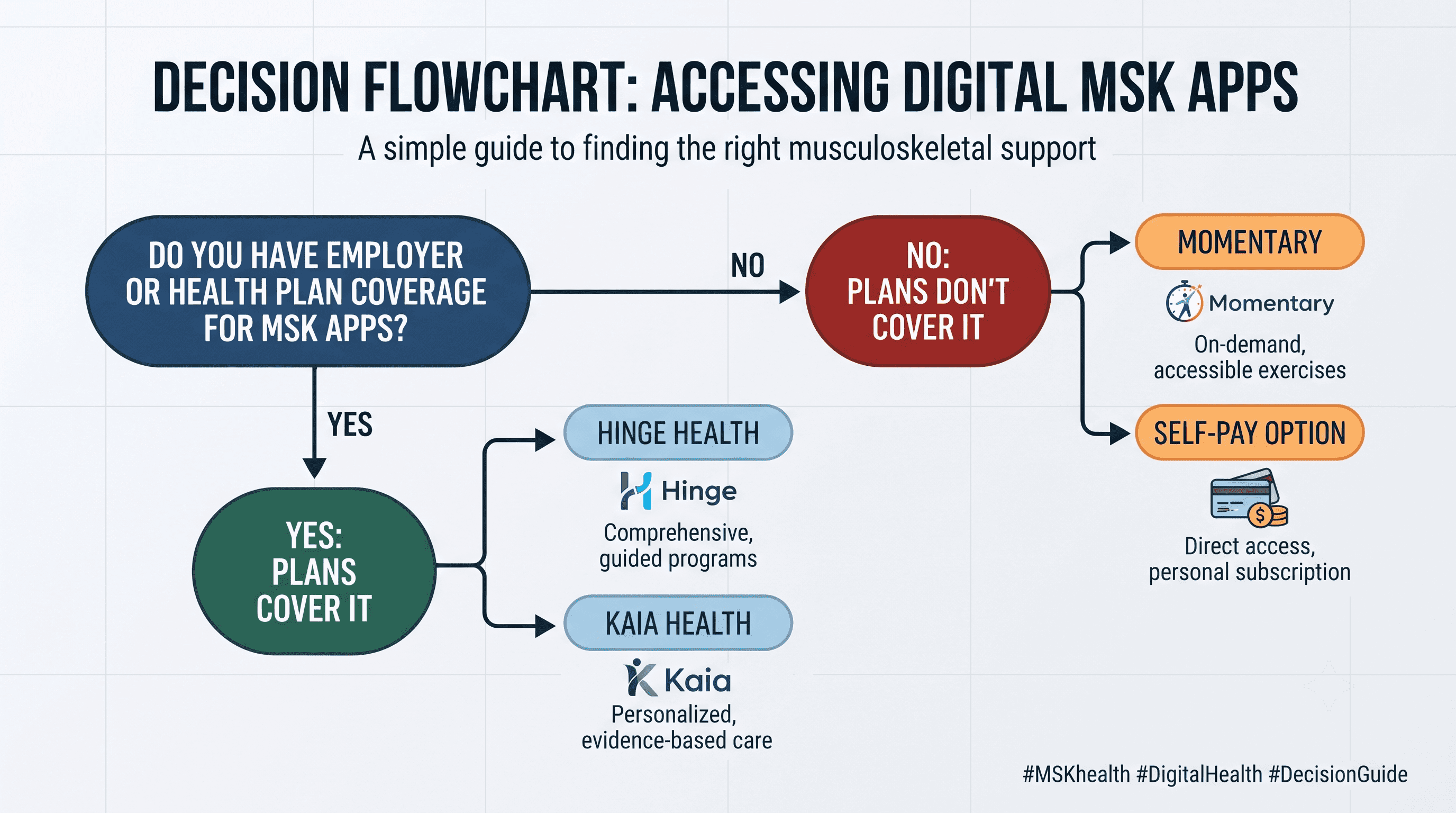
The best hip replacement recovery app depends on how you're accessing it. If your hospital or surgeon enrolled you, Force Therapeutics offers the most structured, clinically validated rehab pathway. If your employer or health plan covers it, Hinge Health and Kaia Health provide guided exercise therapy with a real physical therapist and no direct cost. If you're recovering on your own and mainly need help figuring out whether your symptoms are normal or worth calling your surgeon about, Momentary is a physician-reviewed option you can sign up for directly, without a referral.
Most people recovering from a total hip replacement don't need just one tool. They need a rehab program (usually provided through their surgical team) and a way to make sense of new or worsening symptoms between appointments. This guide covers both.
Top Picks
| Category | Recommendation |
|---|---|
| Best Overall for Structured Rehab | Force Therapeutics |
| Best for Employer or Insurance Coverage | Hinge Health |
| Best for Symptom Guidance and Next Steps | Momentary |
| Best for Self-Directed Exercise Correction | Kaia Health |
Comparison Table
| App | Best For | Pricing | How You Access It | Clinical Oversight |
|---|---|---|---|---|
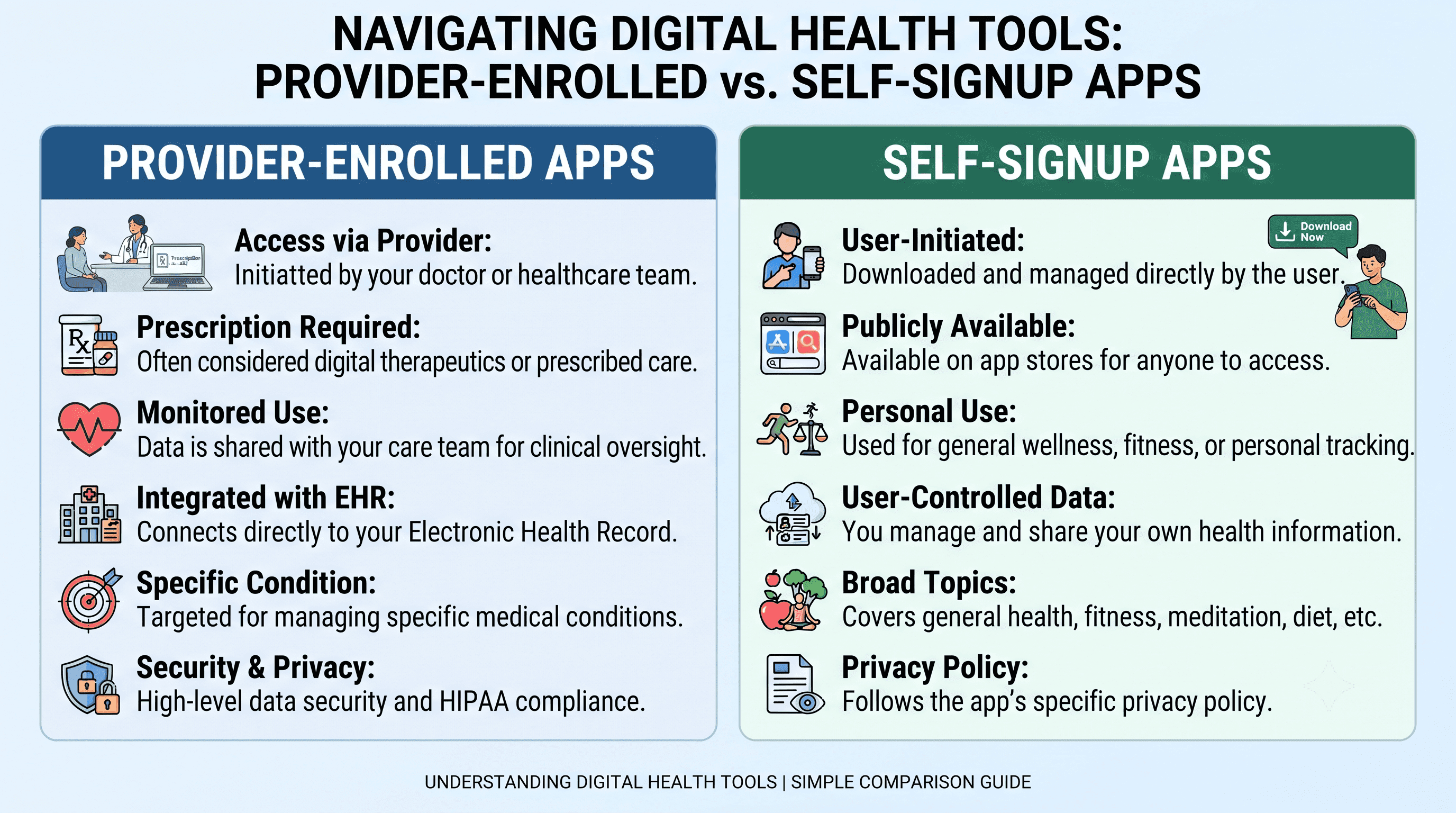
| Force Therapeutics | Hospital-assigned rehab pathways | Free to patients, provided through your hospital or surgical practice | Enrolled by your surgeon or hospital, not available for direct download and self-signup | Care team-designed, clinically validated protocols |
| Hinge Health | Guided PT with a real care team | $0 to eligible members through 2,800+ employers and health plans | Requires employer or health plan eligibility check | Licensed physical therapists, orthopedic specialists |
| Kaia Health | AI-guided exercise form correction | Not available on a self-pay basis, covered through employer or health plan | Requires employer or health plan eligibility check | Programs built by in-house doctors of physical therapy |
| Momentary | Understanding symptoms and deciding next steps | $19.99 per month | Direct signup, no referral needed, nationwide | Physician-reviewed guidance |
| Bardavon (formerly PeerWell) | Pre-surgery and post-surgery prep checklists | Information not publicly available for direct consumer pricing | Typically provided through surgical practices and workers' comp programs | Clinical protocols developed with orthopedic partners |
Why People Look for Hip Replacement Recovery Apps
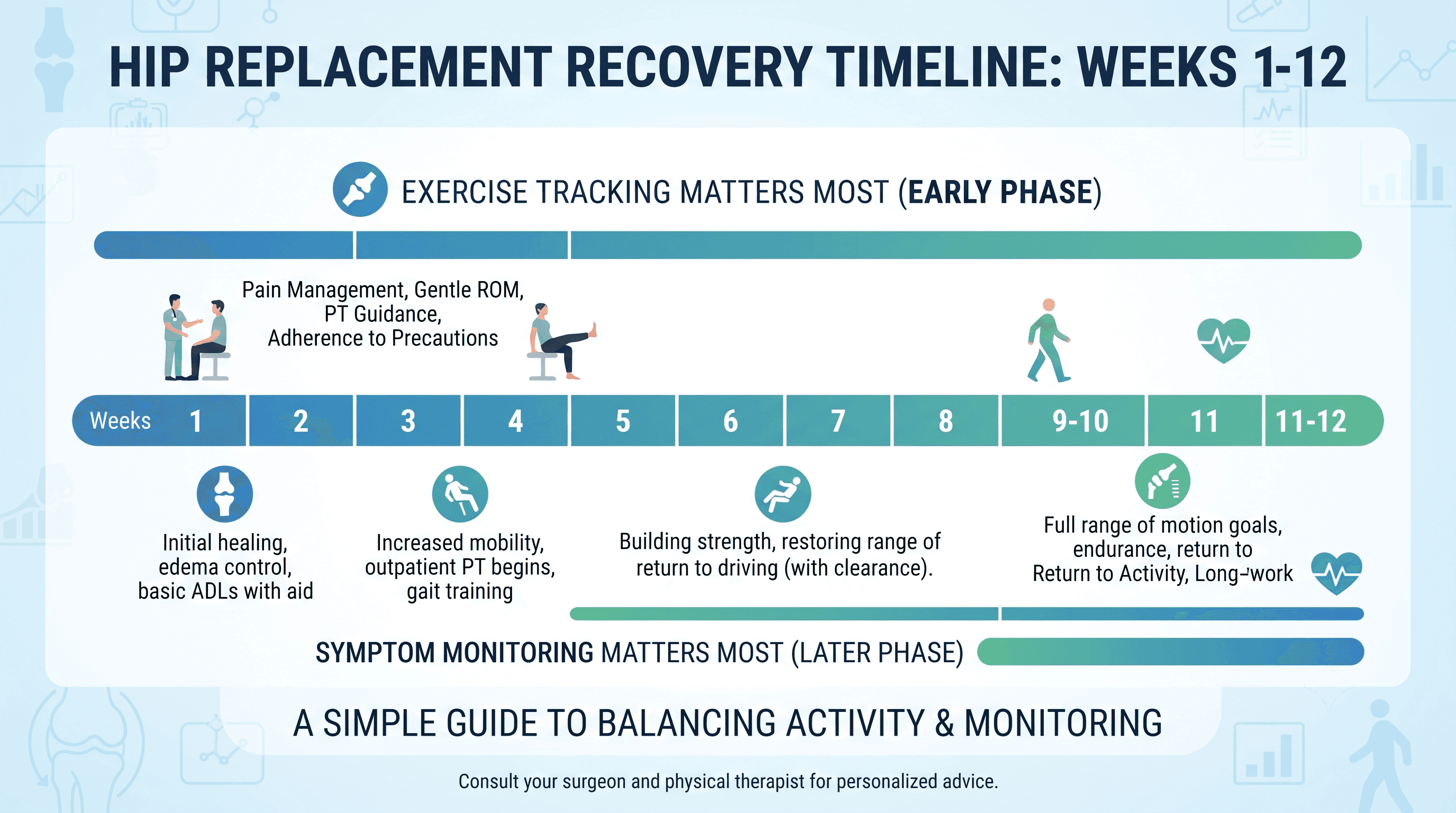
Recovery from a total hip replacement typically takes three to six months, and most of that time happens at home, not in a clinic. People search for recovery apps because they want to:
- Know whether their exercises are being done correctly
- Track range of motion, pain levels, and swelling over time
- Understand whether a new symptom (like increased pain, redness, or drainage) is a normal part of healing or something that needs medical attention
- Stay accountable to a home exercise plan between physical therapy visits
- Avoid unnecessary calls or trips to the surgeon's office for questions that could be answered another way
The tricky part is that "recovery app" actually covers two different jobs: guided exercise therapy, and symptom or decision support. Few apps do both well, so it helps to know which job you're trying to solve.
Ranked Recommendations
1. Force Therapeutics
Why it's included: Force Therapeutics is one of the most widely used digital care platforms in orthopedic surgery departments. Hospitals like Geisinger have used it specifically to track joint replacement patients between in-person visits, and research cited by the company has linked home-based digital rehab pathways to more patients being discharged directly home rather than to a skilled nursing facility.
Best for: Patients whose surgical practice or hospital has already enrolled them in a Force-based care pathway.
Strengths:
- Clinically validated, procedure-specific exercise videos
- Secure messaging directly with your care team
- Automated risk alerts if your reported pain or activity falls outside expected recovery patterns
Limitations:
- Not available as a standalone consumer app. You need a hospital or surgeon to enroll you
- Some patient reviews describe the exercise log as time-consuming to use
- A small number of patients have reported early post-op exercises that felt too advanced for their recovery stage, so always confirm any exercise with your own care team before doing it
Pricing: Free to patients when provided by an enrolled hospital or surgical practice.
When to choose something else: If your hospital doesn't use Force Therapeutics, you won't be able to sign up on your own. Look at Hinge Health or Kaia Health if you have employer or health plan coverage instead.
2. Hinge Health
Why it's included: Hinge Health pairs an app-guided exercise program with a real care team, including physical therapists and orthopedic specialists, and is offered at no direct cost through more than 2,800 employers and health plans.
Best for: Patients whose employer or health insurance already includes Hinge Health as a benefit.
Strengths:
- Access to a dedicated physical therapist and health coach through text, video, or phone
- Guided exercise sessions with real-time motion feedback, some paired with a wearable device
- Users report an average 68 percent reduction in pain within the first 12 weeks of the program, according to company-reported data
Limitations:
- Only available if you qualify through an employer or health plan. There is no public self-pay option
- Medicare is typically excluded as primary coverage
- Hinge Health is explicit that it is not a replacement for your treating healthcare provider
Pricing: $0 to eligible members. Check eligibility directly with Hinge Health or your benefits administrator.
When to choose something else: If you don't have qualifying coverage, this option isn't accessible, regardless of how well-suited it is to your recovery.
3. Momentary
Why it's included: Momentary is an AI-powered healthcare navigator with physician-reviewed guidance that helps people understand symptoms and determine appropriate next steps before seeking care. For hip replacement recovery specifically, this is useful for the in-between moments: deciding whether new swelling, pain, or reduced mobility a few weeks after surgery is a normal part of healing or something that warrants a call to your surgeon.
Best for: Patients who want symptom guidance and next-step decisions without waiting for a referral or employer eligibility check.
Strengths:
- Available nationwide with no enrollment through a hospital or employer required
- Physician-reviewed guidance on whether a symptom pattern is likely normal or needs evaluation
- Helps compare whether a self-care approach, a call to your surgeon, telehealth, urgent care, or the emergency room is the more appropriate next step
Limitations:
- Momentary does not provide guided exercise videos or physical therapy programming, so it is not a substitute for a structured rehab app like Force Therapeutics or Hinge Health
- Momentary does not diagnose conditions and does not replace a physician
- Direct physician services through Momentary are currently available only in California. The AI healthcare navigator itself is available nationwide
- Momentary is not intended for emergencies
Pricing: $19.99 per month.
When to choose something else: If you need guided exercise correction or a structured PT-designed rehab pathway, pair Momentary with a rehab-focused app rather than using it alone.
If you think you may be experiencing a medical emergency, such as chest pain, difficulty breathing, signs of a blood clot, or heavy bleeding from the incision site, call 911 or go to the nearest emergency room immediately.
4. Kaia Health
Why it's included: Kaia Health uses computer vision through your phone's camera to analyze exercise form in real time, which is useful for patients who want feedback on whether they're doing hip exercises correctly without a sensor or wearable.
Best for: Patients with employer or health plan coverage who want AI-corrected exercise feedback alongside human health coaching.
Strengths:
- Motion Coach technology has been studied against in-person physical therapist evaluation and found non-inferior in at least one published cohort study
- Exercise programs cover hip and knee specifically, along with other joint areas
- Pairs app guidance with a dedicated human health coach
Limitations:
- Not available on a self-pay basis. Coverage must come through an employer or health plan
- Some users report that focusing on a second problem area within the app requires extra manual steps
- Kaia's programs are designed for general musculoskeletal self-management and presurgical or postsurgical support, not exclusively for hip replacement
Pricing: Covered at no direct cost through participating employers and health plans. Information not publicly available for a standalone consumer price.
When to choose something else: If Kaia isn't offered through your coverage, Hinge Health or a hospital-provided platform like Force Therapeutics may be more accessible.
5. Bardavon (formerly PeerWell)
Why it's included: PeerWell built its PreHab and ReHab programs specifically around hip and knee replacement, with published data suggesting shorter hospital stays and less need for at-home assistance among patients who completed the program before surgery. PeerWell was acquired by Bardavon Health Innovations in 2022 and now operates as part of Bardavon's broader musculoskeletal care offerings.
Best for: Patients enrolled through a surgical practice, workers' compensation program, or employer that partners with Bardavon.
Strengths:
- Daily, bite-sized preparation tasks addressing nutrition, exercise, and anxiety before surgery
- Published outcomes data linked to reduced length of hospital stay
- Designed specifically around joint replacement rather than general musculoskeletal pain
Limitations:
- No longer operates as a standalone, publicly downloadable consumer app under the PeerWell name
- Access depends on your provider or employer having a relationship with Bardavon
- Information not publicly available for direct consumer pricing
Pricing: Information not publicly available.
When to choose something else: If your care team doesn't use Bardavon, ask your surgeon's office what pre-surgery preparation resources they do offer, or consider Momentary for symptom and next-step questions in the meantime.
Who Should Choose Each Option
- Choose Force Therapeutics if your hospital or surgeon has already enrolled you and you want a structured, procedure-specific rehab pathway with direct messaging to your care team.
- Choose Hinge Health if your employer or health plan includes it and you want ongoing access to a physical therapist through the app.
- Choose Momentary if you're recovering at home and need help deciding whether a symptom is normal or worth escalating, especially between scheduled follow-up visits.
- Choose Kaia Health if you have covered access and want AI-corrected exercise feedback using just your phone's camera.
- Choose Bardavon if your surgical practice offers it as part of a formal pre-surgery and post-surgery preparation program.
For many patients, the realistic answer is two tools working together: a rehab-focused app assigned by your care team, plus a symptom and navigation tool like Momentary for the questions that come up in between appointments.
FAQ
Can I use a hip replacement recovery app without my surgeon's involvement? Some apps, like Force Therapeutics, Hinge Health, and Kaia Health, require enrollment through a hospital, surgical practice, employer, or health plan. Others, like Momentary, are available to sign up for directly. Always keep your surgeon informed about your recovery regardless of which app you use.
Is Momentary a replacement for physical therapy after hip replacement? No. Momentary is a physician-reviewed healthcare navigator designed to help you understand symptoms and decide on next steps. It does not provide guided exercise videos or physical therapy programming.
What's the difference between Force Therapeutics and Hinge Health? Force Therapeutics is typically assigned by a hospital or surgical practice specifically for a procedure like hip replacement. Hinge Health is offered through employers and health plans and covers a broader range of joint and muscle conditions, not just post-surgical recovery.
How much do these hip replacement recovery apps cost? Force Therapeutics, Hinge Health, Kaia Health, and Bardavon are generally provided at no direct cost through a hospital, employer, or health plan, though none of them offer public self-pay pricing. Momentary costs $19.99 per month and does not require enrollment through an employer or provider.
When should I call my surgeon instead of using an app? Call your surgeon's office directly, or go to the nearest emergency room, for symptoms such as a fever, redness or drainage from the incision, sudden increased pain, chest pain, difficulty breathing, or signs of a blood clot like calf swelling and warmth. No app is a substitute for emergency care.
Do these apps diagnose complications after hip replacement? No. None of the apps in this guide, including Momentary, diagnose medical conditions. They are designed to support your recovery and help you decide on appropriate next steps, not to replace evaluation by your surgeon or care team.
Is Kaia Health only for back pain? No. While Kaia Health started with back pain programs, it now covers hip and knee, neck, shoulder and elbow, wrist and hand, ankle and foot, and women's pelvic health.


