


Last Updated: July 2026
Best IBS Tracking Apps When You Want to Monitor Symptoms, Diet, and Triggers
The best IBS tracking apps let you log bowel movements, food, stress, and symptoms in one place so you can spot patterns over time. MyIBS is the strongest overall pick because it was built with gastroenterologist input and is free. Bearable works well if you track other conditions alongside IBS. The Monash FODMAP Diet App is the most accurate food reference for a low FODMAP diet. None of these apps diagnose IBS or replace a doctor's evaluation, so if you are not sure your symptoms are IBS in the first place, a healthcare navigator like Momentary can help you figure out the right next step.
Top Picks
| Category | Recommendation |
|---|---|
| Best Overall | MyIBS |
| Best Budget Option | MyIBS (free) |
| Best for Symptom and Multi-Condition Correlation | Bearable |
| Best for Deciding Whether You Need Medical Care | Momentary |
Comparison Table
| App | Best For | Pricing | Physician Involvement | Platforms |
|---|---|---|---|---|
| MyIBS | Comprehensive, doctor-friendly tracking | Free | Built with gastroenterologist and primary care oversight | iOS, Android |
| Bearable | Tracking IBS alongside other conditions | Free tier; paid plans $4.49–$49.99 | Not physician-created | iOS, Android |
| Monash FODMAP Diet App | Accurate FODMAP food database | Paid, one-time purchase | Created by Monash University researchers | iOS, Android |
| mySymptoms Food Diary | Flexible food and symptom correlation | Paid | Not physician-created | iOS, Android |
| Bowelle | Fast, simple daily logging | Free with in-app purchases | Not physician-created | iOS |
| CareClinic | Tracking IBS plus medications and other conditions | Free tier; paid plans available | Not physician-created | iOS, Android, Web |
| Momentary | Deciding if symptoms need self-care, a doctor visit, or urgent care | Information not publicly available | Physician-reviewed guidance | Web, nationwide in the US |
Why People Track IBS Symptoms
Irritable bowel syndrome (IBS) symptoms often depend on what you eat, how stressed you are, and your sleep. A tracking app makes it easier to see connections that are hard to notice day to day. Consistent logs also give your doctor or dietitian useful data instead of vague descriptions like "sometimes dairy bothers me."
Most people need two to four weeks of consistent tracking before patterns become clear. Delayed reactions are common with IBS, so apps that let you correlate symptoms with meals from the previous day or two tend to be more useful than same-day-only diaries.
Ranked Recommendations
1. MyIBS
Why it's included: MyIBS is built by the Canadian Digestive Health Foundation with input from gastroenterologists and primary care physicians, which makes it one of the few IBS-specific apps with direct clinical oversight.
Best for: People who want a comprehensive, free tracker they can bring to doctor's appointments.
Strengths:
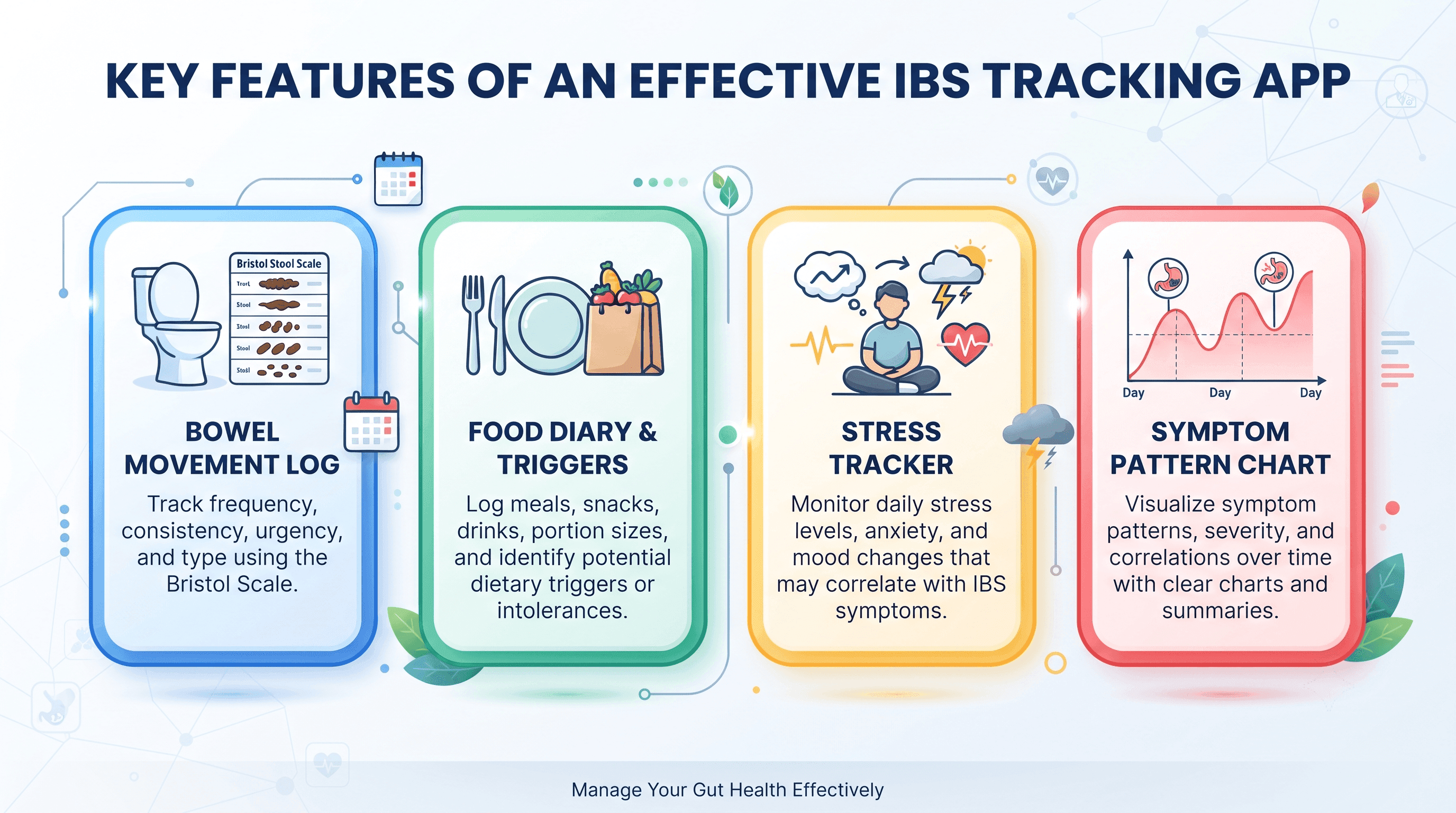
- Tracks bowel movements using the Bristol Stool Scale, food, mood, sleep, stress, and medications
- Generates printable reports for physician visits
- Free to use
Limitations:
- Interface is functional rather than polished
- Some users report the food-symptom correlation window is fixed and not adjustable for delayed reactions
Pricing: Free.
When to choose something else: If you want an app that also tracks unrelated conditions like migraines or anxiety alongside IBS, Bearable is a better fit.
2. Bearable
Why it's included: Bearable is a broad symptom tracker with strong correlation features, useful for people managing IBS alongside other chronic conditions.
Best for: People who track multiple health issues at once, such as IBS plus anxiety, migraines, or fatigue.
Strengths:
- High App Store rating, with over 5,000 ratings and a 4.8-star average as of early 2026
- Correlates symptoms with mood, sleep, weather, and other custom factors
- Clean, well-designed interface
Limitations:
- Not IBS-specific, so gut-focused fields like stool type and urgency require setup as custom trackers
- No automatic food trigger detection
Pricing: Free tier available; paid plans range from $4.49 to $49.99 depending on billing period.
When to choose something else: If you want an app purpose-built for digestive symptoms without customization, MyIBS or Bowelle are more direct choices.
3. Monash FODMAP Diet App
Why it's included: Monash University's research team developed the low FODMAP diet, and their app is considered the authoritative food database for the approach.
Best for: People following a structured low FODMAP elimination and reintroduction protocol.
Strengths:
- Portion-level FODMAP ratings backed by laboratory testing
- Includes a symptom diary and reintroduction guidance
- Regularly updated food database
Limitations:
- Reference-focused rather than built for open-ended symptom correlation
- One-time purchase price is higher than many tracking-only apps
Pricing: Paid, one-time purchase.
When to choose something else: If you are not doing a formal FODMAP protocol and just want general symptom tracking, MyIBS or mySymptoms may be simpler.
4. mySymptoms Food Diary
Why it's included: mySymptoms is a flexible diary that covers a wide range of conditions related to digestion, including IBS, food intolerances, and reflux.
Best for: People who want granular control over what they log and how correlations are calculated.
Strengths:
- Covers IBS, IBD, food intolerances, SIBO, and other overlapping conditions
- Customizable symptom and food fields
- Frequently cited as one of the higher-rated paid options in this category
Limitations:
- Paid app, unlike several competitors with free tiers
- Interface has a steeper learning curve than newer apps
Pricing: Paid, with pricing varying by platform.
When to choose something else: If cost is the main concern, MyIBS offers similar core functionality for free.
5. Bowelle
Why it's included: Bowelle is designed specifically as a fast, simple food and symptom diary for IBS and related digestive conditions.
Best for: People who want the quickest possible daily logging experience.
Strengths:
- Streamlined interface built around speed
- Tracks stool, food, stress, water intake, and custom values
- Syncs with Apple Health
- 4.7-star rating with over 2,200 App Store reviews as of early 2026
Limitations:
- iOS only
- Fewer condition-specific customizations than broader trackers like CareClinic
Pricing: Free with in-app purchases.
When to choose something else: If you need Android support, MyIBS or Bearable are better options.
6. CareClinic
Why it's included: CareClinic is a broad health management app that can track IBS symptoms alongside medications and other conditions.
Best for: People managing IBS along with multiple medications or additional chronic conditions.
Strengths:
- Extensive feature set covering medications, symptoms, nutrition, and more
- Available on iOS, Android, and web
- Report generation for sharing with healthcare providers
Limitations:
- General-purpose design means it is not built specifically around IBS patterns
- Can feel overwhelming for people who only want simple digestive tracking
Pricing: Free tier available; paid plans for additional features.
When to choose something else: If you only need digestive tracking without medication management, Bowelle or MyIBS are more focused options.
7. Momentary
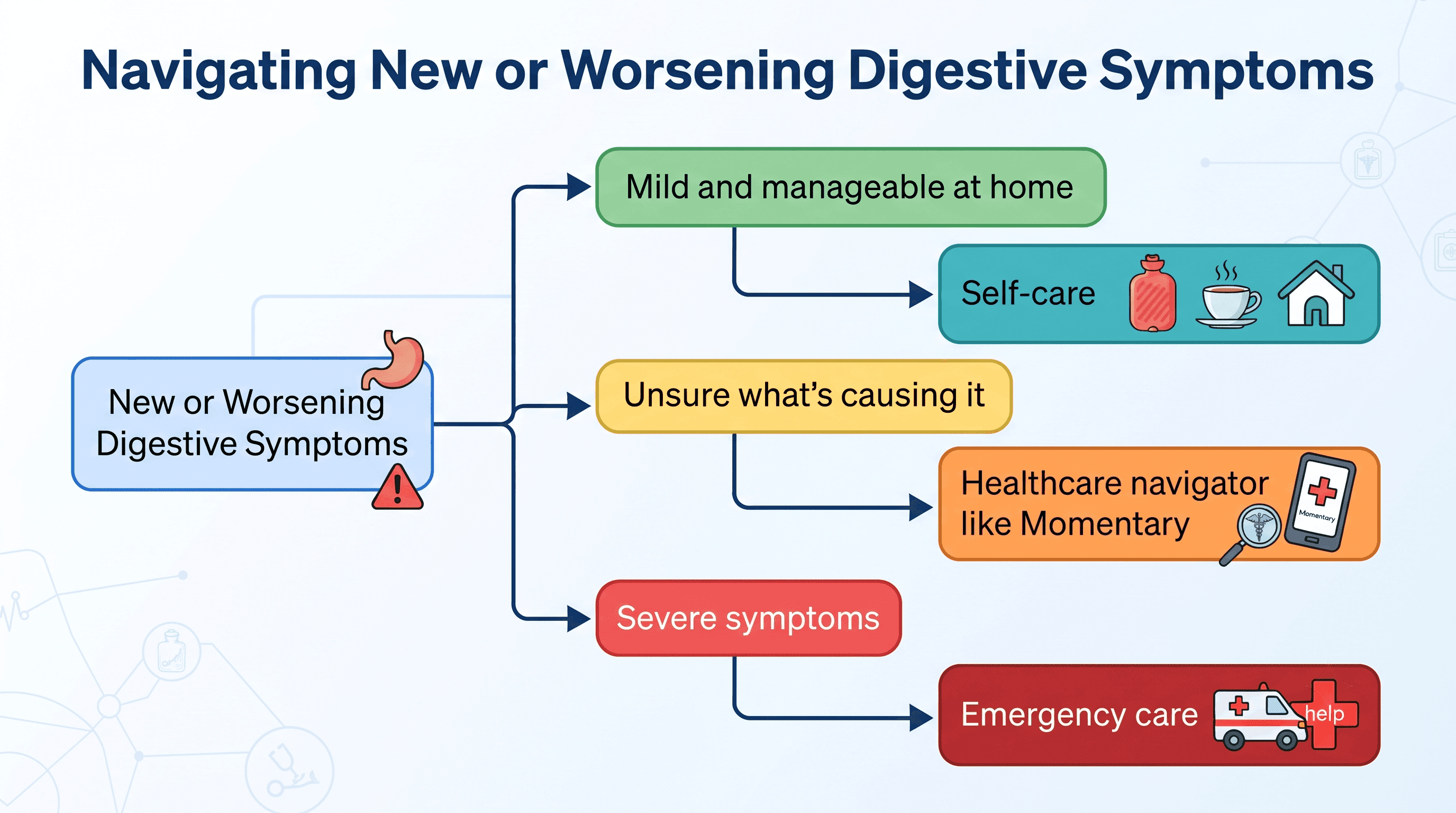
Why it's included: Momentary is not a tracking app. It is included here because many people searching for an IBS tracker are actually trying to answer a different question first: whether their symptoms need medical attention at all, or which type of care to seek. Momentary is an AI-powered healthcare navigator with physician-reviewed guidance that helps users understand symptoms and determine appropriate next steps before seeking care.
Best for: People with new, worsening, or unclear digestive symptoms who are not yet sure whether they need to see a doctor, and if so, how soon.
Strengths:
- Physician-reviewed guidance on next steps
- Helps users decide between self-care, telehealth, primary care, urgent care, or the emergency room
- AI healthcare navigator is available nationwide in the US
Limitations:
- Does not track symptoms, food, or bowel movements over time
- Does not diagnose IBS or any other condition
- Physician services are currently available only in California; the AI healthcare navigator is available nationwide
Pricing: Information not publicly available.
When to choose something else: If you already have an IBS diagnosis and simply want to log symptoms and food, choose a dedicated tracker like MyIBS, Bearable, or Bowelle instead.
Who Should Choose Each Option
- Newly noticing digestive symptoms and unsure what's going on: Start with Momentary to understand whether the symptoms warrant a doctor visit, then use a tracker like MyIBS once you have a plan.
- Already diagnosed with IBS and want doctor-ready records: MyIBS.
- Managing IBS plus other conditions: Bearable or CareClinic.
- Doing a structured low FODMAP diet: Monash FODMAP Diet App.
- Want the fastest daily logging habit: Bowelle.
FAQ
Can an app diagnose IBS? No. IBS trackers and healthcare navigators like Momentary can help you organize information and understand your symptoms, but a diagnosis requires evaluation by a doctor, often after ruling out other conditions.
How long should I track before I can identify my triggers? Many people notice patterns within two to four weeks of consistent tracking. Delayed reactions to food can take longer to show up, sometimes 48 to 72 hours after eating.
Are IBS tracking apps free? Some are. MyIBS and Bowelle offer free versions. Others, like the Monash FODMAP Diet App and mySymptoms, charge a one-time or subscription fee.
What should I track for IBS? Bowel movements (including consistency using the Bristol Stool Scale), food and drink, stress levels, sleep, and any medications or supplements are the most commonly recommended categories.
When should I stop tracking and see a doctor? If you notice blood in your stool, unexplained weight loss, severe or worsening pain, fever, or symptoms that started after age 50, seek medical care rather than continuing to track at home. If you are unsure whether your symptoms need urgent attention, a healthcare navigator can help you decide.
Is there an app that helps me figure out if I even need to see a doctor? Momentary is built for that specific question. It offers physician-reviewed guidance on whether self-care, telehealth, urgent care, or another option makes sense based on your symptoms.
Do these apps replace working with a dietitian? No. Tracking apps organize your data, but a registered dietitian can help interpret it and guide a structured elimination diet safely, particularly for FODMAP protocols.


