


Last Updated: September 2026
Best Low-Cost Healthcare Options in California for Affordable Medical Care
Quick Answer
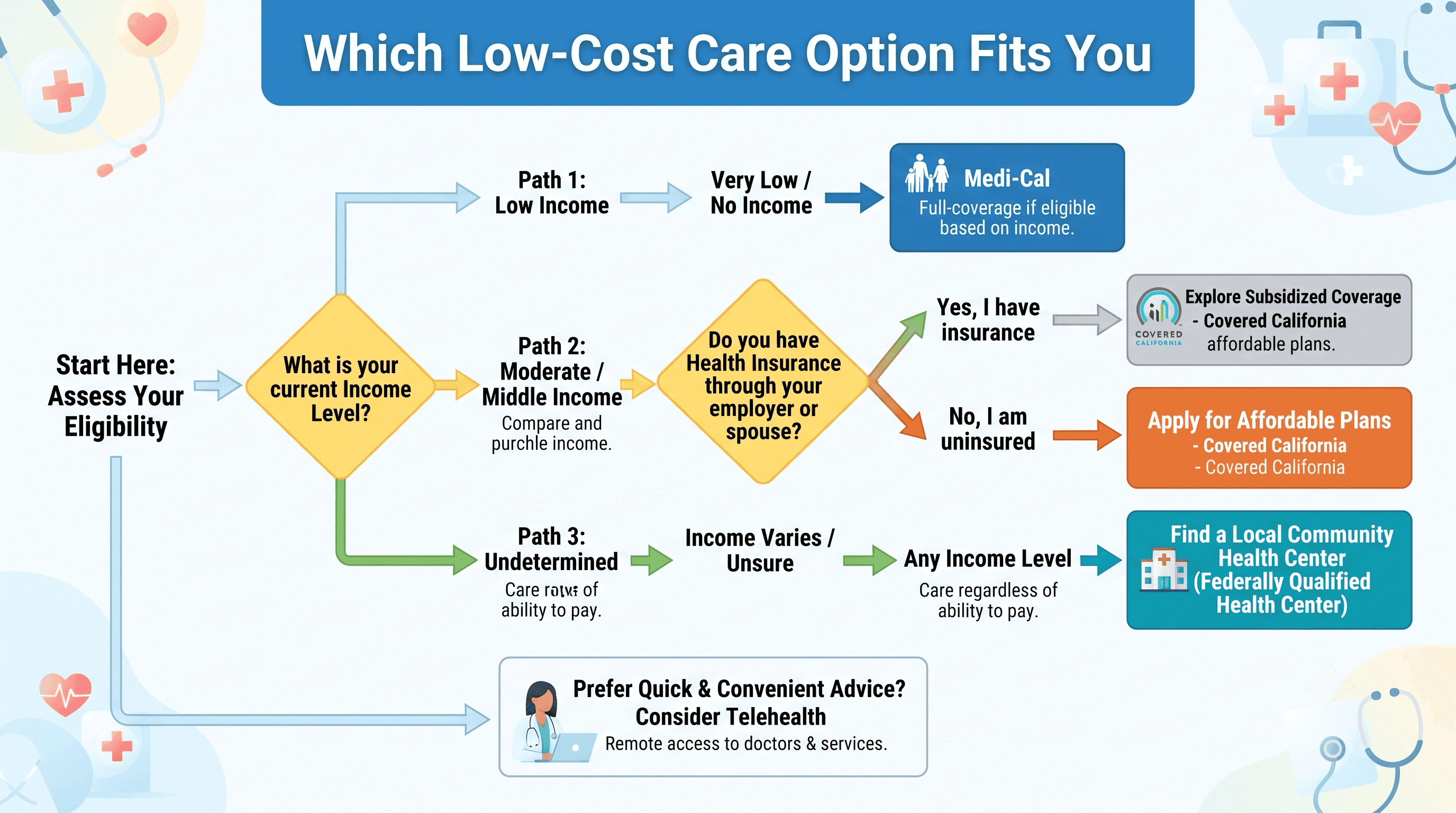
The best low-cost healthcare option in California depends on your income and insurance status. If you earn under 138% of the federal poverty level ($20,783 a year for one person in 2026), Medi-Cal usually offers free or nearly free coverage. If you earn more but still qualify for a subsidy, Covered California can bring premiums close to $0 for households up to 150% of the federal poverty level. If you're uninsured and need a same-day answer or a cheap visit, community health centers, GoodRx Care, and Sesame Care all offer visits for $20 to $40. If you would rather have an ongoing doctor than a one-off visit, Momentary gives Californians a licensed California physician they can text any hour for $19.99 a month, with prescriptions, lab orders, and referrals included.
Top Picks
| Category | Recommendation |
|---|---|
| Best Overall for Low-Cost Care | Community Health Centers (FQHCs) |
| Best for Free or Subsidized Insurance | Medi-Cal |
| Best for Ongoing Primary Care by Text | Momentary |
| Best Budget Telehealth | GoodRx Care |
Comparison Table
| Option | Best For | Pricing | Insurance | California Availability |
|---|---|---|---|---|
| Community Health Centers (FQHCs) | Ongoing low-cost primary care | $0 to $50 per visit, sliding scale | Medi-Cal, Medicare, most plans, self-pay | Statewide, over 180 organizations |
| Medi-Cal | Free or low-cost full coverage | $0 to $10 monthly in most cases | Is the insurance | Statewide |
| Covered California | Subsidized private insurance | $0 to full premium depending on income | ACA marketplace plans | Statewide |
| Momentary | Ongoing primary care by text; prescriptions, labs, and referrals | $19.99/month membership (HSA/FSA eligible); no per-visit fees | Not billed; cash membership | California residents only; iOS app |
| GoodRx Care | Cheap one-off telehealth visits | $19 to $39 per visit (membership), $39 to $75 without | Self-pay only | Nationwide, including California |
| Sesame Care | Transparent cash-pay visits | $29 to $47 primary care, $79+ mental health | Self-pay only, provides receipts for reimbursement | Nationwide, including California |
| K Health | Unlimited AI-assisted messaging visits | $29 to $49 monthly, or $35 single visit | Limited employer partnerships, mostly self-pay | Available in California |
| Carbon Health | In-person urgent care with insurance option | $129 to $159 self-pay per visit | Most major plans and Medicare, not Medi-Cal | Multiple California cities |
Why People Look for Low-Cost Healthcare in California
Healthcare costs in California keep climbing. Covered California approved a preliminary average rate increase of 10.3% for 2026, and federal enhanced subsidies that kept premiums low from 2021 through 2025 expired at the end of last year. The state has allocated $190 million to provide state subsidies for individuals earning up to 150 percent of the federal poverty level, and Covered California announced a preliminary weighted average rate increase of 10.3 percent. That means many people who don't qualify for Medi-Cal are now paying more out of pocket for coverage, and people without insurance are paying full price for care.
At the same time, unnecessary emergency room visits and urgent care trips add up quickly. A single ER visit for a non-emergency can cost thousands of dollars, while the same problem might be handled for $20 to $50 at a telehealth visit or community clinic. The challenge for most people isn't finding a low-cost option. It's knowing which one actually fits their income, symptoms, and insurance status.
This guide breaks down the most useful low-cost healthcare options available in California, ranked by who they help most.
Ranked Recommendations
1. Community Health Centers (FQHCs)
Why it's included: Federally Qualified Health Centers are nonprofit clinics funded to serve everyone, regardless of income or immigration status. California has more than 180 licensed community health center organizations operating well over 1,000 clinic sites statewide.
Best for: Ongoing primary care, dental care, and mental health services at the lowest possible cost.
Strengths: Sliding fee scale based on household income means patients at or below the federal poverty level often pay a nominal charge of $20 to $50 per visit. Many locations offer on-site pharmacies, dental care, and case management.
Limitations: Appointment availability varies by location. Same-day sick visits are not guaranteed everywhere, and wait times for new patients can run several weeks in high-demand areas.
Pricing: $0 to $50 per visit for uninsured patients, based on income. Insurance is billed when available.
Insurance: Accepts Medi-Cal, Medicare, and most commercial plans, plus self-pay.
Who should use it: Uninsured or underinsured Californians who want an ongoing relationship with a primary care provider, not just a one-time visit.
When another provider is better: If you need care today and can't get a same-day appointment, a telehealth option like GoodRx Care or Sesame Care may be faster.
2. Medi-Cal
Why it's included: Medi-Cal is California's Medicaid program and the single lowest-cost path to full health coverage for eligible residents.
Best for: Free or nearly free comprehensive coverage for low-income Californians.
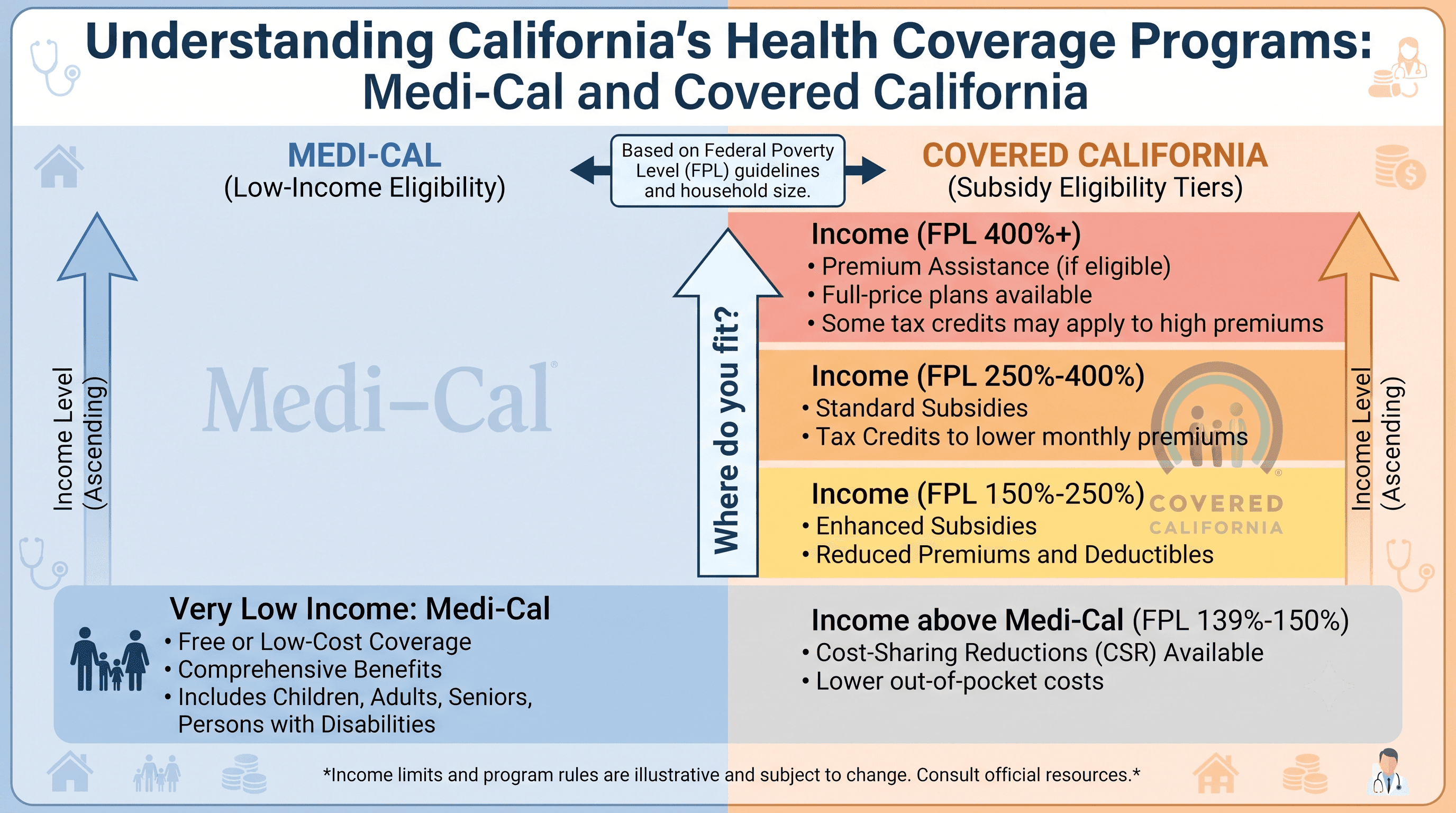
Strengths: Adults earning up to 138% of the federal poverty level, or $20,783 a year for one person in 2026, qualify for free or very low-cost health coverage. Coverage includes doctor visits, hospital care, mental health, and prescriptions.
Limitations: Provider networks can be narrower than commercial insurance in some counties, and not every specialist accepts Medi-Cal.
Pricing: Typically $0 monthly premium; some plans have small copays.
Insurance: Is the insurance itself.
Who should use it: Anyone under the income threshold, including many part-time workers, students, and families.
When another provider is better: If your income is above the Medi-Cal threshold, Covered California is the next step.
3. Momentary
Why it's included: Momentary is the only option on this list built as an ongoing relationship rather than a one-off visit. Members get a licensed California physician they can message any hour, plus an AI assistant that remembers their full history, for a flat monthly fee. Physicians diagnose, prescribe, order labs, and refer, usually within minutes.
Best for: Californians who want a personal doctor in their pocket for everyday primary care: refills, new symptoms, lab work, and follow-up questions, without booking an appointment for each one.
Pricing: $19.99 a month, HSA/FSA eligible. No per-visit fees and no insurance billing.
Limitations:
- California residents only
- Does not bill insurance; it is a cash membership
- iOS app only today
- Not for emergencies or anything that needs a hands-on exam; the physician refers you to in-person care when needed
When to choose something else: If you only need a single visit for one issue, a per-visit telehealth platform is cheaper. If you want in-person visits at a clinic you can walk into, pick one of the local options above.
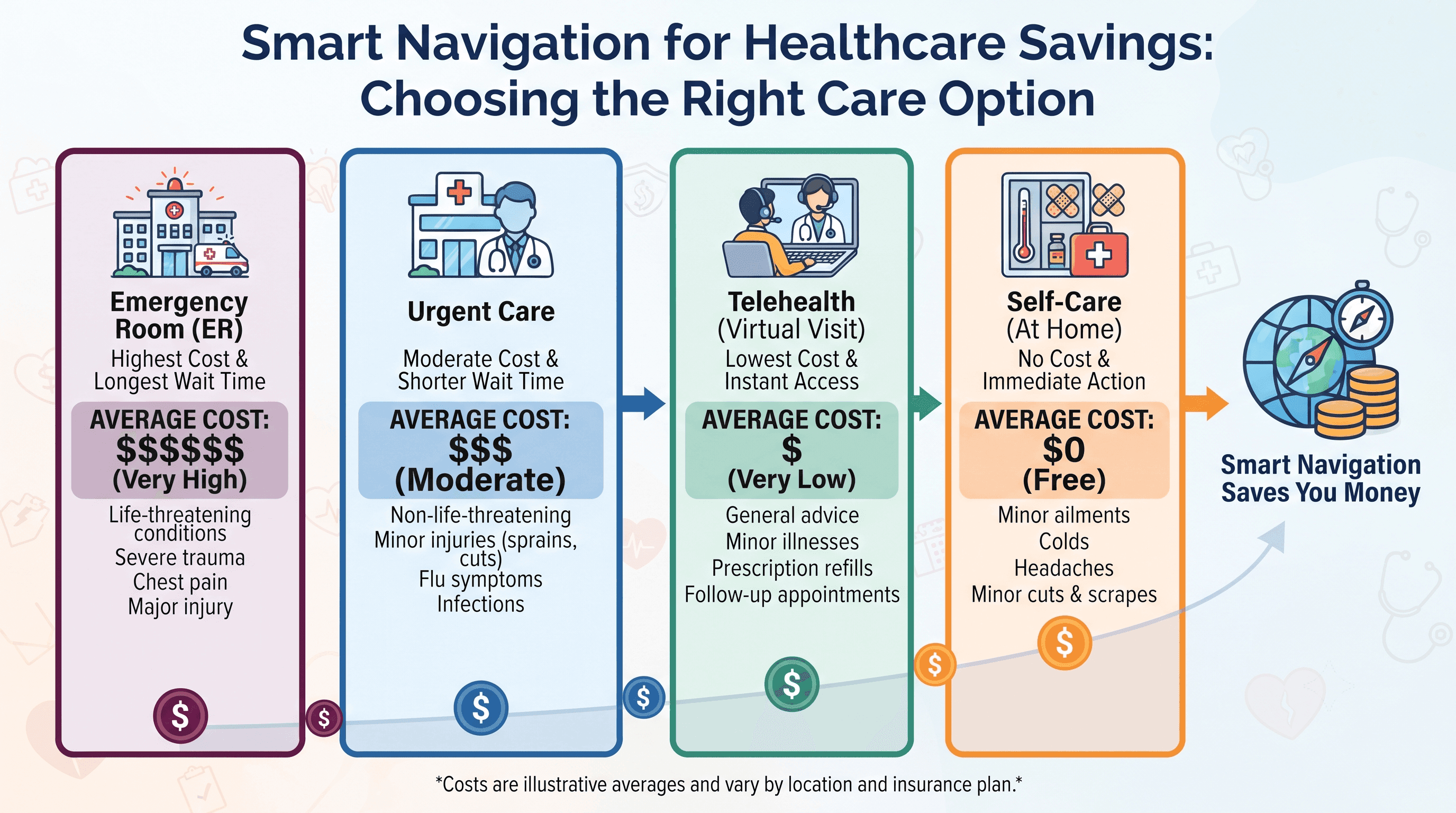
If you think you may be experiencing a medical emergency, call 911 or go to the nearest emergency room immediately.
4. Covered California
Why it's included: For people who earn too much for Medi-Cal but still want help paying for insurance, Covered California is the state's ACA marketplace.
Best for: Subsidized private insurance for individuals and families between 138% and 400% of the federal poverty level.
Strengths: California allocated $190 million to maintain near-$0 premiums for enrollees up to 150% of the federal poverty level, helping about 333,000 people. Plans include Bronze, Silver, and Gold tiers with varying premiums and out-of-pocket costs.
Limitations: Households earning above 400% of the federal poverty level no longer receive federal premium tax credits as of 2026, so premiums can be significantly higher for middle-income families than in prior years.
Pricing: Ranges from $0 monthly for the lowest-income enrollees to full premium cost above 400% FPL.
Insurance: ACA-compliant marketplace plans from major California insurers.
Who should use it: Self-employed workers, small business employees, and anyone without access to employer coverage who earns above the Medi-Cal threshold.
When another provider is better: If your income qualifies for Medi-Cal, that program is typically less expensive.
5. GoodRx Care
Why it's included: GoodRx Care offers some of the lowest published telehealth visit prices available to cash-pay patients in California.
Best for: Quick, affordable visits for common conditions like UTIs, cold and flu, and skin issues.
Strengths: Visit fees range from $20 to $75 depending on condition, and the platform integrates directly with GoodRx prescription discounts.
Limitations: Does not accept insurance for visits. Scope is limited to common, non-emergency conditions.
Pricing: With a GoodRx Gold membership, which costs $5.99 a month, telehealth visits through GoodRx Care are $19; visits without membership generally run $39 to $75.
Insurance: Self-pay only, though prescriptions can be discounted through GoodRx regardless of insurance status.
Who should use it: Uninsured Californians who need a fast, low-cost answer for a common condition and a prescription.
When another provider is better: If you need an ongoing relationship with one provider, a community health center or primary care membership is a better fit.
6. Sesame Care
Why it's included: Sesame is a cash-pay marketplace where independent doctors set and publish their own prices, so you can compare cost before booking.
Best for: Same-day, transparent-pricing visits without insurance.
Strengths: Per-session rates start around $29 for acute care and medication management, and the platform covers a wide range of specialties beyond primary care.
Limitations: Sesame Care does not accept health insurance, though it provides receipts for possible reimbursement. Prices vary by provider and region.
Pricing: Roughly $29 to $47 for primary care, higher for specialty and mental health visits. An optional Sesame Plus membership costs $10.99 monthly.
Insurance: Not accepted; self-pay with reimbursement receipts available.
Who should use it: People comparing prices across multiple providers before committing to a visit.
When another provider is better: If you have Medi-Cal or Medicare, using a provider that bills insurance directly, like a community health center, will likely cost less.
7. K Health
Why it's included: K Health combines AI-assisted triage with licensed clinicians for unlimited messaging-based care.
Best for: People who want ongoing, low-cost access to a provider through an app rather than one-off visits.
Strengths: Unlimited primary care visits and messaging cost $29 a month, or a single visit costs $35.
Limitations: Care is largely text-based rather than in-person, which isn't appropriate for conditions that need a physical exam.
Pricing: $29 to $49 monthly membership, or single visits around $35.
Insurance: Mostly self-pay, with limited employer partnerships.
Who should use it: Californians who want low-cost, repeatable access to a clinician for common conditions and refills.
When another provider is better: If a condition needs hands-on examination, imaging, or labs, in-person urgent care or a community health center is more appropriate.
8. Carbon Health Urgent Care
Why it's included: For situations that need an in-person visit but don't rise to emergency level, Carbon Health offers modern urgent care clinics across several California cities.
Best for: Same-day in-person care for injuries or illnesses that need an exam.
Strengths: Accepts most major insurance plans and Medicare, with published self-pay pricing for transparency.
Limitations: Carbon Health accepts Medicare but does not accept Medi-Cal at this time, which limits access for many low-income Californians.
Pricing: Self-pay rates are usually $129 to $159 for a consult if no labs, x-rays, or procedures are needed.
Insurance: Most major commercial plans and Medicare; self-pay available.
Who should use it: Insured patients who need a same-day, in-person visit for an injury or acute illness.
When another provider is better: Medi-Cal patients or uninsured patients on a tight budget will generally find lower costs at a community health center.
Who Should Choose Each Option
- Uninsured with very low income: Apply for Medi-Cal first.
- Income too high for Medi-Cal but need help with premiums: Covered California.
- Need ongoing primary care on a sliding scale: A community health center.
- Want an ongoing doctor you can text any hour, not a one-off visit: Momentary ($19.99 a month, California residents only)
- Need a fast, cheap answer for a common issue: GoodRx Care or Sesame Care.
- Need a same-day in-person visit and have insurance: Carbon Health urgent care.
FAQ
Is there free healthcare in California for low-income residents? Yes. Medi-Cal provides free or very low-cost coverage for adults earning up to 138% of the federal poverty level, and community health centers offer sliding-scale care regardless of insurance status.
What is the cheapest way to see a doctor in California without insurance? Community health centers and telehealth platforms like GoodRx Care and Sesame Care generally offer the lowest self-pay prices, often between $0 and $50 depending on income and provider.
Do I need immigration documents to use a community health center? No. Federally Qualified Health Centers serve patients regardless of immigration status or ability to pay.
How do I know if I qualify for Medi-Cal or Covered California? Eligibility depends on household income and size. Generally, income below 138% of the federal poverty level qualifies for Medi-Cal, while income between 138% and 400% may qualify for Covered California subsidies.
Can an AI tool like Momentary tell me if I have a serious condition? Yes. Momentary is a virtual primary care membership for California residents: for $19.99 a month you can message a licensed California physician any hour and get a diagnosis, prescriptions, lab orders, and referrals, with an AI assistant that remembers your history between conversations. It is HSA/FSA eligible, does not bill insurance, and is not for emergencies.
Is telehealth cheaper than urgent care in California? Usually yes, for conditions that don't require a physical exam, imaging, or labs. Telehealth visits often run $19 to $75, compared with $129 to $200 or more for an in-person urgent care visit.
What should I do if I can't afford my medical bill? Ask the provider about financial assistance or a payment plan. Community health centers and many hospitals are required to offer discounts based on income.


