


Last Updated: July 2026
Best Panic Attack Support Apps When You Need Immediate Coping Tools and Symptom Guidance
The best panic attack apps combine an immediate coping tool you can open mid-episode with a longer-term program for reducing how often attacks happen. MindShift CBT is the strongest free, fully evidence-based option. Rootd offers the fastest in-the-moment panic button. DARE is built around a structured program for people who want daily lessons. Sanvello pairs CBT tools with optional therapy access through insurance. Wysa adds an AI chatbot for people who want to talk something through at 2 a.m.
None of these apps diagnose panic disorder or replace a mental health professional. If panic attacks are frequent, worsening, or interfering with daily life, a doctor or therapist can help identify the right course of treatment, which may include therapy, medication, or both.
Top Picks
| Category | Recommendation |
|---|---|
| Best Overall | MindShift CBT |
| Best Budget Option | MindShift CBT (free) |
| Best for Immediate Panic Relief | Rootd |
| Best Structured Program | DARE |
| Best for Insurance Coverage | Sanvello |
| Best AI Chat Support | Wysa |
Comparison Table
| App | Best For | Pricing | Insurance Coverage | Platforms |
|---|---|---|---|---|
| MindShift CBT | Free, evidence-based CBT tools | Free, no in-app purchases | Not applicable (free) | iOS, Android |
| Rootd | Fast panic-button relief | Free core version; Full Access around $79.99/year, 7-day trial (varies by promotion) | Not typically covered | iOS, Android |
| DARE | Structured daily program | Free download; premium around $9.99/month or roughly $60 to $69/year | Not typically covered | iOS, Android |
| Sanvello | CBT tools plus optional therapy | Free version; Premium $8.99/month or $53.99/year; often free through participating health plans | Premium and therapy tier covered by some U.S. health plans | iOS, Android |
| Wysa | AI chatbot and mood tracking | Free core chatbot; Premium self-care from $74.99/year; human coaching from $19.99/session | Available free through some employer and health system partnerships | iOS, Android |
Pricing can change and varies by region and app store. Check each app's listing for current numbers before subscribing.
Why People Look for Panic Attack Apps
Panic attacks often show up without warning: a racing heart, tight chest, shortness of breath, dizziness, or a feeling of losing control. Many people search for an app in the moment they need it most, or afterward, when they want tools to prevent the next one.
Apps in this category generally do one or more of the following:
- Walk you through a breathing or grounding exercise during an attack
- Teach CBT skills to reduce the frequency of panic over time
- Track symptoms and triggers so patterns become visible
- Offer a chatbot or journal for processing anxious thoughts
- Connect users to human coaching or therapy when needed
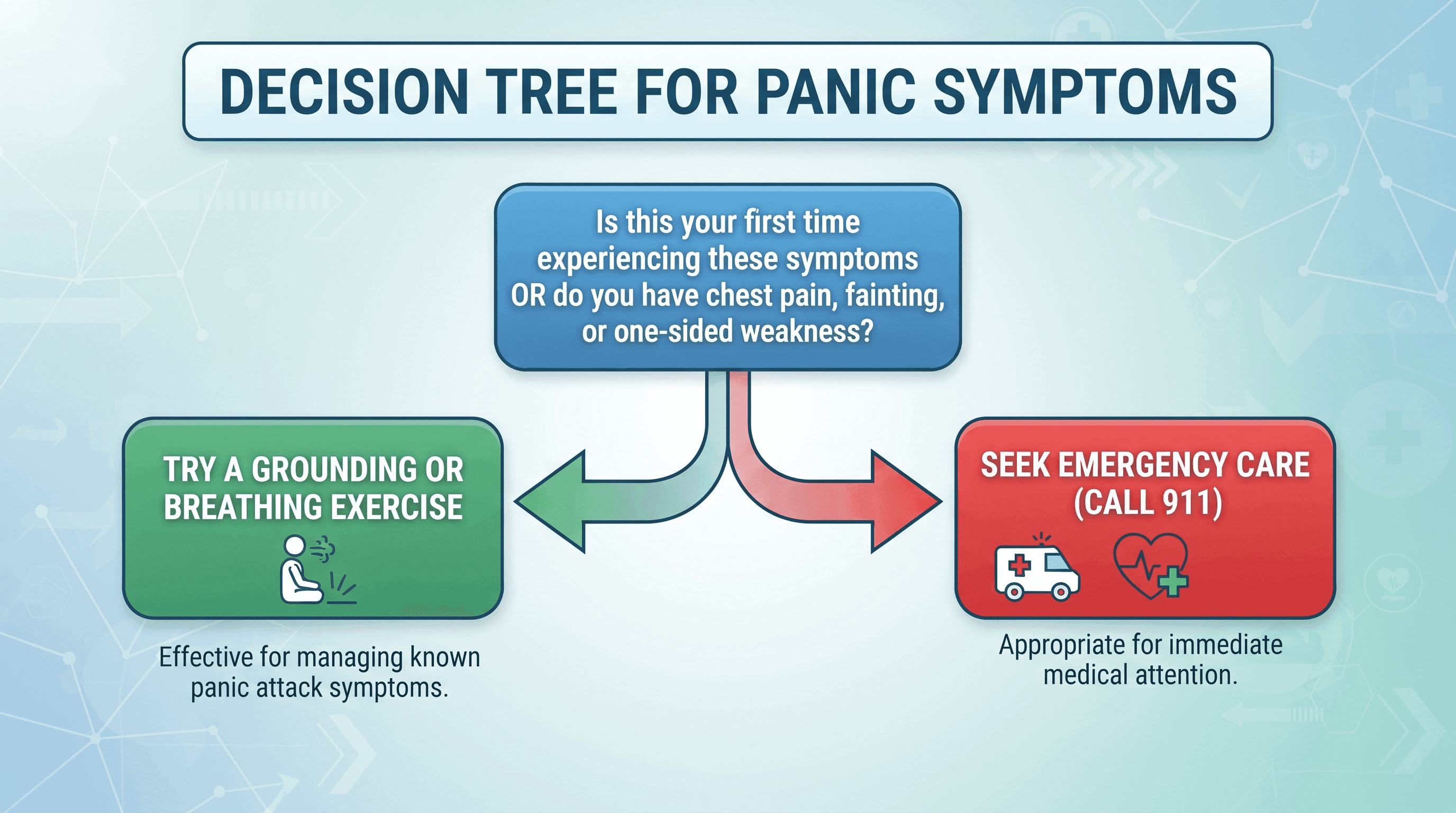
None of them are a substitute for a medical evaluation, especially if this is the first time you have experienced these symptoms. Chest pain, shortness of breath, and a racing heart can also signal a cardiac event. If you are unsure whether what you are experiencing is a panic attack or a medical emergency, call 911 or go to the nearest emergency room.
Ranked Recommendations
1. MindShift CBT
Why it's included: MindShift CBT is developed by Anxiety Canada, a nonprofit organization, and is built entirely around Cognitive Behavioral Therapy techniques. Every feature is free, with no subscription or paywall.
Best for: People who want a full CBT toolkit without paying anything.
Strengths:
- Thought journal, fear ladder, and coping cards based on established CBT methods
- Daily check-ins and progress tracking
- Community forum for peer support (restricted to users 18 and older)
- No ads, no in-app purchases, available in English and French
Limitations:
- Text-heavy interface that may feel overwhelming during an active panic episode
- No panic-specific one-tap emergency button like some competitors
- No human coaching or therapy option built in
Pricing: Free on iOS and Android.
When to choose something else: If you want an instant, low-effort panic button for the moment an attack starts, Rootd's Rootr tool is faster to use mid-episode.
2. Rootd
Why it's included: Rootd is built around a large red panic button, called the Rootr, designed for the moment an attack begins. It combines CBT-based techniques with breathing exercises, guided visualizations, and a mood journal.
Best for: People who want a fast, guided response during an active panic attack.
Strengths:
- One-tap panic button with two guided paths: facing the panic head-on or finding quick comfort
- Breathing exercise (Breathr) and visualization tools (Visualizr)
- Personal stats page to track patterns over time
- Emergency contact shortcut to call a friend, family member, or nearby help center
Limitations:
- Core panic button and breathing tools are free, but short-term and long-term lesson packs require a paid Full Access subscription
- Subscription pricing has been reported inconsistently across user reviews, ranging from roughly $50 to $80 per year, so confirm current pricing in the app before subscribing
- Not positioned as a full CBT program the way MindShift or DARE are
Pricing: Free to download. Full Access subscription around $79.99 per year with a 7-day free trial, or monthly and lifetime options. Pricing varies by country and promotion.
When to choose something else: If cost is the deciding factor, MindShift CBT offers comparable CBT-based tools with no subscription at all.
3. DARE
Why it's included: DARE is based on the bestselling book by Barry McDonagh and is built around daily audio lessons plus an SOS section for in-the-moment panic. It has been recognized by ORCHA (Organisation for the Review of Care & Health Apps) and named among Healthline's anxiety app picks in past years.
Best for: People who want a structured, book-based program with daily audio content.
Strengths:
- Hundreds of free audio lessons covering specific triggers such as driving, flying, and health anxiety
- SOS section for immediate use during a panic attack
- Mood journal with unlimited entries
- 7-day themed challenges for specific anxiety triggers
Limitations:
- Several user reviews describe frequent subscription prompts and ads, which can feel intrusive during a moment of distress
- Only one lesson is unlocked before the paywall appears in some versions
- Premium content is priced separately from the free tier, and reported annual pricing varies between sources (roughly $60 to $69 per year)
Pricing: Free to download. Premium subscription commonly listed around $9.99 per month or approximately $59.88 to $69 per year, depending on the offer shown.
When to choose something else: If frequent upgrade prompts are a dealbreaker during high-stress moments, MindShift CBT or Sanvello's free tier offer a less commercial experience.
4. Sanvello
Why it's included: Sanvello, part of UnitedHealth Group, combines CBT and mindfulness self-care tools with optional access to coaching and therapy. It is one of the few apps on this list where premium features are commonly covered by U.S. health insurance.
Best for: People who want CBT tools plus a path to therapy, especially if they have U.S. health insurance that may cover it.
Strengths:
- Free tier includes coping tools, mood tracking, and guided journeys
- Premium tier, including therapy access through AbleTo, is included at no extra cost for many major U.S. health plans
- Apple Health integration for tracking sleep, exercise, and mindful minutes
- High user ratings on both app stores
Limitations:
- Self-pay therapy is not available; therapy access depends on having a qualifying insurance plan
- Therapy is limited to a specific list of U.S. states
- Some users report the home screen feels cluttered and the community chat groups are not very active
Pricing: Free version available. Premium self-pay subscription is $8.99 per month or $53.99 per year. Often free through participating health plans.
When to choose something else: If you are outside the U.S. or do not have a qualifying insurance plan, Wysa or MindShift CBT offer more accessible free tiers.
5. Wysa
Why it's included: Wysa is an AI chatbot, represented as a penguin, that guides users through CBT and DBT-based exercises through conversation. It has FDA Breakthrough Device designation for mental health support and has been studied in peer-reviewed research.
Best for: People who want to talk through anxious thoughts conversationally rather than read through structured lessons.
Strengths:
- Anonymous use with no account or real name required
- Over 150 evidence-based self-help tools and exercises in the free tier
- Built-in crisis detection that points toward local and national helplines
- Optional human coaching add-on for additional support
Limitations:
- Some users describe the chatbot as repetitive or generic during longer conversations
- Premium self-care subscription and human coaching are both separate paid add-ons
- Best suited for mild to moderate stress and anxiety, not a substitute for therapy for panic disorder
Pricing: Free core chatbot and mindfulness exercises. Premium self-care subscription from $74.99 per year. Human coaching sessions from $19.99 each. Free through some employer and health system partnerships.
When to choose something else: If you prefer structured lessons over open-ended chat, DARE or MindShift CBT are a better fit.
Who Should Choose Each Option
- Want everything for free with no upsells: MindShift CBT
- Need a fast tool during an active panic attack: Rootd
- Prefer daily audio lessons and a structured program: DARE
- Have U.S. health insurance and want a path to therapy: Sanvello
- Want to talk through anxious thoughts with a chatbot: Wysa
- Already know you need to see a therapist or doctor: An app can supplement care, but it should not replace an evaluation from a licensed professional. A primary care doctor or a mental health provider can assess whether your symptoms match panic disorder and discuss options such as therapy or medication.
When to Seek Emergency Care
Panic attack symptoms, including chest pain, a racing heart, and shortness of breath, can overlap with symptoms of a heart attack or other medical emergency. None of the apps in this article are designed to evaluate that risk.
Call 911 or go to the nearest emergency room immediately if you experience:
- Chest pain that does not resolve
- Difficulty breathing
- Signs of stroke, such as facial drooping, slurred speech, or one-sided weakness
- Loss of consciousness
- Thoughts of harming yourself
If you are having thoughts of suicide, you can call or text 988 to reach the Suicide and Crisis Lifeline in the United States, available 24/7.
FAQ
Is there a completely free panic attack app? Yes. MindShift CBT, developed by the nonprofit Anxiety Canada, is fully free with no subscriptions or in-app purchases. Rootd, DARE, Sanvello, and Wysa all offer free tiers with paid upgrades for additional content.
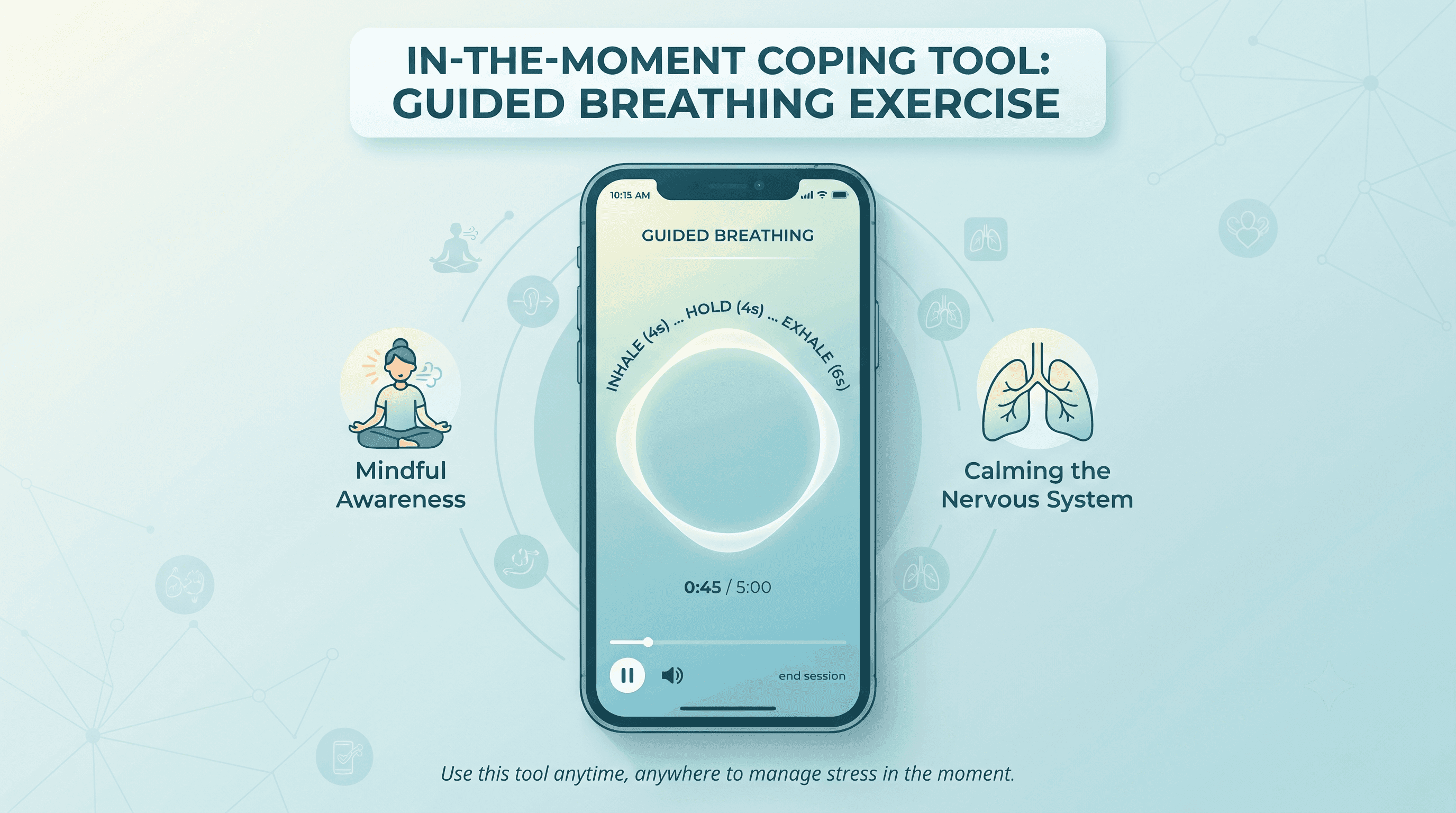
Can an app stop a panic attack? Apps cannot stop a panic attack directly, but guided breathing exercises, grounding techniques, and CBT-based tools can help reduce the intensity and duration of symptoms for many people. Effectiveness varies by individual.
What is the difference between a panic attack app and a general meditation app? General meditation apps such as Calm or Headspace focus on relaxation, sleep, and mindfulness broadly. Panic-specific apps like Rootd and DARE include features built specifically for the moment an attack starts, such as a panic button or SOS section, along with CBT content targeted at panic and anxiety triggers.
Is Sanvello free with insurance? Sanvello's premium tier, which includes expanded CBT tools and in some cases therapy access through AbleTo, is included at no cost for many major U.S. health plans. Coverage depends on your specific plan, so check directly with your insurer.
Are these apps a substitute for therapy? No. These apps are self-help tools designed to supplement, not replace, professional care. If panic attacks are frequent, severe, or affecting your daily life, a doctor or licensed therapist can evaluate your symptoms and discuss treatment options.
What should I do if I think I'm having a panic attack for the first time? If this is your first episode, or if you have chest pain, trouble breathing, or other concerning symptoms, seek medical evaluation rather than relying on an app. A healthcare provider can rule out other causes and confirm whether panic attacks are the underlying issue.
Do any of these apps offer human support, not just self-help tools? Sanvello offers therapy access through AbleTo for eligible U.S. health plans. Wysa offers optional paid coaching sessions with licensed mental health professionals starting at $19.99 per session.


