


Last Updated: July 2026
Best PTSD Support Apps When You Need Tools to Manage Symptoms and Build Healthy Coping Strategies
If you're dealing with PTSD, the strongest app for most people is PTSD Coach, a free tool built by the VA's National Center for PTSD and the Department of Defense. If you're already in trauma focused therapy, a treatment companion app like CPT Coach or PE Coach can reinforce what you're learning in session. If you want daily, general emotional support alongside PTSD specific tools, an AI chatbot app like Wysa can fill the gaps between appointments.
None of these apps diagnose PTSD or replace treatment with a licensed mental health provider. What they do well is give you structured, evidence based tools you can use the moment symptoms show up, whether that's a flashback at 2 a.m. or a panic response triggered by a car backfiring.
This article is for informational purposes only and should not be considered medical advice. If you have questions about your health, consult a qualified healthcare professional.
Quick Answer
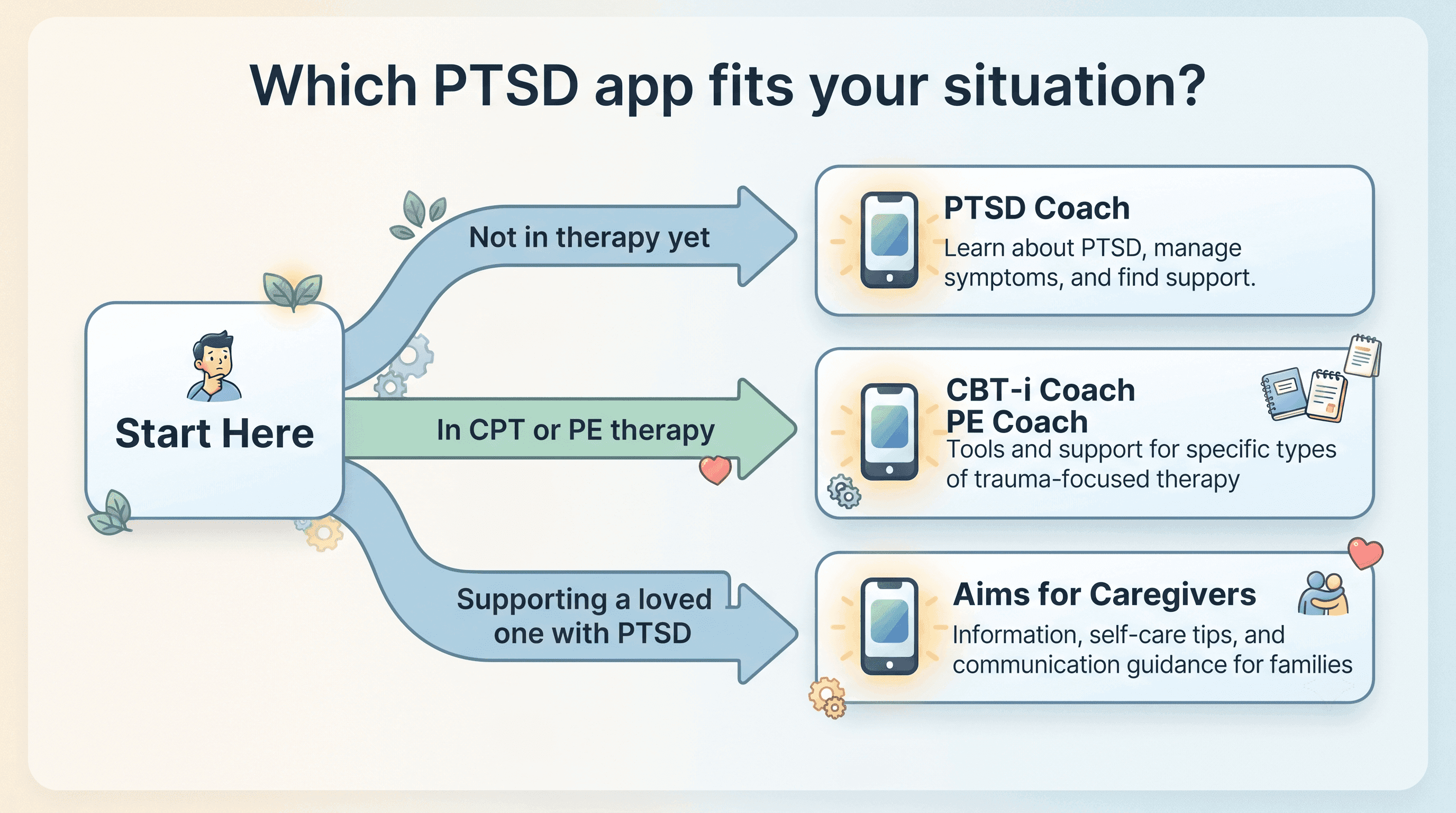
For most people managing PTSD symptoms on their own, PTSD Coach is the best starting point because it's free, was built specifically for PTSD, and includes assessment tools, grounding exercises, and crisis resources in one place. People currently in Cognitive Processing Therapy or Prolonged Exposure therapy should ask their therapist about CPT Coach or PE Coach, which are designed to be used alongside those specific treatments. People who want daily conversational support in addition to PTSD specific tools often add Wysa for its AI chatbot and coping exercise library.
If you're thinking about suicide or self-harm, or you're in immediate danger, call or text 988 (Suicide and Crisis Lifeline) or, if you're a veteran or service member, call the Veterans Crisis Line at 988, then press 1. If this is a medical emergency, call 911.
Top Picks
| Category | Recommendation |
|---|---|
| Best Overall | PTSD Coach |
| Best Free Option | PTSD Coach |
| Best for Ongoing Treatment Support | CPT Coach / PE Coach |
| Best for Daily Coping Support | Wysa |
Why People Look for PTSD Support Apps
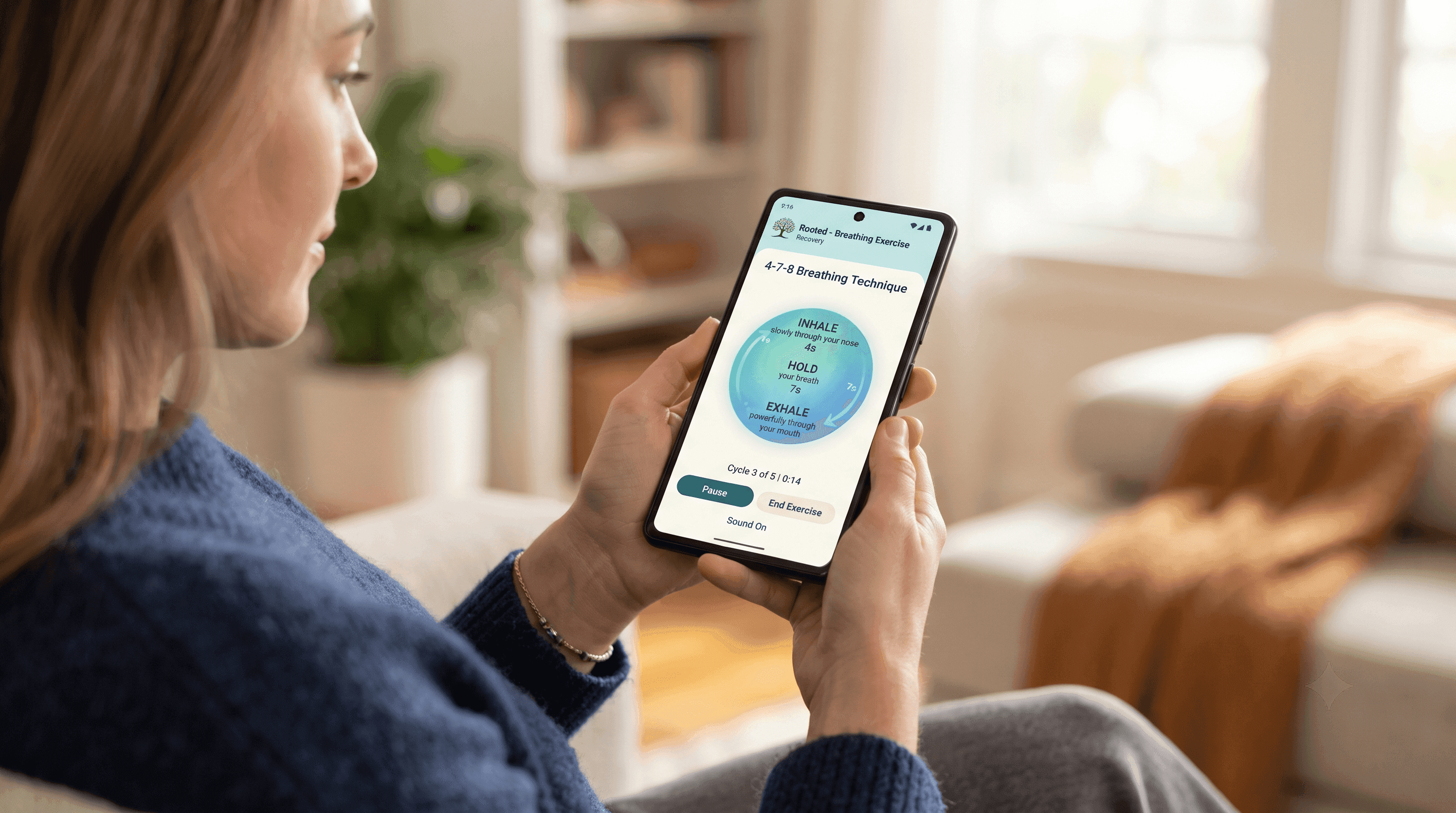
PTSD symptoms don't stay inside a therapist's office. Flashbacks, hypervigilance, sleep disruption, and avoidance can show up anywhere, at any hour. Many people search for an app because they want:
- A way to track triggers, mood, and symptoms over time
- Grounding or breathing tools they can use during a flashback or panic response
- Education about PTSD that's easier to digest than clinical literature
- Support between therapy sessions, especially for homework from CPT or PE therapy
- A private, low-pressure way to check in with their mental state daily
According to the National Institute of Mental Health, PTSD affects roughly 6% of U.S. adults at some point in their lives, and effective treatments include trauma focused psychotherapies such as Cognitive Processing Therapy, Prolonged Exposure, and EMDR. Apps work best as a supplement to these treatments, not a substitute.
Comparison Table
| App | Best For | Pricing | Physician/Clinical Involvement | Availability |
|---|---|---|---|---|
| PTSD Coach | General PTSD symptom management | Free | Built by VA's National Center for PTSD and DoD | iOS, Android, web (US, publicly available) |
| CPT Coach | Patients actively in Cognitive Processing Therapy | Free | VA National Center for PTSD, requires a trained CPT therapist | iOS, Android |
| PE Coach | Patients actively in Prolonged Exposure therapy | Free | VA National Center for PTSD and DoD | iOS, Android |
| PTSD Family Coach | Family members supporting someone with PTSD | Free | VA National Center for PTSD | iOS, Android |
| Wysa | Daily coping support and CBT/DBT exercises | Free tier; premium pricing varies by plan and region, commonly cited between roughly $75 to $100 per year, with coaching sold separately | Clinical psychologists design content; FDA Breakthrough Device Designation | iOS, Android, web, 90+ countries |
| Bearable | Symptom and trigger tracking | Free tier; premium subscription available | Information not publicly available on clinical review process | iOS, Android |
| Insight Timer | Free meditation and grounding library | Free tier; optional paid membership | Mixed, teacher-submitted content, not PTSD specific | iOS, Android, web |
Note on pricing: subscription prices change frequently and vary by region and promotion. Confirm current pricing directly in the app store listing before subscribing.
Ranked Recommendations
1. PTSD Coach
Why it's included: PTSD Coach was purpose built for PTSD by the VA's National Center for PTSD and the Department of Defense's Connected Health program. It is free, publicly available to anyone (not just veterans), and includes the PTSD Checklist (PCL-5), a validated self-assessment used clinically across the VA and DoD.
Best for: Anyone who wants a free, comprehensive starting point for understanding and managing PTSD symptoms day to day.
Strengths:
- Free with no ads or in-app purchases
- Includes a validated self-assessment tool
- Offers customizable coping tools for anger, sleep, and intrusive thoughts
- Includes a self-guided safety plan for suicide prevention
- Data stays on the user's device rather than being sent to VA servers
Limitations:
- Not a substitute for professional evaluation or treatment
- Some tools work best once you've explored the app when calm, not only during a crisis
- Community features are limited to anonymous, in-app interactions rather than moderated peer support groups
Pricing: Free.
When to choose something else: If you're already working with a therapist on CPT or PE homework, a treatment companion app built for that specific protocol will fit better.
2. CPT Coach and PE Coach
Why they're included: These are treatment companion apps, meant to be used only alongside a therapist trained in Cognitive Processing Therapy or Prolonged Exposure therapy. They help patients complete session worksheets, track homework, and review skills between appointments.
Best for: People currently enrolled in CPT or PE with a licensed provider.
Strengths:
- Reinforces specific, evidence based trauma therapies
- Helps patients stay consistent with homework, which is linked to better treatment outcomes
- PE Coach includes a session recording feature so patients can review exposure exercises
Limitations:
- Not designed for self-help use outside of active treatment
- Requires a therapist trained in the specific protocol
- CPT Coach is iOS only in some regions; check current app store availability
Pricing: Free.
When to choose something else: If you are not currently in CPT or PE with a trained therapist, PTSD Coach is a better fit.
3. PTSD Family Coach
Why it's included: PTSD affects the people around the person diagnosed, too. This free VA app is built specifically for spouses, partners, and family members who want to understand PTSD and manage their own stress while supporting a loved one.
Best for: Family members and partners of someone with PTSD.
Strengths:
- Explains PTSD in plain language for non-clinical readers
- Includes self-care tools for the caregiver, not just information about the diagnosis
- Offers guidance on finding counseling for the affected loved one
Limitations:
- Does not include direct treatment tools for the person with PTSD
- Best used alongside, not instead of, family or couples counseling when needed
Pricing: Free.
4. Wysa
Why it's included: Wysa is an AI chatbot app built around CBT and DBT techniques, with a large library of guided exercises and optional human coaching. It is not PTSD specific, but its grounding, breathing, and thought reframing tools are commonly used to manage anxiety and hypervigilance symptoms that overlap with PTSD.
Best for: People who want daily, conversational check-ins and coping exercises alongside a PTSD specific tool like PTSD Coach.
Strengths:
- Available 24/7 for in-the-moment support
- Anonymous by design, no real name required
- Escalates to human crisis resources when it detects signs of distress
- Holds FDA Breakthrough Device Designation
Limitations:
- Not designed or marketed specifically for PTSD
- Premium pricing and plan structures have changed multiple times and vary by source and region
- People with moderate to severe PTSD symptoms should be under the care of a licensed provider, not relying on a chatbot alone
Pricing: Free tier available. Premium pricing varies; check the app for current rates before subscribing.
When to choose something else: If you want a tool built specifically around trauma symptoms rather than general anxiety and mood support, PTSD Coach is the more targeted option.
5. Bearable and Insight Timer (supporting tools)
Bearable is a general symptom and mood tracker that lets users log triggers, sleep, medication, and PTSD related symptoms like nightmares or dissociation on a custom basis. It's useful as a data log to bring into therapy sessions, though it isn't PTSD specific and its clinical review process is not publicly documented.
Insight Timer offers a large free library of guided meditations, including grounding and body based exercises that some people with PTSD use for sleep and nervous system regulation. It is not a clinical tool and should be treated as a wellness supplement, not treatment.
Pricing: Both offer free tiers with optional paid subscriptions.
Pros and Cons Summary
PTSD Coach Pros: free, PTSD specific, validated assessment included Cons: self-guided only, no live human support
CPT Coach / PE Coach Pros: reinforces specific evidence based therapies, free Cons: requires an active therapist trained in the protocol
Wysa Pros: 24/7 availability, broad coping toolkit, crisis escalation logic Cons: not PTSD specific, pricing varies and can be confusing
Bearable Pros: flexible, custom symptom tracking Cons: not PTSD specific, limited public information on clinical review
Insight Timer Pros: large free library, easy to use for grounding and sleep Cons: not a clinical or PTSD focused tool
When an App Isn't Enough
Apps can help you track symptoms and practice coping skills, but PTSD is a diagnosable condition that often requires professional evaluation and treatment, such as trauma focused therapy or medication managed by a psychiatrist. Consider reaching out to a licensed provider if:
- Symptoms are interfering with work, relationships, or daily functioning
- You're using avoidance, substances, or isolation to cope
- Flashbacks or nightmares are frequent or severe
- You're having thoughts of harming yourself or others
If you think you may be experiencing a medical emergency, call 911 or go to the nearest emergency room immediately. If you're having thoughts of suicide, call or text 988, or contact the Veterans Crisis Line at 988, then press 1, if you're a veteran or service member.
Who Should Choose Each Option
- New to managing PTSD and want a free, comprehensive tool: PTSD Coach
- Currently in CPT with a therapist: CPT Coach
- Currently in Prolonged Exposure therapy: PE Coach
- A family member or partner of someone with PTSD: PTSD Family Coach
- Want daily coping support between therapy sessions: Wysa alongside PTSD Coach
- Want to log symptoms and triggers for your therapist: Bearable
- Want free grounding or sleep meditations: Insight Timer
FAQ
Is there a free app for PTSD? Yes. PTSD Coach, CPT Coach, PE Coach, and PTSD Family Coach are all free apps created by the VA's National Center for PTSD and the Department of Defense. PTSD Coach is publicly available to anyone, not only veterans.
Can an app diagnose PTSD? No. These apps can include self-assessment tools, like the PTSD Checklist (PCL-5) inside PTSD Coach, but a diagnosis requires evaluation by a licensed mental health professional.
Is PTSD Coach only for veterans? No. PTSD Coach was originally designed with veterans and service members in mind, but it's publicly available to anyone experiencing symptoms of PTSD after any type of trauma.
What's the difference between PTSD Coach and CPT Coach? PTSD Coach is a standalone, self-help tool anyone can use. CPT Coach is a treatment companion app meant to be used only while working with a therapist trained in Cognitive Processing Therapy.
Are AI chatbot apps like Wysa safe for PTSD? They can be a helpful supplement for general coping skills between therapy sessions, but they are not designed or validated specifically for PTSD, and they should not replace care from a licensed provider, especially for moderate to severe symptoms.
Do PTSD apps cost money? Several of the most PTSD specific apps, including PTSD Coach, CPT Coach, and PE Coach, are completely free. General wellness and CBT apps like Wysa, Bearable, and Insight Timer offer free tiers with optional paid subscriptions.
Can these apps replace therapy? No. Evidence based trauma therapies like Cognitive Processing Therapy, Prolonged Exposure, and EMDR, delivered by a licensed provider, are the standard of care for PTSD. Apps are designed to support, not replace, that treatment.
What should I do if I'm in crisis right now? Call or text 988 for the Suicide and Crisis Lifeline, or call the Veterans Crisis Line at 988 and press 1 if you're a veteran or service member. If you're in immediate danger, call 911.


