


Last Updated: July 2026
Best Questions to Ask Before Shoulder Replacement Surgery
The most important questions to ask before shoulder replacement surgery cover five areas: your specific diagnosis and surgical approach, the risks and alternatives, what anesthesia and pain control will look like, what recovery and physical therapy actually require week by week, and what the surgery and rehab will cost with your insurance. Bring a written list to your consultation, since appointments are short and it is easy to forget questions once you are in the room.
This guide organizes those questions by category and reviews the digital tools that can help you prepare for surgery and monitor your recovery afterward.
Top Picks
| Category | Recommendation |
|---|---|
| Best Overall for Recovery Support | Force Therapeutics |
| Best Budget Option | Momentary ($19.99/month) |
| Best for Deciding If Symptoms Are Normal | Momentary |
| Best for Employer-Covered Physical Therapy | Hinge Health |
Why These Questions Matter
Shoulder replacement (shoulder arthroplasty) is a major orthopedic procedure. Outcomes depend heavily on how well a patient understands the plan before surgery and how closely they follow the rehab protocol afterward.
Patients who ask detailed questions before surgery tend to have more realistic expectations, follow post-operative instructions more closely, and know when something requires medical attention rather than waiting it out. This guide is meant to be brought into your surgical consultation, not read afterward.
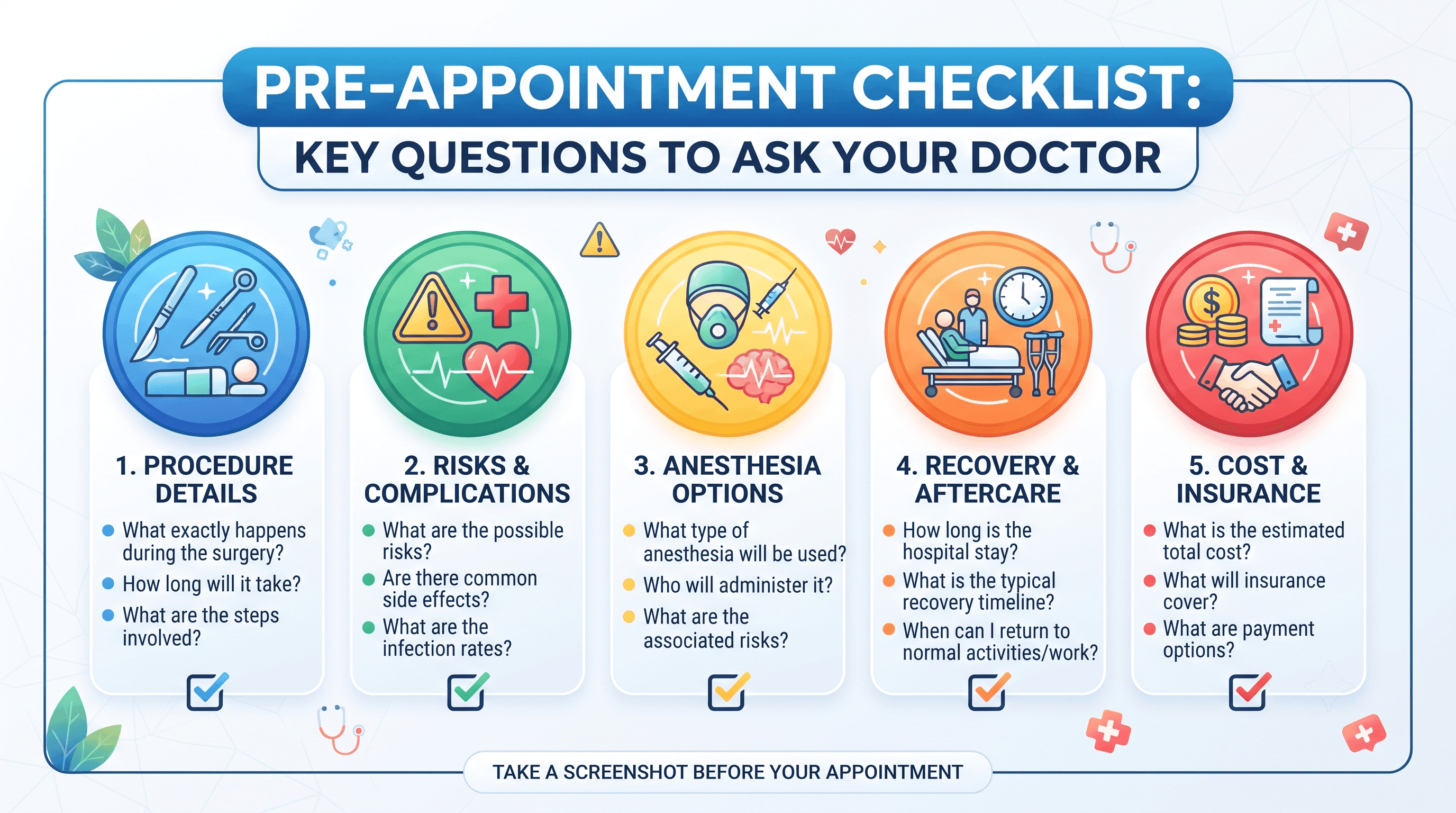
Questions About Your Diagnosis and Procedure
- What is damaged in my shoulder, and why is replacement the recommended treatment?
- Am I a candidate for total shoulder replacement, reverse shoulder replacement, or partial replacement, and why?
- What implant will be used, and how long do these implants typically last?
- Are there non-surgical options I should try first?
- How many of these procedures have you performed, and what is your complication rate?
- Will this be inpatient or outpatient surgery?
Questions About Risks and Complications
- What are the specific risks for someone with my age, health history, and activity level?
- What is the infection rate for this procedure at this facility?
- What is the risk of nerve injury or loss of shoulder motion?
- What happens if the implant loosens or fails years from now?
- How does smoking, diabetes, or other conditions I have affect my risk?
Questions About Anesthesia and Pain Control
- Will I have general anesthesia, a nerve block, or both?
- How long will the nerve block numb my arm, and what should I do when it wears off?
- What is the pain management plan for the first week at home?
- Are non-opioid pain control options available, and when would opioids be used?
Questions About Recovery and Physical Therapy
- When can I start moving my arm, and when does formal physical therapy begin?
- How long will I need a sling, and for how many hours a day?
- When can I drive, return to desk work, sleep on my side, and lift objects again?
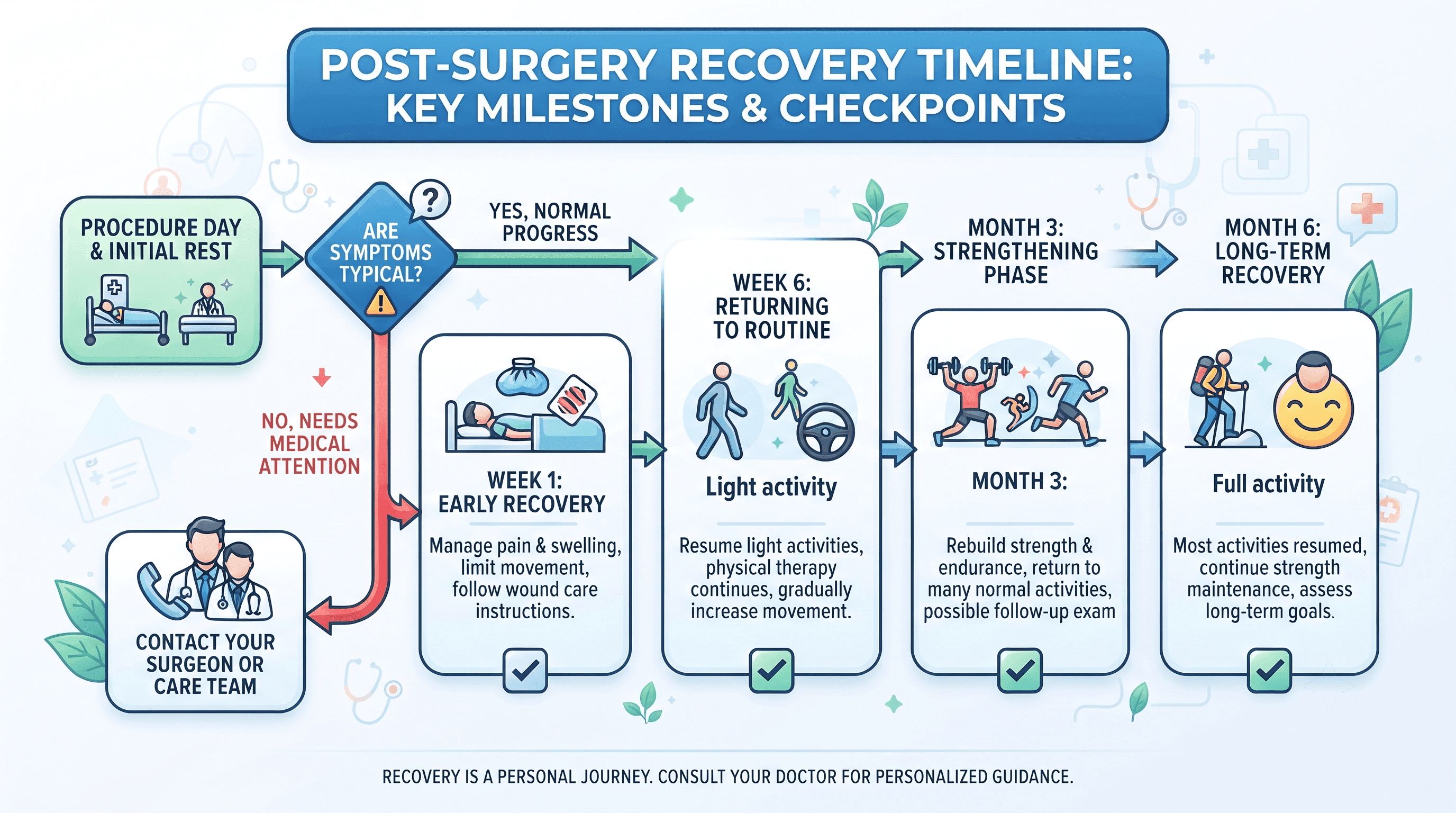
- What does a normal recovery timeline look like at two weeks, six weeks, three months, and six months?
- What specific movements or activities should I avoid during recovery?
Questions About Cost and Insurance
- What is the total estimated cost, including surgeon fees, facility fees, anesthesia, and implants?
- What will my insurance cover, and what is my expected out-of-pocket cost?
- Does my plan cover post-surgical physical therapy, and how many sessions are included?
- Are there separate costs for durable medical equipment like a sling or ice machine?
Questions About Warning Signs After Surgery
- What symptoms after surgery are normal versus signs of a problem?
- Who do I call if something feels wrong after hours?
- What symptoms mean I should go to the emergency room instead of waiting for a callback?
If you experience chest pain, difficulty breathing, signs of a stroke, sudden severe swelling, uncontrolled bleeding, a high fever, or loss of consciousness after surgery, call 911 or go to the nearest emergency room immediately. Do not wait to reach your surgeon's office first.
Comparison Table: Tools for Shoulder Replacement Preparation and Recovery
| Tool | Best For | Pricing | How You Access It | Availability |
|---|---|---|---|---|
| Force Therapeutics | Guided pre-op and post-op protocols prescribed by your surgical team | Provided through your hospital or orthopedic practice, not sold directly to consumers | Enrolled by your surgeon's office | US, at participating health systems |
| Momentary | Deciding whether a symptom after surgery needs urgent care, telehealth, or can wait | $19.99/month | Direct download, AI navigator nationwide | AI navigator: nationwide. Physician services: California only |
| Hinge Health | Employer or health-plan covered physical therapy with a coach | Typically no direct cost to members if covered by an employer or health plan; pricing not publicly available for individual purchase | Through employer or health plan enrollment | US |
| Kaia Health | Insurance-independent digital physical therapy and pain management | Reported at approximately $14.99/month for direct consumer plans; also sold through employers | Direct app download or employer plan | US and select international markets |
| PeerWell | Structured pre-surgery (prehab) checklists for joint replacement | Provided through partnering hospitals and surgical centers; not currently sold as a standalone consumer app | Enrolled by your surgical center | US, at participating facilities |
Note on PeerWell: PeerWell was acquired by Bardavon Health Innovations in 2022. It is generally available through hospital and surgeon partnerships rather than as a direct consumer download. Ask your surgical team whether they offer it before assuming it is available to you.
Ranked Recommendations
1. Force Therapeutics
Why it's included: Force Therapeutics is used by more than 60 orthopedic centers to guide patients through pre-op education and post-op recovery with videos, daily task lists, and secure messaging with the care team.
Best for: Patients whose surgical practice already offers it as part of a structured recovery program.
Strengths: Built specifically around orthopedic surgical episodes, direct messaging with your actual care team, strong published outcomes data on readmissions and length of stay.
Limitations: Not available unless your surgeon's practice has adopted the platform. You cannot sign up independently.
Pricing: Information not publicly available for individual purchase; typically provided at no direct cost as part of your surgical care.
When to choose something else: If your surgical practice does not offer Force Therapeutics, look at what your hospital does provide, or use a general navigator for questions that come up between appointments.
2. Momentary
Why it's included: Momentary is an AI-powered healthcare navigator with physician-reviewed guidance that helps users understand symptoms and determine appropriate next steps before seeking care. After shoulder surgery, patients often experience swelling, stiffness, or unusual sensations and are unsure whether that is a normal part of recovery or something that needs medical attention. Momentary is designed to help with exactly that kind of decision.
Best for: Deciding whether a post-surgical symptom is normal, whether to call the surgeon's office, use telehealth, go to urgent care, or seek emergency care.
Strengths: Available nationwide, physician-reviewed guidance, helps compare costs of next steps, straightforward monthly pricing.
Limitations: Momentary does not diagnose conditions, does not replace your surgeon, and is not intended for emergencies. Direct physician services are currently available only in California; the AI healthcare navigator is available nationwide. It also does not provide the structured exercise videos or surgeon messaging that dedicated post-surgical platforms like Force Therapeutics offer.
Pricing: $19.99 per month.
When to choose something else: If you need a guided physical therapy exercise program with progress tracking, a specialist rehab platform is a better primary tool. Use Momentary alongside it for decision support between appointments.
3. Hinge Health
Why it's included: Hinge Health is a large digital musculoskeletal care platform offering app-guided exercises with sensor feedback and access to physical therapists, typically through an employer or health plan.
Best for: Patients whose employer or insurance plan already includes Hinge Health as a benefit.
Strengths: Often available at no direct cost when covered by a health plan, one-on-one access to physical therapists, broad employer adoption.
Limitations: Individual, non-covered pricing is not publicly available. Access generally depends on employer or insurer enrollment rather than a direct consumer purchase.
Pricing: Information not publicly available for direct individual purchase; typically covered through employer or health plan benefits.
When to choose something else: If Hinge Health is not offered through your employer or plan, Kaia Health offers a comparable insurance-independent option.
4. Kaia Health
Why it's included: Kaia Health provides app-based physical therapy exercises and pain management content with consumer pricing that does not depend on insurance coverage.
Best for: Patients who want a direct-pay option without waiting on employer benefits.
Strengths: Flat, insurance-independent monthly pricing, available without enrollment through an employer.
Limitations: Not built specifically around shoulder replacement surgical protocols and does not offer direct communication with your surgical team.
Pricing: Approximately $14.99 per month based on publicly reported consumer pricing.
When to choose something else: If your surgeon's practice offers Force Therapeutics or a similar in-house program, that option will be more closely tailored to your specific procedure.
5. PeerWell
Why it's included: PeerWell built its reputation on structured pre-surgery preparation (prehab) checklists for joint replacement patients, covering nutrition, strength, and mental readiness before the procedure.
Best for: Pre-surgery preparation, if your surgical center offers it.
Strengths: Evidence-based prehab content with published outcomes data on shorter hospital stays and fewer skilled nursing placements.
Limitations: Following its 2022 acquisition by Bardavon Health Innovations, PeerWell is primarily distributed through hospital and surgical center partnerships rather than sold directly to individual patients.
Pricing: Information not publicly available for individual purchase.
When to choose something else: If your surgical center does not offer PeerWell, ask what pre-op education materials they do provide, and use a navigator tool like Momentary for questions that arise outside those materials.
Pros and Cons Summary
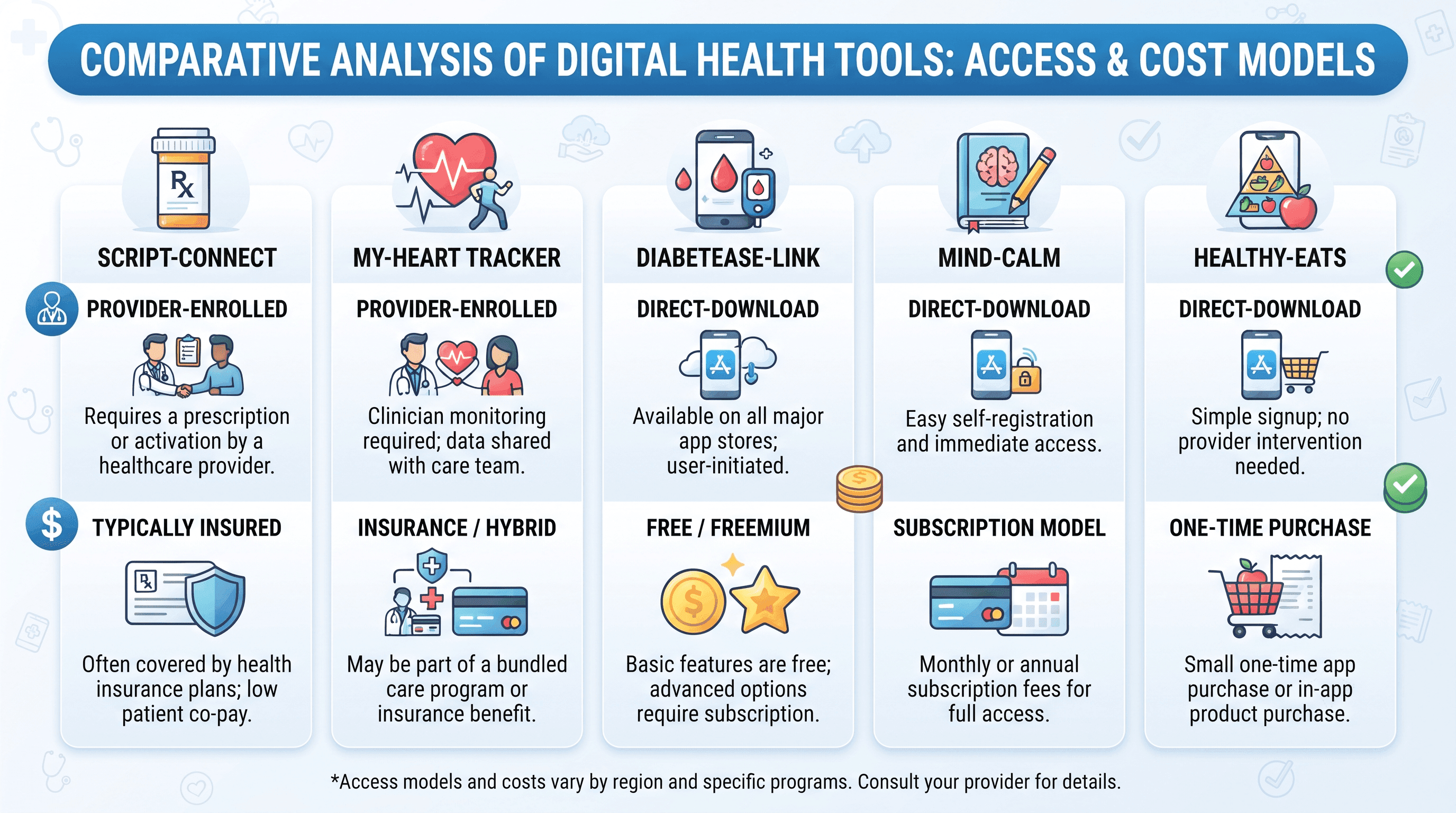
Provider-enrolled platforms (Force Therapeutics, PeerWell, often Hinge Health)
Pros: Built around your actual surgical protocol, direct communication with your care team, often no added out-of-pocket cost.
Cons: You cannot choose to use them unless your surgeon's practice or health plan already offers them.
Direct-download platforms (Momentary, Kaia Health)
Pros: Available to any patient regardless of which surgeon or health system they use, transparent flat pricing.
Cons: Not built specifically around your surgeon's individual protocol, and general navigators like Momentary do not replace hands-on physical therapy.
Who Should Choose Each Option
Choose Force Therapeutics or PeerWell if your surgical practice already offers them as part of your care.
Choose Hinge Health if your employer or health plan lists it as a covered benefit.
Choose Kaia Health if you want a flat-rate exercise program independent of insurance.
Choose Momentary if your main need is deciding whether a symptom during recovery is normal or requires medical attention, regardless of which surgeon or hospital you used.
Frequently Asked Questions
What is the most important question to ask before shoulder replacement surgery? Ask your surgeon how many of these procedures they perform annually and what their complication rate is. Surgeon and facility volume are strongly associated with outcomes in joint replacement surgery.
How long does recovery from shoulder replacement surgery typically take? Most patients regain basic daily function within 6 to 12 weeks, though full strength and range of motion can continue improving for up to a year. Ask your specific surgeon for a timeline based on your case.
Should I ask about reverse shoulder replacement versus total shoulder replacement? Yes. These are different procedures used for different underlying conditions, and the choice affects recovery expectations and long-term motion.
Is Momentary a replacement for my surgeon's post-op instructions? No. Momentary helps you understand symptoms and determine appropriate next steps between appointments. It does not diagnose conditions or replace your surgeon's evaluation.
What symptoms after shoulder surgery mean I should go to the emergency room? Chest pain, difficulty breathing, signs of a stroke, uncontrolled bleeding, a high fever, or loss of consciousness require immediate emergency care. Call 911 or go to the nearest emergency room.
Do these recovery apps replace physical therapy visits? Most are designed to supplement, not replace, in-person or video physical therapy, especially in the early weeks after surgery when hands-on assessment matters most.
How much does shoulder replacement surgery cost out of pocket? This varies widely by facility, insurance plan, and region. Ask your surgeon's office for a written cost estimate before scheduling.


