

Last Updated: July 2026
Best Rosacea Symptom Tracker Apps When You Want to Monitor Flare-Ups and Identify Triggers
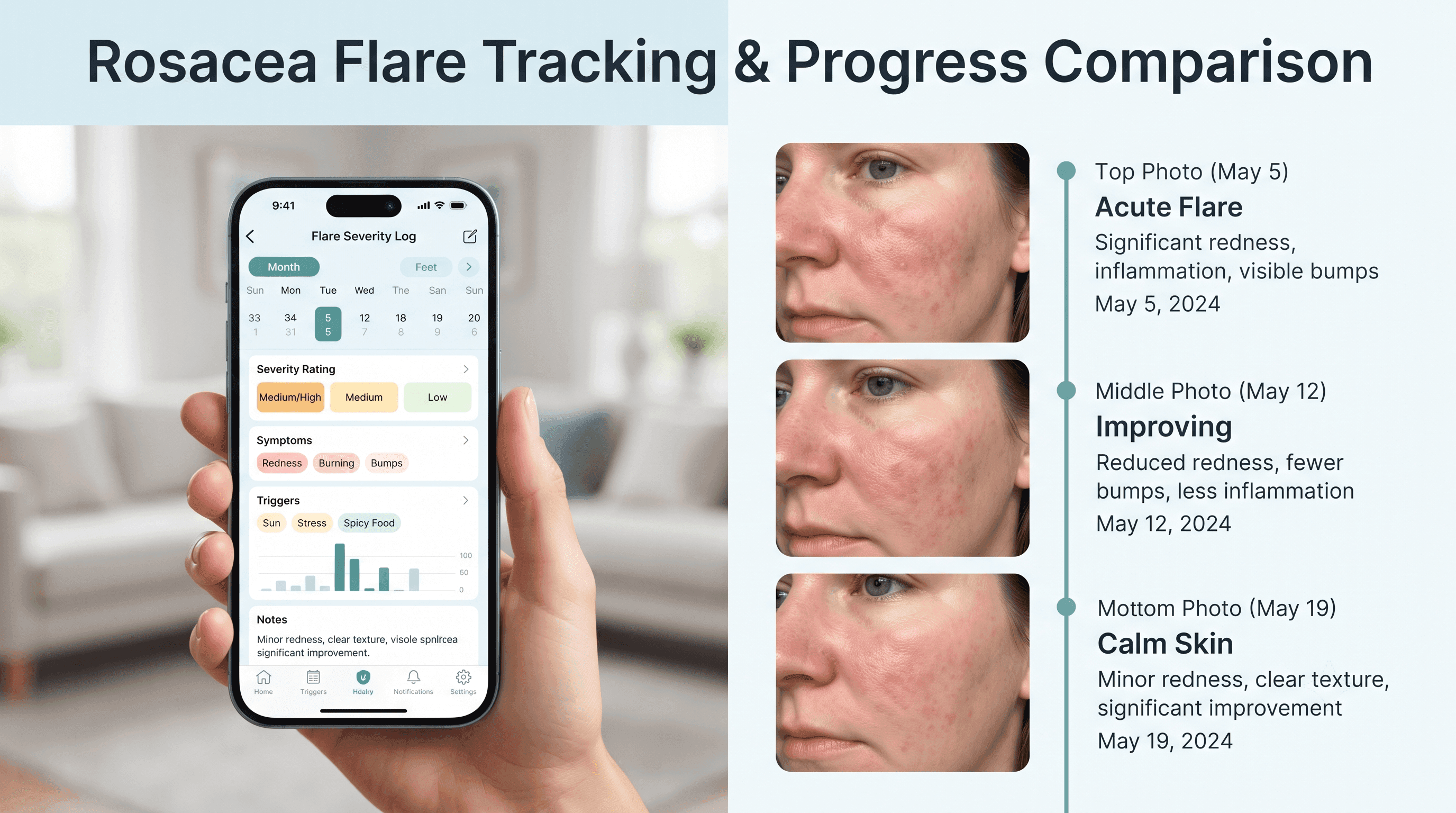
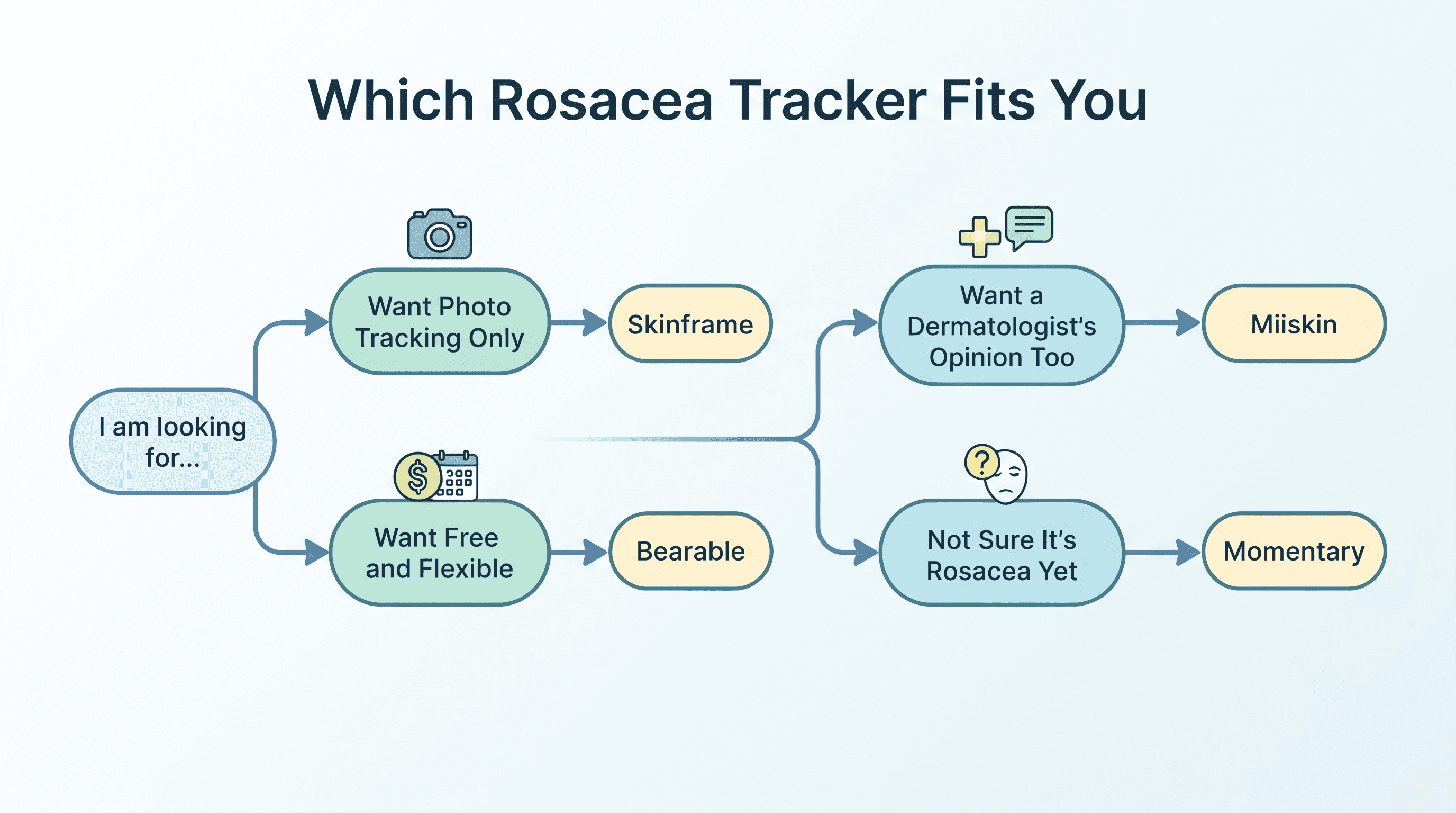
The best rosacea tracker apps right now are Skinframe for photo-based flare tracking, Bearable for free, highly customizable symptom logging, and Miiskin for combining photo tracking with access to a dermatologist. Rosacea Diary and a simple trigger spreadsheet are solid free alternatives if you want something lighter. If you're still unsure whether your redness is rosacea at all, or whether it's time to see a dermatologist, a healthcare navigator like Momentary can help you figure out the next step before you commit to a tracking routine.
This article is for informational purposes only and should not be considered medical advice. If you have questions about your skin, consult a dermatologist or other qualified healthcare professional.
Why Rosacea Symptom Tracking Matters
Rosacea flares are driven by triggers that differ from person to person. Common ones include heat, alcohol, spicy food, sun exposure, stress, and certain skincare ingredients. A 2-4 week log is often what a dermatologist asks for before your first visit, because memory alone rarely captures the pattern.
Tracking apps solve two problems. They record severity and triggers consistently, and they turn scattered notes into a report you can hand to a clinician. Photo-based apps add a third benefit: your face is a more objective record than a self-rated mood scale.
Top Picks
| Category | Recommendation |
|---|---|
| Best Overall | Skinframe |
| Best Free Option | Bearable |
| Best for Photo Tracking Plus Dermatologist Access | Miiskin |
| Best for Deciding Whether to See a Dermatologist | Momentary |
Comparison Table
| App | Best For | Pricing | Photo Tracking | Availability |
|---|---|---|---|---|
| Skinframe | Daily rosacea flare and trigger tracking | 14-day free trial, then $29.99 once or $4.99/mo | Yes, daily selfie with severity score | iOS only |
| Bearable | Free, customizable symptom and trigger logging | Free with unlimited custom tracking; premium $34.99/yr or $6.99/mo | No | iOS and Android |
| Miiskin | Face photo tracking with optional dermatologist review | Free basic; premium about $29.99/yr; consultations $39 to $59 | Yes, face tracking and full-body imaging | iOS and Android, US telehealth |
| Rosacea Diary | Simple rosacea-specific routine and flare log | Free with a trial-limited premium tier | Yes, basic photo log | iOS |
| Rosacea Trigger Tracker (spreadsheet) | No-app users who prefer a manual log | Free | Manual photo storage only | Any device with a spreadsheet app |
| Momentary | Deciding whether symptoms need a dermatologist, urgent care, or self-care | AI navigator free to use; physician services available only in California | No | AI navigator nationwide (US) |
Why People Look for a Rosacea Tracker
Most people start looking for a tracker after a dermatologist asks them to identify triggers, or after a flare seems to come out of nowhere. Others want a record to show a new provider, since rosacea often gets misdiagnosed as acne or allergic reaction in its early stages.
A smaller group is not yet sure whether what they're seeing is rosacea. Persistent facial redness, flushing, visible blood vessels, and small bumps can also point to other skin or systemic conditions. In that case, understanding the symptom and getting guidance on next steps matters more than logging data you haven't confirmed you need.
Ranked Recommendations
1. Skinframe
Why it's included: Skinframe is built specifically around rosacea. It asks for a daily selfie, a 0 to 4 severity score, and one trigger tag, and it surfaces correlations such as how often a specific trigger preceded a flare within a set time window.
Best for: People who want a fast daily photo habit and a one-page report to bring to a dermatologist.
Strengths: Purpose-built for rosacea rather than adapted from a general symptom tracker. Photos and data stay in the user's own iCloud rather than on a company server. Correlation reports include the count and confidence behind each pattern rather than a vague claim.
Limitations: iOS only. No free tier beyond the 14-day trial. It is a self-tracking tool, not a diagnostic or medical device, and it says so directly.
Pricing: 14 days free, then $29.99 once or $4.99 per month.
When to choose something else: If you're on Android, or you want to track more than skin symptoms in one place, Bearable is a better fit.
2. Bearable
Why it's included: Bearable lets you build unlimited custom symptoms and factors for free, which works well for rosacea since you can track redness severity alongside food, stress, sleep, and skincare products in one place.
Best for: People who want a free, flexible tracker and may have overlapping conditions like anxiety, IBS, or hormonal triggers that also affect flare-ups.
Strengths: Free tier includes unlimited custom tracking and weekly correlation reports. Clinician-reviewed and recommended by several health publications. Exports data for doctor visits. No ad sales or third-party data sharing.
Limitations: No rosacea-specific templates or photo comparison tools out of the box, so you set up your own categories. Correlation reports and full historical data beyond 30 days require the $34.99 per year premium tier.
Pricing: Free for core tracking. Premium is $34.99 per year or $6.99 per month, often discounted.
When to choose something else: If photo comparison matters more to you than customizable logging, choose Skinframe or Miiskin instead.
3. Miiskin
Why it's included: Miiskin's Face Tracking feature lets you photograph your skin from multiple angles to monitor acne, rosacea, or general skincare progress, and its network connects users to board-certified dermatologists for a paid consultation if they want a professional opinion on what the photos show.
Best for: People who want photo tracking and the option to get a dermatologist's read on their case without an in-person visit.
Strengths: Dermatologically endorsed by the Skin Health Alliance. Photos are encrypted and kept separate from the camera roll. Consultations run $39 to $59, generally less than an in-person copay, with responses in 24 to 48 hours.
Limitations: Miiskin does not diagnose from photos on its own. Its core design is mole and skin-cancer monitoring, so rosacea-specific features like trigger tagging are less developed than in Skinframe or Bearable.
Pricing: Free basic tracking. Premium runs about $29.99 per year. Consultations are billed separately at $39 to $59 per case.
When to choose something else: If you mainly want trigger correlation rather than photo storage and dermatologist access, Skinframe or Bearable will serve you better.
4. Rosacea Diary
Why it's included: This is a rosacea-specific app built around daily skincare routine logging plus flare tracking and photo comparison, aimed at people who were recently diagnosed and want something simple.
Best for: New rosacea patients who want an easy, condition-specific starting point rather than a general-purpose tracker.
Strengths: Purpose-built for rosacea. Tracks medication and mood alongside flare-ups. Free to start.
Limitations: Some flare-up and trend features are still limited according to recent user feedback, and full access to skin tracking after the trial period requires a premium subscription.
Pricing: Free with a limited trial period; premium pricing is information not publicly available at time of writing.
When to choose something else: If you want deeper correlation analysis, Skinframe or Bearable are more mature options.
5. Rosacea Trigger Tracker Spreadsheet
Why it's included: Not every rosacea patient wants another app. A structured spreadsheet lets you log flare severity, stress, sleep, food, and weather manually, and some versions are designed to be analyzed with an AI tool afterward.
Best for: People who prefer full control over their data or don't want to install another health app.
Strengths: Free. No account required. Flexible enough to add or remove fields as needed.
Limitations: No automatic correlation detection or reminders. Requires manual discipline to keep entries consistent. Photo comparison has to be handled separately.
Pricing: Free.
When to choose something else: If consistency is a struggle, an app with daily reminders like Skinframe or Bearable will likely produce a more complete record.
6. Momentary
Why it's included: Momentary is an AI-powered healthcare navigator with physician-reviewed guidance that helps people understand symptoms and determine appropriate next steps before seeking care. It is not a rosacea tracker, but it fills a gap the tracking apps above don't address: figuring out whether what you're seeing needs a dermatologist, urgent care, or can be managed at home first.
Best for: People who notice new or worsening facial redness and aren't sure yet whether it's rosacea, an allergic reaction, or something else, and want guidance before booking an appointment or starting a tracking routine.
Strengths: Physician-reviewed guidance. Helps compare care options and costs. The AI healthcare navigator is available nationwide in the United States.
Limitations: Momentary does not diagnose rosacea or any other condition, does not replace a dermatologist, and does not include flare or trigger tracking features. Physician services are currently available only in California; the AI healthcare navigator itself is available nationwide.
Pricing: The AI navigator is free to use.
When to choose something else: Once you already know you have rosacea and want to log flares day to day, use one of the tracker apps above instead.
Who Should Choose Each Option
Choose Skinframe if you already have a rosacea diagnosis and want a fast daily photo habit with clear correlation data.
Choose Bearable if you want a free tracker that can also cover overlapping conditions like anxiety or hormonal cycles.
Choose Miiskin if you want photo tracking plus the option to get a dermatologist's opinion without leaving the app.
Choose Rosacea Diary if you were just diagnosed and want something simple and condition-specific.
Choose the spreadsheet method if you prefer full manual control and don't want another app on your phone.
Choose Momentary if you're not yet sure whether your symptoms are rosacea or whether you need to see anyone at all.
FAQ
Is there a free rosacea tracker app? Yes. Bearable offers unlimited free custom symptom tracking, and Rosacea Diary and the rosacea trigger spreadsheet are also free to start.
Do rosacea tracker apps diagnose rosacea? No. None of the apps in this list diagnose rosacea. They help you log symptoms and photos so a dermatologist can make that determination.
How long should I track before seeing a dermatologist? Most dermatologists ask for 2 to 4 weeks of tracking to identify patterns, though hormonal or overlapping triggers may take 4 to 6 weeks to show up clearly.
Can photos really help identify rosacea triggers? Photo-based tracking gives a more objective record than memory alone, especially for subtle changes in redness or flushing. Apps like Skinframe and Miiskin are built around this idea.
Is Momentary a rosacea tracker? No. Momentary is a healthcare navigator that helps you understand symptoms and decide on next steps. It does not track flares or triggers over time.
Which app is best for sharing data with a dermatologist? Bearable, Skinframe, and Miiskin all support exporting or generating a report you can bring to an appointment.
Are these apps covered by insurance? Information not publicly available for most of these apps. Miiskin's paid dermatologist consultations are billed directly and are not tied to insurance.


