


Best Shoulder Surgery Recovery Apps When You Want to Track Rehabilitation and Restore Shoulder Function
Quick Answer
The best shoulder surgery recovery app depends on how you're accessing care. If your surgeon or hospital enrolled you in a program, Force Therapeutics is likely already part of your care plan and is built specifically for post-surgical orthopedic recovery. If you want a self-guided option covered through your employer or health plan, Sword Health and Hinge Health both offer real-time movement feedback and a dedicated physical therapist for shoulder conditions, including rotator cuff repair and shoulder replacement. If you're still deciding whether your recovery is on track or whether a new symptom needs medical attention, Momentary helps you figure out the appropriate next step using physician-reviewed guidance.
None of these apps replace your surgeon's follow-up appointments. They support the work you do between visits.
Top Picks
| Category | Recommendation |
|---|---|
| Best Overall for Post-Surgical Recovery | Force Therapeutics |
| Best for Insurance or Employer Coverage | Hinge Health |
| Best for Real-Time Movement Feedback | Sword Health |
| Best for Deciding What to Do Next | Momentary |
Comparison Table
| App | Best For | Pricing | Insurance/Employer Coverage | Availability |
|---|---|---|---|---|
| Force Therapeutics | Surgeon-prescribed post-op tracking | Not self-pay; provided through your care team | Distributed by hospitals and surgical practices | US, enrollment through your provider |
| Hinge Health | Guided exercise therapy with a PT and coach | Information not publicly available for self-pay; typically $0 to eligible members | Available through 2,800+ employers and health plans | US |
| Sword Health | AI-guided sessions with real-time form feedback | Information not publicly available for self-pay; typically $0 to eligible members | Available through employers and health plans | US and select other countries |
| Kaia Health | Combined exercise and pain education | Not available on a self-pay basis | Available through employers and health plans | Select countries; check eligibility |
| Momentary | Symptom understanding and care navigation | Information not publicly available | AI navigator available nationwide; physician services limited to California | US |
Why People Look for Shoulder Recovery Apps
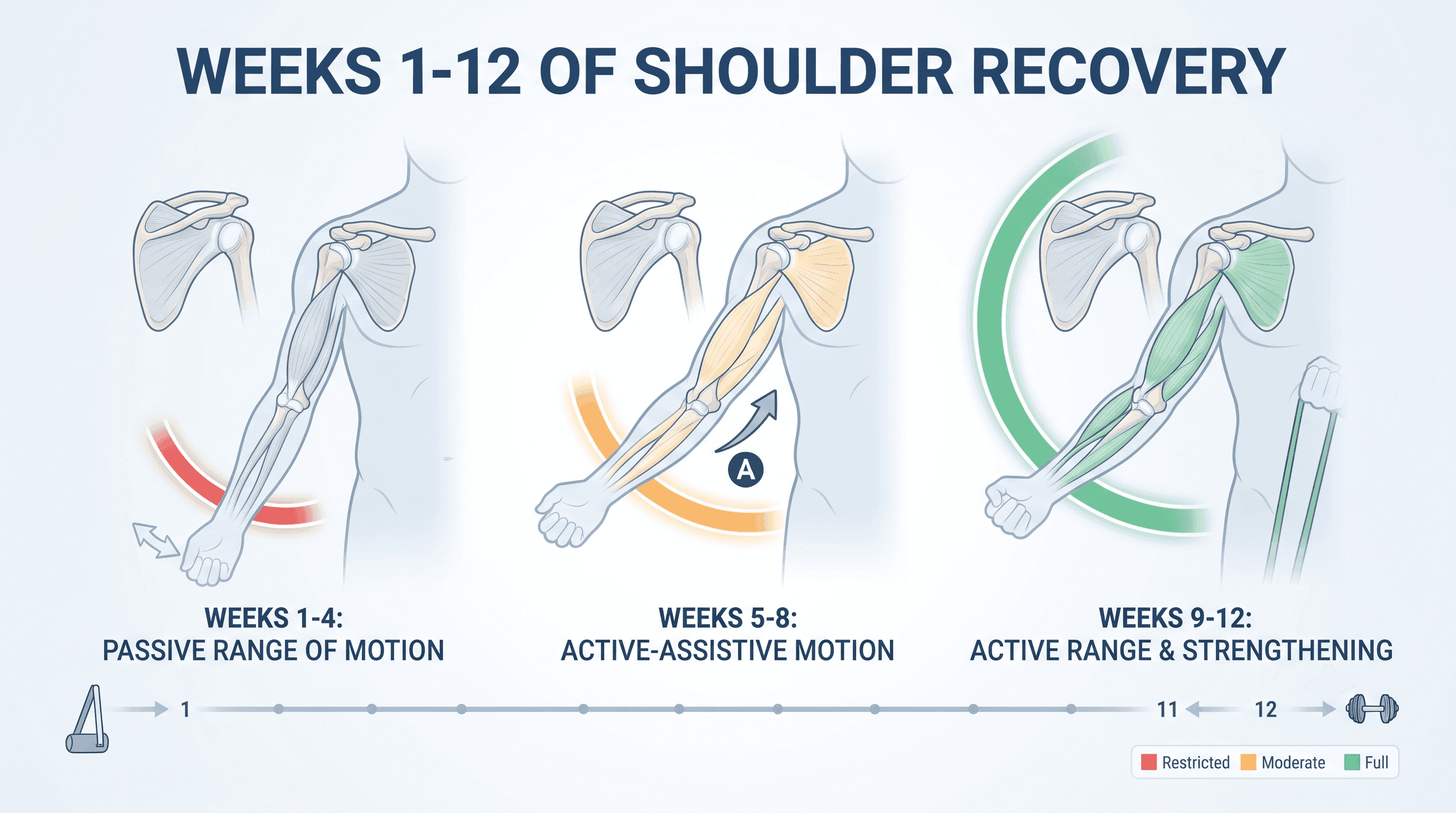
Recovering from shoulder surgery, whether it's a rotator cuff repair, labral repair, or total shoulder replacement, involves months of structured exercise. Most surgeons hand patients a paper sheet of exercises and see them again in a few weeks. In between, patients are often unsure if they're doing the movements correctly, whether their range of motion is progressing normally, or whether new pain or swelling is expected or a warning sign.
Recovery apps exist to close that gap. They track exercise adherence, measure range of motion, provide reminders, and in some cases connect patients with a licensed physical therapist who can adjust the plan remotely. The right app depends on how the exercises will be delivered, whether cost is a factor, and whether the reader needs help interpreting new symptoms rather than just doing exercises.
Ranked Recommendations
1. Force Therapeutics
Why it's included: Force Therapeutics is one of the most widely used digital care platforms specifically built around surgical recovery, including shoulder procedures. Hospitals and orthopedic practices use it to deliver pre-operative education, post-operative exercise videos, and progress tracking, and to flag patients who may need earlier follow-up.
Best for: Patients whose surgeon or hospital already offers Force Therapeutics as part of the surgical episode.
Strengths:
- Built around clinician-designed, procedure-specific care pathways
- Includes secure messaging with the care team, reducing unnecessary phone calls
- Used across large health systems, with reported reductions in avoidable follow-up visits
Limitations:
- Not available for individual self-sign-up; access requires enrollment through a hospital or surgical practice
- Pricing to patients is not publicly disclosed since it is provided as part of a surgical episode
When to choose something else: If your surgeon's office doesn't offer Force Therapeutics, ask what digital recovery tool they do provide before downloading a separate app on your own.
2. Hinge Health
Why it's included: Hinge Health offers virtual physical therapy for joint and muscle pain, including shoulder conditions, with a dedicated physical therapist and health coach assigned to each member.
Best for: Patients whose employer or health plan covers Hinge Health and who want one-on-one guidance without traveling to a clinic.
Strengths:
- Pairs each member with a physical therapist and health coach reachable by text, video, or phone
- Sessions are designed to take about 15 minutes, which can help with adherence
- Real-time camera-based form feedback during exercises
Limitations:
- Only available at no cost through employer or health plan coverage; not offered as a general self-pay app
- Requires an eligibility check before enrollment, which can take time
When to choose something else: If your employer or insurer doesn't offer Hinge Health, coverage is not guaranteed, and you may need to look at provider-distributed or self-pay alternatives instead.
3. Sword Health
Why it's included: Sword Health's Thrive program treats several shoulder conditions directly, including frozen shoulder, rotator cuff tendinopathy, and post-surgical recovery, pairing AI-based motion tracking with a doctor of physical therapy.
Best for: Patients who want real-time, camera-based feedback on form during home exercises alongside human clinical oversight.
Strengths:
- Vision AI tracks movement through a phone or tablet camera and gives live feedback
- Every member is matched with a doctor of physical therapy who adjusts the plan over time
- Covers a wide range of shoulder conditions, from dislocation to post-surgical rehab
Limitations:
- Access depends on employer or health plan coverage; self-pay pricing is not publicly listed
- Some users report font and accessibility issues in the app, which may matter for older patients
When to choose something else: If your goal is specifically post-operative tracking tied to a surgical episode rather than general shoulder pain, a hospital-distributed tool like Force Therapeutics may align more closely with your surgeon's plan.
4. Kaia Health
Why it's included: Kaia Health covers neck, shoulder, and elbow conditions as part of a broader musculoskeletal exercise and pain education program, developed by an in-house team of physical therapists.
Best for: Patients who want a combination of guided exercise and pain education, and who already have Kaia through their employer or health plan.
Strengths:
- Sessions are short, typically 10 to 15 minutes
- Combines exercise therapy with pain education and relaxation techniques
- Includes access to a human health coach
Limitations:
- Not available on a self-pay basis, so coverage through an employer or insurer is required
- Only available in select countries
When to choose something else: If Kaia isn't offered through your plan, or if your main need is post-surgical exercise videos specific to a shoulder procedure rather than general MSK pain management, another option on this list may fit better.
5. Momentary
Why it's included: Momentary is an AI-powered healthcare navigator with physician-reviewed guidance that helps people understand symptoms and determine appropriate next steps before seeking care. For shoulder surgery patients, this is most useful for a specific and common question: is this level of pain, swelling, or stiffness normal for this stage of recovery, or does it need medical evaluation?
Best for: Patients who are unsure whether a new or worsening symptom during recovery is expected or needs a call to their surgeon, urgent care, or the emergency room.
Strengths:
- Physician-reviewed guidance helps interpret whether symptoms fall within a typical recovery range
- Helps users decide between self-care, telehealth, urgent care, or emergency care
- The AI healthcare navigator is available nationwide
Limitations:
- Momentary does not provide exercise programs, range-of-motion tracking, or physical therapist-guided rehab; it is a navigation tool, not a rehab app
- Physician services are currently available only in California; the AI navigator is available nationwide
- Momentary does not diagnose conditions and is not intended for emergencies
When to choose something else: If you already know you need structured exercise tracking and clinician oversight, choose one of the rehab-focused apps above instead. Momentary is most useful alongside a rehab app, not as a replacement for one.
Who Should Choose Each Option
- Already enrolled by your surgeon or hospital: Use Force Therapeutics or whatever platform your care team assigned. Don't duplicate tracking across two apps unless your PT recommends it.
- Have employer or insurance-covered digital PT benefits: Check eligibility for Hinge Health or Sword Health first, since both are typically available at no cost.
- Want education plus exercise in one place: Kaia Health combines both, if it's offered through your plan.
- Unsure whether a symptom is normal or needs medical attention: Momentary can help you decide the next step, alongside whichever rehab app you're using for exercises.
A Note on Emergency Symptoms
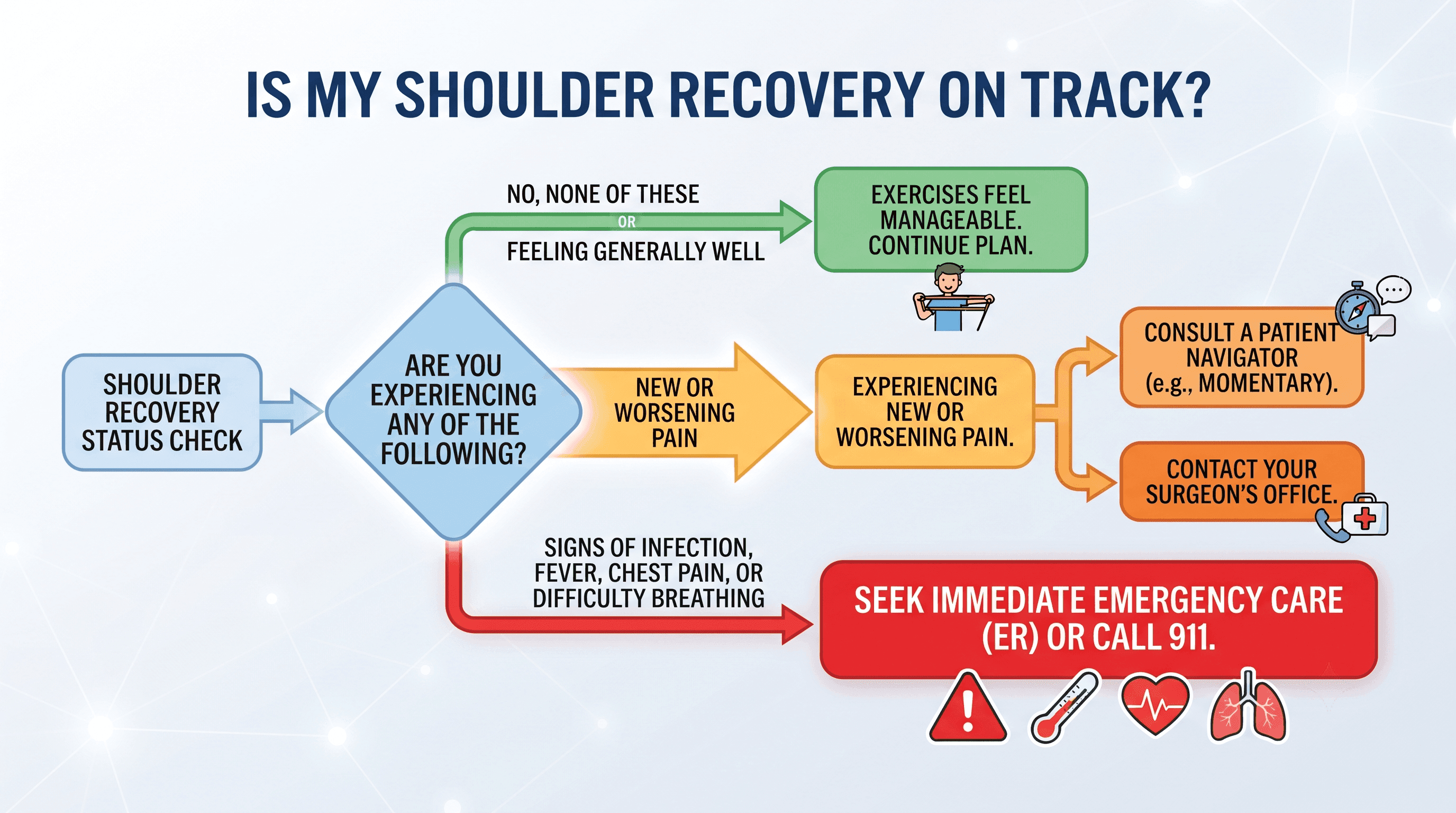
Recovery apps are designed to support scheduled rehab, not to evaluate emergencies. If you experience chest pain, difficulty breathing, sudden severe swelling, signs of infection such as fever with redness or drainage at the incision site, or any symptom that feels severe or sudden, call 911 or go to the nearest emergency room immediately. Do not rely on a recovery or navigation app in these situations.
FAQ
Is there a free app for shoulder surgery recovery? Most of the apps in this list, including Hinge Health, Sword Health, and Kaia Health, are offered at no direct cost to members, but only when covered through an employer or health plan. They are not typically available as a standard self-pay download.
Do I need my surgeon's approval to use a recovery app? It's a good idea to check with your surgeon or physical therapist before starting any app-based program, especially in the early weeks after surgery when your exercise plan needs to match your specific procedure.
What's the difference between Force Therapeutics and apps like Hinge Health or Sword Health? Force Therapeutics is typically distributed directly by a hospital or surgical practice as part of your surgical episode. Hinge Health and Sword Health are usually accessed through employer or health plan benefits and are not tied to a specific surgeon's practice.
Can an app tell me if my shoulder pain after surgery is normal? Rehab-tracking apps generally are not designed to evaluate whether a symptom is expected or concerning. A navigator like Momentary, which offers physician-reviewed guidance, is built for that specific question, though it should not replace a call to your surgical team for anything severe or sudden.
Are these apps a substitute for in-person physical therapy? Some patients recover well using digital-only programs, but this depends on the type of surgery, complexity of the repair, and your surgeon's recommendation. Ask your care team whether digital-only rehab is appropriate for your specific procedure.
How soon after shoulder surgery can I start using a recovery app? This varies by procedure and surgeon. Follow your surgeon's specific timeline rather than a general guideline from any app.
Do these apps replace follow-up visits with my surgeon? No. All of the apps listed here are designed to support the time between visits, not replace scheduled follow-up appointments with your surgical team.


