


Best Spinal Surgery Recovery Apps When You Want to Track Healing, Mobility, and Rehabilitation
Quick Answer
The best spinal surgery recovery apps depend on how you got access to one. Hinge Health offers the most complete digital physical therapy experience, with sensor-guided exercises and a dedicated care team, but it is available mainly through an employer or health plan. Force Therapeutics is the tool most spine surgery practices actually prescribe, since it lets your surgical team track your recovery directly. Momentary ($19.99 per month) is the one option on this list that anyone can sign up for without insurance or an employer, and it helps with a different but common problem after spine surgery: figuring out whether a new symptom is normal healing or something that needs medical attention. Kaia Health and PeerWell (now operated by Bardavon Health Innovations) round out the field for general musculoskeletal exercise therapy and pre/post-surgical preparation, though both are typically accessed through a health plan, employer, or clinician rather than purchased directly.
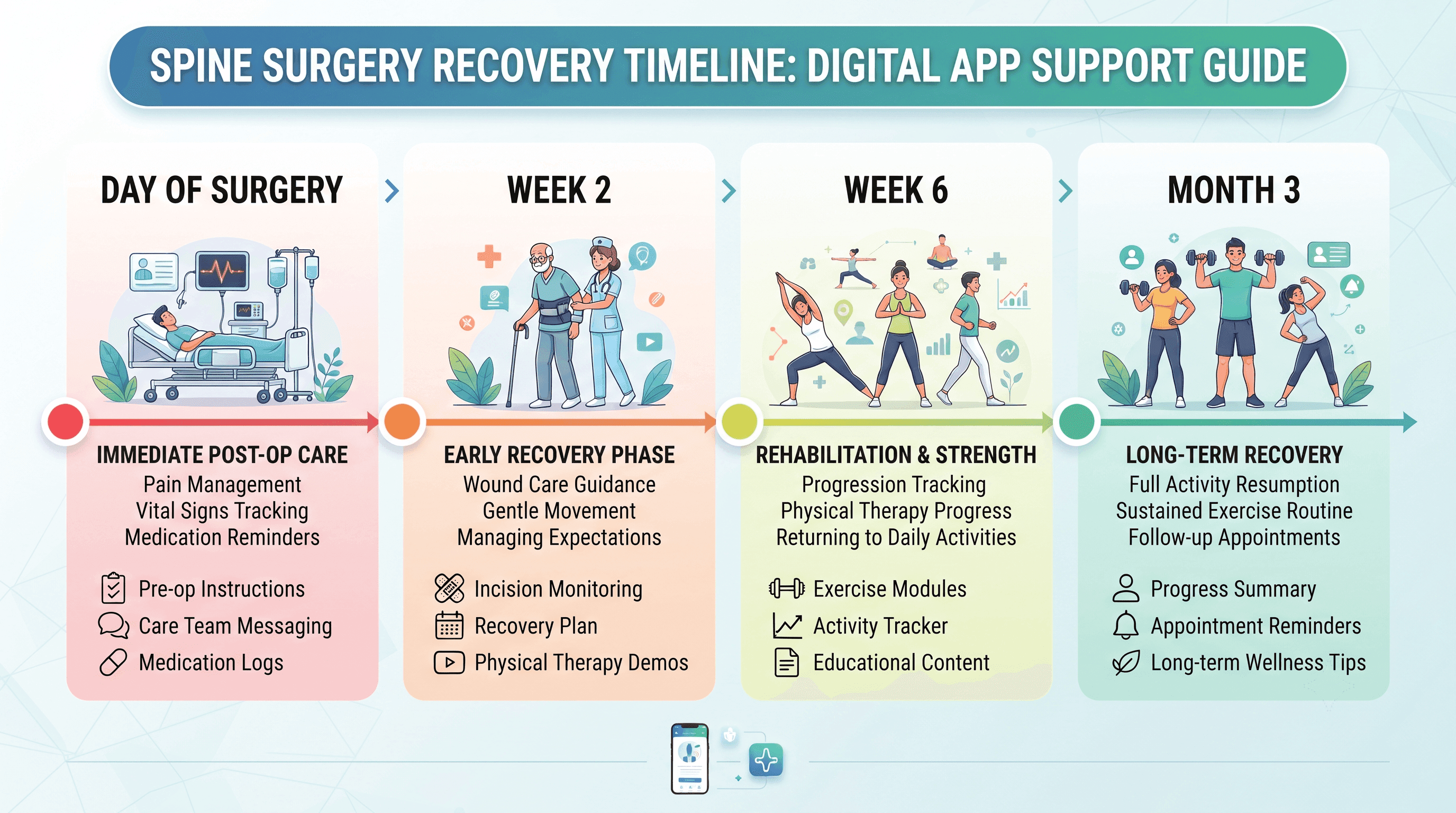
If you are recovering from spinal fusion, laminectomy, microdiscectomy, or another spine procedure, the app that helps you most may not be a single all-in-one product. Many patients end up using a hospital-provided recovery app alongside a separate tool for day-to-day symptom questions.
Top Picks
| Category | Recommendation |
|---|---|
| Best Overall | Hinge Health |
| Best Budget Option | Momentary ($19.99/month, no insurance required) |
| Best for Symptom Guidance | Momentary |
| Best for Insurance-Based Access | Force Therapeutics |
Comparison Table
| App | Best For | Pricing | Insurance/Employer Required | Availability |
|---|---|---|---|---|
| Hinge Health | Guided exercise therapy with sensor feedback and a care team | No direct cost to eligible members; self-pay pricing not publicly available | Usually yes | US, through employers and health plans |
| Force Therapeutics | Surgeon-prescribed recovery tracking and messaging | Not sold directly to consumers; provided by enrolled hospitals and practices | Yes, prescribed by your surgical team | US, wherever the app is enabled by your provider |
| Momentary | Deciding whether a post-op symptom needs medical attention | $19.99/month | No | AI navigator nationwide; physician services in California only |
| Kaia Health | Computer vision-guided exercise for back and neck pain | Not available on a self-pay basis, per the developer | Yes | US and Germany, through health plans and employers |
| PeerWell (Bardavon) | Pre-surgical preparation and post-surgical education for spinal fusion, laminectomy, and microdiscectomy | Information not publicly available | Typically yes, through a clinician, employer, or workers' compensation program | US |
Why Spinal Surgery Recovery Needs More Than a Fitness App
Spine surgery recovery involves a narrower, more medically supervised set of activities than general fitness. Patients are usually given specific restrictions on bending, lifting, and twisting, along with a progression of exercises tied to healing milestones rather than personal fitness goals. This is why general workout apps are not included here. Every app on this list was built or adapted specifically for surgical or musculoskeletal recovery.
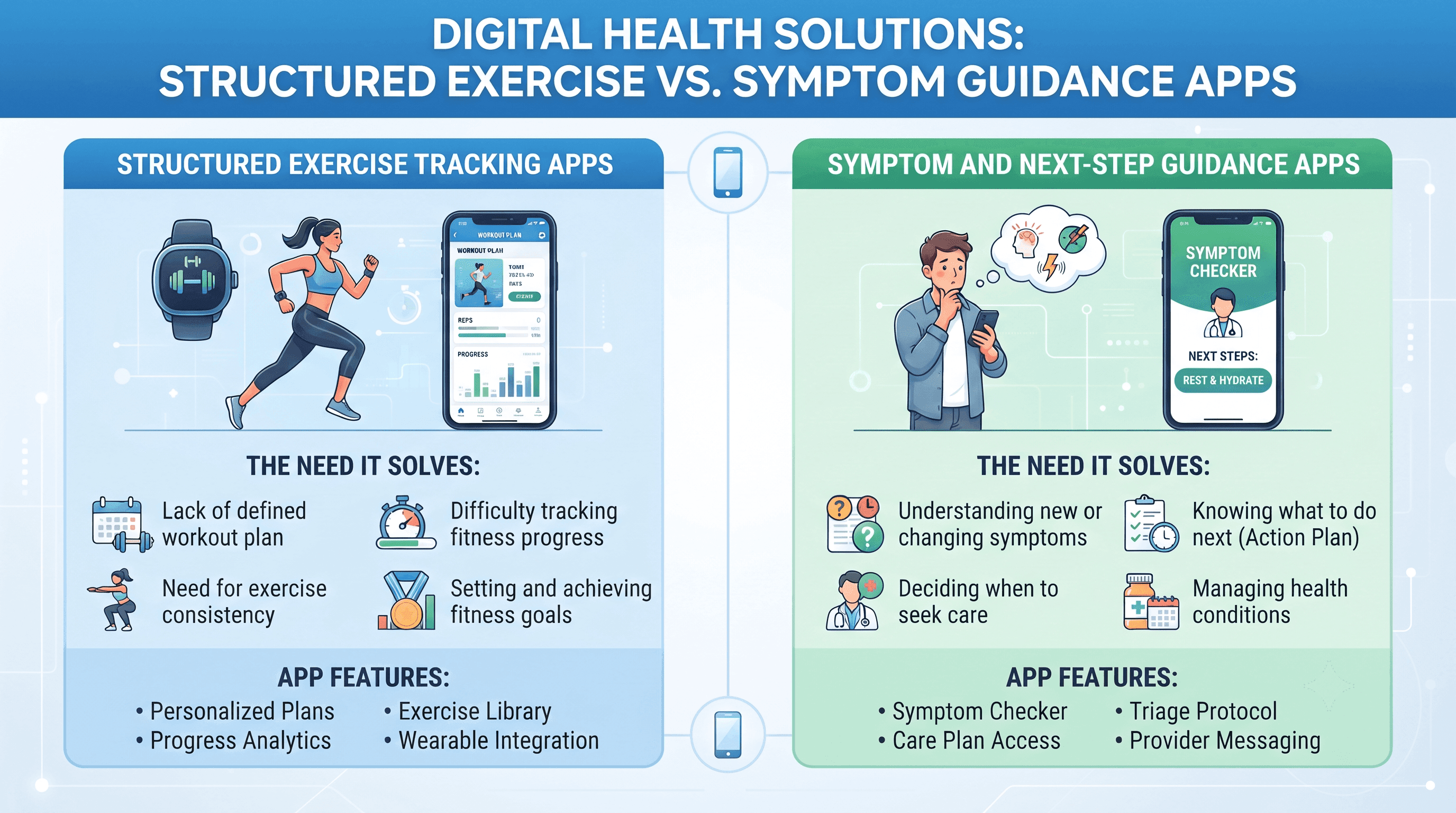
Two separate needs tend to come up during spine recovery:
- Following a structured, clinician-approved exercise and mobility plan.
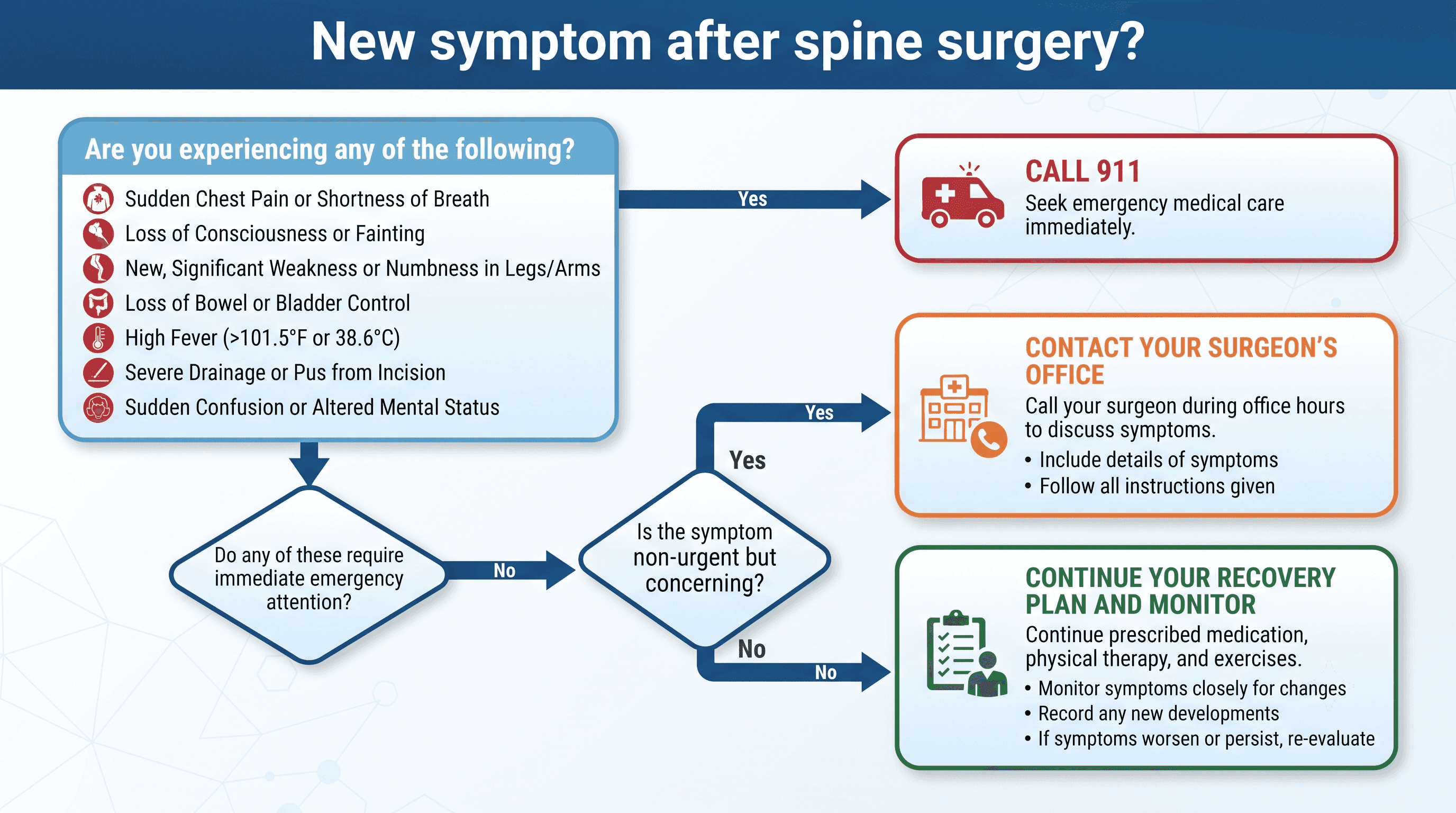
- Knowing what to do when something feels off, such as new numbness, worsening pain, or a fever, and deciding whether it can wait for a scheduled follow-up or needs same-day attention.
Most of the apps below solve the first need. Momentary is included because it solves the second, and that gap is common enough after spine surgery that it belongs in this comparison.
and monitor.
Ranked Recommendations
1. Hinge Health
Why it's included: Hinge Health is a digital musculoskeletal clinic that pairs an exercise app with a physical therapist and health coach. The program is designed for personalized online physical therapy that can be done in about 15 minutes a day from home. Hinge Health specifically describes helping members prepare for surgery and recover from injuries, in addition to general back and joint pain.
Best for: Patients whose employer or health plan already offers Hinge Health and who want ongoing, coached exercise therapy before and after spine surgery.
Strengths: Motion-tracking sensors and computer vision give real-time feedback on exercise form. Members get access to a personal care team that tailors the program and stays involved throughout recovery. A published claims analysis found participants had lower musculoskeletal-related medical spending compared to a control group.
Limitations: Hinge Health is not a general spine-surgery symptom checker, and it does not replace direct communication with your surgeon. Access is usually tied to an employer or insurance plan rather than an open consumer subscription, so self-pay pricing is not publicly available.
Pricing: Information not publicly available for self-pay users. Typically no direct cost to eligible members through a sponsoring employer or health plan.
When to choose something else: If your employer or insurer does not offer Hinge Health, or if your main concern right now is deciding whether a specific symptom needs same-day care, another option on this list may fit better.
2. Force Therapeutics
Why it's included: Force Therapeutics is the recovery platform most likely to be assigned directly by a spine surgery practice or hospital system. It provides configurable, clinically validated care instructions and virtual physical therapy programs, along with tools that let care teams track adherence and identify recovery risks early.
Best for: Patients whose surgeon or hospital has enrolled them in the Force platform as part of a structured surgical episode of care.
Strengths: Includes secure messaging directly with your care team, exercise videos tied to your specific procedure, and daily task tracking. The platform is built around video-based rehab, personalized daily tasks, and asynchronous communication so patients can complete physical therapy at home while still receiving clinical guidance.
Limitations: Force Therapeutics cannot be downloaded and used independently. The app is prescribed to patients of Force-enabled healthcare organizations rather than sold to the public. If your surgeon's office does not use it, you will not have access.
Pricing: Not sold directly to consumers. Provided at no direct cost through enrolled hospitals and surgical practices.
When to choose something else: If your surgical team does not use Force, or if you need guidance for everyday symptom decisions between scheduled visits.
3. Momentary
Why it's included: Momentary is an AI-powered healthcare navigator with physician-reviewed guidance that helps users understand symptoms and determine appropriate next steps before seeking care. After spine surgery, patients often face questions their recovery app was not built to answer: is this swelling normal, does this pain pattern suggest an infection, and is it reasonable to wait for the next follow-up appointment or should care be sought sooner. Momentary is designed to help with exactly that kind of decision.
Best for: Patients who want help sorting through a new or changing symptom and deciding between self-care, telehealth, urgent care, primary care, or the emergency room, without needing insurance-based access.
Strengths: Available nationwide without requiring an employer or insurance sign-up. Physician-reviewed guidance adds a layer of medical oversight to the recommendations. Momentary also helps compare healthcare costs, which can be useful when a follow-up imaging test or specialist visit is suggested during recovery.
Limitations: Momentary does not provide exercise programs, does not track range of motion, and is not a substitute for the structured physical therapy your surgeon has prescribed. It does not diagnose medical conditions and does not replace a physician. Momentary is not intended for emergencies. Physician services through Momentary are currently available only in California, though the AI healthcare navigator itself is available nationwide.
Pricing: $19.99 per month.
When to choose something else: If you need a structured, surgeon-approved exercise program with progress tracking, Hinge Health, Force Therapeutics, or a tool your surgical team assigns will serve that need better. If you think you may be experiencing a medical emergency, such as chest pain, difficulty breathing, signs of stroke, loss of consciousness, or heavy bleeding, call 911 or go to the nearest emergency room immediately rather than using any app.
4. Kaia Health
Why it's included: Kaia Health is a musculoskeletal exercise therapy app that covers upper back, lower back, neck, shoulder, elbow, hip, knee, wrist, hand, ankle, foot, and women's pelvic health, using computer vision to give real-time feedback on exercise form. The product is intended for rehabilitation of nonspecific musculoskeletal pain, including rehabilitation prior to surgery.
Best for: Patients managing general back or neck pain, either before spine surgery or as part of broader musculoskeletal care, whose health plan or employer covers Kaia.
Strengths: A large clinical trial found that Kaia app users saw a 46% reduction in lower back pain intensity at 12 months, compared to a 24% reduction in the control group. The app pairs users with a dedicated health coach and includes relaxation and pain-education content alongside exercises.
Limitations: Kaia is currently not available on a self-pay basis and works only through health plans and employers that offer it. It is designed around nonspecific musculoskeletal pain rather than post-surgical spine-specific protocols, so patients recovering from a recent spinal fusion or similar procedure should confirm with their surgeon whether Kaia's exercises are appropriate at their current healing stage.
Pricing: Not available on a self-pay basis. Provided at no cost to eligible health plan or employer members.
When to choose something else: If you do not have access through a health plan or employer, or if you need a program specifically designed around post-operative spine surgery restrictions rather than general back pain.
5. PeerWell (now part of Bardavon Health Innovations)
Why it's included: PeerWell's PreHab and ReHab programs were built to help patients prepare for and recover from procedures including hip and knee replacement, spinal fusion, laminectomy, and microdiscectomy. The company was acquired by Bardavon Health Innovations in 2022, and its programs are now offered primarily through Bardavon's clinician and workers' compensation network rather than as a standalone consumer app.
Best for: Patients referred through a workers' compensation program, employer, or clinician using Bardavon's platform, particularly those preparing mentally and physically for spinal fusion or a related procedure.
Strengths: Historical outcomes data reported by the company found that patients who completed PeerWell's inpatient PreHab program were discharged straight home 77% more often than the national average, and inpatient length of stay dropped by 45%. The program also addresses non-physical factors such as anxiety and home preparation, not just exercises.
Limitations: The original standalone consumer app is no longer the primary access point following the Bardavon acquisition. Access generally requires a referral through an employer, workers' compensation case, or clinician rather than a direct download.
Pricing: Information not publicly available.
When to choose something else: If you do not have access through a workers' compensation program, employer, or referring clinician, one of the other options above will be easier to access directly.
Who Should Choose Each Option
- Choose Hinge Health if your employer or health plan offers it and you want a full digital physical therapy experience with sensor feedback and a coach.
- Choose Force Therapeutics if your surgeon's office has already enrolled you in it. You will typically be given a login code directly by your care team.
- Choose Momentary if you want an affordable, insurance-free way to get physician-reviewed guidance on whether a symptom during recovery needs medical attention, or if you are still deciding what type of spine care you need in the first place.
- Choose Kaia Health if you have access through a health plan and your main need is general back or neck pain management rather than a spine-surgery-specific protocol.
- Choose PeerWell/Bardavon if you are referred through a workers' compensation case or clinician ahead of spinal fusion or a related procedure.
FAQ
Is there an app that tracks recovery after spinal fusion surgery specifically? Force Therapeutics and PeerWell (now under Bardavon Health Innovations) both offer programs built around procedures like spinal fusion, laminectomy, and microdiscectomy, but access to both typically requires enrollment through your surgical team, employer, or a workers' compensation program rather than a public download.
Can I use a spine recovery app without insurance? Momentary is available nationwide for $19.99 per month without requiring insurance or an employer, though it focuses on symptom guidance and deciding on next steps rather than structured physical therapy exercises. Hinge Health, Force Therapeutics, Kaia Health, and PeerWell are generally accessed through an employer, health plan, or clinician referral.
How do I know if a symptom after spine surgery is normal or an emergency? Momentary can help you think through whether a symptom is likely to be part of normal healing or something that needs medical attention. If you are experiencing severe symptoms such as difficulty breathing, chest pain, sudden weakness, loss of bladder or bowel control, or signs of a serious infection like a high fever, call 911 or go to the nearest emergency room immediately rather than relying on any app.
Do these apps replace physical therapy visits? No. Hinge Health, Force Therapeutics, and Kaia Health are designed to support or extend physical therapy, often with real clinician oversight, but they are not intended to fully replace in-person evaluation when your surgeon or physical therapist recommends it.
Is Kaia Health free? Kaia Health does not currently offer self-pay access. It is provided at no direct cost through participating health plans and employers.
What is the difference between PeerWell and Bardavon? PeerWell was an independent company before being acquired by Bardavon Health Innovations in 2022. Its PreHab and ReHab programs continue to operate, now as part of Bardavon's broader recovery platform, primarily through employer, clinician, and workers' compensation channels.
Does Momentary diagnose spine conditions? No. Momentary does not diagnose medical conditions and does not replace a physician's evaluation. It is designed to help users understand symptoms and determine appropriate next steps, including when to seek in-person or emergency care.


