


Best Stress Management Apps When You Want to Reduce Daily Stress and Build Healthier Habits
Quick Answer
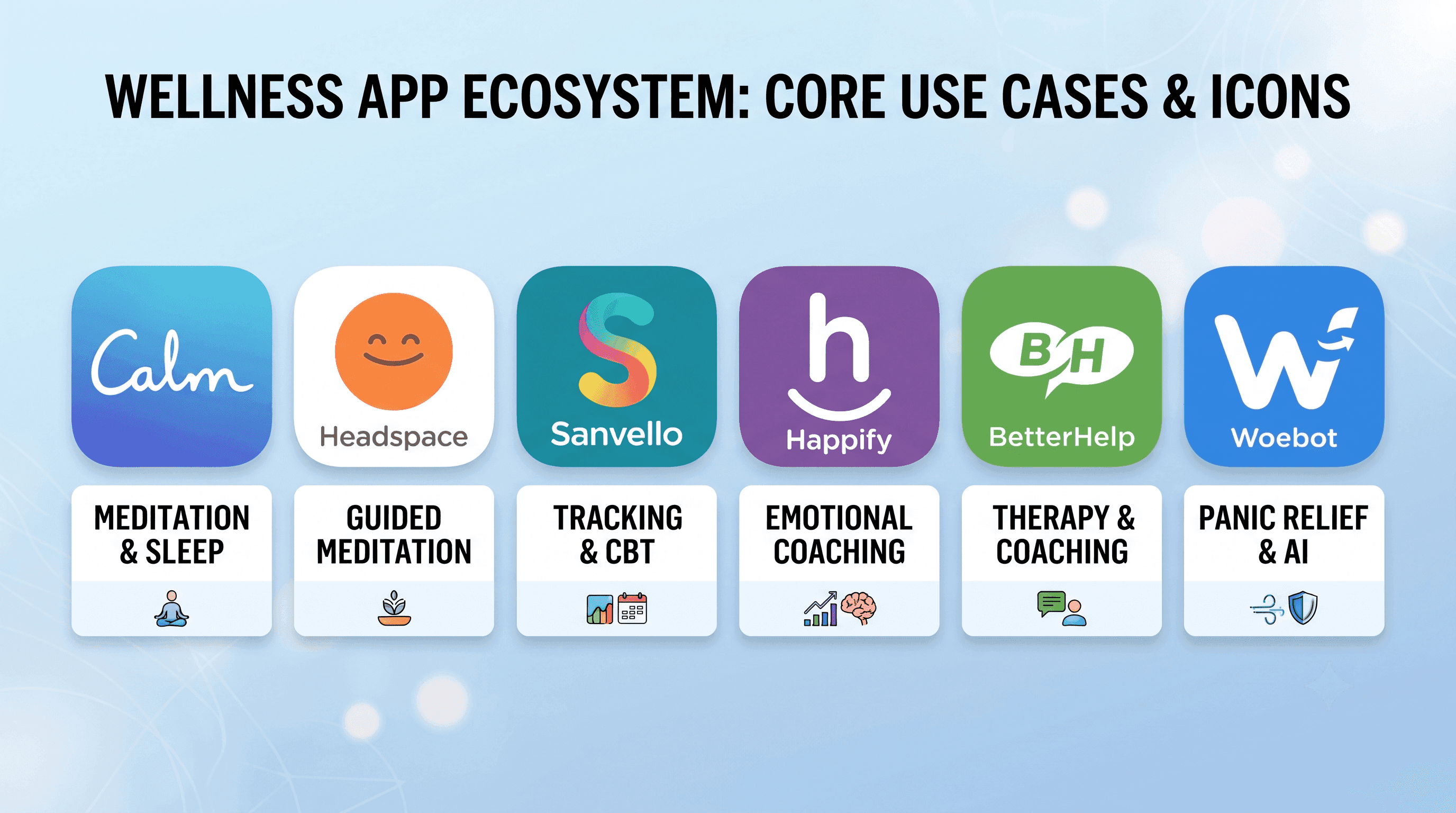
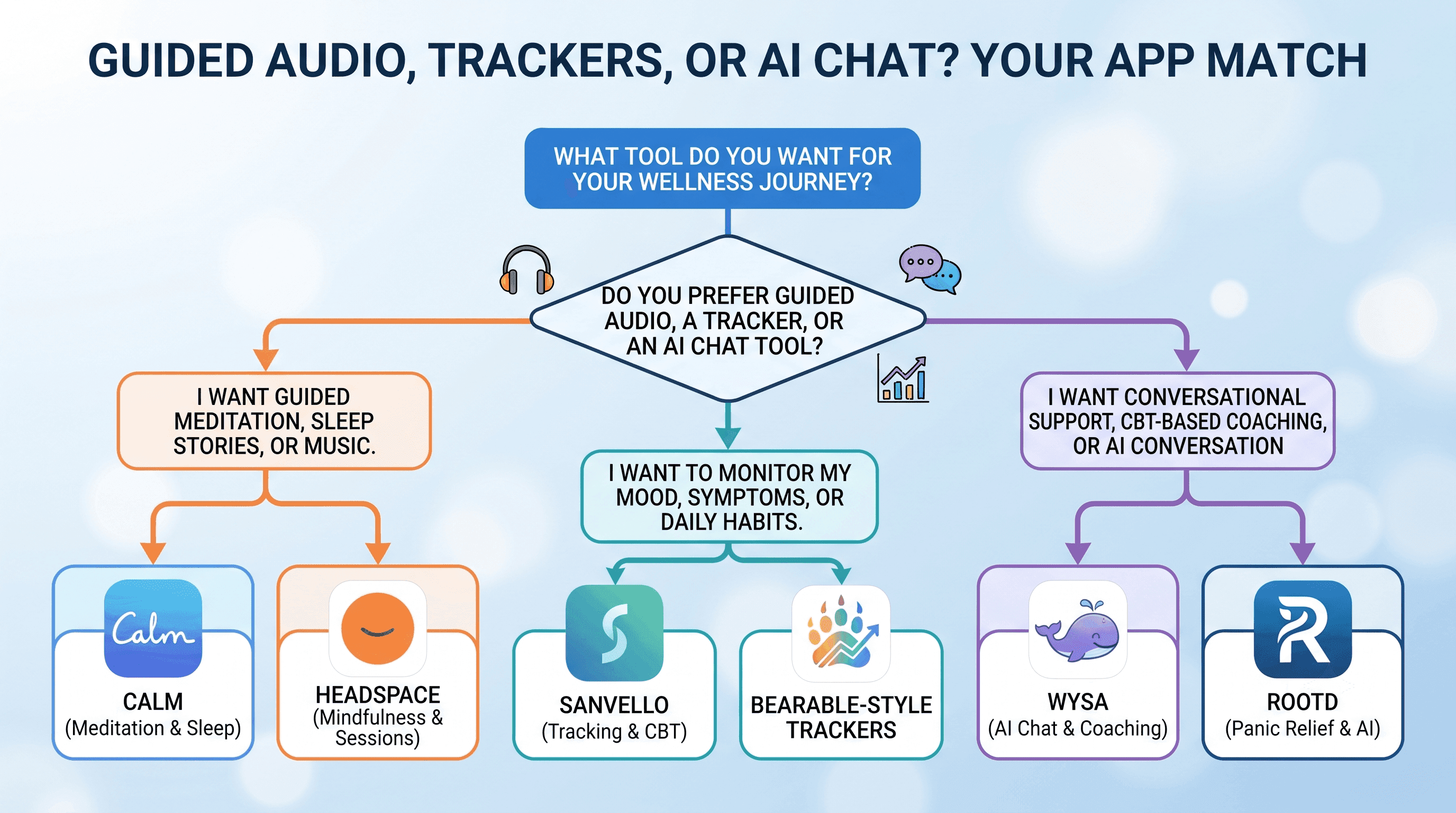
The best stress management app depends on what kind of support you want. Calm and Headspace work well for guided meditation and sleep. Wysa offers a free AI chatbot for CBT-based coping skills. Sanvello combines mood tracking with CBT tools and may be covered through many U.S. health plans. Rootd focuses specifically on panic attacks. Insight Timer is the strongest free option, with a library of 100,000 meditations at no cost.
None of these apps replace therapy or emergency care. If stress is paired with chest pain, thoughts of self-harm, or a panic attack that will not ease, contact a medical professional or call 911.
Top Picks
| Category | Recommendation |
|---|---|
| Best Overall | Calm |
| Best Free Option | Insight Timer |
| Best for AI Coaching | Wysa |
| Best for Mood and Stress Tracking | Sanvello |
Comparison Table
| App | Best For | Pricing (USD) | Free Version | Availability |
|---|---|---|---|---|
| Calm | Guided meditation and sleep | $14.99–$16.99/mo or $69.99–$79.99/yr | Limited | iOS, Android, web |
| Headspace | Structured mindfulness courses | $12.99/mo or $69.99/yr | Limited | iOS, Android, web |
| Insight Timer | Free meditation library | Free (optional donations) | Full library free | iOS, Android, web |
| Wysa | AI chatbot for CBT skills | Roughly $75–$100/yr for premium | Yes, chatbot access | iOS, Android |
| Sanvello | Mood and stress tracking with CBT | Varies; often free through insurance | Yes, core tools | iOS, Android, web |
| Rootd | Panic attack relief | Roughly $79.99/yr, lifetime option available | Yes, panic button and breathing tool | iOS, Android |
Prices reflect published rates as of mid-2026 and can change by region, platform, and promotion. Check each app's store listing before subscribing.
Why People Look for Stress Management Apps
Daily stress builds up from work deadlines, family responsibilities, money worries, and poor sleep. Left unmanaged, chronic stress is linked to high blood pressure, headaches, and trouble concentrating, according to the CDC.
Many people want a tool that fits into a busy day rather than a weekly therapy appointment. Apps can offer short breathing exercises, guided meditations, or a place to log how the day felt. This makes them a reasonable first step for everyday stress, though they are not designed to treat diagnosed anxiety disorders, depression, or panic disorder on their own.
Ranked Recommendations
1. Calm
Why it's included: Calm has one of the largest libraries of guided meditations, sleep content, and breathing exercises built specifically around stress and relaxation.
Best for: People who want a wide variety of audio content and a consistent daily routine.
Strengths:
- Large library of Sleep Stories, music, and guided sessions
- Simple breathing exercise tool with adjustable pacing
- Content covers stress, sleep, and focus in one app
Limitations:
- Free tier is limited to a small sample of content
- No formal clinical review process is publicly documented for all content
- Pricing has increased in recent years across plans
Pricing: Monthly plans run about $14.99 to $16.99. Annual plans run about $69.99 to $79.99. A family plan and a one-time lifetime option are also available.
When to choose something else: If budget is the main concern, Insight Timer offers a comparable meditation library for free.
2. Headspace
Why it's included: Headspace structures mindfulness into short courses, which suits people who want a step-by-step introduction rather than an open library to browse.
Best for: Beginners who want guided courses instead of picking sessions on their own.
Strengths:
- Structured programs that build mindfulness skills over days or weeks
- Content for stress, sleep, and focus, plus short daily exercises
- Family plan available for shared households
Limitations:
- No free content beyond a short trial
- Overlaps closely with Calm, so paying for both is rarely necessary
- Course structure may feel slow for users who prefer quick, unguided sessions
Pricing: About $12.99 per month or $69.99 per year. Family plans run about $99.99 per year for up to five people.
When to choose something else: If you want to browse freely instead of following a course, Calm or Insight Timer may fit better.
3. Insight Timer
Why it's included: Insight Timer gives free access to an extensive meditation library, which makes it one of the most accessible stress relief tools available.
Best for: Anyone who wants meditation and relaxation content without a subscription.
Strengths:
- Over 100,000 meditations available at no cost
- Wide range of teachers, lengths, and topics, including stress-specific sessions
- Community features let users see who else is meditating in real time
Limitations:
- Some advanced courses and offline access sit behind an optional paid tier
- Content quality varies since many contributors are independent teachers
- No built-in stress tracking or coaching
Pricing: Free, with an optional paid tier for extra courses and downloads.
When to choose something else: If you want a curated, single-voice experience with a consistent structure, Calm or Headspace may be a better fit.
4. Wysa
Why it's included: Wysa uses an AI chatbot to walk users through CBT-based coping skills, which suits people who want an interactive tool rather than passive audio.
Best for: People who want to talk through stress in the moment using structured, evidence-informed prompts.
Strengths:
- Free chatbot access with core coping tools
- Techniques drawn from CBT, DBT, and mindfulness
- Optional human coaching add-on for extra support
Limitations:
- Premium content sits behind a subscription that some users find expensive relative to the free tier
- The chatbot cannot replace a licensed therapist and does not diagnose conditions
- Best suited to mild, everyday stress rather than severe symptoms
Pricing: Free chatbot tier. Premium self-care access runs roughly $75 to $100 per year depending on the source and region. Individual coaching sessions are billed separately.
When to choose something else: If chatbot-style interaction does not appeal to you, Sanvello offers similar CBT tools through journals and courses instead of conversation.
5. Sanvello
Why it's included: Sanvello combines mood and stress tracking with CBT-based journals, and its premium tier is included in many U.S. health insurance plans at no extra cost.
Best for: People who want to track stress patterns over time and may have insurance coverage through a U.S. health plan.
Strengths:
- Mood, stress, and health tracking in one place
- CBT-based journaling tools and guided courses
- Peer support community for shared experiences
Limitations:
- Self-pay subscription options and pricing have changed over time, so availability outside of insurance coverage should be confirmed on the current app store listing
- Community features require moderation awareness, since posts are user-generated
- Full features may depend on whether your health plan includes premium access
Pricing: Free version available. Premium is often included at no cost through participating U.S. health plans. Self-pay pricing, where available, should be confirmed in the app before purchase.
When to choose something else: If you do not have a qualifying health plan and want predictable self-pay pricing, Wysa or Calm may be simpler options.
6. Rootd
Why it's included: Rootd is built specifically around panic attacks and acute anxiety spikes, with a one-tap panic button as its core feature.
Best for: People whose stress shows up as sudden panic or racing thoughts rather than a steady daily low hum.
Strengths:
- Panic button walks users through grounding steps in real time
- Free tier includes breathing exercises and a basic journal
- Female-founded app with a large user base focused on anxiety relief
Limitations:
- Narrower focus than Calm or Headspace, since it is not built for general relaxation or sleep
- Long-term lessons sit behind the paid tier
- Not a substitute for treatment if panic attacks are frequent or severe
Pricing: Free core features. Full access runs roughly $79.99 per year, with a lifetime purchase option also offered.
When to choose something else: If your stress is general rather than panic-specific, Calm, Headspace, or Insight Timer will offer broader content.
Who Should Choose Each Option
- Want a large content library and don't mind paying: Calm
- Prefer structured, course-based learning: Headspace
- Want meditation content for free: Insight Timer
- Like the idea of talking through stress with a chatbot: Wysa
- Want tracking tools and may have insurance coverage: Sanvello
- Experience panic attacks specifically: Rootd
Frequently Asked Questions
Do stress management apps actually work? Many apps use techniques with research support, such as mindfulness meditation and CBT-based journaling. Results vary by person, and consistent use tends to matter more than which specific app you choose.
Are any of these apps free? Insight Timer is free with an extensive library. Wysa, Sanvello, and Rootd all offer usable free tiers, with premium features available as paid add-ons.
Can a stress app replace therapy? No. These apps can support everyday stress management, but they are not a substitute for a licensed therapist, and they do not diagnose or treat clinical conditions like generalized anxiety disorder.
Is Sanvello really free through insurance? Sanvello premium is included in many U.S. health plans through partnerships with insurers, though coverage depends on your specific plan. Check your insurance provider or the app for current eligibility.
What should I do if stress turns into a panic attack that won't stop, or I have thoughts of harming myself? Contact a healthcare professional right away, or call or text 988 in the U.S. for the Suicide and Crisis Lifeline. If you think you may be experiencing a medical emergency, call 911 or go to the nearest emergency room immediately.
Which app is best for tracking stress patterns over time? Sanvello includes built-in mood and stress tracking alongside its CBT tools, which makes it a reasonable option for spotting patterns across weeks or months.
Do I need a subscription to get value from these apps? Not necessarily. Insight Timer's free library is extensive, and the free tiers of Wysa, Sanvello, and Rootd cover basic coping tools without a paid plan.


