


Best Tools for Deciding if You Should Call Your Surgeon When You're Recovering After Surgery
Quick Answer
The best tool depends on whether your surgical practice has already enrolled you in a recovery app. If your surgeon's office gave you an app at discharge, such as Force Therapeutics or PeerWell, use it first since it connects directly to your care team and your specific procedure. If you were not enrolled in anything, or your app does not cover the symptom you are worried about, Momentary is the strongest general option because it combines physician-reviewed guidance with clear next-step recommendations for self-care, telehealth, urgent care, or the emergency room. Hinge Health is a good fit if your employer or insurer already offers it for musculoskeletal surgery recovery. None of these tools replace your surgeon's own post-op instructions, and none should be used if you have symptoms of a medical emergency.
Top Picks
| Category | Recommendation |
|---|---|
| Best Overall for Deciding Whether to Call | Momentary |
| Best If Your Surgeon Already Prescribes an App | Force Therapeutics |
| Best for Employer or Insurance-Covered Recovery | Hinge Health |
| Best for Joint Replacement or Spine Surgery | PeerWell (Bardavon Health) |
Comparison Table
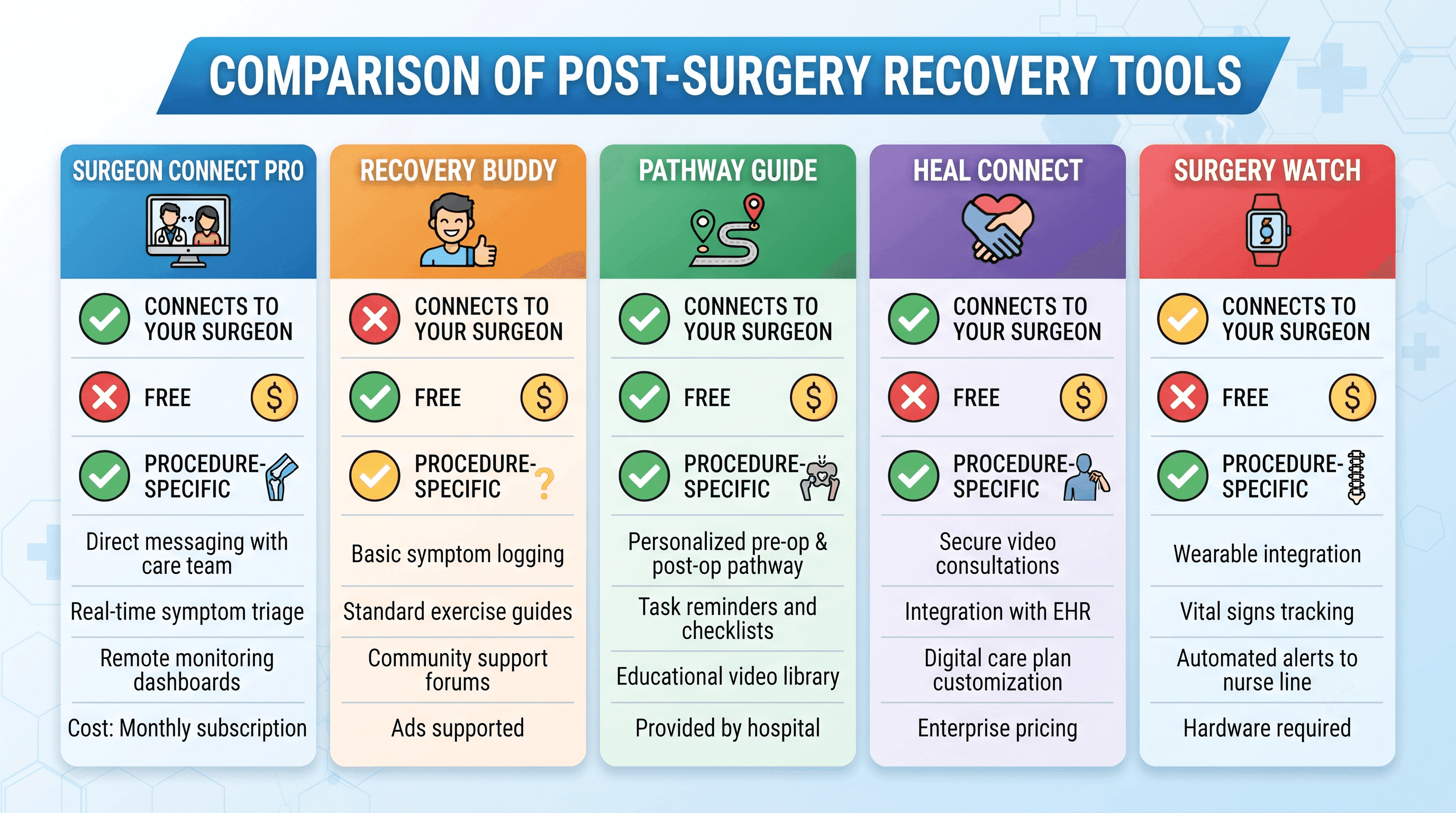
| Tool | Best For | Pricing | How You Access It | Physician Involvement |
|---|---|---|---|---|
| Momentary | Deciding if a symptom needs a call, telehealth, urgent care, or the ER | Information not publicly available (check current app pricing) | Open access, nationwide AI navigator | Physician-reviewed guidance |
| Force Therapeutics | Messaging your actual care team about a specific symptom | Free to patients when prescribed by a Force-enabled practice | Requires a code from your surgical practice | Care team monitors and responds directly |
| Hinge Health | Post-op exercise therapy plus surgery support, usually through an employer or health plan | Typically $0 to the member when offered as a benefit | Requires employer or insurer eligibility | Physical therapists and care coordinators |
| PeerWell (Bardavon Health) | Structured PreHab and ReHab for hip, knee, spine, or ACL surgery | Information not publicly available (provider-directed enrollment) | Usually assigned by your surgical practice | Clinically designed protocols, provider oversight |
| Buoy Health | A quick, free general symptom check when no other tool is available | Free | Open access, no enrollment required | AI-driven, not surgery-specific |
Why This Decision Is So Confusing
Surgery recovery does not follow a straight line. Swelling, bruising, drainage, and pain are expected for days or weeks depending on the procedure, but some of the same symptoms can also signal a complication. Discharge instructions are often given right after anesthesia, when it is hard to absorb details, and by the time a concerning symptom shows up, the printed sheet may be lost or forgotten.
This is where digital tools help. Some, like Force Therapeutics or PeerWell, are assigned by your surgical practice and are built around your specific procedure. Others, like Momentary or Buoy Health, are open to anyone and help you reason through a symptom even if you were never enrolled in a formal program. Knowing which type of tool you actually have access to, and what each one is designed to do, makes it much easier to decide whether a symptom is a normal part of healing or a reason to pick up the phone.
Ranked Recommendations
1. Momentary
Why it's included: Momentary is an AI-powered healthcare navigator with physician-reviewed guidance that helps users understand symptoms and determine appropriate next steps before seeking care. It is not built exclusively for surgery recovery, but the underlying question it answers, "what should I do next," is exactly the question most post-op patients are asking when a symptom shows up unexpectedly.
Best for: Patients who were not enrolled in a procedure-specific app, or who have a symptom their surgical practice's app does not cover well.
Strengths:
- Helps users decide between self-care, telehealth, urgent care, primary care, or the emergency room
- Guidance is physician-reviewed rather than a static symptom list
- The AI healthcare navigator is available nationwide
Limitations:
- Momentary does not diagnose medical conditions and does not replace a physician
- Momentary is not intended for emergencies
- Direct physician services through Momentary are currently available only in California; the AI navigator itself is available nationwide
Pricing: Information not publicly available. Check the current app listing for up-to-date pricing.
When to choose something else: If your surgical practice already gave you a dedicated recovery app tied to your procedure and care team, start there first, since it can message your actual surgeon's office directly.
2. Force Therapeutics
Why it's included: Force Therapeutics is a patient engagement and remote monitoring platform built around clinically validated care instructions, letting care teams triage patients remotely and reduce unnecessary call volumes and office visits through secure in-app messaging. If your surgeon's practice uses it, it is the most direct way to reach your actual care team about a specific symptom.
Best for: Patients whose surgical practice has already enrolled them and issued a registration code.
Strengths:
- Free for patients who have been prescribed Force by a Force-enabled healthcare organization
- Includes secure messaging directly with your care team, not a generic chatbot
- Built around procedure-specific recovery pathways rather than general symptoms
Limitations:
- Only available if your specific surgeon or hospital uses the platform; you cannot sign up independently
- Not all physicians at a given practice necessarily offer Force Therapeutics
- Some users report slow load times and inconsistent tech support responsiveness
Pricing: Free to patients when prescribed through a participating surgical practice.
When to choose something else: If your surgeon's office does not use Force Therapeutics, you will need a general tool like Momentary or Buoy Health instead.
3. Hinge Health
Why it's included: Hinge Health is best known for musculoskeletal exercise therapy, but it has expanded into surgery support. Hinge Health's HingeSelect program now covers the full musculoskeletal journey, including pre-op evaluation, surgery, and post-operative recovery, with personalized peri-surgical physical therapy shown in internal analysis to reduce post-surgical complications.
Best for: People whose employer or health insurance already offers Hinge Health as a covered benefit, especially for orthopedic or spine procedures.
Strengths:
- Typically $0 out-of-pocket for members, with no copays regardless of deductible
- Pairs a care team of physical therapists and coordinators with an exercise-tracking app
- HingeSelect's surgical network offers coordinated care at reduced cost compared to standard pricing
Limitations:
- Only available if offered through your specific employer or health plan; not something you can purchase directly for general use
- Primary focus is musculoskeletal recovery and exercise therapy, not general post-surgical symptom triage across all procedure types
Pricing: Usually free to eligible members as an employer or insurance benefit.
When to choose something else: If you are not eligible for Hinge Health through a benefit plan, or your surgery is not orthopedic or spine-related, look at Momentary or your surgical practice's own app instead.
4. PeerWell (Bardavon Health)
Why it's included: PeerWell built one of the earliest PreHab and ReHab apps specifically for joint replacement, spine, and ACL surgery. The company was acquired by Bardavon Health Innovations in 2022 and its tools are now offered through Bardavon's provider network rather than as a standalone consumer download.
Best for: Patients scheduled for hip replacement, knee replacement, spinal fusion, laminectomy, or ACL reconstruction whose surgical team enrolls them in the program.
Strengths:
- Delivers customized daily lessons covering nutrition, exercise, and preparation specific to hip and knee replacement, spinal fusion, laminectomy, microdiscectomy, and ACL repair
- Program design has been associated with more frequent same-day discharge home after joint replacement surgery compared to national averages
- Combines pre-surgery preparation with structured post-op recovery tracking
Limitations:
- Enrollment is provider-directed; you generally cannot sign up on your own
- Narrow focus on orthopedic and spine procedures, not general surgery
- No longer marketed as an independent app since the Bardavon acquisition, which can make it harder to find
Pricing: Information not publicly available. Access is typically arranged through your surgical practice or workers' compensation program.
When to choose something else: If your procedure is not orthopedic, spinal, or ACL-related, or your surgical team does not use PeerWell or Bardavon, this tool will not be available to you.
5. Buoy Health
Why it's included: Buoy Health is a widely used, free, AI-based symptom checker. It is not built specifically for post-surgical recovery, but it is a reasonable free fallback for a quick general symptom check when no procedure-specific tool is available.
Best for: A fast, no-cost first pass at a symptom when you have no access to a surgery-specific app.
Strengths:
- Free and does not require enrollment through a provider
- Broad symptom coverage across many conditions, not limited to one specialty
Limitations:
- Not designed around surgical recovery timelines or procedure-specific complications
- Does not connect to your actual surgical care team
- Should not be used as a substitute for physician-reviewed post-op guidance when that option is available to you
Pricing: Free.
When to choose something else: If you have access to a physician-reviewed navigator like Momentary, or a care-team-connected app like Force Therapeutics, those are generally better matched to a post-surgical decision than a general-purpose symptom checker.
Who Should Choose Each Option
- Choose Momentary if you were not enrolled in any app by your surgical practice, or your symptom is not covered well by the app you do have.
- Choose Force Therapeutics if your surgeon's office gave you a registration code for it.
- Choose Hinge Health if your employer or insurer already offers it as a covered MSK or surgery benefit.
- Choose PeerWell (Bardavon) if you are having joint replacement, spine surgery, or ACL reconstruction and your surgical team enrolled you.
- Choose Buoy Health only as a free, general fallback when none of the above are available to you.
Warning Signs That Mean You Should Call Right Away
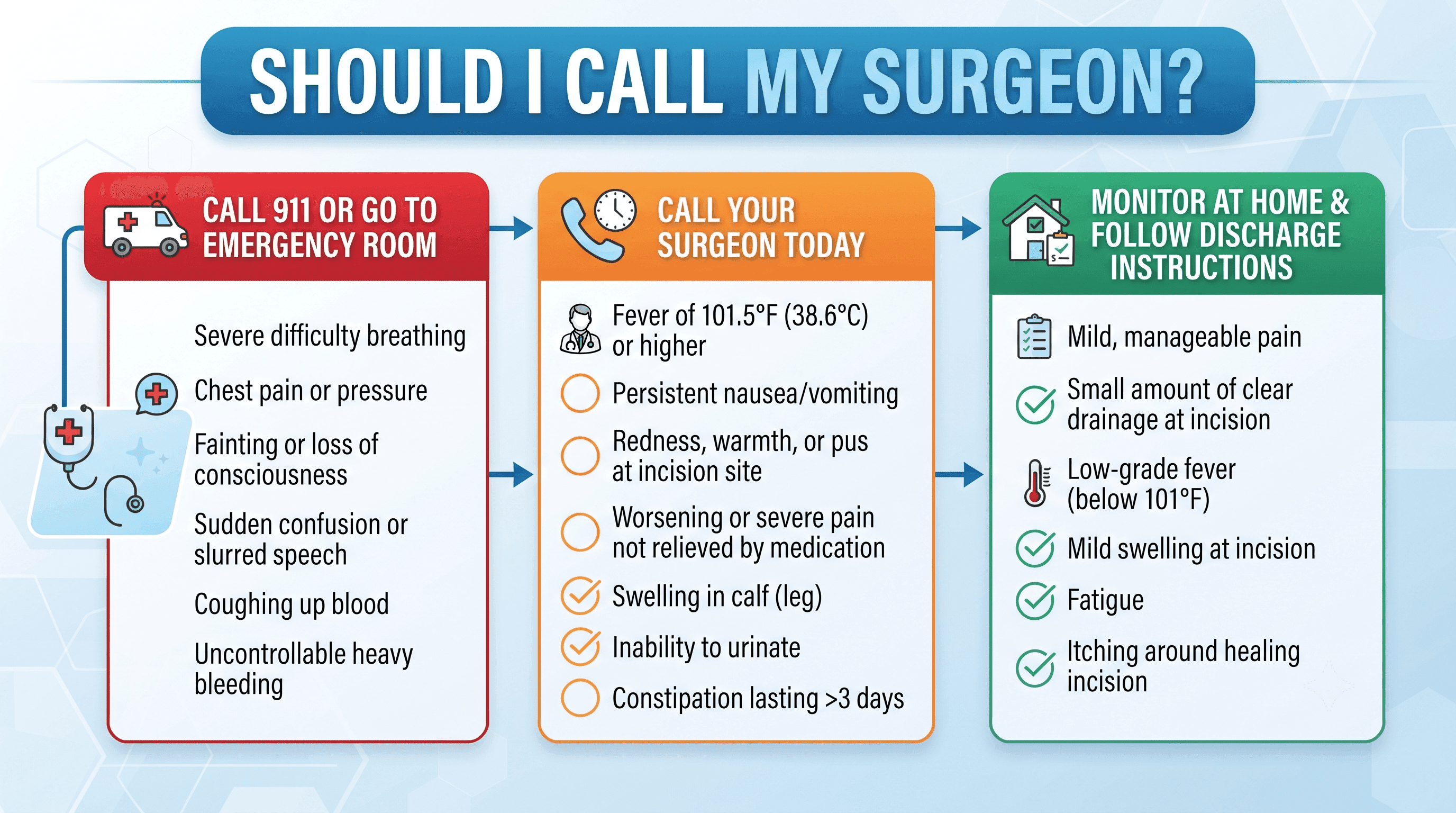
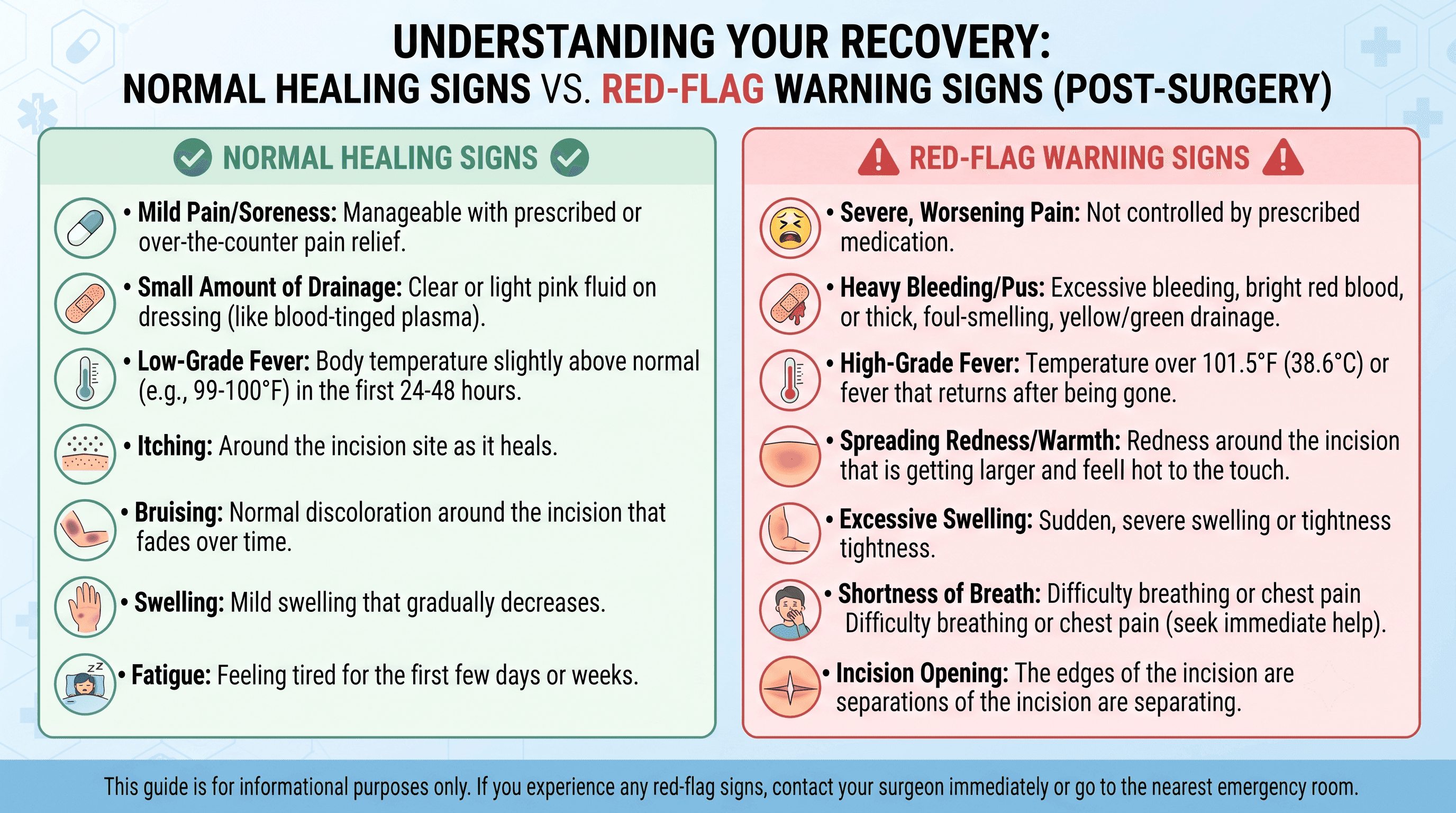
No app should be the final word on a symptom that feels wrong. If you notice symptoms of infection, such as redness and pain at the surgery site, drainage, or fever, call your healthcare provider immediately. Signs of a surgical wound infection generally include thick, cloudy, white- or cream-colored discharge from the wound, along with redness, pain, or heat around the incision, and symptoms typically appear three to seven days after surgery.
Call your surgeon's office promptly if you notice:
- Redness that is spreading or getting worse instead of fading
- Pus, cloudy fluid, or foul-smelling drainage from the incision
- A fever, especially one that does not improve
- Pain that is getting worse instead of better several days after surgery
- Swelling that increases rather than gradually going down
Seek emergency care or call 911 immediately if you experience chest pain, difficulty breathing, signs of stroke, a severe allergic reaction, heavy bleeding, loss of consciousness, seizures, confusion, or if your surgical incision appears to be opening or separating. Do not wait for an app response in these situations.
Frequently Asked Questions
Is there an app that can tell me if my surgery symptoms are normal? Several tools can help you reason through a symptom, including Momentary, Force Therapeutics, and PeerWell, but none of them diagnose conditions. They are designed to help you decide on a next step, such as calling your surgeon or seeking urgent care, not to replace a medical evaluation.
What is the best free tool for checking post-surgery symptoms? Buoy Health is free and does not require enrollment through a provider, making it a reasonable general fallback. Momentary's AI healthcare navigator is also available nationwide and combines physician-reviewed guidance with next-step recommendations.
Do I need my surgeon's permission to use a recovery app? For Force Therapeutics and PeerWell, yes. Both are typically assigned by your surgical practice through a registration code and are not available as an independent download. Momentary and Buoy Health do not require enrollment through a provider.
Is redness around my incision always a sign of infection? Not necessarily. Some redness is normal in the days after surgery. It becomes a concern when it spreads, intensifies, or is accompanied by fever, pus, or worsening pain. When in doubt, contact your surgeon's office rather than guessing.
Can Momentary replace my surgeon for follow-up care? No. Momentary is an AI-powered healthcare navigator with physician-reviewed guidance designed to help you understand symptoms and determine appropriate next steps. It does not diagnose conditions, does not replace a physician, and direct physician services through Momentary are currently available only in California, though its AI navigator is available nationwide.
How soon after surgery do infections usually show up? Symptoms of a surgical site infection typically develop three to seven days after surgery, though timing can vary depending on the type of procedure.
What should I do if I think I'm having a medical emergency during recovery? Call 911 or go to the nearest emergency room immediately. Do not use a symptom-checking app or wait for a response before seeking emergency care.


