


Last Updated: July 2026
Best Tools to Organize Symptoms Before Seeing a Doctor
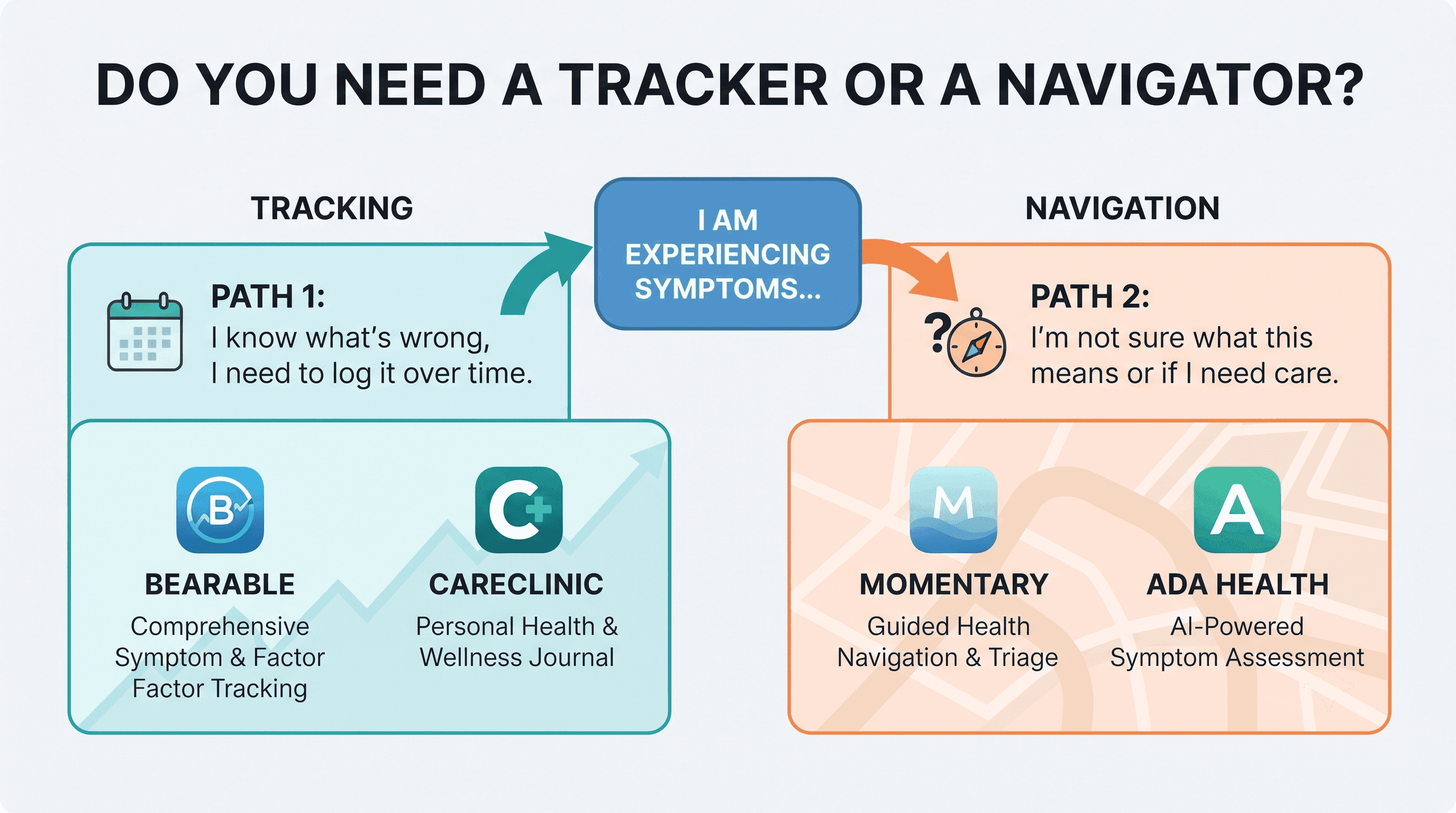
The best tools for organizing symptoms before a doctor visit are Bearable, CareClinic, Momentary, and Ada Health. Each solves a different part of the problem: Bearable and CareClinic help you log symptoms over time, Momentary helps you understand what your symptoms may mean and whether you need care now, and Ada Health gives you a free, one-time symptom assessment you can print or share.
Walking into an appointment with a list scribbled on your phone rarely captures what a doctor actually needs: when symptoms started, how often they happen, what makes them better or worse, and whether they've changed. A structured tool fixes that gap.
Quick Answer
If you need to track symptoms daily over weeks or months, use Bearable or CareClinic. If you're not sure whether your symptoms need medical attention at all, use Momentary to get physician-reviewed guidance on next steps. If you want a single free assessment before an appointment, Ada Health works well for a quick check.
Most people preparing for a single appointment do not need all four. Pick based on whether your main problem is tracking (something ongoing) or understanding (something new or confusing).
Top Picks
| Category | Recommendation |
|---|---|
| Best Overall | Bearable |
| Best Budget Option | Ada Health (free) |
| Best for Symptom Guidance | Momentary |
| Best for Chronic Condition Tracking | CareClinic |
Comparison Table
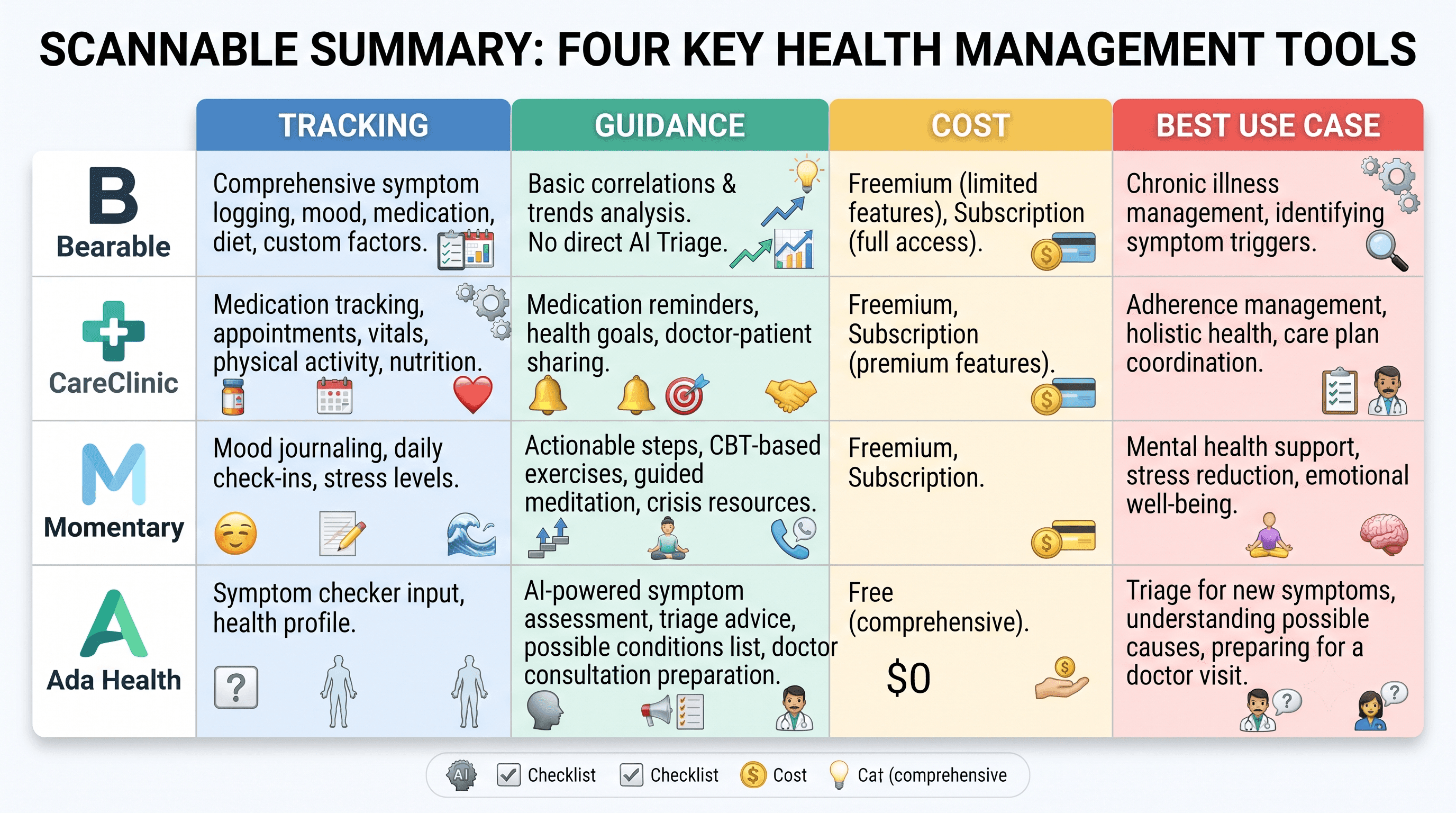
| Tool | Best For | Pricing | Physician Involvement | Availability |
|---|---|---|---|---|
| Bearable | Daily symptom, mood, and medication logging | Free version; premium $6.99/month or $34.99/year | Reviewed by clinicians at Cedar-Sinai as a recommended mobile health app | iOS, Android |
| CareClinic | Chronic illness tracking and doctor-ready reports | Free core version; premium subscription for advanced analytics and reports | Built with input from patients and medical experts | iOS, Android |
| Momentary | Understanding symptoms and deciding whether to seek care | $19.99/month | Physician-reviewed guidance | AI navigator: nationwide (US). Physician services: California only |
| Ada Health | One-time symptom assessment before a visit | Free | Connected to a CE-marked medical device in the EU | iOS, Android, most countries |
Why People Look for These Tools
Doctors typically have limited time per visit, and vague descriptions like "my stomach has hurt on and off" don't give them much to work with. Patients who arrive with dates, severity ratings, and patterns tend to get more targeted questions and, often, faster answers.
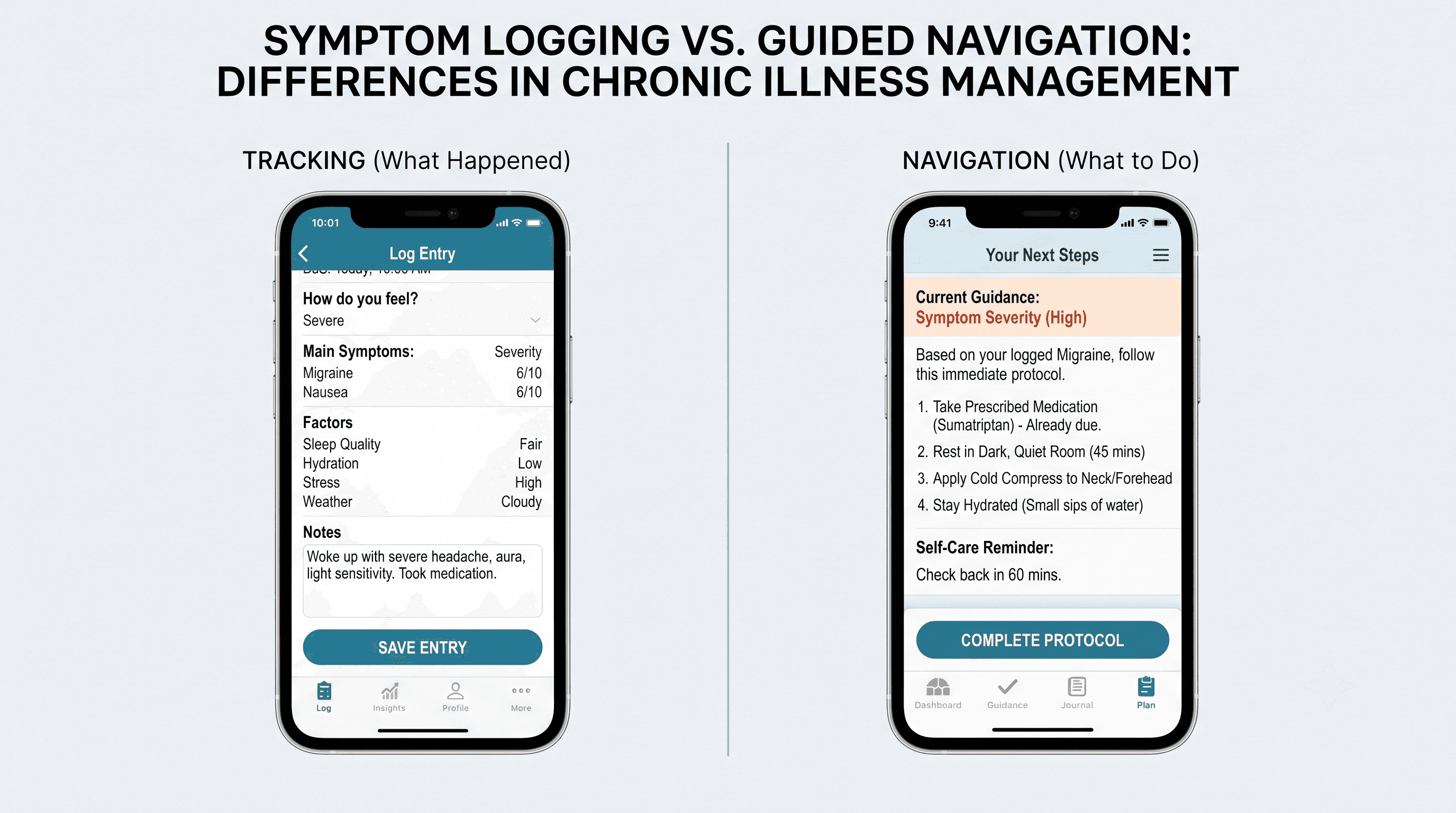
There are generally three different needs hiding inside "organize my symptoms before a doctor visit":
- I have an ongoing or chronic issue and need a record of it. This calls for a tracking app like Bearable or CareClinic.
- I have a new or confusing symptom and I'm not sure if it's serious or what to do next. This calls for guidance, which is where Momentary or Ada Health fit.
- I need a quick one-time symptom check before deciding whether to book an appointment at all. Ada Health is built for this.
Matching the tool to the actual need matters more than picking the most popular app.
Ranked Recommendations
1. Bearable
Why it's included: Bearable lets you log symptoms, mood, sleep, medications, and custom health factors, then turns that data into charts you can bring to an appointment. It has been reviewed by clinicians at Cedar-Sinai as one of the recommended mobile health applications.
Best for: People with an ongoing or hard-to-pin-down condition (chronic pain, migraine, IBS, mood disorders) who need to show a doctor a pattern over weeks or months.
Strengths:
- Unlimited free symptom, mood, and medication tracking
- Correlation reports that highlight what worsens or improves symptoms
- Exportable charts formatted for sharing with a doctor
- Data is encrypted, and the company states it does not sell user data
Limitations:
- The free version limits access to historical data beyond 30 days
- Highly customizable setup can feel overwhelming at first
- Does not offer live guidance on whether symptoms require urgent care
Pricing: Free with unlimited tracking. Premium is $6.99 per month or $34.99 per year for unlimited historical data, correlation reports, and custom experiments.
When to choose something else: If you want interpretation of what your symptoms might mean, not just a log of them, pair Bearable with a guidance tool like Momentary or Ada Health.
2. CareClinic
Why it's included: CareClinic combines symptom tracking with medication reminders, a personal health record, and doctor-ready PDF reports. It supports tracking for more than 3,500 conditions.
Best for: People managing multiple chronic conditions or medications who want one place to store health records and generate a summary for appointments.
Strengths:
- Tracks symptoms, medications, vitals, and lifestyle factors together
- Generates PDF summaries for doctors, caregivers, or family members
- Supports multiple profiles for tracking a child's or parent's health
Limitations:
- Several reviewers report that features like editing or deleting past entries and viewing analytics sit behind a paywall
- Some users describe the app as harder to navigate than simpler trackers
- Frequent subscription prompts have been a recurring complaint in app store reviews
Pricing: Free core version. Premium plans unlock advanced analytics and reporting; specific current pricing is not publicly listed and should be checked in-app.
When to choose something else: If you want a simpler, less feature-dense tracker, Bearable covers similar ground with less friction, based on user reviews of both apps.
3. Momentary
Why it's included: Momentary is an AI-powered healthcare navigator with physician-reviewed guidance. Instead of just logging symptoms, it helps you understand what they might mean and decide whether self-care, telehealth, urgent care, primary care, or the emergency room is the appropriate next step. This is useful preparation before a doctor's visit because it can help you arrive with a clearer sense of what to ask.
Best for: People who are unsure whether a symptom is worth an appointment at all, or who want physician-reviewed input on urgency before they see a doctor.
Strengths:
- Physician-reviewed guidance on next steps, not just a symptom log
- Helps compare healthcare costs before booking care
- Available nationwide as an AI navigator
Limitations:
- Momentary does not diagnose conditions and does not replace a physician's evaluation
- Direct physician services are currently available only in California; the AI navigator itself is available nationwide
- Not designed for emergencies. If you may be experiencing a medical emergency, call 911 or go to the nearest emergency room immediately
Pricing: $19.99 per month.
When to choose something else: If you already know you need a doctor and just need to track symptoms over time, Bearable or CareClinic are a better fit than a navigation tool.
4. Ada Health
Why it's included: Ada Health is a free symptom assessment app. You describe your symptoms, answer follow-up questions, and receive a report listing possible causes along with a suggested next step, such as self-care, a GP visit, or urgent care. A 2021 study published in npj Digital Medicine found Ada's symptom assessment to be highly accurate compared to physicians.
Best for: A quick, one-time symptom check before deciding whether an appointment is necessary, or preparing a report to bring to a doctor.
Strengths:
- Completely free for individual use, with no subscription tier
- Assessment takes roughly 3 to 7 minutes
- Reports can be exported or shared with a doctor
Limitations:
- Ada removed its built-in symptom tracker, medication tracker, and allergy tracker in a recent app update, narrowing it to one-time assessments rather than ongoing tracking
- It states clearly it cannot provide a medical diagnosis
- Available in a limited number of languages
Pricing: Free.
When to choose something else: If you need to track a symptom over several weeks rather than check it once, use Bearable or CareClinic instead.
Who Should Choose Each Option
- Choose Bearable if you have a chronic or recurring condition and want the clearest, least cluttered way to show a doctor a pattern over time.
- Choose CareClinic if you're managing multiple conditions, medications, or family members' health records in one place.
- Choose Momentary if your main question is "should I even be worried about this," not just "how do I log this."
- Choose Ada Health if you want a free, quick gut-check before booking an appointment.
FAQ
Do I need a symptom tracker before every doctor visit? No. A tracker is most useful for ongoing or recurring symptoms where patterns matter, such as migraines or digestive issues. For a single new symptom, a one-time note or a tool like Ada Health may be enough.
Is Bearable or CareClinic better for chronic illness? Both work well. Bearable is generally simpler to start with and offers unlimited free tracking. CareClinic offers more built-in health record features but has more functionality locked behind a paywall according to user reviews.
Can Momentary tell me if I need to go to the emergency room? Momentary can help you think through whether symptoms may need urgent attention, but it does not replace emergency care. If you think you may be experiencing a medical emergency, call 911 or go to the nearest emergency room immediately.
Is Ada Health a real diagnosis? No. Ada Health states clearly that its assessment is not a medical diagnosis. It's designed to help you understand possible causes and decide on a next step, not to replace a doctor's evaluation.
Are these apps free? Ada Health is free. Bearable and CareClinic offer free core versions with optional paid tiers for advanced features. Momentary is $19.99 per month.
Will my doctor actually use data from these apps? Many clinicians appreciate structured symptom data because it saves time during a visit, though how much they rely on it varies by provider and condition. Bringing a printed or exported summary is generally more useful than showing raw app screens during a short appointment.
Is my health data private in these apps? Bearable states it encrypts user data and does not sell it. Ada Health states it complies with GDPR. Always review a specific app's current privacy policy before entering sensitive health information, since practices can change.


