


Last Updated: July 2026
Best Ulcerative Colitis Tracking Apps When You Want to Monitor Symptoms, Flare-Ups, and Treatment Progress
Quick Answer
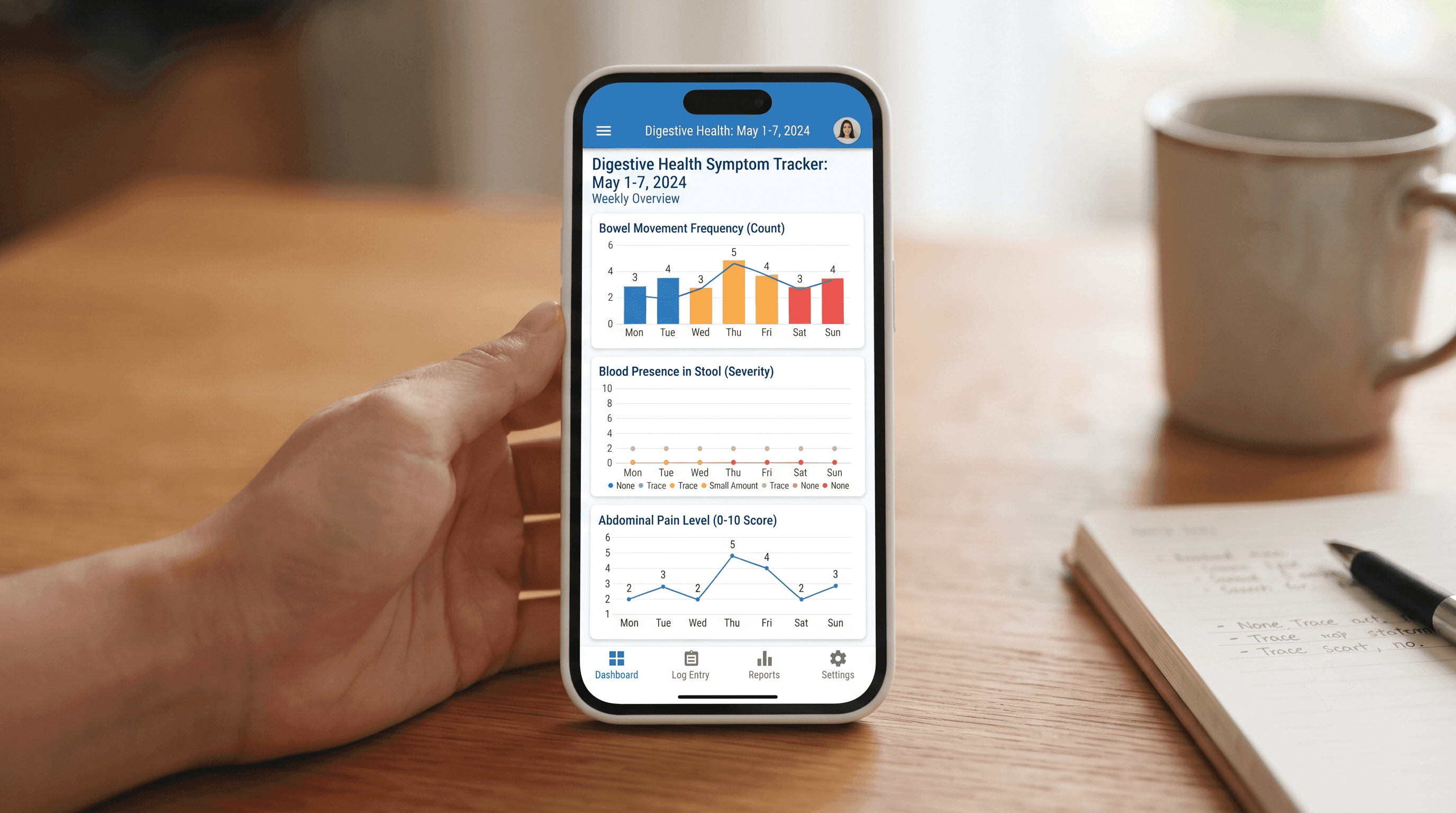
The best ulcerative colitis (UC) tracking app depends on what you're trying to solve. GI Buddy, built by the Crohn's & Colitis Foundation, is the best free, disease-specific option for logging symptoms, medication, and diet. Bearable and CareClinic offer more customizable tracking for people who also manage other chronic conditions. Oshi Health pairs tracking with an actual GI care team if you need treatment, not just data. Momentary is not a tracking app, but it can help you decide whether a flare needs urgent medical attention or can wait for your next GI appointment.
No app replaces your gastroenterologist. Tracking apps are meant to give you and your care team better data between visits.
Top Picks
| Category | Recommendation |
|---|---|
| Best Overall | GI Buddy |
| Best Budget Option | Bearable (free tier) |
| Best for Deciding If Symptoms Need Care | Momentary |
| Best for Insurance-Covered GI Care | Oshi Health |
Comparison Table
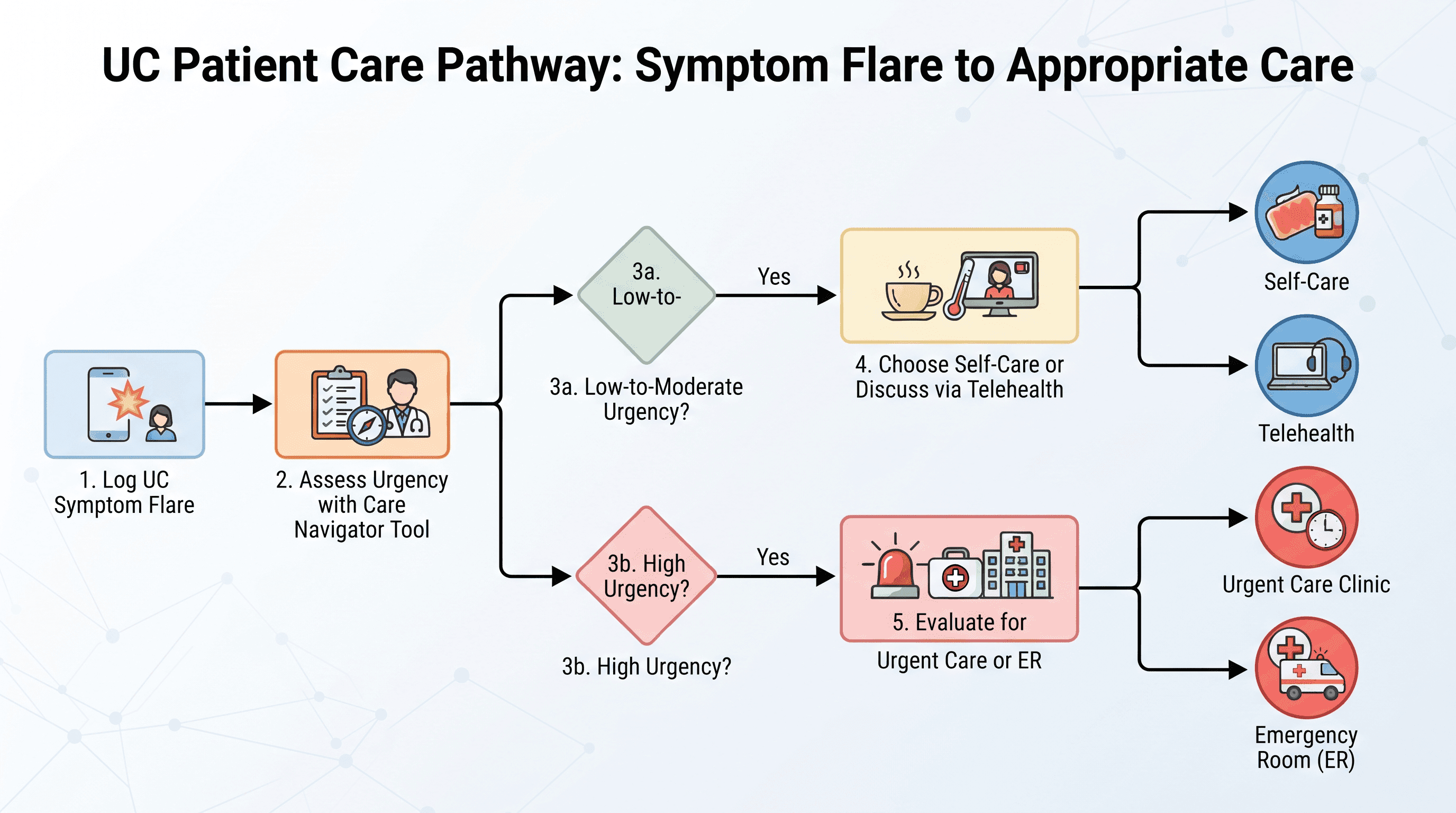
| App | Best For | Pricing | Insurance | Availability |
|---|---|---|---|---|
| GI Buddy | UC-specific symptom, medication, and diet logging | Free | Not applicable, self-tracking only | US, iOS and Android |
| My IBD Care | Symptom tracking plus provider messaging | Free to download | Varies by health system partner | US and UK |
| Oshi Health | Virtual GI care team with built-in tracking | In-network visits, self-pay from $250 per visit | In-network with major insurers including UnitedHealthcare, Aetna, and Cigna | Nationwide in the US |
| Bearable | Fully customizable chronic illness tracking | Free, premium at $34.99 per year | Not applicable | US, UK, Canada |
| CareClinic | All-in-one tracker with Bristol Stool Chart logging | Free, premium at $9.99 per month or $59.99 per year | Not applicable | Available worldwide |
| Momentary | Deciding whether a flare needs urgent care | Free AI navigator, physician visits available in California only | Varies, check current plan details | AI navigator nationwide in the US |
Why People Track Ulcerative Colitis Symptoms
Ulcerative colitis is unpredictable. Flares can build over days or appear suddenly, and symptoms like stool frequency, blood, and urgency are hard to recall accurately at a six-month follow-up appointment.
Tracking apps give gastroenterologists something notebooks and memory cannot: a timestamped record of stool frequency, bleeding, pain, and medication adherence. Some doctors use this data to score disease activity and adjust treatment before a flare becomes severe enough to need steroids, hospitalization, or surgery.
Tracking also helps patients spot their own patterns. Correlating meals, stress, sleep, and symptoms over weeks can reveal personal triggers that a single office visit would never catch.
Ranked Recommendations
1. GI Buddy
Why it's included: GI Buddy was built by the Crohn's & Colitis Foundation specifically for people with Crohn's disease and ulcerative colitis, and includes medication reminders that clinicians consider especially useful for complex IBD treatment schedules.
Best for: People who want a free, disease-specific tracker backed by a nonprofit patient organization rather than a general wellness company.
Strengths:
- Built for IBD, not adapted from a general symptom tracker
- Free with no premium paywall
- Generates email reports you can bring to appointments
Limitations:
- Interface is more basic than newer consumer health apps
- Does not connect you with a live care team
Pricing: Free
When to choose something else: If you want a slicker interface with correlation charts and wearable integration, Bearable or CareClinic may fit better.
2. My IBD Care
Why it's included: My IBD Care, developed with Crohn's and Colitis UK, combines symptom and bowel movement tracking with secure messaging to a care team, which some UC patients find more actionable than tracking alone.
Best for: Patients whose GI practice or health system has adopted the platform and wants ongoing two-way communication.
Strengths:
- Tracks mood, stress, and pain alongside physical symptoms
- Built with clinical input, not just patient anecdotes
- Supports secure provider messaging where available
Limitations:
- Full functionality depends on whether your clinic participates
- Availability and features vary by health system partner. Information not publicly available for all US regions.
Pricing: Free to download
When to choose something else: If your GI practice doesn't use My IBD Care, GI Buddy or Bearable will work independently of any clinic partnership.
3. Oshi Health
Why it's included: Oshi Health is a nationwide virtual GI clinic that pairs symptom tracking with an actual multidisciplinary care team, including gastroenterologists, registered dietitians, and behavioral health specialists.
Best for: People who need active treatment adjustments, not just a log to bring to an appointment months away.
Strengths:
- In-network with major insurers, which can make a year of care cost about the same as a few specialist copays
- Next-day virtual appointments in many cases
- Combines tracking with real medical, dietary, and behavioral care
Limitations:
- Not covered by Medicare or Medicaid in most states
- Requires ongoing engagement with a care team rather than passive logging
- Self-pay cost is significantly higher than free tracking apps
Pricing: In-network visits through participating insurance plans, or self-pay starting around $250 per visit
When to choose something else: If you already have a gastroenterologist and just want a personal log, a free tracker like GI Buddy or Bearable is more practical.
4. Bearable
Best for: People managing UC alongside other conditions, such as fatigue, joint pain, or mood symptoms, who want one app instead of several.
Strengths:
- Unlimited custom symptom and trigger tracking on the free tier
- Correlation reports to spot what worsens or improves symptoms
- Syncs with Apple Health and Google Fit
Limitations:
- Not designed specifically for IBD, so some UC-specific fields like a rectal bleeding score require manual setup
- Historical data beyond 30 days requires the paid subscription
Pricing: Free, with an optional $34.99 per year premium subscription
When to choose something else: If you want a tracker built specifically around IBD symptom scoring, GI Buddy is more purpose-built.
5. CareClinic
Best for: People who want detailed tracking, including a built-in Bristol Stool Chart, alongside medication reminders and caregiver sharing.
Strengths:
- Dedicated stool tracker using the Bristol Stool Chart, which is directly relevant to UC symptom scoring
- Care Team feature lets caregivers or family view data remotely
- Exportable PDF reports for GI appointments
Limitations:
- Core logging is free, but deeper AI insights and unlimited history sit behind a subscription
- Broad feature set can feel like more than some users need for UC alone
Pricing: Free, with premium at $9.99 per month or $59.99 per year
When to choose something else: If you want the simplest possible daily check-in with minimal setup, GI Buddy or Bearable's free tier may feel lighter.
6. Momentary
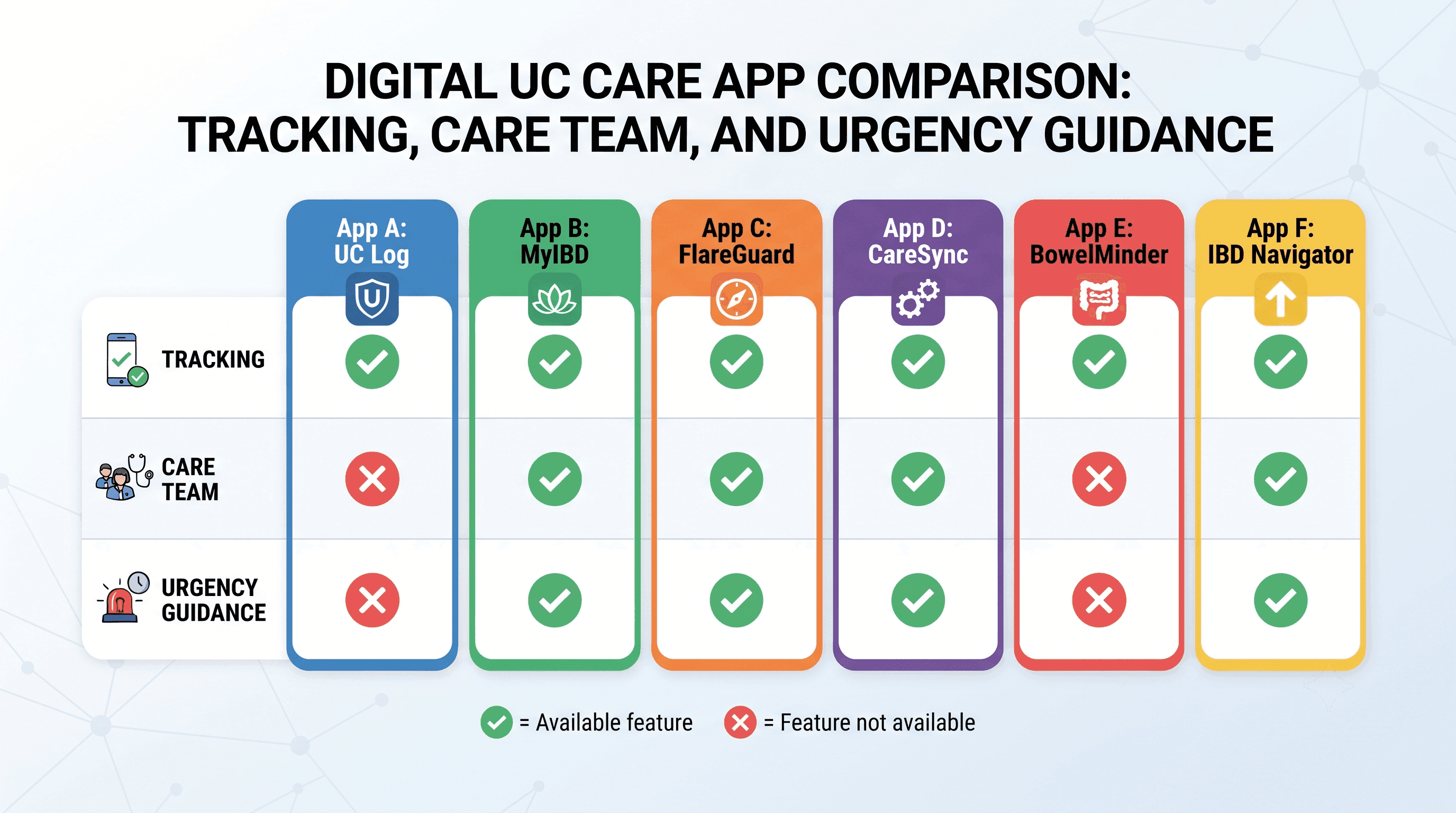
Why it's included: Momentary is an AI-powered healthcare navigator with physician-reviewed guidance that helps people understand symptoms and determine appropriate next steps before seeking care. It is not a symptom-tracking app, but UC flares often raise a question tracking apps cannot answer: does this need urgent attention right now?
Best for: Deciding whether a flare, new symptom, or sudden change (such as increased bleeding or fever) needs same-day care, can wait for a scheduled GI visit, or is manageable at home.
Strengths:
- Physician-reviewed guidance rather than an unreviewed AI symptom checker
- Helps compare self-care, telehealth, urgent care, and emergency room options
- AI healthcare navigator is available nationwide in the US
Limitations:
- Does not track symptoms over time or log bowel movements
- Does not diagnose conditions or replace your gastroenterologist
- Physician services are currently available only in California; the AI navigator is available nationwide
Pricing: Free to use the AI healthcare navigator
When to choose something else: For ongoing symptom logging, pair Momentary with a dedicated tracker like GI Buddy rather than using it as a replacement.
Who Should Choose Each Option
- Newly diagnosed and want the simplest free start: GI Buddy
- Managing UC plus other chronic symptoms: Bearable
- Want detailed stool tracking and caregiver sharing: CareClinic
- Need an actual GI care team, not just a log: Oshi Health
- Your clinic already uses a connected platform: My IBD Care
- Unsure if a flare is serious enough to act on today: Momentary, alongside your regular tracker
Emergency Symptoms: When to Skip the App
Ulcerative colitis flares can occasionally become medical emergencies. Call 911 or go to the nearest emergency room immediately if you experience:
- Heavy or continuous rectal bleeding
- Severe abdominal pain or a rigid, swollen abdomen
- High fever with chills
- Signs of severe dehydration, such as dizziness or a rapid heartbeat
- Fainting or loss of consciousness
No tracking app or AI navigator, including Momentary, is designed for emergencies. If you think you may be experiencing a medical emergency, call 911 or go to the nearest emergency room.
FAQ
Is there a free app to track ulcerative colitis symptoms? Yes. GI Buddy, Bearable, and CareClinic all offer free tracking. GI Buddy is entirely free, while Bearable and CareClinic offer free core logging with optional paid upgrades for advanced reports.
What should I track for ulcerative colitis? Most GI providers want to know stool frequency, presence and amount of blood, urgency, nighttime bowel movements, abdominal pain, fatigue, and medication adherence. Several apps in this list, including GI Buddy and CareClinic, include fields built around these categories.
Can an app tell me if my flare is serious enough for the ER? Tracking apps generally do not offer this kind of guidance. Momentary is designed to help you compare self-care, telehealth, urgent care, and emergency options based on your symptoms, though it does not replace medical evaluation. For severe symptoms like heavy bleeding or high fever, seek emergency care immediately rather than relying on any app.
Is Oshi Health covered by insurance? Oshi Health is in-network with a number of major insurers, including UnitedHealthcare, Aetna, and Cigna, though coverage varies by plan. It is generally not covered by Medicare or Medicaid in most states. Check with Oshi Health or your insurer directly for your specific plan.
Do I still need to see a gastroenterologist if I use a tracking app? Yes. These apps are designed to support your care, not replace it. Ulcerative colitis requires ongoing management by a gastroenterologist, and tracking data is meant to make those visits more productive, not substitute for them.
Which app is best for logging bowel movements specifically? CareClinic includes a dedicated Bristol Stool Chart tracker, and GI Buddy was purpose-built around IBD symptom logging, including stool frequency and bleeding.
Are any of these apps a replacement for emergency care? No. None of the apps in this article, including Momentary, are designed for emergencies. If you may be experiencing a medical emergency, call 911 or go to the nearest emergency room.


