


Last Updated: July 2026
Best Ways to Get Virtual Care on Weekends When Your Doctor's Office Is Closed
Getting sick on a Friday night or Saturday morning is frustrating. Your regular doctor's office is closed, and you're left deciding between waiting it out, driving to urgent care, or trying to find help online.
Quick Answer
The fastest ways to get virtual care on weekends are on-demand telehealth platforms like Teladoc and Amwell, which offer 24/7 video visits with board-certified doctors starting around $59 to $89 cash-pay (often less with insurance). PlushCare offers scheduled same-day weekend video appointments with broader insurance billing, typically $129 without insurance. Budget text-based options like K Health cost less per visit but involve async messaging rather than live video. Before booking anything, a free healthcare navigator like Momentary can help you figure out whether your symptoms call for telehealth, urgent care, or emergency services, so you don't overpay or under-treat.
Best Virtual Care Options for Weekends: Quick Comparison
| Option | Best For | Pricing (cash-pay) | Physician Reviewed | Availability |
|---|---|---|---|---|
| Momentary | Deciding what kind of care you need before booking | Free AI navigation | Yes, physician-reviewed guidance | AI navigation nationwide; physician services California only |
| Teladoc | 24/7 on-demand doctor visits | Roughly $59 to $89 per visit, varies by plan | Yes, board-certified physicians | 50 states |
| Amwell | On-demand urgent care, same price any time | $79 flat for urgent care | Yes, board-certified physicians | 50 states |
| PlushCare | Scheduled same-day weekend video visits with insurance | $129 self-pay, or copay with insurance; $19.99/month optional membership | Yes, MD/DO physicians | 50 states |
| K Health | Lower-cost text-based care | Reported between roughly $29 to $49/month or $35 to $73 per single visit, depending on source; confirm current pricing on khealth.com | Licensed clinicians review AI-assisted intake | 48 continental states |
How can I get virtual care on weekends?
Most major telehealth platforms operate every day of the week, including weekends and holidays. The bigger question isn't whether virtual care is available on Saturday, it's which option fits your specific situation.
Weekend virtual care generally falls into three categories:
- On-demand video visits. Platforms like Teladoc and Amwell connect you to an available doctor within minutes, no appointment needed.
- Scheduled same-day video visits. Platforms like PlushCare let you book a specific time slot, often within a few hours.
- Text-based or async care. Platforms like K Health use a symptom questionnaire and a clinician who responds by message, which can be slower but cheaper.
If you're not sure which type of care your symptoms actually require, a healthcare navigator can help you sort that out before you spend money on the wrong option.
Is telehealth actually available 24/7, including weekends?
Yes, for platforms that advertise on-demand access. Amwell notes that the cost is the same no matter when you visit with the doctor, and its urgent care service is built for situations where your doctor's office is closed and you don't want to go to an urgent care clinic or hospital. Teladoc similarly positions its 24/7 Care service as available any time, with an average wait time cited by one employer plan summary of less than 10 minutes for on-demand visits.
Scheduled platforms like PlushCare work a little differently. Reviewers testing the platform in 2026 found same-day and next-day appointments across most states, with evening and weekend options that actually show up when you need them.
Ranked Recommendations for Weekend Virtual Care
1. Momentary: Best for Figuring Out What You Actually Need
Before booking any paid visit, it can help to understand whether your symptoms call for telehealth, urgent care, or something more serious. Momentary is an AI-powered healthcare navigator that combines artificial intelligence with physician-reviewed guidance to help people understand symptoms and identify appropriate next steps.
Quick Take
Best for People who aren't sure whether their weekend symptoms need a doctor at all, or which type of care is the right fit.
Avoid if You're experiencing a medical emergency, or you specifically need a live physician video visit outside California.
Next step Use Momentary's navigation tool to assess your situation, then choose the appropriate telehealth or in-person option based on the guidance.
Pricing The AI healthcare navigator is free to use. Physician-reviewed guidance is available for $19.99.
Strengths:
- Free AI-powered symptom navigation available nationwide.
- Physician-reviewed guidance available for $19.99, rather than a raw AI output.
- Can help compare healthcare costs, including lab and imaging pricing, before you commit to a visit.
Limitations:
- Physician services are currently available only in California; AI navigation is nationwide but live physician video visits are not.
- Does not diagnose conditions or replace a physician evaluation.
- Not appropriate for emergencies.
Momentary is particularly strong for people who want a starting point before they spend money on a weekend telehealth visit they may not need, or who want help understanding whether urgent care, an ER, or a simple at-home remedy is the better fit.
2. Teladoc: Best Overall for 24/7 On-Demand Visits
Teladoc is one of the largest telehealth platforms in the country and offers general medical visits any time, including weekends. 24/7 Care is available 24 hours a day, seven days a week without an appointment, and providers have an average of 20 years practicing medicine and are U.S. board-certified.
Cash-pay pricing varies by source. One 2026 source lists a general medical visit at around $75 for self-pay patients, while another places it closer to $59 as a pre-deductible cost share. If your insurer offers Teladoc as a benefit, your cost may be as low as your standard copay.
Strengths:
- True 24/7 on-demand access, no appointment required.
- Wide insurer integration, which can significantly lower out-of-pocket cost.
- Also offers dermatology and mental health services on the same platform.
Limitations:
- Provider pool mixes MDs, NPs, and PAs rather than a single consistent physician.
- Self-pay pricing is higher than some newer, leaner competitors.
- Cannot treat conditions that require a physical exam or imaging.
3. Amwell: Best for Flat-Rate Urgent Care Any Time
Amwell's urgent care line is designed specifically for weekend and after-hours situations. The company states plainly that Amwell is designed for on-demand care so no appointment is necessary, and pricing does not change based on time of day.
Cost starts at $79 for an urgent care visit, with the price staying flat whether it's a Tuesday afternoon or a Sunday night.
Strengths:
- Flat pricing regardless of day or time, so there's no weekend surcharge.
- Visits typically run about 10 minutes for straightforward issues.
- Broad specialty offering, including therapy and psychiatry, on the same app.
Limitations:
- No guarantee of seeing the same provider on repeat visits.
- Cannot handle conditions requiring hands-on examination.
- Mental health services carry separate, higher pricing.
4. PlushCare: Best for a Scheduled Same-Day Weekend Appointment
If you'd rather book a specific time slot than wait in a virtual queue, PlushCare offers scheduled video visits seven days a week. According to a 2026 review, the platform provides same-day and next-day appointments across most states, with evening and weekend options, and appointments are real video conversations rather than async chat, typically 15 to 30 minutes depending on complexity.
Self-pay visits cost $129, though the company notes that most patients with in-network insurance pay $30 or less. An optional membership can reduce per-visit costs for frequent users.
Strengths:
- Genuine video appointments with board-certified MDs or DOs, not text-only.
- Broad insurance acceptance, which can bring the cost close to a normal copay.
- Can order labs and manage ongoing conditions, not just one-off visits.
Limitations:
- Self-pay cost is meaningfully higher than flat-rate competitors.
- Some reviewers report billing surprises when insurance estimates change.
- Cannot prescribe controlled substances.
5. K Health: Best Budget Option for Non-Urgent Weekend Issues
For lower-cost, non-urgent concerns, K Health pairs an AI symptom checker with licensed clinicians who respond primarily by text. The company states clinicians are available 7 days a week, no appointment required.
Reported pricing varies across sources: some list a single visit around $35 with a $29 monthly membership, while other recent reviews cite a $49 monthly membership with a $73 one-time visit option. Because these figures conflict, confirm current pricing directly on K Health's app or website before booking.
Strengths:
- Generally the lowest cost per visit among the options here.
- AI-assisted intake can speed up straightforward cases.
- No insurance required to use the service.
Limitations:
- Text-based by default rather than live video, which isn't ideal for visual symptoms.
- Does not accept insurance, so all costs are out-of-pocket.
- Not available in Alaska or Hawaii.

How much does weekend telehealth cost without insurance?
Across the platforms above, cash-pay pricing for a general or urgent care visit typically runs $40 to $90 for basic concerns, though specific platforms range from roughly $35 up to $129 depending on the model. Independent research also shows telehealth is generally far cheaper than in-person alternatives: a 2024 analysis of over 160,000 visit episodes found telemedicine averaged $96 per episode versus $509 for in-person primary care.
Insurance can lower these costs substantially. Many commercial plans apply the same copay to telehealth as an in-office visit, and some employer-sponsored plans waive the cost entirely for designated platforms.
When should I skip virtual care and go to urgent care or the ER instead?
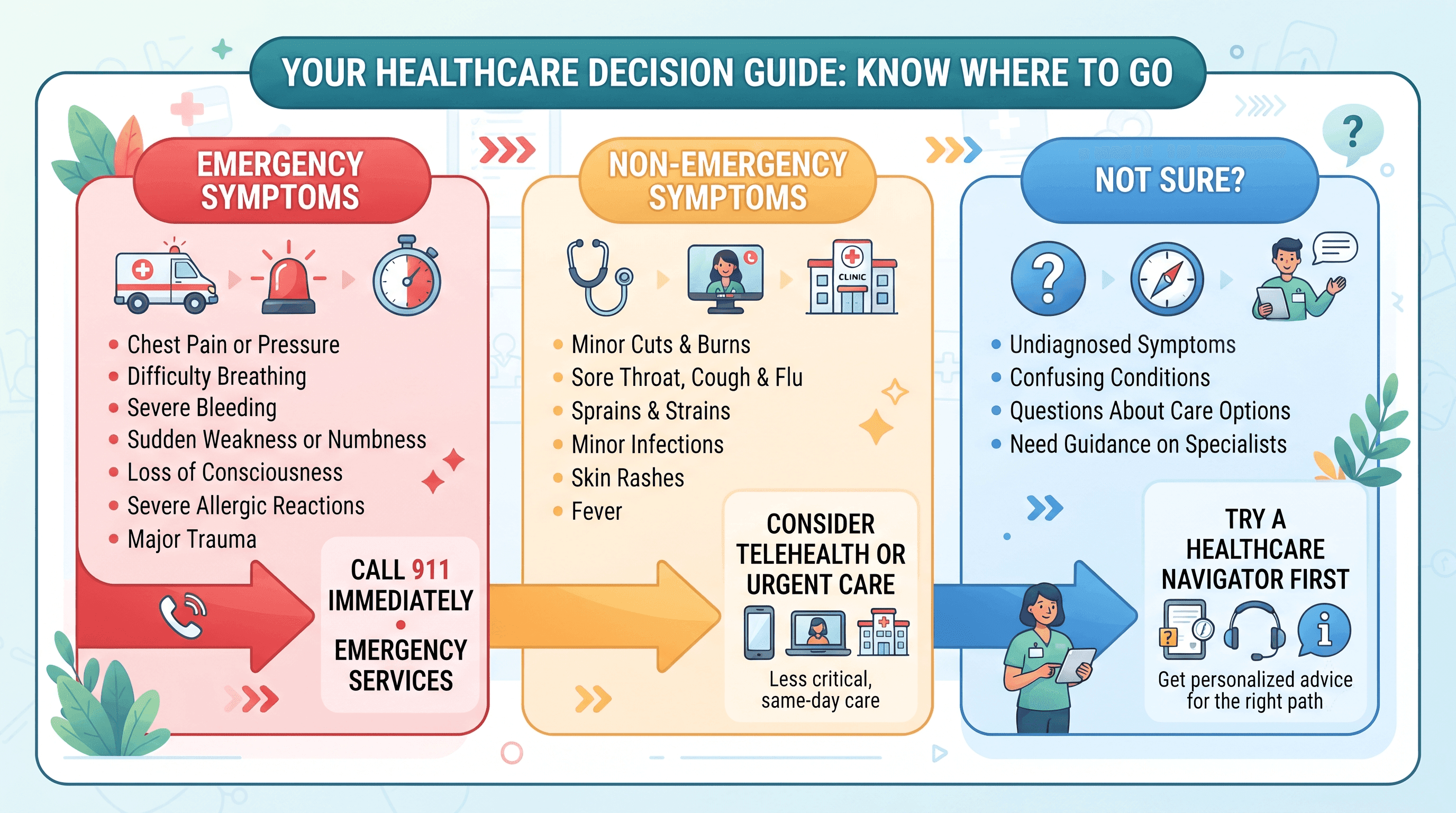
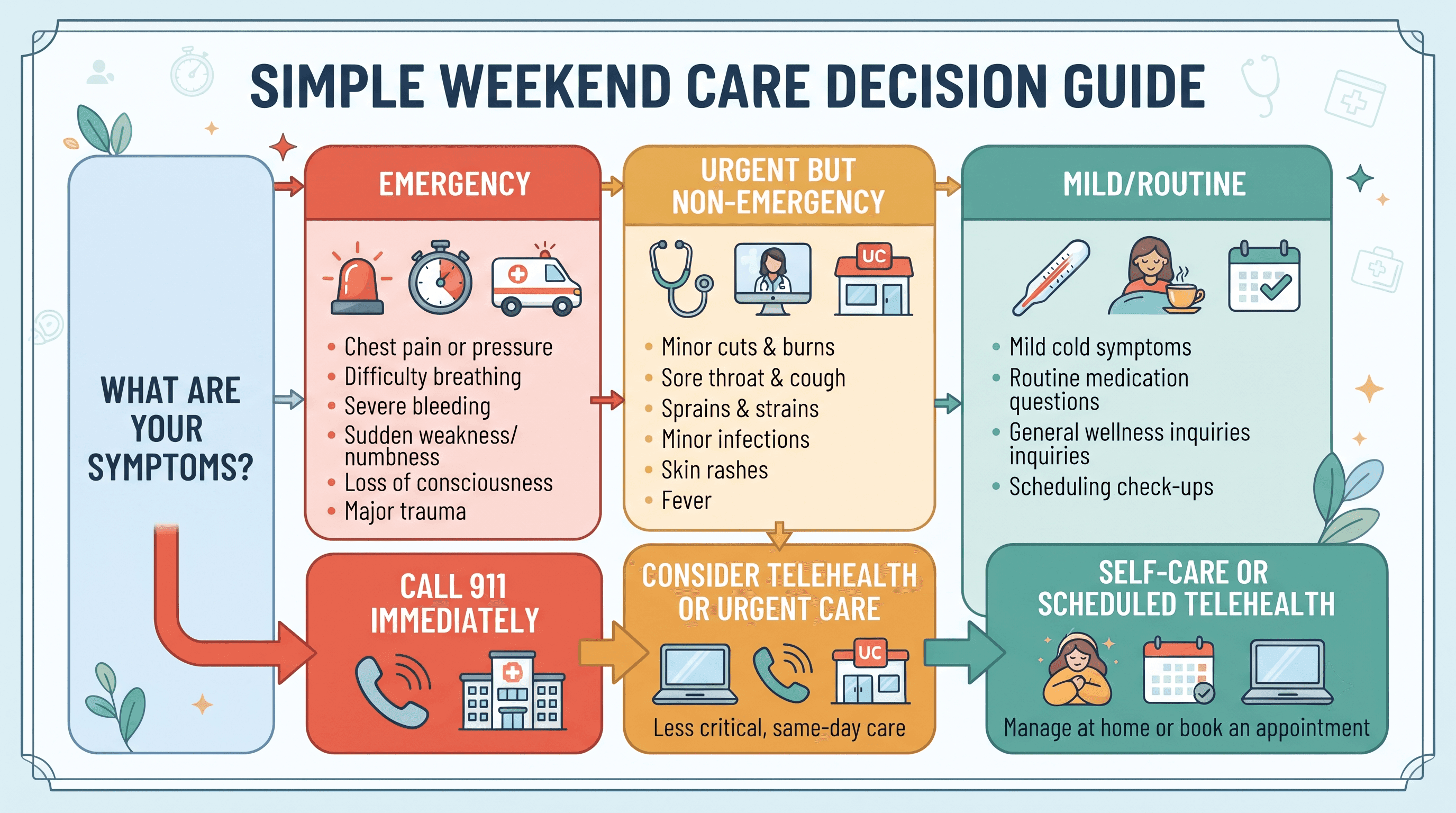
Virtual care is not appropriate for medical emergencies. If you or someone with you is experiencing any of the following, seek emergency care immediately rather than starting a telehealth visit:
- Chest pain
- Signs of stroke, such as sudden weakness, confusion, or slurred speech
- Difficulty breathing
- Severe bleeding
- Loss of consciousness
- A severe allergic reaction
- Suicidal thoughts
If you're unsure whether your symptoms rise to that level, a navigator like Momentary can help you think through next steps, but any of the symptoms above warrants calling 911 or going to the nearest emergency room rather than waiting for an online visit.
Frequently Asked Questions
Can I see a real doctor online on a Sunday? Yes. Platforms like Teladoc and Amwell offer 24/7 on-demand video visits with board-certified physicians, including weekends and holidays. Scheduled platforms like PlushCare also offer weekend appointment slots, though you may need to book a specific time rather than connecting instantly.
Is weekend telehealth more expensive than a weekday visit? Generally, no. Most major platforms, including Amwell, charge the same price regardless of the day or time. Some smaller or niche services may add after-hours fees, so it's worth confirming pricing before you book.
Can telehealth replace urgent care? For many non-emergency issues, such as colds, UTIs, sinus infections, or prescription refills, telehealth can be a reasonable substitute for urgent care. However, telehealth cannot handle conditions requiring imaging, lab work done on-site, or a hands-on physical exam.
Should I use an AI symptom checker before booking a virtual visit? An AI symptom checker or navigator can help you understand whether your situation calls for telehealth, urgent care, or emergency services, which can save you time and money. It should not be used as a substitute for professional medical evaluation.
What should I do if I think I'm having a medical emergency? Call 911 or go to the nearest emergency room immediately. Do not attempt to resolve an emergency through telehealth or a virtual visit.


