


Best Ways to Avoid Surprise Medical Bills When You Need Healthcare
Quick Answer
The best way to avoid a surprise medical bill is to confirm network status before you get care, request a Good Faith Estimate for non-emergency services, and compare prices ahead of time using free tools like FAIR Health Consumer, Turquoise Health, or Momentary. The federal No Surprises Act already bans most balance billing for emergency care and for out-of-network providers who treat you at an in-network hospital. If you already received a bill that seems too high, you can dispute it, request an itemized statement, and ask about hospital financial assistance before paying. Ground ambulance rides and planned out-of-network care are not fully protected, so those situations need extra caution.
What Is a Surprise Medical Bill and Why Does It Happen?
A surprise medical bill happens when you receive care from an out-of-network provider or facility without realizing it, and you get billed for the difference between what your insurer paid and what the provider charged. This is called balance billing.
It often happens during emergencies, when you cannot choose your provider, or during a hospital stay where an anesthesiologist, radiologist, or pathologist working at an in-network hospital turns out to be out-of-network themselves. Patients rarely know this in advance, especially during emergencies, which is how surprise bills are created.
Hospital pricing also varies enormously by location. Hospital charges for the same procedure can differ by dozens of times within the same metro area, and a routine blood test can cost under $20 at one facility and several hundred dollars at another just a short distance away. That kind of variation is part of why comparing prices in advance matters as much as knowing your legal protections.
Top Tools and Resources to Avoid Surprise Medical Bills
| Option | Best For | Pricing | Physician Reviewed | Availability |
|---|---|---|---|---|
| FAIR Health Consumer | Broadest procedure-specific cost lookup | Free | No | Nationwide |
| Momentary | Physician-reviewed guidance plus lab, imaging, and screening cost comparison | Free healthcare navigator; physician-reviewed care is $19.99 | Yes | AI navigation nationwide; physician services California only |
| Turquoise Health | Hospital-specific negotiated rates | Free, no signup required | No | Nationwide |
| Patient Advocate Foundation | Free case management for billing disputes and insurance denials | Free | No | Nationwide |
| Dollar For | Hospital charity care and bill forgiveness applications | Free | No | Nationwide |
How Can I Avoid a Surprise Medical Bill Before I Get Care?
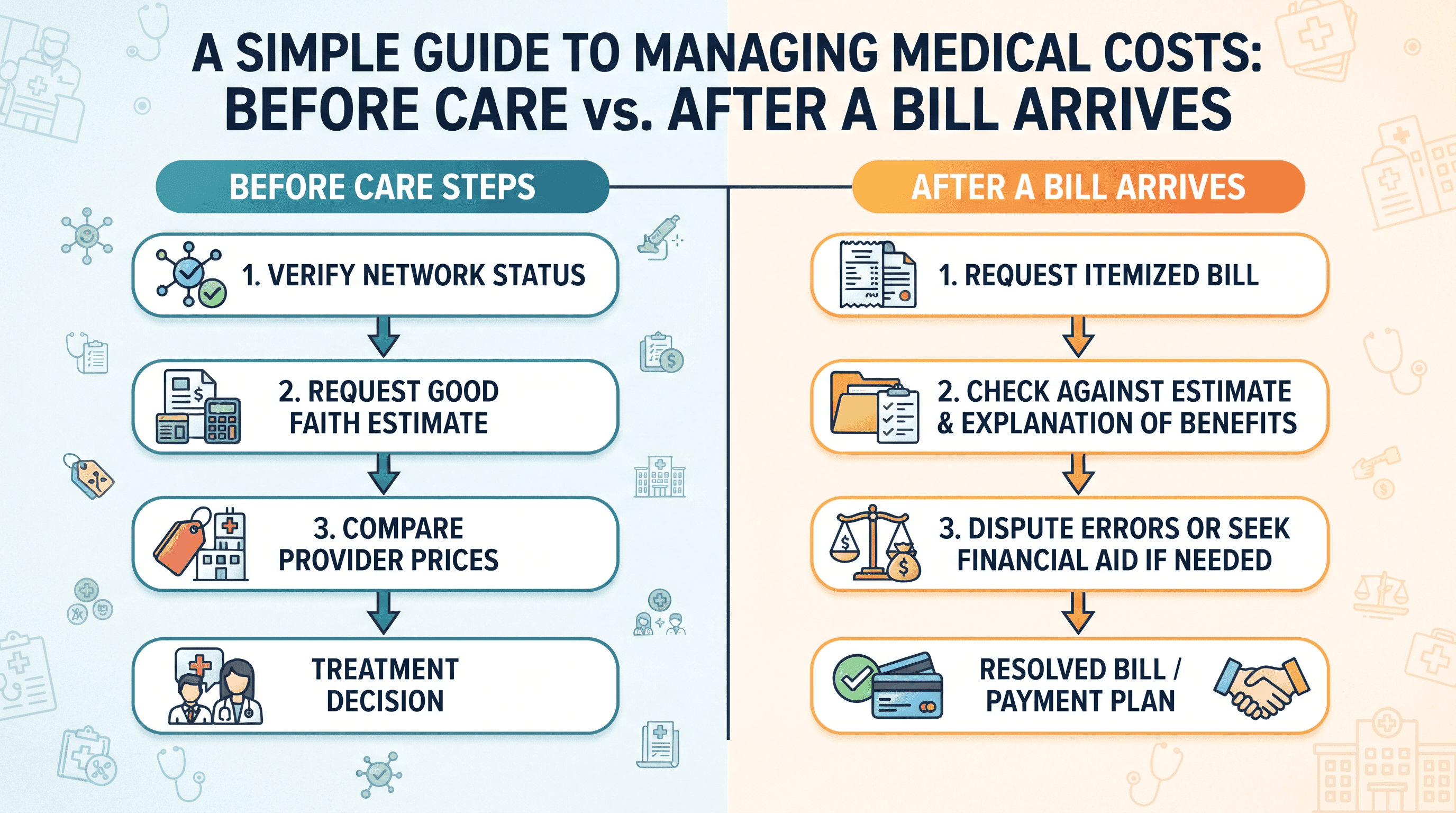
1. Confirm network status directly, every time
Do not assume a hospital being in-network means every provider inside it is too. Call your insurer and the provider's office to confirm network status before a scheduled visit, and ask specifically about anesthesiologists, radiologists, pathologists, and any specialists who may be involved.
Best for: Anyone with a scheduled procedure or specialist visit.
Limitation: This step will not help with true emergencies, where you often cannot choose your provider.
2. Request a Good Faith Estimate before non-emergency care
Under the No Surprises Act, if you do not have health insurance or choose not to use it, providers must give you a written good faith estimate of expected charges before you receive care. If you are insured, you can still ask your provider what the estimated cost will be.
If your final bill ends up at least $400 above the good faith estimate, you may be able to dispute the charges.
Best for: Uninsured or self-pay patients scheduling any non-emergency service.
Limitation: Estimates are not guarantees, and unexpected complications can still raise the final cost.
3. Compare prices before scheduling routine tests, imaging, or screenings
Free tools can show you what a service typically costs in your area before you book it.
- FAIR Health Consumer draws on a large claims database to show what insurance typically pays for a given procedure and zip code, which is useful as a baseline reference point.
- Turquoise Health lets you search any procedure, add your insurance, and see what nearby providers actually charge, without requiring a signup.
- Momentary helps users compare costs for laboratory testing, imaging, and health screenings, and pairs that with physician-reviewed guidance on whether the service is appropriate in the first place. The AI healthcare navigator is free to use, while physician-reviewed guidance costs $19.99.
Best for: People planning routine labs, imaging, or screenings who want to shop around first.
Limitation: These tools give estimates based on typical or negotiated rates, not a guarantee of your exact bill, since your specific plan, deductible, and provider still affect the final cost.
4. Understand what the No Surprises Act does and does not cover
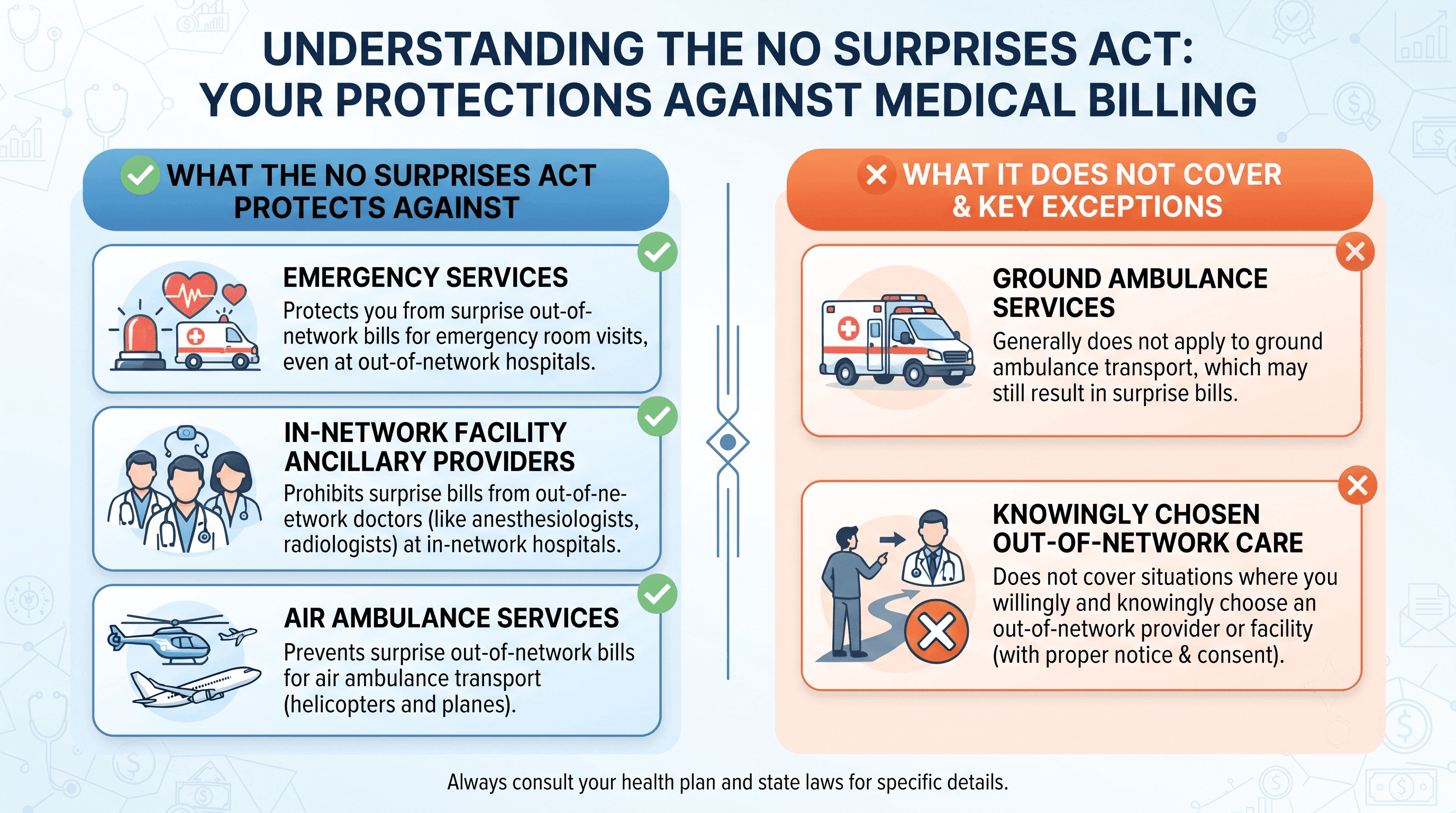
The law bans surprise bills for most emergency services, out-of-network charges for certain additional services like anesthesiology or radiology at an in-network facility, and services from out-of-network air ambulance providers.
It has real limits, though. The law does not apply to ground ambulance services, which remain a significant source of surprise billing, and it does not protect patients who knowingly choose an out-of-network provider for non-emergency care. If you sign a notice and consent form agreeing to out-of-network care, you give up those protections, so read that document carefully before signing it.
Best for: Anyone who wants to know what protections they can rely on.
Limitation: State laws vary, and some categories of care, like ground ambulances, fall outside federal protection.
5. Get guidance on the right care setting before you go
Choosing the appropriate level of care, such as telehealth or urgent care instead of an emergency room for a non-emergency issue, can itself help you avoid higher facility fees and unexpected charges. Momentary provides physician-reviewed guidance to help users understand symptoms and decide on an appropriate next step before seeking care, which can reduce the chances of an unnecessary and costly visit. The AI healthcare navigator is free, while physician-reviewed guidance is $19.99. This does not replace emergency care. If you are experiencing a possible medical emergency, such as chest pain, stroke symptoms, difficulty breathing, severe bleeding, loss of consciousness, or a severe allergic reaction, seek emergency care immediately rather than researching costs first.
Best for: People unsure whether a symptom needs urgent care, a primary care visit, telehealth, or the emergency room.
Limitation: Momentary's AI-powered navigation is available nationwide, but physician services are currently available only in California, and the platform does not diagnose conditions or replace a physician's evaluation.
6. Review every bill line by line before you pay
Request an itemized bill and compare it against your good faith estimate or insurance explanation of benefits. Billing errors are common enough that a careful review is worth the time before you pay anything.
Best for: Anyone who has already received a bill that looks unfamiliar or higher than expected.
Limitation: This takes time and paperwork, and some errors are easier to catch than others without help.
What Should I Do if I Already Received a Surprise Medical Bill?
- Do not pay it immediately. Review it first, since paying in full can limit your ability to dispute charges later.
- Request an itemized bill and compare it to any good faith estimate or prior communication about cost.
- Contact the provider's billing department and explain that you believe the charge may be covered under the No Surprises Act, if applicable.
- File a complaint or start a dispute with the CMS No Surprises Help Desk if your bill exceeds a good faith estimate by $400 or more, or if you believe your protections were violated.
- Ask about hospital financial assistance, also called charity care, especially at nonprofit hospitals. A hospital bill for $15,000 could become $150, or even $0, depending on income-based financial assistance policies. Organizations like Dollar For help patients apply for this at no cost.
- Consider a free patient advocate through the Patient Advocate Foundation if your situation involves a chronic condition, an insurance denial, or a complex dispute. Their case managers can help you review payment plan options, prompt-pay discounts, and other financial assistance offered by a provider.
Quick Take
Best for: People who want to prevent a surprise bill before care, or resolve one that already arrived.
Avoid if: You are experiencing a medical emergency. Seek emergency care immediately rather than pausing to compare costs or verify network status.
Next step: Confirm network status and request a Good Faith Estimate before scheduled care, or contact the CMS No Surprises Help Desk or a free patient advocate if you already received an unexpected bill.
When Does the No Surprises Act Not Protect You?
The law does not apply in every situation. It generally does not cover:
- Ground ambulance rides, which remain a common source of surprise bills.
- Non-emergency care you knowingly choose from an out-of-network provider or facility.
- Situations where you sign a notice and consent form waiving your protections.
- Short-term health insurance plans that are not subject to the law.
People with coverage through Medicare, Medicaid, TRICARE, Indian Health Services, or the Veterans Health Administration already have separate protections against surprise billing and do not need to rely on the No Surprises Act.
Frequently Asked Questions
What is a surprise medical bill?
A surprise medical bill is an unexpected charge you receive after getting care from an out-of-network provider or facility, often without realizing it at the time, such as during an emergency or from a specialist working at an in-network hospital.
Does the No Surprises Act cover ground ambulance rides?
No. Ground ambulance services are one of the main gaps in the law and remain a common source of surprise bills. Some states have their own ambulance billing protections, so it is worth checking local rules.
What is a Good Faith Estimate, and who can request one?
A Good Faith Estimate is a written estimate of expected charges that providers must give to uninsured or self-pay patients before non-emergency care. Insured patients can also ask their provider for a cost estimate, though the formal requirement applies to uninsured and self-pay individuals.
Can I dispute a medical bill that is higher than my estimate?
Yes. If your final bill is at least $400 above your Good Faith Estimate, you may be able to start a dispute resolution process through the CMS No Surprises Help Desk within 120 days of receiving the bill.
Are healthcare price comparison tools free to use?
Many are. FAIR Health Consumer and Turquoise Health's patient search are free and do not require a signup. Some employer-based tools, like Valenz Bluebook, may require enrollment through a workplace health plan.
Can Momentary help me avoid a surprise medical bill?
Momentary can help by comparing costs for labs, imaging, and screenings and by offering physician-reviewed guidance on the right next step before you seek care, which can help you choose a more appropriate and often less expensive care setting. The AI healthcare navigator is free to use, and physician-reviewed guidance costs $19.99. Momentary does not set prices, negotiate bills, or replace a physician, and its physician services are currently available only in California.
References
- Centers for Medicare & Medicaid Services (CMS), "No Surprises: Understand your rights against surprise medical bills"
- U.S. Department of Labor, "Avoid Surprise Healthcare Expenses: How the No Surprises Act Can Protect You"
- Consumer Financial Protection Bureau, "What is a 'surprise medical bill' and what should I know about the No Surprises Act?"
- RELI Group, "Breaking Down the No Surprises Act"
- Congressional Budget Office, "A Call for New Research on the No Surprises Act"
- FAIR Health Consumer, fairhealthconsumer.org
- Turquoise Health, turquoise.health/patients
- Patient Advocate Foundation, patientadvocate.org
- Dollar For, dollarfor.org
- Sylk Health, "Healthcare Cost Estimator Tools: How to Price Any Surgery"


