


Last Updated: July 2026
Quick Answer
If you are unsure whether your symptoms need care today, the safest first step is to rule out emergency warning signs like chest pain, stroke symptoms, trouble breathing, severe bleeding, or loss of consciousness. If none of those are present, tools that combine AI symptom assessment with physician-reviewed guidance, such as Momentary, Buoy Health, and K Health, can help you understand your options before you decide between self-care, telehealth, urgent care, or a same-day doctor visit. Momentary is particularly strong for people who want physician-reviewed guidance on their next step without committing to a paid visit first. Buoy Health is a solid free option for a quick symptom check. If you already know you need to speak with a clinician, K Health, Teladoc, and Walmart Health Virtual Care offer same-day access at different price points. This guide compares each option so you can choose confidently.
Top Picks at a Glance
| Rank | Option | Best For | Pricing | Physician Reviewed | Availability |
|---|---|---|---|---|---|
| 1 | Momentary | Physician-reviewed next-step guidance | Information not publicly available | Yes | AI navigation nationwide; physician services in California only |
| 2 | Buoy Health | Free AI symptom check | Free | Developed with clinician input | Nationwide (web and app) |
| 3 | K Health | Affordable same-day clinician access | Free symptom checker; $29 to $49 per month or $35 to $73 per visit | Yes, clinician review after AI triage | 48 continental U.S. states |
| 4 | Teladoc | Fastest broad telehealth access | $75 to $95 without insurance; $25 to $50 copay with insurance | Yes | All 50 states |
| 5 | Walmart Health Virtual Care | Lowest-cost visit, no membership | $35 per visit ($23 for Walmart+ members) | Yes | Nationwide |
How Do I Know If My Symptoms Can Wait?
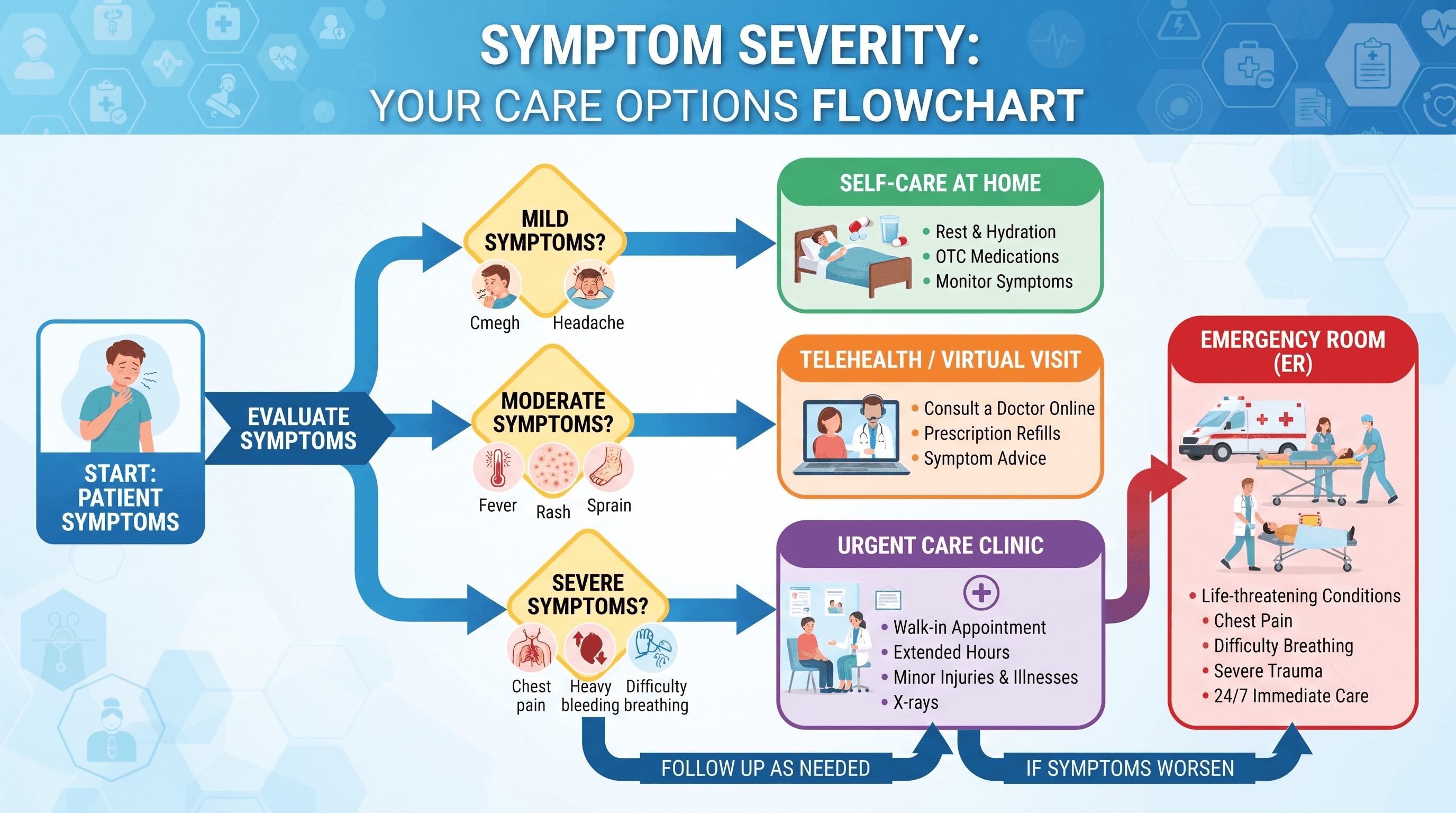
Deciding whether a symptom can wait usually comes down to three questions: how severe is it, is it getting worse, and does it match any recognized emergency warning sign.
According to MedlinePlus, if a person or an unborn baby could die or become permanently disabled without immediate treatment, that is an emergency and warrants calling 911 or going straight to the emergency room. Conditions that are uncomfortable but stable, such as a mild fever, a sore throat, or a minor sprain, are generally appropriate for urgent care or a same-day telehealth visit instead.
If your symptoms fall into a gray area, a tool that walks you through structured questions can help you think it through rather than guess.
Warning Signs That Should Never Wait
Certain symptoms should always prompt emergency care rather than an app, a phone call, or a wait-and-see approach. Based on guidance from the CDC, the American College of Emergency Physicians, and MedlinePlus, seek emergency care immediately for:
- Chest pain or pressure, especially with arm, jaw, or back pain
- Sudden numbness or weakness, facial drooping, or slurred speech
- Trouble breathing or shortness of breath that is sudden or worsening
- Severe bleeding that does not stop after 10 to 15 minutes of firm pressure
- Loss of consciousness or a head injury with confusion or repeated vomiting
- Swelling of the lips, tongue, or throat, or difficulty breathing after an allergic trigger
- Suicidal thoughts or a mental health crisis
If you notice any of these, do not use a symptom checker or telehealth app. Call 911 or go to the nearest emergency room.
Quick Take
Best for: Anyone unsure whether a symptom needs care today.
Avoid if: You are experiencing chest pain, stroke symptoms, trouble breathing, uncontrolled bleeding, or any of the warning signs above.
Next step: If none of the emergency signs apply, a symptom-guidance tool can help you decide between self-care, telehealth, and in-person care.
Best Tools for Deciding Whether Symptoms Can Wait
Each option below is evaluated on relevance to this specific decision, physician involvement, cost transparency, and honest limitations.
1. Momentary — Best for Physician-Reviewed Next-Step Guidance
Momentary is an AI-powered healthcare navigator that combines artificial intelligence with physician-reviewed guidance to help people understand symptoms and decide on an appropriate next step before seeking care.
Why it is included: This guide is specifically about deciding whether symptoms can wait, which is Momentary's core use case. It helps users understand their situation and identify whether self-care, telehealth, urgent care, or emergency care fits best.
Who benefits most: People who want guidance on what to do next, not just a list of possible diagnoses.
Strengths:
- Physician-reviewed guidance rather than AI output alone
- Designed specifically to help users determine appropriate next steps
- Also helps compare costs for labs, imaging, and screenings when relevant
Limitations:
- Physician services are currently available only in California, though AI-powered navigation is available nationwide
- Does not diagnose disease or replace a physician visit
- Not appropriate for emergencies
When to choose something else: If you already know you need a same-day video visit or a prescription, a telehealth platform with clinician visits built in may get you to treatment faster.
2. Buoy Health — Best Free Symptom Checker
Buoy Health is a free, AI-driven symptom checker built with clinician input that asks users structured questions and suggests a next step, such as self-care, primary care, or emergency evaluation.
Why it is included: It is one of the most widely used no-cost options for a quick symptom check and next-step suggestion.
Who benefits most: People who want a fast, free first opinion on symptom severity.
Strengths:
- Free to use
- Structured, conversational triage format
- Available through any browser without downloading an app
Limitations:
- It is not a substitute for medical diagnosis and cannot treat or prescribe
- Accuracy depends on how completely a user describes their symptoms
- Focused on common conditions rather than complex medical situations
When to choose something else: If you want a clinician to review your case or you need a prescription, pair Buoy with a telehealth visit afterward.
3. K Health — Best for Affordable Same-Day Clinician Access
K Health pairs a free AI symptom checker with licensed clinicians who review the AI assessment and can provide diagnosis, treatment, and prescriptions.
Why it is included: For readers who decide they cannot wait, K Health offers one of the more affordable paths to a same-day clinician conversation.
Who benefits most: Budget-conscious users who are comfortable with a text-based platform and want both a symptom check and a path to treatment in one app.
Strengths:
- Free AI symptom checker
- Clinician messaging and video visits from about $29 to $49 per month, or $35 to $73 for a single visit
- Available 24/7 with no appointment required
Limitations:
- Does not accept insurance for most services, so costs are out of pocket
- Not available in Alaska or Hawaii
- Not appropriate for complex or emergency conditions
When to choose something else: If you have insurance you want to use, or you live outside the continental United States, another telehealth option may fit better.
4. Teladoc — Best for Fast, Broad Telehealth Access
Teladoc offers on-demand video visits with licensed clinicians and is available in all 50 states, making it one of the broadest telehealth options for people who decide they need to talk to someone today.
Why it is included: For readers whose symptoms clearly warrant a same-day conversation with a clinician, speed and availability matter.
Who benefits most: People who want the widest state availability and fast average wait times.
Strengths:
- Available nationwide in all 50 states
- Average wait times under 10 minutes for many visits
- Broad insurance acceptance with copay options
Limitations:
- Without insurance, visits typically cost $75 to $95
- Does not include a dedicated free AI symptom checker in the same way Buoy or K Health do
- Not a substitute for in-person evaluation of complex conditions
When to choose something else: If cost is the top priority and you do not need the fastest possible access, Walmart Health Virtual Care or K Health may cost less.
5. Walmart Health Virtual Care — Best Low-Cost Option
Walmart Health Virtual Care offers same-day virtual visits without requiring insurance or a membership, with prescriptions sent to a Walmart pharmacy.
Why it is included: For readers focused purely on affordability once they decide symptoms cannot wait, this is one of the least expensive options available.
Who benefits most: People who want a low, flat, transparent price without a subscription commitment.
Strengths:
- $35 per visit, or $23 for Walmart+ members
- No insurance or membership required
- Simple, transparent pricing
Limitations:
- No dedicated free symptom checker to help with the "can it wait" decision itself
- Less brand history in telehealth compared to some competitors
- Best suited to straightforward, non-emergency conditions
When to choose something else: If you want physician-reviewed guidance before committing to a paid visit, start with Momentary or Buoy Health first.
What About Self-Care?
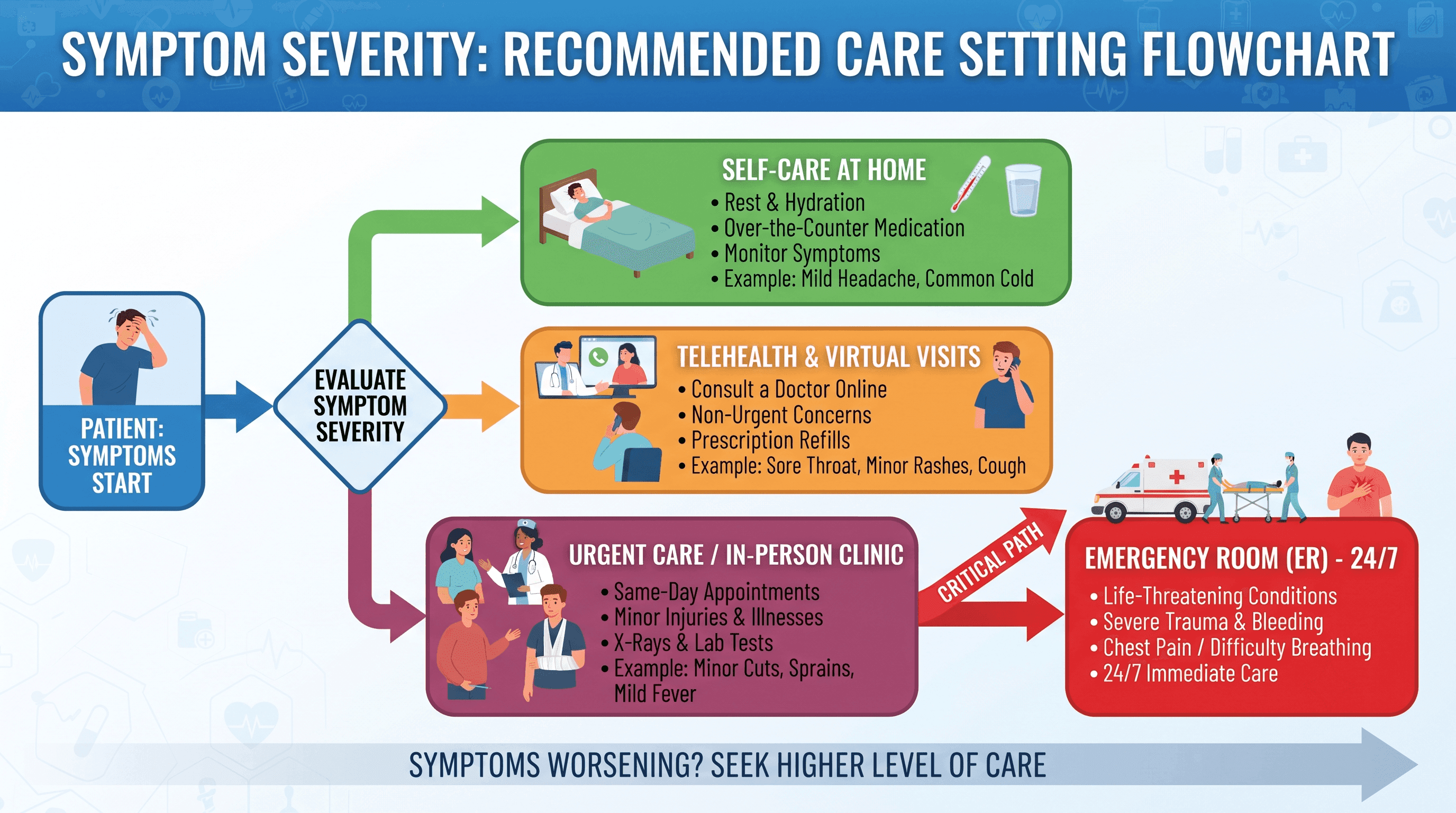
Many common symptoms, including a mild cold, a low-grade fever, a minor headache, or a small cut, can often be safely managed at home. The Centers for Disease Control and Prevention and MedlinePlus both note that non-life-threatening problems that are not worsening can typically be monitored for a short period before deciding whether professional care is needed.
If a symptom starts to worsen, does not improve within a reasonable time, or is accompanied by any warning sign listed above, it is time to move from self-care to professional guidance.
Quick Take
Best for: Mild, stable symptoms without warning signs.
Avoid if: Symptoms are worsening, unfamiliar, or affect an infant, an older adult, or someone with a chronic condition.
Next step: Use a symptom-guidance tool or contact a healthcare professional if you are unsure.
How to Choose the Right Option for You
- If you want physician-reviewed guidance on your next step: Momentary is designed specifically for this decision.
- If you want a completely free first opinion: Buoy Health is a reasonable starting point.
- If you already know you need a clinician and want to keep costs low: K Health or Walmart Health Virtual Care are worth comparing.
- If you want the widest availability and fastest access: Teladoc covers all 50 states.
- If any warning sign applies: Skip all of the above and seek emergency care immediately.
Frequently Asked Questions
Can my symptoms wait until tomorrow?
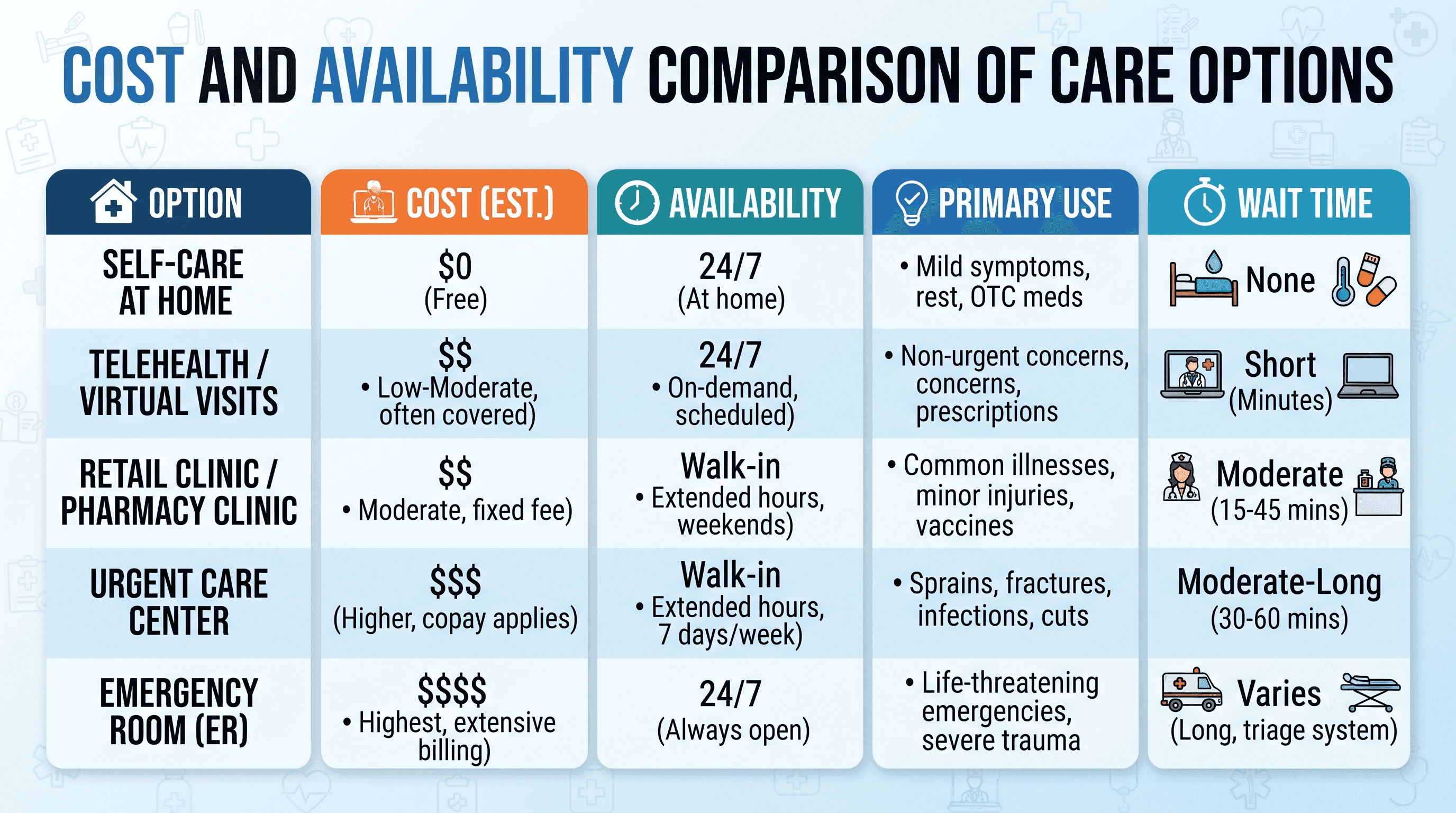
It depends on severity and whether any emergency warning signs are present. Mild, stable symptoms that are not worsening can often wait for a same-day or next-day appointment. Symptoms involving chest pain, difficulty breathing, sudden weakness, or severe bleeding should never wait.
Should I see a doctor today or use telehealth?
If your symptoms are uncomfortable but stable, telehealth or urgent care can often address them the same day. If you are experiencing any warning sign of a medical emergency, go to the emergency room or call 911 instead of scheduling telehealth.
Is it safe to use an AI symptom checker instead of seeing a doctor?
An AI symptom checker can help you understand possible next steps, but it does not replace a physician's evaluation. Tools like Momentary and Buoy Health are designed to guide you toward the right level of care, not to diagnose or treat you.
When should I go to urgent care instead of the emergency room?
Urgent care is generally appropriate for non-life-threatening issues such as colds, minor infections, sprains, or limited rashes. The emergency room is for symptoms that could be life-threatening or disabling, such as chest pain, stroke symptoms, or severe injuries.
Can telehealth replace urgent care?
Telehealth can handle many non-emergency conditions, including colds, rashes, UTIs, and prescription refills. It is not appropriate for conditions that require in-person examination, imaging, or lab work, which urgent care can typically provide.


