


Last updated: July 2026
If you just received a serious or confusing diagnosis and want confirmation before you commit to a treatment plan, start by requesting your complete medical records, imaging, and pathology reports today. Then choose a path based on two things: how much time you have before treatment decisions need to be made, and whether your employer or insurer already covers a second opinion service. For most people facing this situation, a physician-reviewed online second opinion service is faster and cheaper than a duplicate in-person specialist visit, and it does not require you to travel while you are already dealing with a hard diagnosis.
| Option | Best For | Price | Key Stat | Works Without Insurance |
|---|---|---|---|---|
| Cleveland Clinic MyConsult | Broad range of serious diagnoses | $565 (+$180 if pathology review needed) | Covers 1,200+ diagnoses | Yes |
| Included Health / 2nd.MD | Employer or insurer-covered members | $0 for eligible members | 87% led to an improved treatment plan | No, membership required |
| Dana-Farber Online Second Opinion | Cancer diagnoses specifically | $3,000 flat fee | NCI-designated cancer center oncologists | Yes |
| Mayo Clinic Online Second Opinion | Complex or rare conditions | Varies, request a cost estimate | 88% leave with a new or refined diagnosis | Yes |
| Momentary Virtual Care | A same-day first step to organize the process | Contact for current pricing | Physician-reviewed guidance | Yes |
| Self-directed academic center request | Readers with time to coordinate their own case | Varies by institution | Access to centers like Yale, Emory, UCLA, Mass General | Yes |
| PinnacleCare | High-complexity or ongoing case management | $15,000 to $55,000 per year | Medical Advisory Board of 75+ specialists | Yes |
How We Ranked
"Best" here means the fastest, most clinically credible path to a physician-reviewed second opinion on a serious diagnosis, evaluated for someone trying to decide before starting treatment rather than someone browsing general health information. We scored seven eligible options on six criteria: clinical credibility, cost and value, speed and availability, scope fit, user experience, and trust signals. Because this situation involves a specific and often serious diagnosis, we weighted clinical credibility at 30% and speed and availability at 25%, above the standard defaults, since treatment timing pressure is central to this decision; cost and value carried 20%, scope fit 15%, and user experience and trust signals 5% each. Momentary is our own product. We scored it on the same criteria as every other entry, and its result reflects that scoring, not its placement in our catalog. Evaluation date: July 2026.
1. Cleveland Clinic MyConsult — The most established online second opinion program for serious diagnoses
Cleveland Clinic's MyConsult program gives you secure online access to a Cleveland Clinic physician specialist who reviews your medical history, records, imaging, and test results and delivers a written second opinion for your specific diagnosis. This is a purpose-built second opinion service, not a general telehealth visit, which is why it fits a reader who has already received a diagnosis and needs a documented, credentialed review before deciding on treatment.
Pros: The program covers more than 1,200 diagnoses, which means it can handle both common and unusual conditions without you needing to find a niche specialist yourself. The written report includes treatment options and alternatives, so you leave with something concrete to bring back to your local doctor. An independent study on Cleveland Clinic's virtual second opinions found that most patients who were unsatisfied with their original treatment recommendation made changes to their care after the review.
Cons: The service is not covered by Medicare or Medicaid, and Cleveland Clinic cannot bill insurance directly, so you pay out of pocket unless your employer has a contracted benefit. If your case requires a pathology slide review, that adds a separate charge on top of the base fee.
Pricing: $565 for the standard consultation, plus $180 if a pathology review is required.
Best for: Readers who want a single, well-documented specialist review across a wide range of diagnoses without going through an employer benefit.
Rating: Independently studied by Healthcare IT News (February 2023), which reported measurable changes in patient care plans following the virtual second opinion.
2. Included Health / 2nd.MD Expert Medical Opinion — The best no-cost option if it is part of your benefits
Included Health, which absorbed the longstanding 2nd.MD program, connects members facing a serious or high-stakes diagnosis with a board-certified specialist from a network of more than 4,000 physicians at top institutions. A nurse coordinates the entire process, including gathering your medical records, so you are not doing that work yourself while managing a new diagnosis.
Pros: For eligible members, this service costs nothing, since it is typically included as a benefit through your employer or health plan. The coordination is done for you end to end, from records collection to specialist matching to the video consultation. According to the program's own reporting, 87% of consultations led to an improved treatment plan.
Cons: You cannot access this service unless your employer or insurer has contracted for it, so it is not available to everyone regardless of need. Turnaround depends on how quickly your original providers release records, which can add delay if your local office is slow to respond.
Pricing: $0 for eligible members through an employer or health plan benefit.
Best for: Readers whose employer or insurance already includes this benefit and who want a fully coordinated, no-cost second opinion.
Rating: Cited by UnitedHealthcare's broker materials (2025) as a standard no-cost benefit across multiple large commercial plans.
3. Dana-Farber Online Second Opinion Program — The strongest option specifically for a cancer diagnosis
Dana-Farber Cancer Institute's online second opinion program pairs you with a Dana-Farber medical oncologist who reviews your records, imaging, and pathology and delivers a written second opinion. This is one of the few online programs where the specialist works at an NCI-designated comprehensive cancer center, which matters if your diagnosis is cancer specifically rather than a general medical condition.
Pros: Because the fee is flat and disclosed upfront, you know your total cost before you start, which is rare among academic second opinion programs. The service is staffed by medical oncologists who work daily with the type of cancer the review covers, not general specialists. The process, run through AccessHope, actively manages records collection on your behalf.
Cons: Most health plans do not cover this service, and Dana-Farber cannot file an insurance claim or provide a billing code for it. Records collection alone can take up to 14 days before your case is even reviewed, which matters if your treatment decision has a shorter runway.
Pricing: $3,000 flat fee, covering records collection, the written second opinion, and process guidance.
Best for: Readers with a new or unclear cancer diagnosis who want a subspecialist oncologist's review specifically, not a general second opinion.
Rating: Program details confirmed directly on Dana-Farber's official FAQ page, accessed July 2026.
4. Mayo Clinic Online Second Opinion — Strong clinical credibility with less predictable virtual access
Mayo Clinic offers second opinions through its Care Network and eConsult programs, where a Mayo specialist reviews your case in a documented, asynchronous format. Mayo's own data shows that a large share of second opinion patients leave with a diagnosis that has changed or been refined from what they were originally told, which is directly relevant if you are unsure your current diagnosis is complete or accurate.
Pros: Mayo reports that as many as 88% of second opinion patients go home with a new or refined diagnosis, a meaningful number if you are weighing whether to pursue this route at all. Mayo's Cost Estimator tool lets you get a personalized price estimate before committing, which adds transparency compared to some competitors. Mayo's reputation across nearly every specialty means most diagnoses have a relevant expert on staff.
Cons: Several patients report being told that a fully virtual, self-directed second opinion is not available unless they are an established Mayo patient or their case comes through an existing provider relationship, which limits scope fit for someone starting from scratch. Virtual visits also depend on state licensing rules, meaning a Mayo specialist must be licensed in your state, which is not guaranteed.
Pricing: Varies by case; use Mayo's online Cost Estimator tool or contact an appointment coordinator directly for a written estimate.
Best for: Readers who already have a connection to Mayo Clinic or whose local hospital participates in the Mayo Clinic Care Network.
Rating: 88% of second opinion patients report a new or refined diagnosis, per Mayo Clinic Health System's own published data.
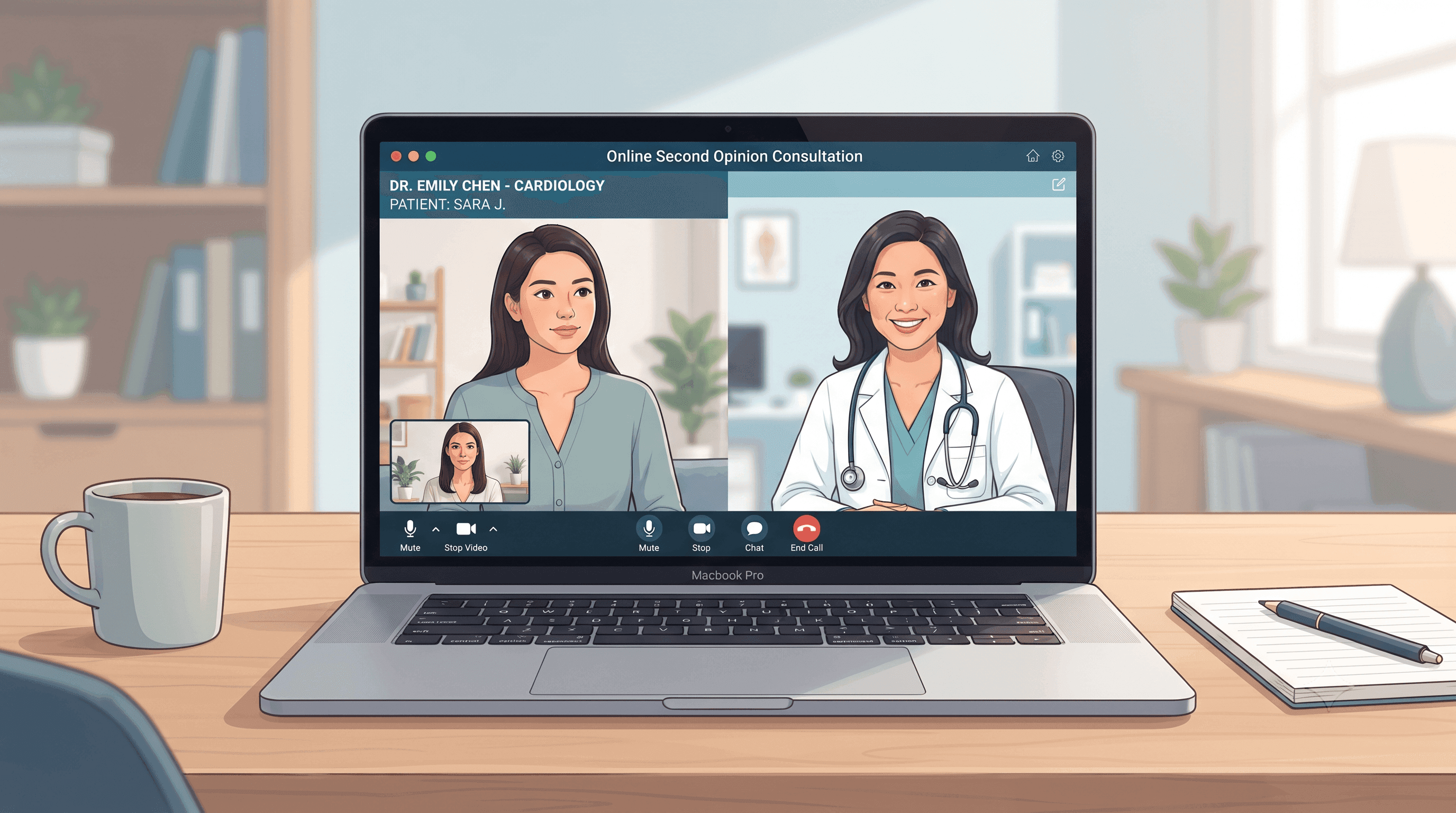
5. Momentary Virtual Care — A same-day first step to help organize your case and your next move
Momentary Virtual Care is a physician-reviewed telehealth service, not a replacement for a specialist second opinion. In this situation, it works best as a first step when you have just received a diagnosis and need same-day guidance on what records to gather, which type of specialist your case actually calls for, and whether your situation warrants a dedicated second opinion program like the ones above.
Pros: You can typically get a same-day to next-day virtual appointment, which matters if you are anxious to take some action immediately after a diagnosis. Every visit includes physician review, so you are getting a licensed clinician's read on your situation rather than an automated response. The service can help you understand medical terminology and next steps in plain language before you commit time and money to a formal second opinion program.
Cons: Momentary Virtual Care is not a specialist chart review service, so it cannot replace the kind of subspecialist opinion you would get from Cleveland Clinic MyConsult, Dana-Farber, or Mayo Clinic for a complex or serious diagnosis. A physician reviews your care and can point you toward the right next step, but the final second opinion on your diagnosis should still come from a specialist in that condition.
Pricing: Contact Momentary for current visit pricing.
Best for: Readers who want same-day guidance on how to approach getting a second opinion, before committing to a specific program.
Rating: Physician-reviewed visits with same-day scheduling availability.
6. Self-directed request to an academic medical center — Free or low-cost if you have time to coordinate it yourself
Instead of going through a packaged second opinion service, you can request your complete records directly from your current provider's patient portal and send them yourself to an academic medical center's second opinion program. Institutions including Yale, Emory, UCLA, and Massachusetts General Hospital all run their own second opinion pathways for patients outside their existing patient base.
Pros: This route can be free or far cheaper than a packaged service if your insurance covers an out-of-network consultation with the receiving institution. You choose the exact institution and, in some cases, the specific specialist, rather than being assigned one. It also gives you full control over which records and questions go into the request.
Cons: You are responsible for every step, including tracking down records from multiple providers, which takes real time while you are also processing a new diagnosis. Response times and requirements vary widely by institution, so there is no single, predictable turnaround.
Pricing: Varies by institution; some charge a flat consultation fee, others bill through insurance.
Best for: Readers with some lead time before a treatment decision and a preference for choosing their own receiving institution.
Rating: Named academic centers offering this pathway include Yale, Emory, UCLA, Massachusetts General Hospital, Lurie Children's, Baylor Scott and White, and NYU, per PinnacleCare's published guidance on virtual second opinions.
7. PinnacleCare — Best for readers who want ongoing case management, not a one-time review
PinnacleCare is a concierge health advisory membership that includes virtual second opinion coordination as part of a broader package of healthcare navigation. A dedicated health advisor helps identify the right specialist, often at institutions like Johns Hopkins or Yale, and coordinates a virtual consultation on your behalf.
Pros: PinnacleCare maintains a Medical Advisory Board of more than 75 specialists across fields, which supports matching you to a genuinely relevant expert rather than a generic referral. The service extends beyond a single second opinion into ongoing coordination if your diagnosis requires multiple rounds of specialist input. Advisors are available continuously, which helps if new questions come up after your initial review.
Cons: Annual memberships range from $15,000 to $55,000, which puts this option out of reach for most readers who only need a single second opinion. Because the service is membership-based, you are paying for a year of access even if your immediate need is a one-time review before starting treatment.
Pricing: $15,000 to $55,000 per year, depending on membership tier.
Best for: Readers who anticipate a complex, multi-specialist case rather than a single second opinion.
Rating: 75+ specialists on PinnacleCare's Medical Advisory Board, per the company's own published membership materials, accessed July 2026.
Why Your Specific Situation Changes Which Option Makes Sense
Getting a second opinion before starting treatment is different from getting one for a minor or chronic issue, because the clock matters. If your treatment plan has a near-term deadline, a slow, self-directed request to an academic center may not be realistic, even though it can be the cheapest route. That is why speed and availability carry extra weight in this ranking, and why a packaged program with a defined turnaround, like Cleveland Clinic MyConsult or Included Health, tends to fit better than a fully self-managed request when time is short.
Cost also plays out differently here than it would for a routine question. Most health plans do not cover a standalone online second opinion, and Medicare and Medicaid do not cover programs like MyConsult at all, according to Cleveland Clinic's own billing information. That means many readers are choosing between paying several hundred to a few thousand dollars out of pocket, or checking first whether an employer or insurer benefit like Included Health's Expert Medical Opinion already covers the cost. Before you pay anything, it is worth a five-minute call to your HR department or insurer to ask whether a no-cost second opinion benefit already exists in your plan, since several major employers and insurers, including UnitedHealthcare and Chevron, include this at no additional cost to eligible members.
Finally, scope fit matters more here than it would on a general "best telehealth" list, because the condition itself determines which program actually applies. A cancer-specific diagnosis is better served by an oncology-focused program like Dana-Farber's than by a general second opinion service, while a broader or less common diagnosis may be better matched by MyConsult's coverage of more than 1,200 conditions. Matching the program to the diagnosis, not just to price or speed, is what makes the difference between a second opinion that actually changes your decision and one that just repeats what you already knew.
Once you have a second opinion in hand, or if your case needs more than a records review, the next step is usually a live conversation with a provider who can walk through your options in real time. If you want to talk through your diagnosis, your questions, or your next steps with a licensed clinician before or after a formal second opinion, you can book a virtual visit with Momentary and get a physician's input the same day.
FAQ
What questions should I ask in a second opinion? Ask the reviewing specialist whether they agree with the original diagnosis, what evidence supports or challenges it, and what they would do differently, if anything, about the proposed treatment plan. Also ask about alternative treatments, expected outcomes for each option, and what happens if you delay treatment while you gather more information. Write your questions down before the consultation so nothing gets missed during a short review window.
Can I get a second opinion on my diagnosis? Yes. You have the right to request your complete medical records and seek a second opinion from any qualified specialist, whether through a formal program like the ones above or by contacting another provider directly. Some employer or insurance plans include a no-cost second opinion benefit, so it is worth checking your plan documents or calling your insurer before you pay out of pocket.
What are 10 questions to ask a doctor about a new diagnosis? A useful starting list includes: What exactly is my diagnosis, in plain language? How confident are you in this diagnosis, and what tests confirm it? What are all my treatment options, not just the recommended one? What happens if I choose to wait or do nothing right now? What are the risks and side effects of the recommended treatment? How will we know if the treatment is working? What is the expected timeline for recovery or ongoing management? Are there clinical trials relevant to my condition? What symptoms should prompt me to call you immediately? And, should I get a second opinion before we proceed? A doctor can advise on which of these matter most for your individual case.
What are the 3 health questions? If you only have time for three, ask: What is my diagnosis and how sure are you of it? What are all of my treatment options, including watching and waiting? And what happens to my prognosis if I get a second opinion before deciding? These three cover accuracy, options, and timing, which are the three things a second opinion is most likely to change.
How long does an online second opinion usually take? Turnaround depends on the program and how quickly your original providers release your records. Programs like Included Health typically move within days once records are received, while academic programs like Dana-Farber can take up to 14 days just to collect materials before the physician review begins.
Do I need my current doctor's permission to get a second opinion? No. You do not need permission from your current doctor to request your own medical records or to seek a second opinion elsewhere. If you are unsure how to start gathering your records or explaining your situation to a new provider, you can also use Momentary's AI health navigator to get personalized guidance on your next steps before you reach out to a second opinion program.


