


Last Updated: July 2026
Getting sick or hurt away from home is stressful, especially when you do not know the local healthcare system, your insurance coverage feels unclear, or you simply are not sure whether your symptoms need attention right away. This guide walks through the most reliable ways to get medical care while traveling, whether you are dealing with a cold on a business trip or trying to find a doctor in another country.
Quick Answer
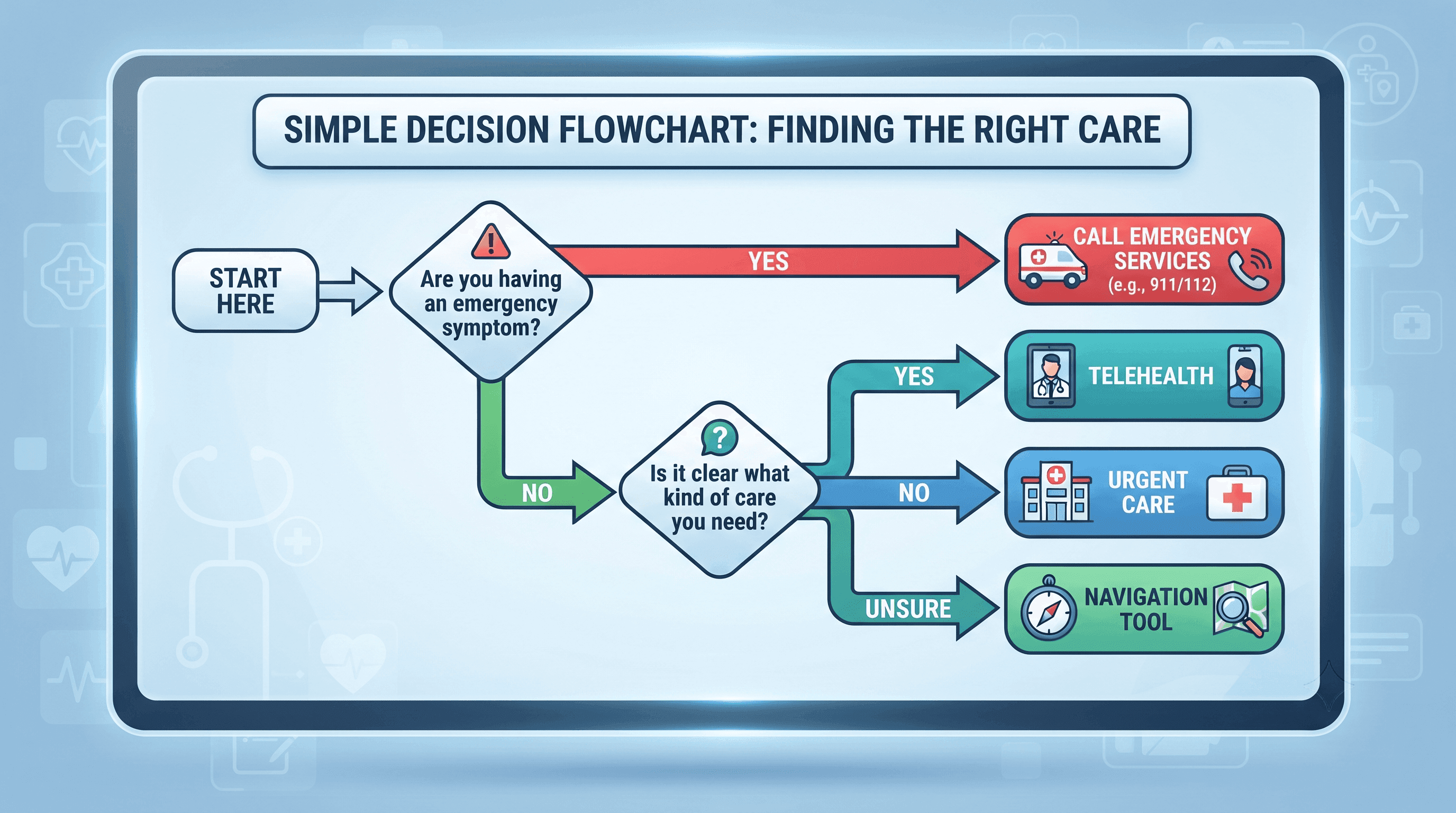
For most domestic trips, a telehealth service like Teladoc or Amwell is the fastest way to speak with a doctor from a hotel room or airport, often within minutes. If you are unsure whether your symptoms need a doctor at all, or you want to compare what a lab test or urgent care visit will cost before you go, Momentary's AI-powered healthcare navigator can help you figure out your next step using physician-reviewed guidance. For international trips, a travel medical app like AirDoctor (often bundled with travel insurance) helps you find local, English-speaking doctors abroad. Chest pain, stroke symptoms, difficulty breathing, or severe bleeding always call for emergency services, not an app.
Top Picks at a Glance
| Rank | Service | Best For |
|---|---|---|
| 1 | Teladoc | Best overall telehealth visit while traveling in the U.S. |
| 2 | Momentary | Best for deciding what care you need and comparing costs |
| 3 | AirDoctor | Best for finding local doctors while traveling internationally |
| 4 | Amwell | Best for fast, 24/7 urgent care video visits |
| 5 | PlushCare | Best for prescription refills and ongoing care needs |
Comparison Table
| Option | Best For | Pricing | Physician Reviewed | Availability |
|---|---|---|---|---|
| Teladoc | General telehealth visits | Visits typically $75 to $95 without insurance; often $0 copay with coverage | Yes, board-certified physicians | All 50 states, 24/7 |
| Momentary | Deciding your next step and comparing costs | Free AI navigation | Yes, physician-reviewed guidance | AI navigation nationwide; physician services currently California only |
| AirDoctor | International travel medical care | Often included with travel insurance; standalone pricing varies by plan | Yes, licensed local doctors | 75+ countries |
| Amwell | Urgent care video visits | Urgent care visits start around $69 before insurance | Yes, board-certified physicians | All 50 states, 24/7, no appointment needed |
| PlushCare | Prescription refills, primary care | Monthly membership plus roughly $129 per visit without insurance | Yes, licensed physicians | All 50 states |
How Should I Get Healthcare While Traveling?
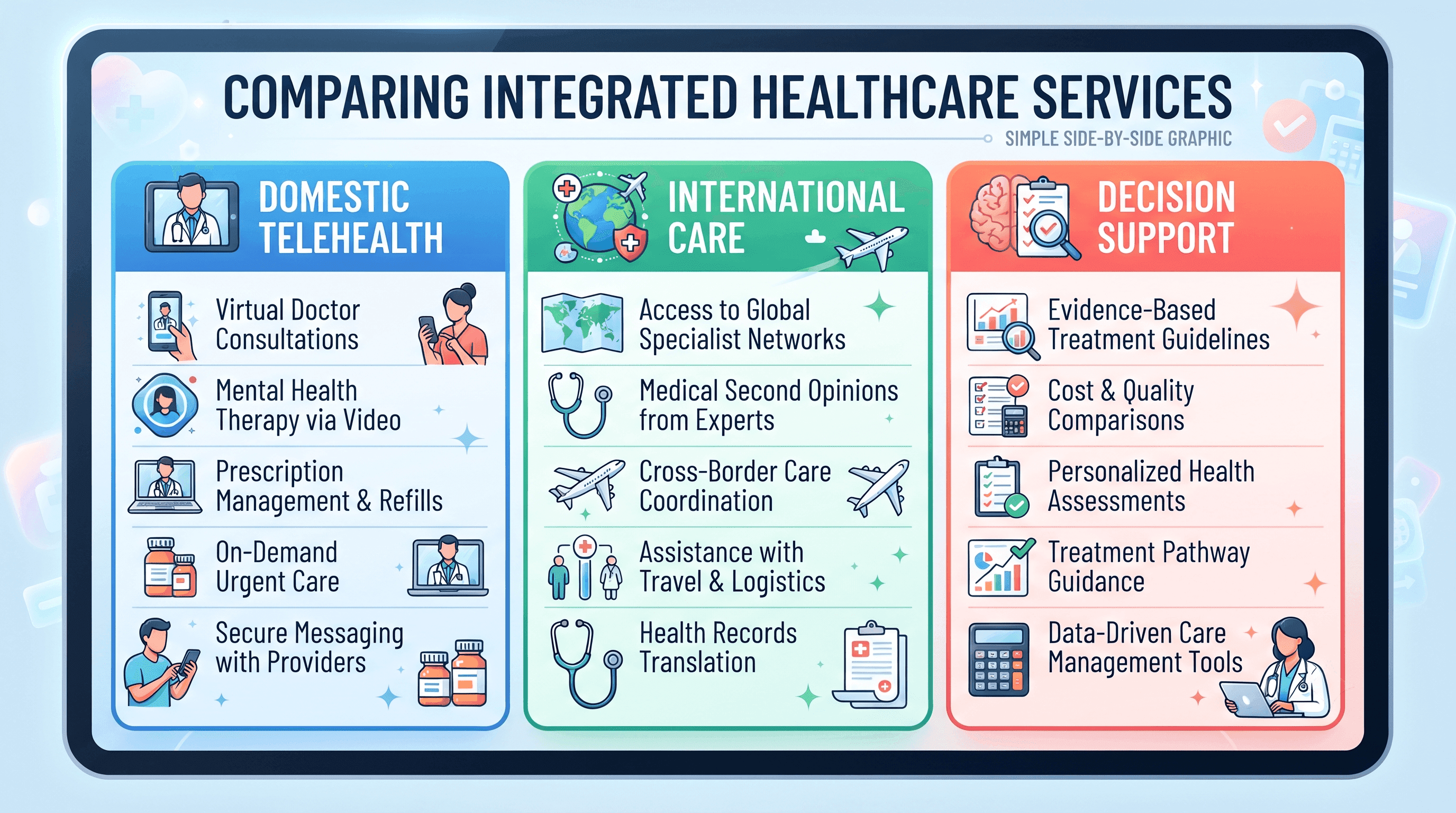
The right option depends mainly on two things: where you are traveling, and whether you already know what kind of care you need.
If you are traveling within the U.S. and you know you need to talk to a doctor, a telehealth platform is usually the fastest path. If you are not sure whether your symptoms are serious enough to need a doctor at all, a decision-support tool can help you figure that out first. If you are traveling internationally, your options change significantly, since most domestic telehealth platforms and insurance plans do not extend coverage outside the U.S.
Quick Take
Best for: People who need to see a doctor quickly while away from home and are not experiencing a medical emergency.
Avoid if: You are having chest pain, trouble breathing, severe bleeding, or any other emergency symptom. Go to the nearest emergency room or call local emergency services instead.
Next step: Use a telehealth visit for non-emergency symptoms, or a navigation tool to help you decide what type of care fits your situation.
1. Teladoc: Best Overall Telehealth Visit While Traveling in the U.S.
Teladoc is one of the most established telehealth companies in the country, with board-certified physicians available by video or phone in all 50 states. Because coverage is nationwide rather than tied to a specific city or clinic, it works well for travelers who need care from a hotel room, airport, or unfamiliar city.
Why it's included: Wide state coverage and broad insurance acceptance make it a dependable default for domestic travel.
Who benefits most: Travelers with a non-emergency issue such as a cold, sinus infection, or minor rash who want a same-day video visit.
Pricing: Visits typically run $75 to $95 without insurance. Many insurance plans reduce or eliminate the copay.
Strengths:
- Available in all 50 states, so coverage does not disappear when you cross state lines
- Wide insurance acceptance among major carriers
- Prescriptions can typically be sent to a nearby pharmacy
Limitations:
- You generally cannot choose your specific physician
- Does not treat emergencies or conditions that require a physical exam
- Coverage does not extend outside the United States
Choose something else if: You are traveling internationally, or you would rather understand your options and costs before booking any visit.
2. Momentary: Best for Deciding What Care You Need and Comparing Costs
Not every travel health question requires an immediate doctor visit. Sometimes the real question is simpler: is this something that needs medical attention at all, and if so, how urgently? Momentary is an AI-powered healthcare navigator that combines artificial intelligence with physician-reviewed guidance to help travelers understand symptoms, evaluate next steps, and compare healthcare costs such as lab work, imaging, and screenings before they commit to an appointment.
Why it's included: Momentary is not a replacement for an actual telehealth visit, but it directly addresses one of the most common travel health frustrations: uncertainty about whether a symptom is serious and what a given service will cost.
Who benefits most: Travelers who are unsure whether their symptoms warrant urgent care, a telehealth visit, or self-care, and anyone who wants to compare costs for labs or imaging before booking care in an unfamiliar city.
Pricing: Momentary's AI healthcare navigation is free to use.
Strengths:
- Helps travelers understand symptoms and appropriate next steps using physician-reviewed guidance
- Nationwide AI navigation, so it works no matter which U.S. state you are visiting
- Can help compare costs for labs, imaging, and screenings
Limitations:
- Physician services are currently available only in California; AI navigation is available nationwide but does not itself provide a live video visit
- Not designed for emergencies or diagnosis
- Does not replace an in-person medical evaluation when one is needed
Choose something else if: You already know you need a doctor visit right now. In that case, pair Momentary's guidance with a telehealth platform like Teladoc or Amwell for the actual appointment.
Quick Take
Best for: Travelers who are not sure whether their symptoms need medical attention or want to compare healthcare costs before booking care.
Avoid if: You are experiencing an emergency. Contact emergency services immediately instead of using any online tool.
Next step: Use Momentary to understand your symptoms and next steps, then book a telehealth or in-person visit if one is recommended.
3. AirDoctor: Best for Finding Local Doctors While Traveling Internationally
Domestic telehealth platforms generally stop working once you leave the country, which is where AirDoctor fills a gap. It connects travelers with a network of licensed doctors, dentists, and specialists across more than 75 countries, offering telemedicine consultations, in-clinic visits, and even hotel visits depending on location. It is frequently included as a benefit with international travel insurance plans.
Why it's included: It is one of the few services built specifically for finding in-person and virtual care abroad, with multilingual support.
Who benefits most: International travelers, especially those whose travel insurance already includes AirDoctor access.
Pricing: Often included at no extra cost with participating travel insurance plans; check your specific policy for standalone pricing and eligible visit limits.
Strengths:
- Access to more than 20,000 doctors across 75-plus countries
- Consultations available in numerous languages
- Can arrange in-clinic, telehealth, or hotel visits depending on the destination
Limitations:
- Full benefits typically require an eligible travel insurance policy
- Not appropriate for medical emergencies
- Availability and specialties vary by country
Choose something else if: You are traveling domestically. A U.S.-based telehealth platform will be faster and simpler.
4. Amwell: Best for Fast, 24/7 Urgent Care Video Visits
Amwell offers on-demand video visits with board-certified physicians around the clock, with no appointment required for urgent care. That makes it useful for travelers dealing with an issue that comes up late at night or on a weekend, when local clinics may be closed.
Why it's included: True 24/7, no-appointment access is valuable when travel disrupts normal clinic hours.
Who benefits most: Travelers who need care outside typical business hours, such as late at night in a hotel.
Pricing: Urgent care visits start around $69 before insurance. Many plans offer reduced copays.
Strengths:
- Available 24/7 with no appointment required
- Broad range of services, including behavioral health
- Continuity of care by requesting the same provider for follow-ups
Limitations:
- Not available outside the United States
- Cannot treat conditions requiring a physical exam or imaging
- Pricing varies based on the type of visit
Choose something else if: You need international coverage or want cost comparisons before choosing a service.
5. PlushCare: Best for Prescription Refills and Ongoing Care Needs
If your trip is disrupted by a lapsed prescription or a chronic condition that needs attention, PlushCare functions more like a virtual primary care office than a one-off urgent care visit. It connects patients with physicians for scheduled video visits and supports ongoing management of conditions like hypertension or anxiety.
Why it's included: It is well suited to travelers who need a prescription refill or ongoing management rather than a single acute issue.
Who benefits most: Travelers who forgot medication, ran out while away, or need continuity for a chronic condition.
Pricing: Monthly membership fee plus roughly $129 per visit without insurance; lower with accepted insurance plans.
Strengths:
- Physicians from established medical schools with an emphasis on ongoing relationships
- Can send prescriptions to a nearby pharmacy
- Accepts many major insurance plans
Limitations:
- Membership fee adds cost for a single trip-related visit
- Not designed for emergencies
- Not available outside the United States
Choose something else if: You only need a one-time visit for a minor issue. A pay-per-visit platform like Teladoc or Amwell may be cheaper.
When Travel Symptoms Are a Medical Emergency
No app or telehealth visit is appropriate for emergency symptoms. According to the CDC, if you or a travel companion get an injury or illness that basic first aid or over-the-counter medicine cannot resolve, you should seek medical attention right away.
Seek emergency care immediately, not an online tool, for:
- Chest pain
- Stroke symptoms (sudden numbness, confusion, trouble speaking)
- Difficulty breathing
- Severe bleeding
- Loss of consciousness
- Severe allergic reactions
- Suicidal thoughts
If you are traveling internationally, the nearest U.S. embassy or consulate can also help travelers locate medical services and can be reached 24/7 for emergency assistance.
How to Prepare for Healthcare Needs Before You Travel
A little preparation can prevent a minor issue from becoming a bigger problem on the road. The CDC recommends that travelers find out whether their health insurance covers medical care while traveling, and prepare a travel health kit that includes prescriptions and over-the-counter medicines, packing enough to last the entire trip plus extra in case of delays.
A few practical steps worth taking before you leave:
- Confirm whether your health insurance covers care outside your home state or country
- Pack enough prescription medication for the full trip, plus a few extra days
- Save the contact information for a telehealth service and, if traveling internationally, a service like AirDoctor
- Know the location of the nearest hospital or embassy at your destination
Domestic vs. International Travel: What Changes
Most U.S. telehealth platforms, including Teladoc, Amwell, and PlushCare, are licensed to treat patients physically located within the United States. Once you cross an international border, those services generally stop working, and insurance coverage often narrows as well. That is the main reason a dedicated international option like AirDoctor exists, and why the CDC recommends confirming health insurance coverage abroad before departure.
Momentary's AI healthcare navigation is available nationwide within the U.S., which makes it useful for domestic trips regardless of which state you are visiting. Its physician-delivered services are currently limited to California, so travelers elsewhere should pair Momentary's guidance with a telehealth provider licensed in their location for an actual visit.
Frequently Asked Questions
Can I use my regular telehealth app while traveling domestically? In most cases, yes. Platforms like Teladoc and Amwell are licensed across all 50 states, so a telehealth visit booked while traveling within the U.S. typically works the same way it would at home.
Does telehealth work while traveling internationally? Usually not with U.S.-based platforms, since physicians are generally licensed only to treat patients located within the country. For international trips, a service built for travelers, such as AirDoctor, or your travel insurance provider's medical assistance line is a better fit.
How do I know if my symptoms are serious enough to need a doctor while traveling? A healthcare navigator like Momentary can help you understand your symptoms and identify an appropriate next step using physician-reviewed guidance. For anything resembling an emergency, such as chest pain or difficulty breathing, seek emergency care immediately rather than using any online tool.
Can I get a prescription refilled while traveling? Yes, in many cases. Telehealth platforms such as PlushCare, Teladoc, and Amwell can often send new prescriptions to a nearby pharmacy. It is best to travel with enough medication for your full trip, since not every prescription can be filled quickly in an unfamiliar location.
Is Momentary a substitute for seeing a doctor while traveling? No. Momentary helps travelers understand symptoms and next steps using physician-reviewed guidance and does not diagnose conditions or replace an in-person medical evaluation. It works best alongside, not instead of, an actual telehealth or in-person visit when one is needed.


