


Last Updated: July 2026
Best Ways to See a Specialist Online When You Need Expert Medical Advice
Quick Answer
The fastest way to see a specialist online usually depends on why you need one. If you have insurance and want a referral, a telehealth primary care visit through a platform like PlushCare or Teladoc can connect you with a specialist in your network, often within a week or two. If you already have a diagnosis and want an expert opinion from a nationally recognized specialist, a second opinion service like 2nd.MD can arrange a video consultation, typically within days. For specific fields like dermatology or psychiatry, dedicated platforms such as DermatologistOnCall or Talkiatry connect you directly with board certified specialists. Before booking anything, a healthcare navigator like Momentary can help you understand whether a specialist visit is actually the right next step and what it might cost.
Quick Take
Best for: People who want to see a medical specialist without waiting weeks or months for an in person appointment.
Avoid if: You are experiencing a medical emergency, such as chest pain, difficulty breathing, or stroke symptoms. Call 911 or go to the nearest emergency room instead.
Next step: Identify whether you need a referral, a second opinion, or a specific specialty (like dermatology or psychiatry), then match that need to the right platform below.
Top Picks at a Glance
| Rank | Platform | Best For |
|---|---|---|
| 1 | Teladoc | Best overall for broad specialist access |
| 2 | 2nd.MD | Best for expert second opinions |
| 3 | Momentary | Best for deciding if you need a specialist and comparing costs first |
| 4 | PlushCare | Best for a primary care referral to a specialist |
| 5 | DermatologistOnCall | Best for online dermatology |
| 6 | Talkiatry / Brightside Health | Best for online psychiatry |
Comparison Table
| Option | Best For | Pricing | Physician Reviewed | Availability |
|---|---|---|---|---|
| Teladoc | Broad specialist access, multi-specialty network | Around $75 to $95 without insurance; copay varies by plan | Yes, board certified physicians | All 50 states |
| 2nd.MD | Second opinions from top specialists | Around $750 for a self-pay virtual second opinion; often free through an employer benefit | Yes, nationally recognized specialists | Nationwide |
| Momentary | Deciding whether a specialist is needed and comparing costs | Information not publicly available | Yes, physician-reviewed guidance | AI navigation nationwide; physician services currently California only |
| PlushCare | Referral to an in-network specialist through primary care | $129 first visit, $99 follow-up; membership lowers cost to $49 to $75 | Yes, MD and DO physicians | All 50 states and DC |
| DermatologistOnCall | Online dermatology without an appointment | $75 per consultation, no insurance accepted | Yes, board certified dermatologists | Nationwide |
| Talkiatry | Online psychiatry with insurance | Often a $10 to $50 copay with insurance; cash pay not offered | Yes, board certified psychiatrists | 45 states |
Pricing reflects rates published by each company as of this writing and can change. Always confirm current pricing and insurance acceptance directly with the provider before booking.
How to Get Medical Advice Online From a Specialist
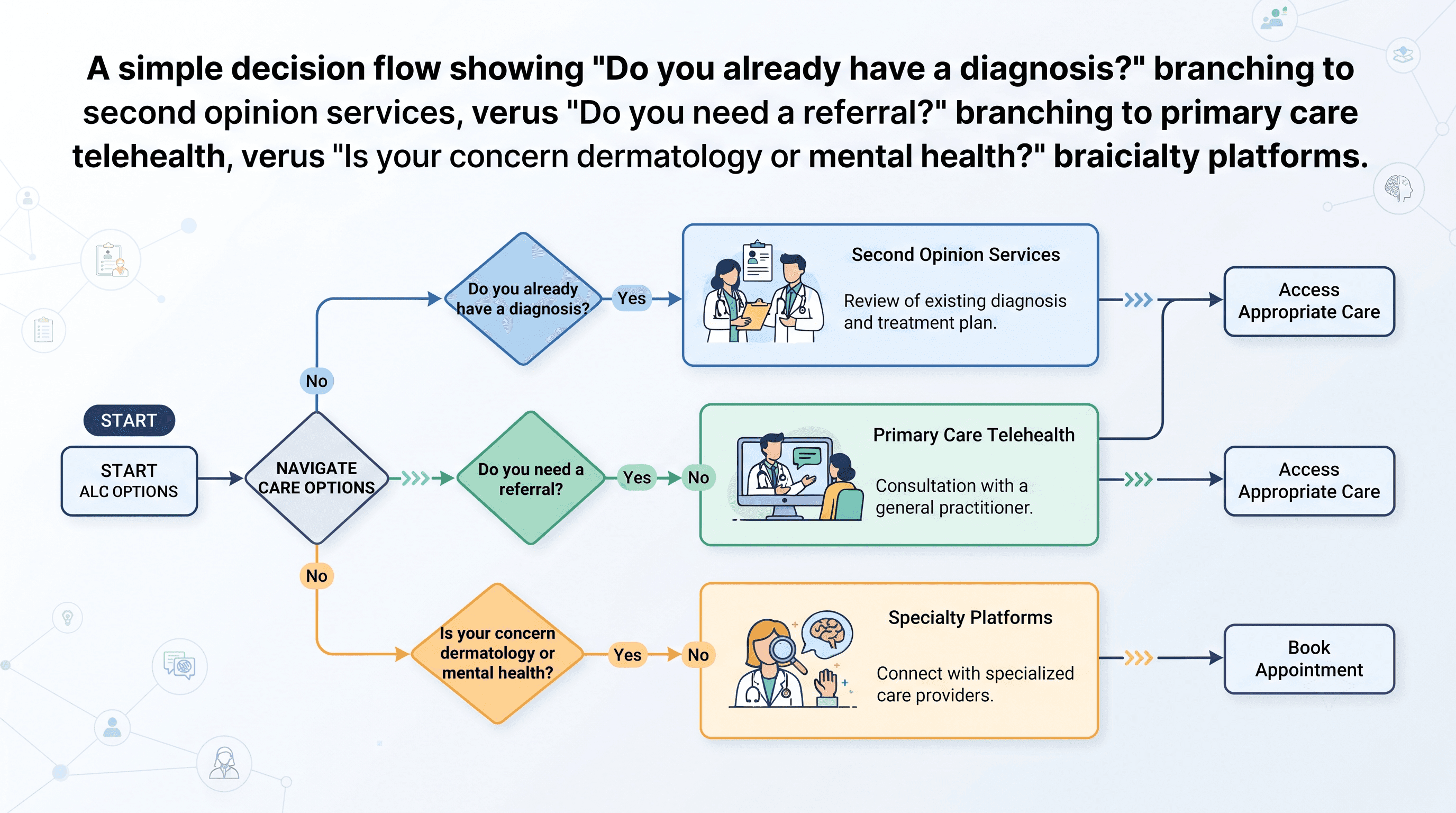
Before comparing platforms, it helps to know what kind of specialist visit you actually need. There are three common paths.
A referral through your existing care. If your primary care doctor or a telehealth primary care provider identifies a problem that needs specialized attention, they can refer you to an in-network specialist. This is usually the most affordable route if you have insurance.
A direct-pay second opinion. If you already have a diagnosis or treatment plan and want confirmation from an expert, second opinion services connect you with nationally recognized specialists, often without a referral.
A specialty-specific telehealth visit. For fields like dermatology or psychiatry, some conditions can be evaluated and treated entirely online, without needing an in-person specialist at all.
Understanding which category applies to your situation makes it much easier to choose the right platform.
The Best Ways to See a Specialist Online
1. Teladoc: Best Overall for Broad Specialist Access
Teladoc is one of the largest telehealth networks in the United States, with physicians available in all 50 states across a wide range of specialties. It works with many insurance plans and typically offers appointments within a week for specialty consultations.
Strengths
- Wide insurance acceptance and a large multi-specialty physician network
- Available in all 50 states
- Integrated behavioral health and chronic condition support
Limitations
- Visit quality can vary depending on the assigned physician
- Cost without insurance is mid-range compared to other platforms
- Cannot prescribe most controlled substances
Why it's included: Teladoc offers one of the broadest combinations of specialty coverage and insurance acceptance, making it a realistic first stop for most people who need a specialist and don't already have one lined up.
2. 2nd.MD: Best for Expert Second Opinions
2nd.MD connects patients with nationally recognized specialists for a second opinion on a diagnosis, treatment plan, or imaging results. A nurse coordinator gathers medical records and matches you with a relevant expert, and consultations happen by video or phone.
Strengths
- Access to nationally recognized subspecialists, not just general practitioners
- No referral required
- Coordinator handles medical records so you don't have to
Limitations
- A self-pay consultation costs around $750, which is expensive without an employer or health plan benefit
- Not designed for new symptoms or urgent concerns, only for reviewing an existing diagnosis or plan
- No follow-up conversation with the specialist after the initial consultation
Why it's included: For someone who already has a diagnosis and wants confidence in the plan before proceeding, this is one of the few services built specifically around specialist-level second opinions.
3. Momentary: Best for Deciding If You Need a Specialist and Comparing Costs
Momentary is an AI-powered healthcare navigator that helps you understand your symptoms and figure out the most appropriate next step before you book anything. It provides physician-reviewed guidance nationwide and can help you compare the cost of labs, imaging, or screenings a specialist might order.
Momentary does not connect you directly with a specialist for a live video visit. It's most useful as the step before you choose one of the platforms above, particularly if you're not yet sure whether your situation calls for a specialist at all, or if cost is a major factor in your decision.
Strengths
- Helps determine whether a specialist visit, urgent care, or self-care is the more appropriate next step
- Physician-reviewed guidance available nationwide
- Can help compare the cost of related labs, imaging, or screenings
Limitations
- Does not provide live video visits with specialists
- Physician services are currently available only in California
- Does not diagnose conditions or replace an in-person medical evaluation
Why it's included: Momentary's strength is decision support and cost transparency, not specialist care delivery itself. For readers unsure whether they need a specialist in the first place, or who want to understand costs before committing to a second opinion service or referral, it's a useful first step rather than the final destination.
4. PlushCare: Best for a Primary Care Referral to a Specialist
PlushCare is a telehealth primary care platform that can evaluate your symptoms, order labs through Quest or LabCorp, and refer you to an in-network specialist when your situation calls for it. It's in-network with many major insurance plans.
Strengths
- Same-day or next-day appointments in most cases
- Can order labs and interpret results before deciding whether a specialist referral is needed
- Accepts many major insurance plans
Limitations
- Physicians cannot perform physical exams, so hands-on evaluation still requires in-person care
- A monthly membership fee applies for the lowest visit pricing
- The referral itself doesn't guarantee a fast specialist appointment, since that depends on the receiving specialist's availability
Why it's included: For readers with insurance who want the traditional referral pathway but don't want to wait for an in-person primary care appointment, PlushCare shortens the first step significantly.
5. DermatologistOnCall: Best for Online Dermatology
For skin, hair, and nail concerns, DermatologistOnCall connects patients with board certified dermatologists through a message-based, photo-driven visit. No appointment is required, and most patients hear back within 24 hours.
Strengths
- Direct access to a board certified dermatologist without a referral
- No appointment scheduling required
- 30 day follow-up messaging included with each visit
Limitations
- Does not accept insurance
- Response times can occasionally stretch up to three business days
- Conditions requiring a biopsy or in-person procedure still need a local dermatologist
Why it's included: Dermatology is one of the specialties best suited to virtual evaluation, since photos often provide enough information for diagnosis and treatment.
6. Talkiatry and Brightside Health: Best for Online Psychiatry
For psychiatric medication management, Talkiatry pairs patients with board certified psychiatrists and works exclusively through insurance. Brightside Health is a strong alternative for people without in-network coverage, offering cash-pay plans starting around $95 per month.
Strengths
- Direct access to board certified psychiatrists, not just general telehealth doctors
- Talkiatry accepts more than 100 insurance plans
- Brightside offers an affordable cash-pay option for the uninsured
Limitations
- Neither platform currently prescribes controlled substances
- Talkiatry has no cash-pay option if you're out of network
- Therapy is typically bundled with medication management rather than offered on its own
Why it's included: Psychiatry is another specialty where virtual care has become a standard, evidence-supported option, and these two platforms represent the most accessible entry points depending on your insurance situation.
When Online Specialist Care Isn't the Right Choice
Telehealth specialists can't replace emergency care. If you're experiencing chest pain, sudden difficulty breathing, signs of a stroke, severe bleeding, loss of consciousness, a severe allergic reaction, or thoughts of suicide, call 911 or go to the nearest emergency room. No online platform, including any listed here, is appropriate for these situations.
Similarly, conditions that require a physical exam, imaging equipment, or a procedure, such as a suspicious lump, a joint injury, or abdominal pain with guarding, will still need an in-person specialist, even if the initial evaluation happens online.
Frequently Asked Questions
Which online doctor consultation is best?
There isn't a single best option for everyone. Teladoc offers the broadest specialist network and insurance acceptance, making it a solid general choice. If you already have a diagnosis and want expert confirmation, 2nd.MD's second opinion service may be a better fit. The right choice depends on whether you need a new evaluation, a referral, or a second opinion.
Can I talk to a doctor online for free?
Some options exist. If your health insurance plan includes a telehealth benefit, many virtual visits may cost $0 or a small copay. Some employers also offer free access to second opinion services like 2nd.MD as part of a benefits package. Outside of insurance or employer benefits, most platforms charge a per-visit or subscription fee, and free consultations with a licensed physician are uncommon.
Can an online doctor refer you to a specialist?
Yes. Telehealth primary care platforms such as PlushCare and Teladoc can evaluate your symptoms and refer you to an in-network specialist when appropriate, similar to how an in-person primary care doctor would.
What are the risks of online consultations?
Telehealth visits cannot include a physical exam, imaging, or lab draws during the appointment itself, so some conditions may be harder to fully evaluate online. Response times and provider quality can vary by platform, and not every specialist accepts every insurance plan. Online consultations also aren't appropriate for medical emergencies, which require immediate in-person care.


