


Last Updated: July 2026
Best Ways to Understand Your Lab Results When You're Not Sure What the Numbers Mean
Quick Answer
Most people can get a clear explanation of their lab results using a physician-reviewed AI tool, a portal built by their testing lab, or a conversation with their doctor's office. If your lab already offers an AI explainer, like Quest's AI Companion, that's often the fastest free starting point for results from that specific lab. If you want help deciding what an abnormal result actually means for your next step, such as whether to schedule a visit, wait for a repeat test, or head to urgent care, a healthcare navigator like Momentary or a broader interpretation platform like Docus AI can add useful context. None of these tools replace a conversation with a healthcare professional, especially for results your doctor has flagged as significant.
Top Picks Comparison Table
| Option | Best For | Pricing | Physician Reviewed | Availability |
|---|---|---|---|---|
| Quest AI Companion | Existing Quest patients | Free with a MyQuest account | AI-generated explanations within a HIPAA-compliant portal | Nationwide, for adult MyQuest users with Quest results |
| Momentary | Deciding what to do next | Information not publicly available | Physician-reviewed guidance | AI navigation nationwide; physician services currently California only |
| Docus AI | Ongoing tracking and second opinions | Free plan available; Premium around $3.99/month billed annually | AI-generated, with optional access to a doctor network | Available online |
| AI DiagMe | One-time, pay-per-report interpretation | Paid per report (exact current pricing not verified) | Described by the company as doctor-validated AI | Available online |
| Standard lab patient portal (e.g., Labcorp, MyQuest without AI features) | Viewing raw results without paying for interpretation | Free | Not applicable, results are unexplained by default | Nationwide for existing lab patients |
What Do the Flags on My Lab Report Actually Mean?
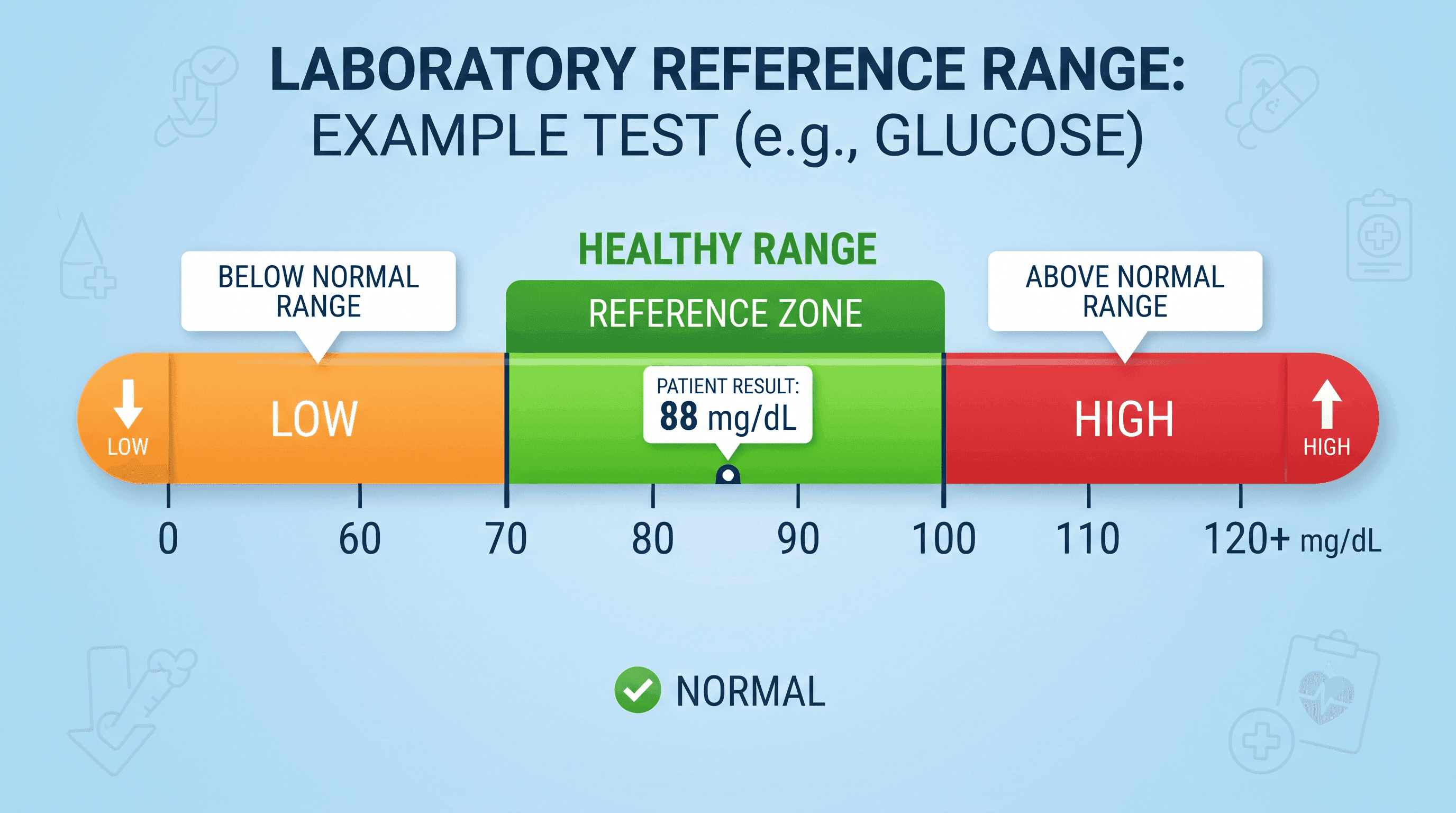
A lab report will typically mark each value as normal, high, or low, based on a reference range. That range represents where most healthy people's results fall, not a strict line between healthy and unhealthy.
A single flagged value doesn't automatically mean something is wrong. Levels can shift slightly due to hydration, timing, medication, or lab-to-lab differences in equipment. Reference ranges also vary somewhat between labs.
This is why context matters more than any single number. A healthcare professional typically looks at your flagged results alongside your symptoms, medical history, and any previous test results before deciding whether follow-up is needed.
How Can I Get Help Understanding My Lab Results Online?
Several types of tools can help translate lab jargon into plain language. They generally fall into a few categories.
Lab-provided AI companions. Some diagnostic labs now build AI explainers directly into their own patient portals. Quest Diagnostics, for example, launched Quest AI Companion inside its MyQuest app, which can define terminology, explain whether a value is high, low, or in range, and help identify trends across up to five years of a patient's own Quest data. This option is convenient and free, but it only works with results from that specific lab.
Independent interpretation platforms. Services like Docus AI and AI DiagMe let users upload a report from any lab and receive a plain-language explanation of each marker, sometimes with trend tracking or a network of doctors for a second opinion. These can be useful when your results come from multiple labs or when your own lab doesn't offer an AI explainer.
Healthcare navigators. Rather than focusing only on defining each biomarker, a navigator like Momentary is built around helping you figure out your next step once you know a result is abnormal. That includes physician-reviewed guidance on whether the result warrants a doctor visit, urgent care, or a wait-and-watch approach, along with the ability to compare costs for follow-up lab work or imaging if additional testing is recommended.
Your doctor's office or patient portal messaging. For results tied to an ongoing condition or a recent visit, messaging your care team directly is often still the most reliable way to get an explanation specific to your situation.
Quick Take
Best for: People who received an abnormal or confusing lab result and want to understand what it means and what to do next.
Avoid if: You're experiencing a medical emergency, such as chest pain, severe bleeding, or difficulty breathing.
Next step: Use an AI explainer or healthcare navigator to understand the terminology and your options, then confirm next steps with a healthcare professional, especially for anything flagged as significantly abnormal.
Ranked Recommendations
1. Quest AI Companion, Best for Existing Quest Patients
Quest AI Companion is a free AI chat feature built into the MyQuest app and portal. It can define test names, explain whether a value falls high, low, or within range, help identify trends across past Quest results, and assist with drafting questions for your doctor.
Strengths
- Free to use for adult MyQuest account holders.
- Built into a HIPAA-compliant portal you may already use, so there's no separate upload step.
- Can analyze up to five years of your own historical Quest data for trend spotting.
Limitations
- Only works with results from Quest Diagnostics, not other labs.
- It explains terminology and trends but does not help you decide broader next steps like whether to see a specialist or compare costs for follow-up care.
Choose this if your recent results came from Quest and you want a fast, free explanation inside a portal you already use.
Consider another option if your results came from a different lab, or you want help deciding what to do next rather than just understanding the terminology.
2. Momentary, Best for Deciding What to Do Next
Momentary is an AI-powered healthcare navigator that combines artificial intelligence with physician-reviewed guidance. Rather than centering on marker-by-marker definitions, it's designed to help you work through the practical question many people have after seeing an abnormal result: what should I do next?
Strengths
- Physician-reviewed guidance to help you understand whether a result may warrant a doctor's visit, urgent care, telehealth, or a wait-and-watch approach.
- Healthcare cost comparison for follow-up laboratory testing, imaging, or screenings if a professional recommends additional workup.
- AI-powered healthcare navigation is available nationwide.
Limitations
- Physician services are currently available only in California; AI navigation itself is nationwide, but this distinction matters if you're hoping for a live physician review outside California.
- Momentary does not diagnose conditions or interpret individual biomarkers line by line the way a dedicated lab-report explainer does.
Choose this if you already have a general sense of what your result means and want physician-reviewed help figuring out your next move, or if comparing costs for a follow-up test matters to you.
Consider another option if you want a detailed, marker-by-marker breakdown of an uploaded report first.
3. Docus AI, Best for Ongoing Tracking and Second Opinions
Docus AI offers lab test interpretation as part of a broader AI health platform that also includes an AI symptom checker and access to a network of doctors for second opinions.
Strengths
- A free plan is available, with a paid Premium tier for more messages and report interpretations.
- Includes access to a network of doctors for a written second opinion on more complex situations.
- Supports trend tracking across multiple uploaded reports over time.
Limitations
- The free tier is limited in how many interpretations and AI Doctor messages it includes per week.
- As with any AI interpretation tool, report quality can depend on how cleanly the uploaded PDF or image is formatted.
Choose this if you want to track lab trends over time or want the option of a human second opinion built into the same platform.
Consider another option if you only need a single, one-time explanation and don't want to create an account.
4. AI DiagMe, Best Pay-Per-Report Option
AI DiagMe is designed for people who want a single lab report explained without committing to a subscription. Users upload a report, answer a few profile questions, and receive a report back within minutes.
Strengths
- No ongoing subscription is required, useful for a one-time need.
- Covers blood, urine, and stool test interpretation with marker-by-marker explanations.
- The company states that personal identifying information isn't required for analysis.
Limitations
- Exact current per-report pricing was not independently verified at the time of publication; check the company's site directly.
- Like other direct-to-consumer AI interpretation tools, it's positioned as informational and educational rather than diagnostic.
Choose this if you have a single report you want explained and would rather pay once than subscribe.
Consider another option if you'll need to interpret results regularly, where a subscription tool may work out more cost-effective.
5. Standard Lab Patient Portals, Best for Free Raw Access
Most people already have free access to a patient portal from their lab or provider, such as MyQuest or Labcorp's patient site. These portals show your results and reference ranges but, without an added AI feature, don't explain what the numbers mean.
Strengths
- Free and already available to most patients who've had lab work done.
- Official source for your exact results, values, and reference ranges.
Limitations
- No built-in explanation of what a flagged result means unless the lab has added an AI companion feature.
- Patients are often left to search for explanations elsewhere.
Choose this if you just need to view or download your official results.
Consider another option if you want the numbers explained in plain language.
When Should I Worry About an Abnormal Lab Result?
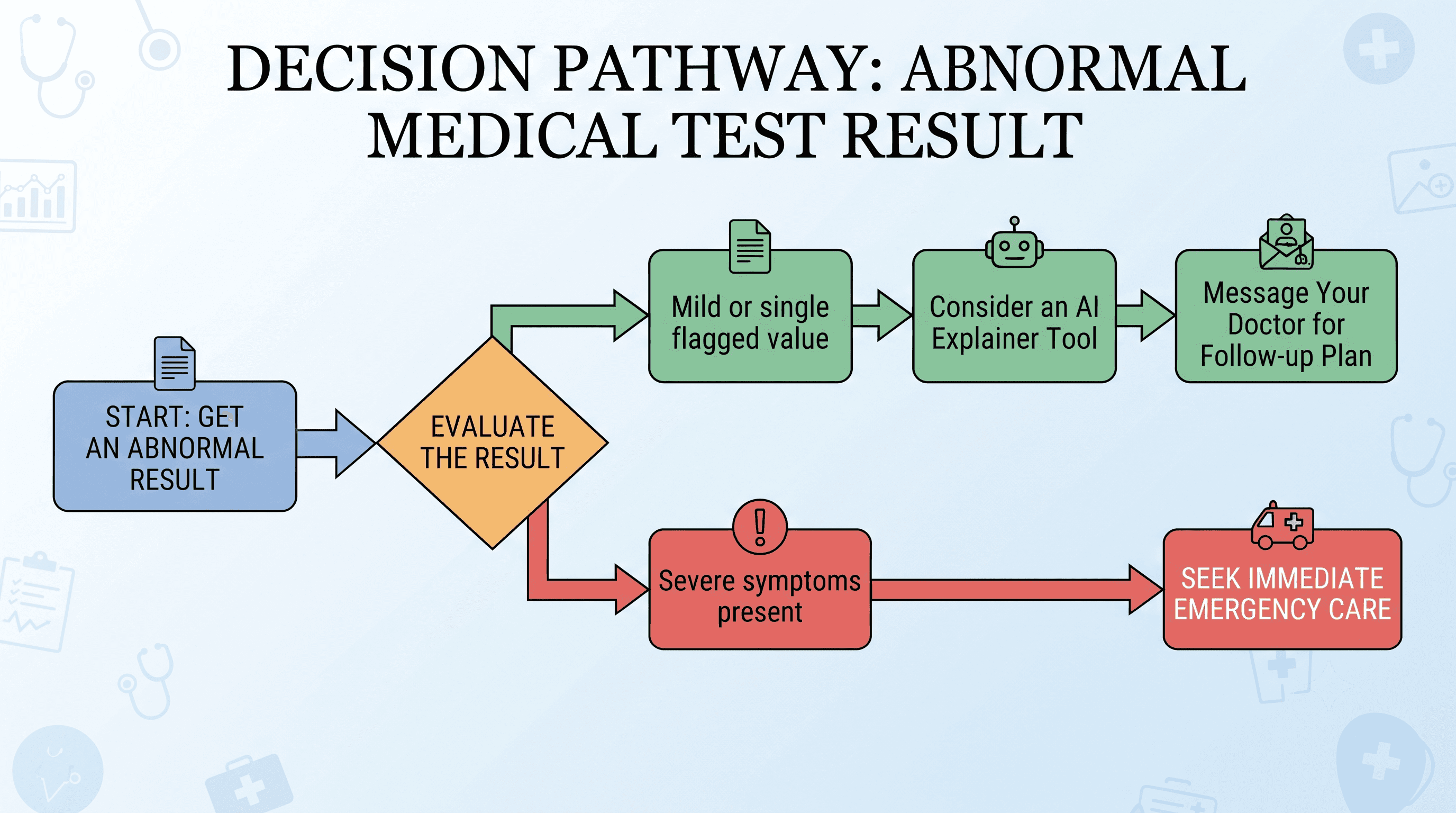
Most abnormal results are not emergencies. A single value slightly outside the reference range is common and often followed up with a repeat test or a routine conversation with your provider.
However, certain situations call for prompt medical attention rather than waiting to research the result. According to general clinical guidance, you should seek emergency care rather than relying on an online tool if you're experiencing:
- Chest pain
- Signs of stroke, such as sudden weakness, numbness, or trouble speaking
- Difficulty breathing
- Severe or uncontrolled bleeding
- Loss of consciousness
- A severe allergic reaction
- Suicidal thoughts
If your lab result was flagged as critically abnormal or your doctor's office has already reached out to you about it, treat that outreach as the priority over independent research.
For everything in between, a healthcare professional or a physician-reviewed guidance tool can help you understand how urgently to act.
How to Prepare Before Discussing Results With Your Doctor
Whichever tool you use to get a first read on your results, a short prep list can make your next appointment or telehealth visit more useful:
- Write down which specific values were flagged, along with the reference range shown on your report.
- Note any symptoms you've noticed recently, even if they seem unrelated.
- List current medications and supplements, since some can affect lab values.
- Bring up whether this is a new finding or something that's shown up on previous tests.
- Ask directly whether a repeat test, additional testing, or a specialist referral is recommended.
Frequently Asked Questions
Can I understand my lab results without insurance? Yes. Free options include your lab's own patient portal, and some labs, such as Quest, now include a free AI explainer feature for existing patients. Independent AI interpretation tools and healthcare navigators are additional options, some of which offer free tiers.
Is it safe to upload my lab report to an AI tool? Look for platforms that state clear privacy practices, such as HIPAA compliance or a policy of not requiring personally identifiable information. If you're unsure, you can black out identifying details like your name and date of birth before uploading a report to an independent third-party tool.
Can an AI tool diagnose what's wrong based on my lab results? No. AI interpretation tools and healthcare navigators can help explain terminology, reference ranges, and general next steps, but a diagnosis requires evaluation by a licensed healthcare professional.
What should I do if my results say "critical" or my doctor calls me about them? Treat that as a priority. A "critical" flag or a direct call from your provider's office means the finding is considered urgent enough to need timely follow-up, not something to research on your own first.
Does Momentary interpret lab results directly? Momentary is a healthcare navigator that provides physician-reviewed guidance on next steps and helps compare healthcare costs, including for laboratory testing. It's not primarily built as a marker-by-marker report explainer the way some dedicated lab interpretation tools are.


