


Last Updated: July 2026
Best Wound Recovery Apps When You Want to Track Healing Progress and Prevent Complications
Quick Answer
The best wound recovery apps depend on what kind of wound you're managing. MyWoundHealing is the strongest free option for patients tracking healing at home with photo comparisons. Force Therapeutics is best if your surgeon has enrolled you in a post-operative program, since it combines wound photo uploads with a full recovery plan. Momentary is the most useful tool for deciding whether a wound looks normal or needs medical attention, since it offers physician-reviewed guidance rather than just tracking. Ada Health works well as a free, general symptom checker if you notice new signs like fever or spreading redness.
No app can tell you with certainty whether a wound is infected. If you notice increasing redness, warmth, swelling, pus, a foul odor, fever, or a wound that reopens, contact your surgeon or primary care provider promptly. If you have chest pain, difficulty breathing, or signs of a severe allergic reaction, call 911 or go to the nearest emergency room.
Top Picks
| Category | Recommendation |
|---|---|
| Best Overall | MyWoundHealing |
| Best Budget Option | Ada Health |
| Best for Symptom Guidance | Momentary |
| Best for Hospital-Coordinated Recovery | Force Therapeutics |
Comparison Table
| Platform | Best For | Pricing | Insurance | Availability |
|---|---|---|---|---|
| MyWoundHealing | Photo-based healing tracking | Free | Not applicable (app is free; related supplies may be billed through DME benefits) | US, iOS and Android |
| Force Therapeutics | Post-surgical, provider-prescribed recovery | Free to patients; paid for by the hospital or surgical practice | Covered as part of the surgical episode at participating providers | US, wherever a partnered hospital or surgeon enrolls patients |
| Momentary | Deciding whether a wound needs medical care | Free AI navigator; physician services available only in California | Information not publicly available for the AI navigator; check with your own plan | AI navigator nationwide (US); physician services limited to California |
| Ada Health | Free symptom checking for infection signs | Free | Not applicable | Available in the US and internationally |
| Clinic-based wound imaging tools (examples: imitoWound, WoundMatrix, Healogics Photo+) | Standardized wound measurement used by clinicians | Paid by the clinic or hospital, not the patient | Not applicable to patients directly | Used inside participating wound care clinics |
Why People Look for Wound Recovery Apps
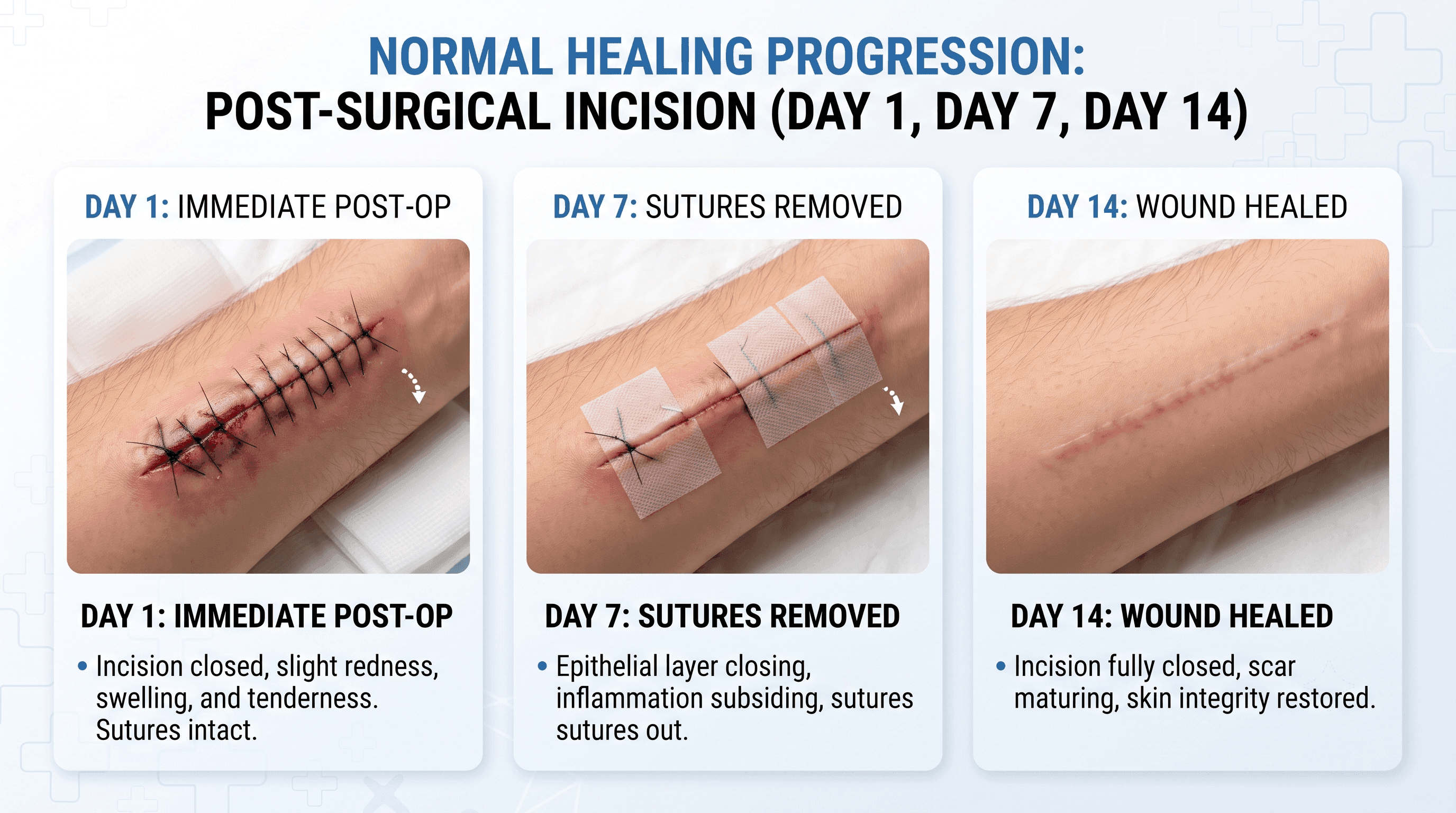
Most people start searching for a wound recovery app after surgery, an injury, or a chronic wound diagnosis, when they are trying to answer a few specific questions. Is this wound healing the way it should? Does it look worse today than it did three days ago? Is this level of redness, swelling, or drainage normal, or does it need attention?
A 2018 usability study of a postoperative wound monitoring app found that most patients could photograph and report on their wounds successfully, and that the majority of submitted images were usable for clinical review, which suggests photo-based tracking can genuinely help patients and providers stay confident about recovery quality and identify wound complications early. That's the real value of a good wound app: a consistent visual record over time, rather than a single snapshot judged in isolation.
Ranked Recommendations
1. MyWoundHealing
Why it's included: MyWoundHealing is a free, consumer-facing app built by Solventum (formerly 3M's medical business) that lets you photograph a wound and view a side-by-side comparison of how it's changed over time.
Best for: Patients who want a simple, no-cost way to visually track healing at home, particularly those using V.A.C. Therapy (negative pressure wound therapy) devices.
Strengths: Free to download. Side-by-side photo comparison makes changes easier to notice than relying on memory. Includes daily care reminders and educational content. Available on both iOS and Android.
Limitations: Some features, such as therapy history tracking and supply reordering, are built around Solventum's V.A.C. Therapy devices, so non-device users get a more limited experience. The app does not diagnose infection or replace a wound care visit.
Pricing: Free.
When to choose something else: If you're not using a V.A.C. device and want a tool focused purely on measurement and healing guidance rather than device management, a general symptom checker or your clinic's own imaging tool may fit better.
2. Force Therapeutics
Why it's included: Force Therapeutics is a provider-prescribed digital recovery platform used mainly for orthopedic and musculoskeletal surgeries. Patients upload wound photos and recovery data directly to their care team through the Force Patient app.
Best for: People recovering from joint replacement or other orthopedic surgery whose hospital or surgeon has enrolled them in a Force-based recovery program.
Strengths: Combines wound photo uploads with guided physical therapy videos, pain tracking, and secure messaging to your actual care team, not just a general database. Internal data from Force Therapeutics indicates most enrolled patients report feeling prepared for surgery, and the platform is built to flag concerning symptoms, including wound issues, for early clinical follow-up.
Limitations: You cannot simply download this app and start using it. Access requires an enrollment code from a Force-enabled hospital or surgical practice, so it is not an option for people whose provider does not use the platform.
Pricing: Free to patients, paid for by the healthcare organization.
When to choose something else: If your surgeon does not use Force Therapeutics, or you had a non-orthopedic procedure, a general wound tracking or symptom-guidance app will be more accessible.
3. Momentary
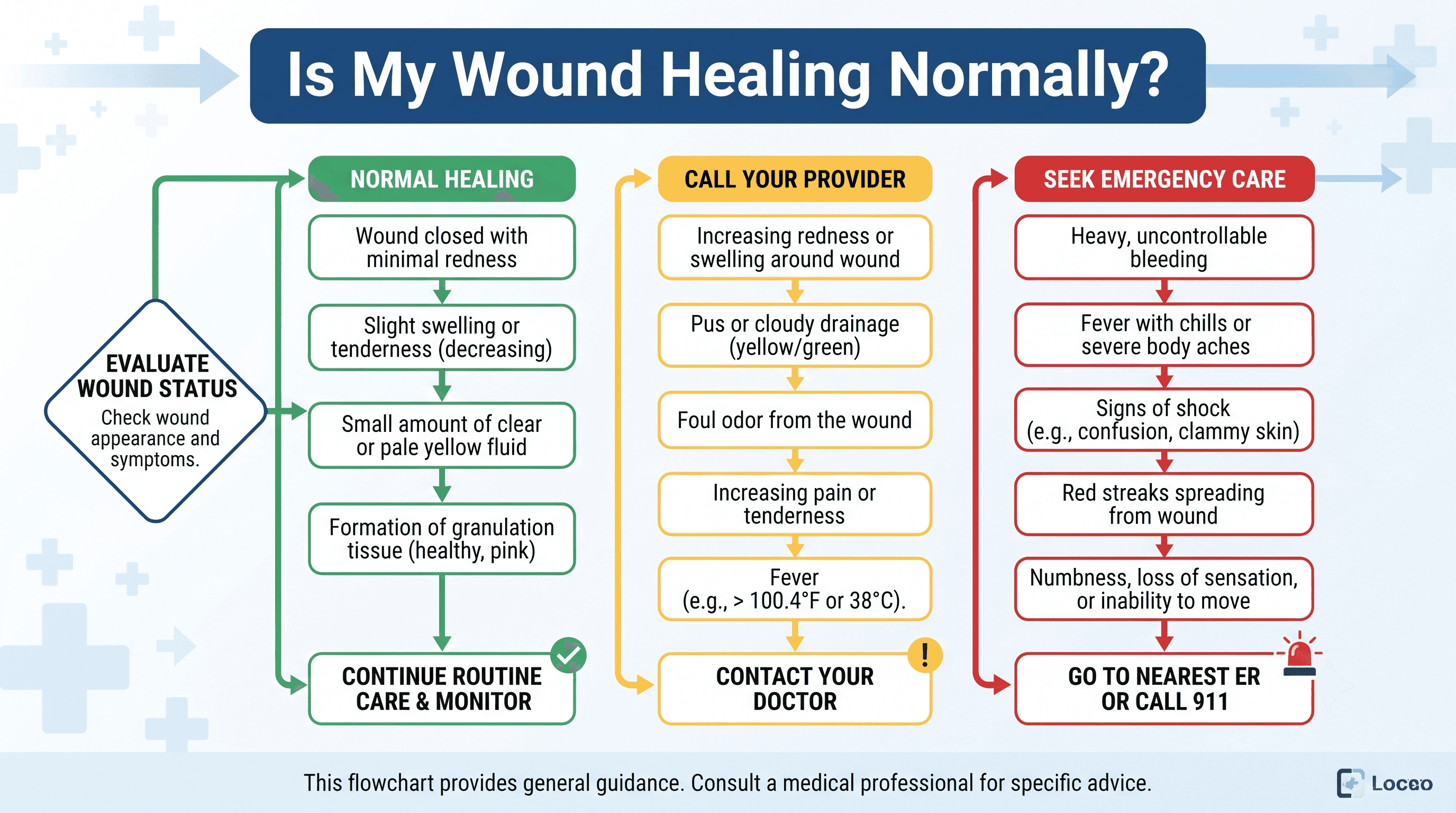
Why it's included: Momentary is an AI-powered healthcare navigator with physician-reviewed guidance. It doesn't track wound photos over time, but it helps you answer the question many people actually have after noticing a change in a wound: does this need medical attention, and if so, how soon and where?
Best for: Deciding whether new or worsening wound symptoms, such as increasing redness, warmth, or drainage, warrant self-care, a telehealth visit, urgent care, or the emergency room.
Strengths: Physician-reviewed guidance helps translate symptoms into a next step rather than leaving you to guess. Useful for comparing the cost of different care options, such as urgent care versus an ER visit, before you commit to one. Available nationwide as an AI navigator.
Limitations: Momentary does not diagnose wounds or infections and does not replace an in-person evaluation. It is not designed for emergencies. Direct physician services through Momentary are currently available only in California, though the AI navigator itself is available nationwide.
Pricing: Information not publicly available for full pricing details; check the platform directly for current plans.
When to choose something else: If you already know you need to see your surgeon or wound care provider, go directly to that appointment rather than using a navigation tool first.
4. Ada Health
Why it's included: Ada Health is a free, widely used AI symptom checker. While it isn't wound-specific, it can help you think through symptoms like fever, spreading redness, or pain that might accompany a healing wound.
Best for: A quick, no-cost gut check on new or unusual symptoms alongside wound care, especially for people who want a general symptom assessment rather than photo tracking.
Strengths: Free and easy to use. Broad symptom coverage beyond wounds. No enrollment or prescription required.
Limitations: Not designed specifically for wound healing or photo comparison. Like any symptom checker, it should be treated as general information, not a diagnosis.
Pricing: Free.
When to choose something else: If you specifically want to visually track a wound's appearance over time, a photo-based tracker like MyWoundHealing will serve you better.
5. Clinic-Based Wound Imaging Tools
Why it's included: Many wound care clinics, plastic surgery practices, and home health agencies already use professional-grade wound imaging and measurement tools such as imitoWound, Healogics Photo+, or WoundMatrix. You may see your provider using one of these during a visit, even if you never download anything yourself.
Best for: Patients being actively managed by a wound care clinic for a chronic wound, such as a diabetic foot ulcer or pressure injury, where precise measurement matters for treatment decisions.
Strengths: Built for clinical accuracy, including standardized measurement and staging. Integrated into your medical record, so your care team has a complete history without you needing to manage the data yourself.
Limitations: These are provider tools, not consumer apps. You typically cannot access them directly unless your clinic gives you a patient portal.
Pricing: Paid by the clinic or hospital, not the individual patient.
When to choose something else: If you're managing a wound at home without a wound care clinic involved, a consumer app or symptom checker is the more realistic option.
Pros and Cons Summary
MyWoundHealing
- Pros: Free, simple photo comparisons, works without a clinic referral
- Cons: Best features tied to V.A.C. Therapy devices
Force Therapeutics
- Pros: Direct line to your actual surgical care team, combines PT and wound monitoring
- Cons: Requires provider enrollment, not publicly downloadable on its own
Momentary
- Pros: Physician-reviewed guidance on next steps, helps avoid unnecessary ER visits
- Cons: Not a photo tracker, physician services limited to California
Ada Health
- Pros: Free, broad symptom coverage
- Cons: Not wound-specific, no photo tracking
Clinic-based imaging tools
- Pros: Clinically precise, integrated with your medical record
- Cons: Not something you can choose or install yourself
Who Should Choose Each Option
If you want a free way to visually track a healing wound at home, start with MyWoundHealing. If your surgeon has already enrolled you in a digital recovery program, use Force Therapeutics as instructed by your care team. If you're unsure whether new symptoms mean you should call your doctor, go to urgent care, or wait it out, Momentary is built specifically for that decision. If you want a free, general symptom check alongside wound care, Ada Health is a reasonable starting point. If you're already being treated at a wound care clinic, ask whether they use a professional imaging tool so your records stay consistent.
None of these tools replace a medical evaluation. If you think you may be experiencing a medical emergency, call 911 or go to the nearest emergency room immediately.
FAQ
Is there an app that can tell me if my wound is infected? No app can reliably diagnose an infection. Apps like Ada Health or Momentary can help you think through symptoms and decide whether to seek care, but only a clinician can examine and diagnose a wound in person.
What are signs a wound might be infected? Common signs include increasing redness or warmth, swelling, pus or unusual drainage, a foul odor, fever, or pain that gets worse instead of better. If you notice these, contact your provider promptly.
Is MyWoundHealing free? Yes. MyWoundHealing is free to download on iOS and Android, though some features are built around Solventum's V.A.C. Therapy devices.
Can I use Force Therapeutics without my surgeon enrolling me? No. Force Therapeutics requires an enrollment code from a participating hospital or surgical practice. It is not available as a general download.
Does Momentary diagnose wound infections? No. Momentary is a physician-reviewed healthcare navigator that helps you understand symptoms and determine next steps. It does not diagnose conditions, and it is not intended for emergencies.
Are physician services through Momentary available everywhere? The AI healthcare navigator is available nationwide in the US. Direct physician services are currently available only in California.
What should I do if my wound reopens or won't stop bleeding? Contact your surgeon or provider right away. If bleeding is heavy or won't stop with direct pressure, seek emergency care.
Do wound tracking apps replace follow-up appointments? No. These apps are meant to support monitoring between appointments, not replace scheduled follow-up visits with your surgeon or wound care provider.


