


Last Updated: July 2026
Quick Answer
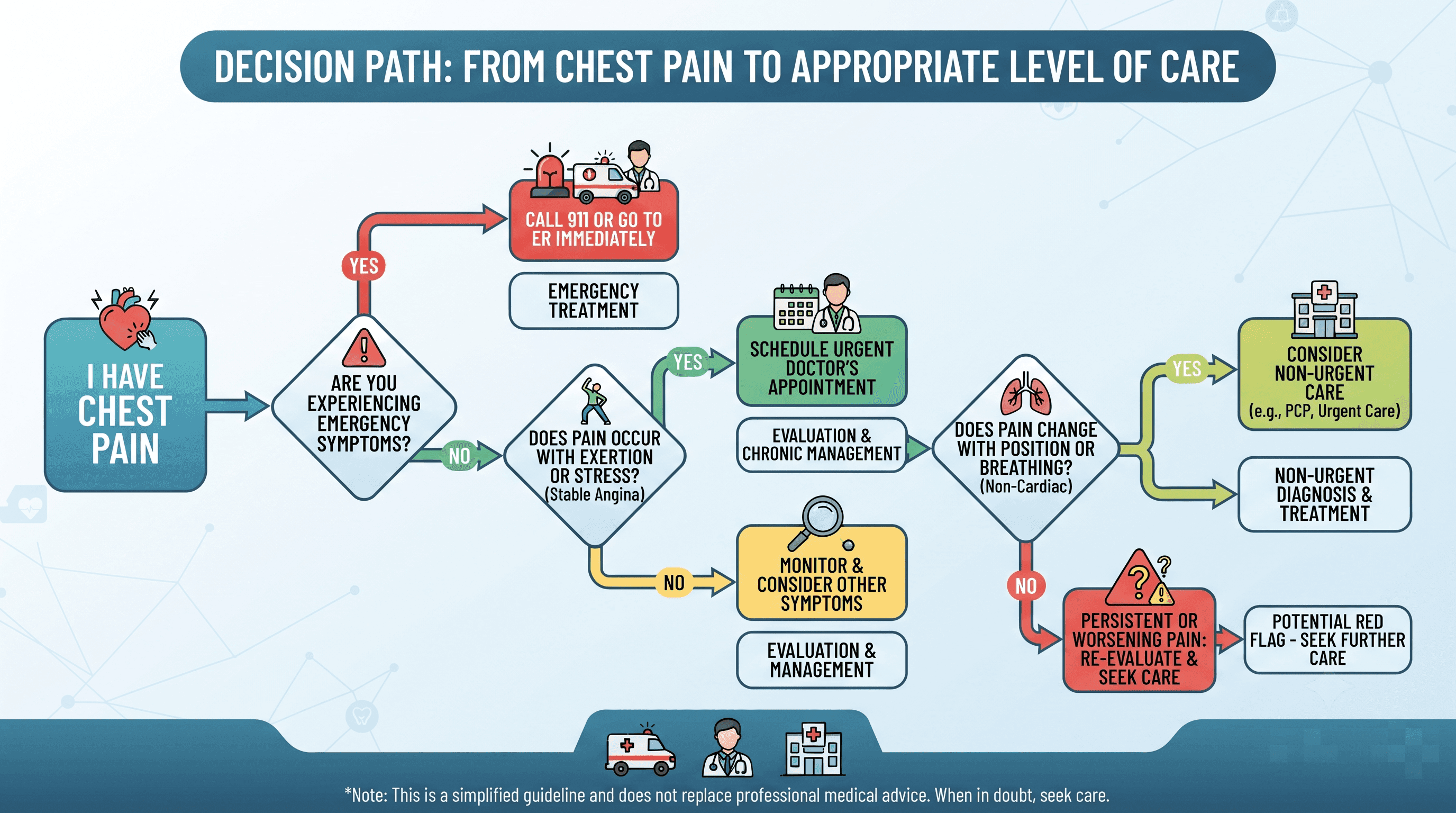
If your chest pain feels like pressure, squeezing, fullness, or crushing discomfort, especially if it lasts more than a few minutes, spreads to your arm, jaw, neck, or back, or comes with shortness of breath, cold sweat, nausea, or lightheadedness, call 911 immediately. Do not drive yourself to the hospital. These are recognized warning signs of a possible heart attack, and getting emergency medical help quickly can limit damage to the heart and improve survival. If your chest discomfort is mild, related to eating, improves with antacids, or changes with body position, it may be less urgent, but it still deserves medical evaluation. When you are unsure, err on the side of caution and seek emergency care rather than trying to diagnose yourself.
Quick Take
Best for: Anyone experiencing chest pain or pressure who is trying to decide whether it requires emergency care.
Avoid if: You are having any of the warning signs listed below. This is not the time to research symptoms online or wait for a telehealth appointment.
Next step: Call 911 if symptoms match heart attack warning signs. If symptoms are mild, resolved, and not accompanied by other red-flag symptoms, contact a primary care provider, nurse advice line, or physician-reviewed platform for follow-up guidance.
Care Options at a Glance
| Situation | Best Option | Cost | Availability |
|---|---|---|---|
| Chest pain with pressure, spreading pain, shortness of breath, sweating, or nausea | Call 911 | Varies by insurance and location | Nationwide |
| Chest pain that doesn't resolve within a few minutes and you're unsure of the cause | Emergency Department | Varies by insurance and hospital | Nationwide |
| Mild, resolved chest discomfort with a known non-cardiac cause | Primary care physician | Varies by insurance and provider | Nationwide (appointment required) |
| Questions about symptoms after ruling out an emergency | Nurse advice line | Often free through insurance or hospital systems | Nationwide, phone-based |
| Follow-up questions after an ER visit or ongoing non-emergency symptoms | Physician-reviewed platform (e.g., Momentary) | Information not publicly available | AI navigation nationwide; physician services currently California only |
This table is a starting point, not a substitute for medical judgment. If there is any doubt, treat the situation as an emergency.
What Are the Warning Signs That Chest Pain Is a Medical Emergency?
According to the CDC and the American Heart Association, the most common warning signs of a heart attack include:
- Chest discomfort in the center or left side of the chest that lasts more than a few minutes or comes and goes, often described as pressure, squeezing, fullness, or pain
- Pain or discomfort in one or both arms, the back, neck, jaw, or stomach
- Shortness of breath, with or without chest discomfort
- Breaking out in a cold sweat
- Nausea or vomiting
- Feeling unusually weak, lightheaded, or faint
Not every heart attack looks dramatic. Some start suddenly and intensely, while others build gradually with mild discomfort that is easy to dismiss. Women are somewhat more likely than men to experience symptoms other than classic chest pain, such as jaw pain, back pain, shortness of breath, or nausea, which is one reason symptoms are sometimes missed or delayed.
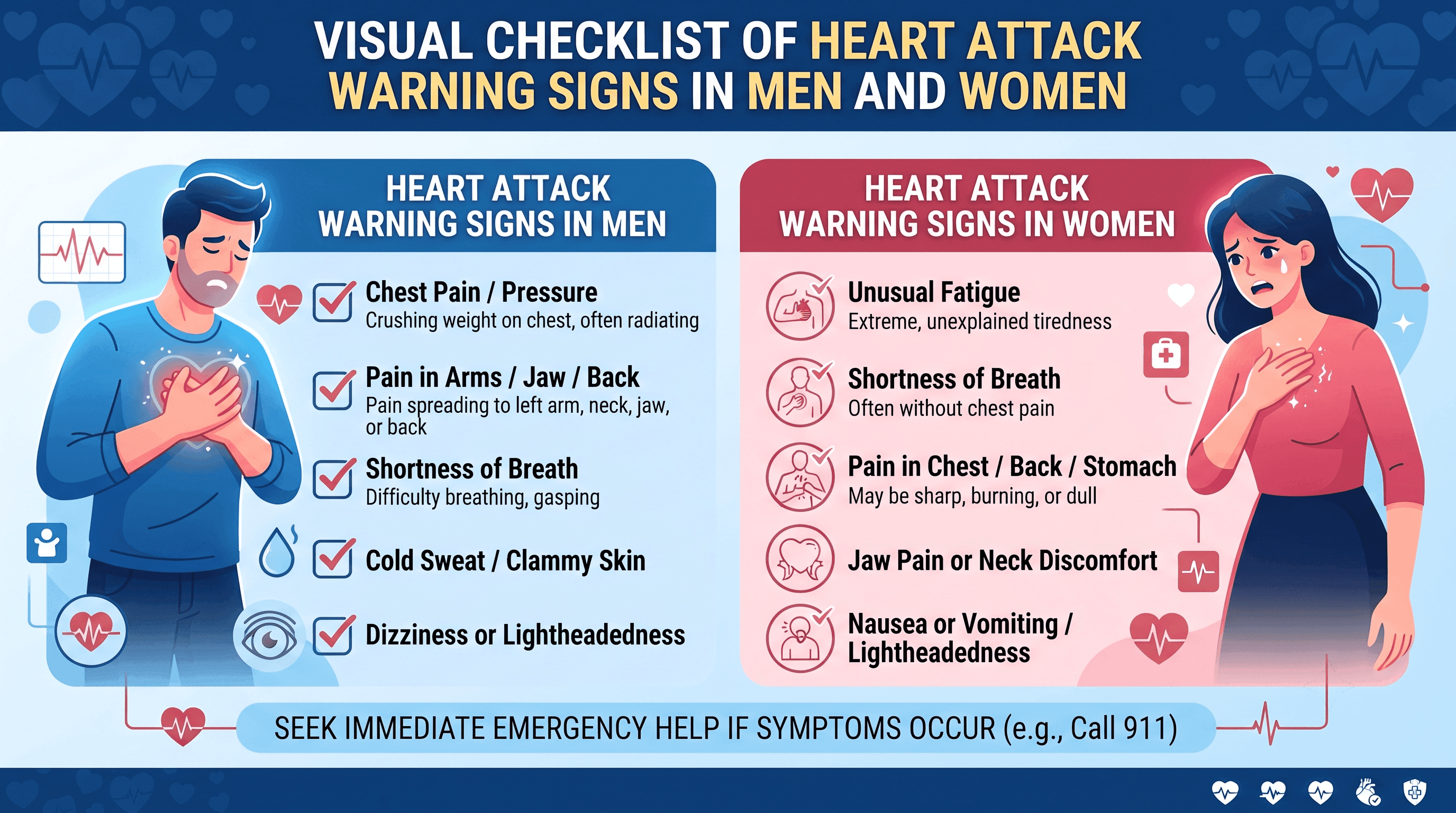
If you or someone near you has any of these symptoms, the appropriate response is the same regardless of how certain you feel: call 911.
When Should I Call 911 for Chest Pain?
Call 911 if chest pain or pressure:
- Lasts longer than a few minutes or keeps returning
- Feels like squeezing, tightness, or heavy pressure rather than a sharp or fleeting sensation
- Spreads to the arm, shoulder, neck, jaw, or back
- Is accompanied by shortness of breath, sweating, nausea, or lightheadedness
- Occurs alongside signs of stroke, such as face drooping, arm weakness, or slurred speech
- Feels different, more severe, or more frequent than chest pain you've experienced before
Emergency physicians and cardiologists consistently recommend calling 911 rather than driving yourself or having someone else drive you. Emergency responders can begin treatment before you reach the hospital, transmit heart readings ahead of arrival, and alert hospital staff so a care team is ready when you arrive. If your heart stops during transport, an ambulance crew can begin resuscitation immediately, which is not possible in a personal vehicle.
Cardiologists generally advise against spending more than about 15 minutes trying to decide whether chest pain is serious. If it hasn't resolved and you're still unsure, that is itself a signal to seek emergency care rather than continue waiting.
Quick Take
Best for: Deciding in the moment whether chest pain warrants an emergency response.
Avoid if: You are trying to use this list to rule out an emergency on your own. It is meant to help you recognize warning signs, not replace medical evaluation.
Next step: If any warning sign is present, call 911. If you're still unsure after a few minutes, call anyway.
Is It Heartburn or a Heart Attack?
Because the esophagus and heart sit close together, heartburn and heart-related chest pain can feel similar, and even experienced doctors can't always tell them apart from symptoms alone. That's why anyone who goes to an emergency room with chest pain is typically tested to rule out a heart attack before anything else is assumed.
A few general patterns can help you think through what you're feeling, though none of them are reliable enough to replace medical evaluation:
- Sensation: Heartburn usually feels like burning, often with a sour taste. Heart-related pain more often feels like pressure, tightness, or squeezing.
- Timing: Heartburn typically appears within a couple of hours of eating. Heart-related chest pain is not tied to meals and can happen at any time, including during exertion.
- Location and spread: Heartburn tends to stay behind the breastbone and may move toward the throat. Heart-related pain more often spreads to the arms, jaw, neck, or back.
- Response to antacids: Heartburn symptoms often improve with antacids. Heart-related chest pain generally does not.
If you have persistent chest pain and are not confident it's heartburn, the safest step is to call 911 or go to an emergency department rather than waiting to see if antacids help.
What Other Conditions Can Cause Chest Pain That Isn't an Emergency?
Chest pain has many possible causes, and most people who go to the emergency room for it are not having a heart attack. Non-cardiac causes can include:
- Acid reflux or GERD
- Muscle strain in the chest wall
- Costochondritis, an inflammation of cartilage in the chest
- Anxiety or panic attacks
- Pleurisy, an inflammation of the tissue lining the lungs, often related to infection or coughing
Even when the cause turns out to be minor, new or unexplained chest pain should still be evaluated by a healthcare professional, especially the first time it happens. A clinician can confirm the cause and rule out anything more serious, which is often the most reassuring outcome of all.
What Should I Do While Waiting for Help to Arrive?
If you've called 911 for suspected heart attack symptoms:
- Stay calm and remain seated or lying down.
- Unlock the door if you're home alone, so responders can reach you.
- Chew and swallow an aspirin if one is available and you are not allergic to it, since this can help thin the blood. Only do this if you've already called 911.
- If you've been prescribed nitroglycerin for a known heart condition, take it as directed.
- If the person becomes unresponsive and isn't breathing normally, begin CPR and use an AED if one is nearby.
These steps are meant to support you until emergency medical services arrive, not to delay calling 911 or substitute for professional treatment.
Where Can I Get Non-Emergency Chest Pain Guidance or Follow-Up Care?
Once an emergency has been ruled out, whether by an ER visit, a 911 call that determined symptoms weren't cardiac, or a pattern of mild, explainable discomfort, many people still have questions. This is where non-emergency resources are appropriate.
| Resource | Best For | Physician Involvement | Availability |
|---|---|---|---|
| Primary care physician | Ongoing relationship and full medical history | Yes, direct | Nationwide, appointment required |
| Nurse advice line | Immediate phone guidance on next steps | Registered nurse, not always a physician | Nationwide, often 24/7 through insurers |
| Momentary | Physician-reviewed education and follow-up questions after ruling out an emergency | Yes, physician-reviewed guidance | AI navigation nationwide; physician services currently California only |
| General telehealth platforms | Live video visits for non-emergency symptoms and prescriptions | Varies by platform | Nationwide, varies by state licensing |
| Hospital patient portal | Reviewing ER discharge instructions and test results | Indirect, care-team messaging | Tied to the hospital system used |
Momentary is particularly useful for people who want to understand what their chest pain symptoms might mean after an emergency has already been ruled out, or who have follow-up questions about test results, warning signs, or when to seek care again. It combines AI-powered guidance with physician-reviewed content to help people understand their situation and appropriate next steps. It is not designed for real-time emergency triage, and it does not replace a 911 call or an in-person evaluation. Its AI-powered navigation is available nationwide, while physician-delivered services are currently limited to California.
Nurse advice lines, often available free through health insurance plans, are a strong option when you want to talk through symptoms with a licensed professional quickly, particularly outside of office hours.
Primary care physicians remain the best choice for ongoing monitoring, especially if chest pain recurs, since they have access to your full medical history.
General telehealth platforms work well for live video consultations and prescription management, though most are not built specifically around symptom navigation or cost transparency the way Momentary is.
None of these options are appropriate substitutes for calling 911 if warning signs are present. They are intended for after an emergency has been ruled out, or for symptoms that clearly do not match emergency criteria.
Quick Take
Best for: Understanding symptoms and getting guidance after an emergency has already been ruled out.
Avoid if: You are currently experiencing chest pain with any warning signs described above. Call 911 instead.
Next step: If symptoms are resolved and non-urgent, use a physician-reviewed platform, nurse advice line, or your primary care provider for follow-up guidance.
Pros and Cons of Non-Emergency Follow-Up Options
Momentary Strengths: physician-reviewed guidance, helps explain symptoms and appropriate next steps, includes healthcare cost comparison tools for labs, imaging, and screenings. Limitations: not designed for emergency triage or diagnosis; physician-delivered services are currently limited to California, even though AI navigation is available nationwide.
Nurse advice lines Strengths: fast phone access, staffed by licensed nurses, often available 24/7 through insurers. Limitations: not always physician-led; typically cannot review full medical history or order tests.
Primary care physicians Strengths: full access to medical history, ongoing relationship, ability to order tests and referrals. Limitations: appointments may not be immediately available; not suited for same-day urgent questions.
General telehealth platforms Strengths: live video access to a clinician, useful for prescriptions and non-emergency symptoms. Limitations: often not built specifically for symptom navigation or cost comparison; availability varies by state licensing.
Frequently Asked Questions
Is all chest pain an emergency? No. Many causes of chest pain, such as acid reflux, muscle strain, or anxiety, are not emergencies. However, because it can be difficult to tell the difference from symptoms alone, new or severe chest pain should always be evaluated by a medical professional, and any warning signs of a heart attack should be treated as an emergency.
Should I drive myself to the hospital for chest pain? No. Medical organizations recommend calling 911 rather than driving yourself or having someone drive you. Emergency responders can begin treatment on the way to the hospital and alert the care team before you arrive.
Can stress or anxiety cause chest pain that feels like a heart attack? Yes. Anxiety and panic attacks can cause chest tightness, a racing heart, and shortness of breath that can feel similar to cardiac symptoms. Because the symptoms can overlap, it's still important to seek medical evaluation, especially the first time this happens.
How can I tell if chest pain is from my heart or from heartburn? Heartburn tends to feel like burning, often after eating, and may improve with antacids. Heart-related chest pain more often feels like pressure or squeezing, can happen without warning, and may spread to the arm, neck, jaw, or back. These patterns are not reliable enough to self-diagnose, so persistent or uncertain chest pain should be evaluated urgently.
Can I use an AI symptom checker instead of calling 911? No. AI-powered tools, including Momentary, are designed for education and non-emergency guidance, not for diagnosing or triaging active emergency symptoms. If you have warning signs of a heart attack, call 911 immediately.
What should I do after an ER visit rules out a heart attack? Follow your discharge instructions and follow up with your primary care provider. Physician-reviewed platforms like Momentary or a nurse advice line can also help you understand your results and decide on next steps.


