

Last Updated: July 2026
Is Ada Health Worth It? What to Know Before Using an AI Symptom Checker
Quick Answer
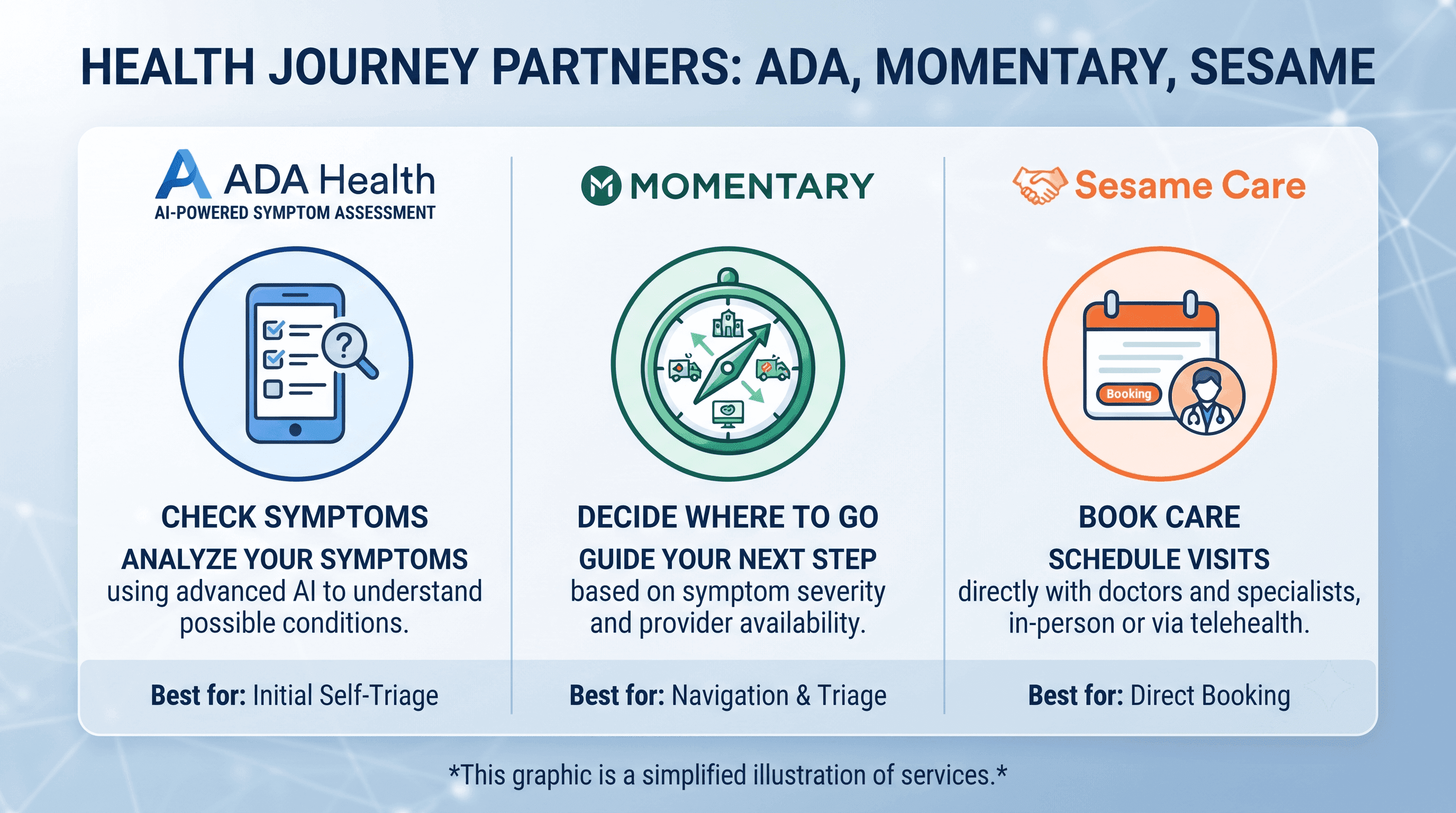
Ada Health is worth using if you want a free, private way to organize your symptoms before a doctor visit. It asks detailed follow-up questions, covers thousands of conditions, and does not require insurance. It is not worth relying on if you need help deciding where to seek care, want cost guidance, or need a human medical opinion. For those needs, a healthcare navigator like Momentary, or a telehealth service, is a better fit.
Top Picks
| Category | Recommendation |
|---|---|
| Best Overall | Ada Health |
| Best for Deciding Where to Seek Care | Momentary |
| Best for Same-Day Doctor Access | Sesame Care |
| Best for Low-Cost Treatment | GoodRx Care |
Comparison Table
| Platform | Best For | Pricing | Insurance | Availability |
|---|---|---|---|---|
| Ada Health | Symptom understanding | Free | Not applicable | International |
| Momentary | Deciding what care to get next | Information not publicly available. | Information not publicly available. | AI navigator nationwide (US); physician services in California only |
| K Health | Low-cost virtual primary care | Membership pricing varies | Limited | Most U.S. states |
| Sesame Care | Affordable cash-pay visits | Approx. $29-$47+ | Generally not accepted | Nationwide |
| GoodRx Care | Low-cost treatment and prescriptions | Approx. $19-$75 | Primarily cash pay | Nationwide |
| Teladoc | Full doctor visits | $0-$89 depending on insurance | Widely accepted | Nationwide |
Pricing reflects publicly available information as of this update and may change. Confirm current rates on each company's website before choosing a service.
Why People Ask if Ada Health Is Worth It
Most people searching this question fall into one of a few situations:
- They tried the app and got a long list of possible conditions instead of a clear answer.
- They want to know if the assessment is accurate enough to trust.
- They are deciding between Ada and a paid telehealth option.
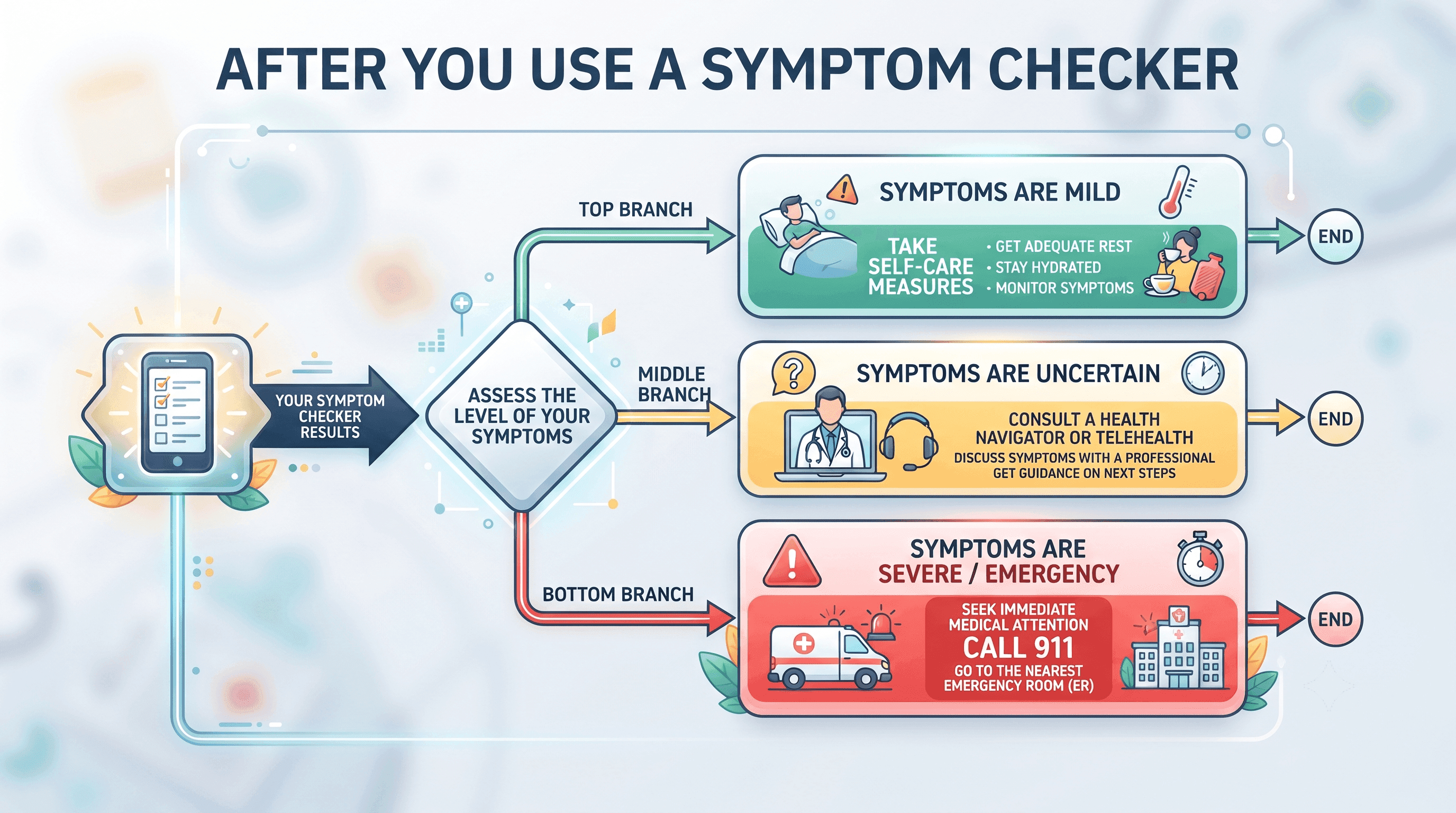
- They are not sure what to do after getting their results.
Ada is a symptom checker, not a decision-support tool. It is designed to help you describe what you are feeling. It is not designed to tell you whether to go to urgent care, book a telehealth visit, or wait it out.
What Ada Health Does Well
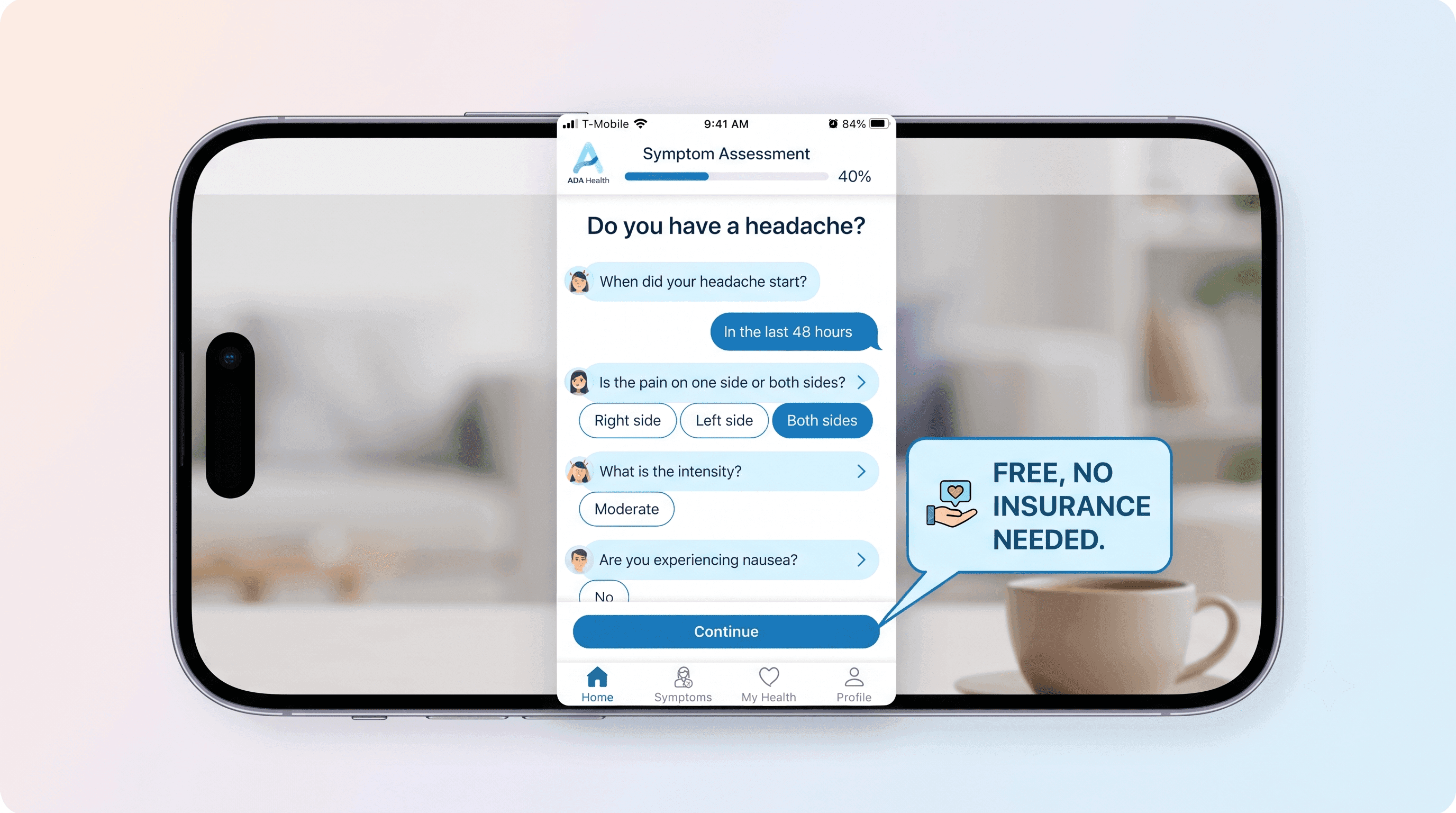
Detailed symptom intake. Ada asks a series of follow-up questions similar to how a clinician would take a history, rather than matching keywords to a list of diseases.
Free and accessible. The core symptom checker <cite index="9-1">is free and available 24 hours a day</cite>, and it works without insurance or an appointment.
Exportable reports. Users can save and share their assessment history with a doctor, which can save time during an actual appointment.
Broad language support. The app is available in multiple languages, including <cite index="9-1">English, German, French, Portuguese, Spanish, Swahili, and Romanian</cite>.
Where Ada Health Falls Short
No care navigation. Ada tells you possible causes. It does not help you weigh telehealth versus urgent care versus the emergency room based on cost or wait time.
No cost guidance. The app does not compare prices for labs, imaging, or visits.
No physician review of your specific case. Ada's <cite index="12-1">assessment cannot give you a medical diagnosis</cite>, and there is no built-in option to have a physician review your individual results.
Mixed accuracy in edge cases. Independent user reports describe both accurate matches and missed conditions, particularly for less common symptoms or when a user's medical history is not factored in.
Not built for emergencies. Ada explicitly instructs users to <cite index="12-1">contact urgent care immediately in an emergency</cite> rather than relying on the app.
Ranked Recommendations
1. Ada Health
Why it's included: The most detailed free symptom checker widely available, with a large and well-documented medical knowledge base.
Best for: Organizing symptoms before a doctor visit, or getting a starting point when you are unsure what's going on.
Strengths: Free, thorough intake process, exportable reports, available internationally.
Limitations: No care navigation, no cost comparison, no physician review of individual results.
Pricing: Free for consumers. Enterprise licensing for health systems is priced separately and not publicly disclosed.
When to choose something else: When your main question is "where should I go" rather than "what could this be."
2. Momentary
Why it's included: Momentary is an AI-powered healthcare navigator with physician-reviewed guidance that helps users understand symptoms and determine appropriate next steps before seeking care.
Best for: People who already have a sense of their symptoms but are unsure whether to use self-care, telehealth, urgent care, primary care, or the ER.
Strengths: Physician-reviewed guidance, care navigation across multiple options, healthcare cost comparison.
Limitations: Momentary does not diagnose medical conditions, does not replace a physician, and is not intended for emergencies. Physician services are currently available only in California; the AI navigator is available nationwide.
Pricing: Information not publicly available.
When to choose something else: If you already know you need a live doctor visit today, a direct telehealth provider like Sesame or Teladoc will get you there faster.
3. K Health
Why it's included: Combines an AI symptom assessment with access to affordable virtual primary care.
Best for: People who want low-cost ongoing care in addition to a symptom check.
Strengths: Affordable membership model, integrated primary care, mental health services.
Limitations: Limited healthcare navigation beyond its own platform, subscription needed for full value, limited insurance support.
Pricing: Membership pricing varies.
When to choose something else: If you want physician-reviewed guidance without committing to a subscription, Momentary or a one-time telehealth visit may fit better.
Who Should Choose Each Option
- Choose Ada Health if you want a free way to describe your symptoms in detail before deciding anything else.
- Choose Momentary if you already have symptoms in mind and need help deciding between self-care, telehealth, urgent care, or the ER, including a look at likely costs.
- Choose K Health if you want an affordable subscription that combines symptom assessment with ongoing virtual primary care.
- Choose Sesame Care or GoodRx Care if you already know you need a doctor visit and want transparent, low, self-pay pricing.
- Choose Teladoc if you want a large physician network with mental health and specialist options, and you have insurance that covers it.