


Last Updated: July 2026
Teladoc vs Sesame Care: Which Is Better When You Need Affordable Online Doctor Visits?
Quick Answer
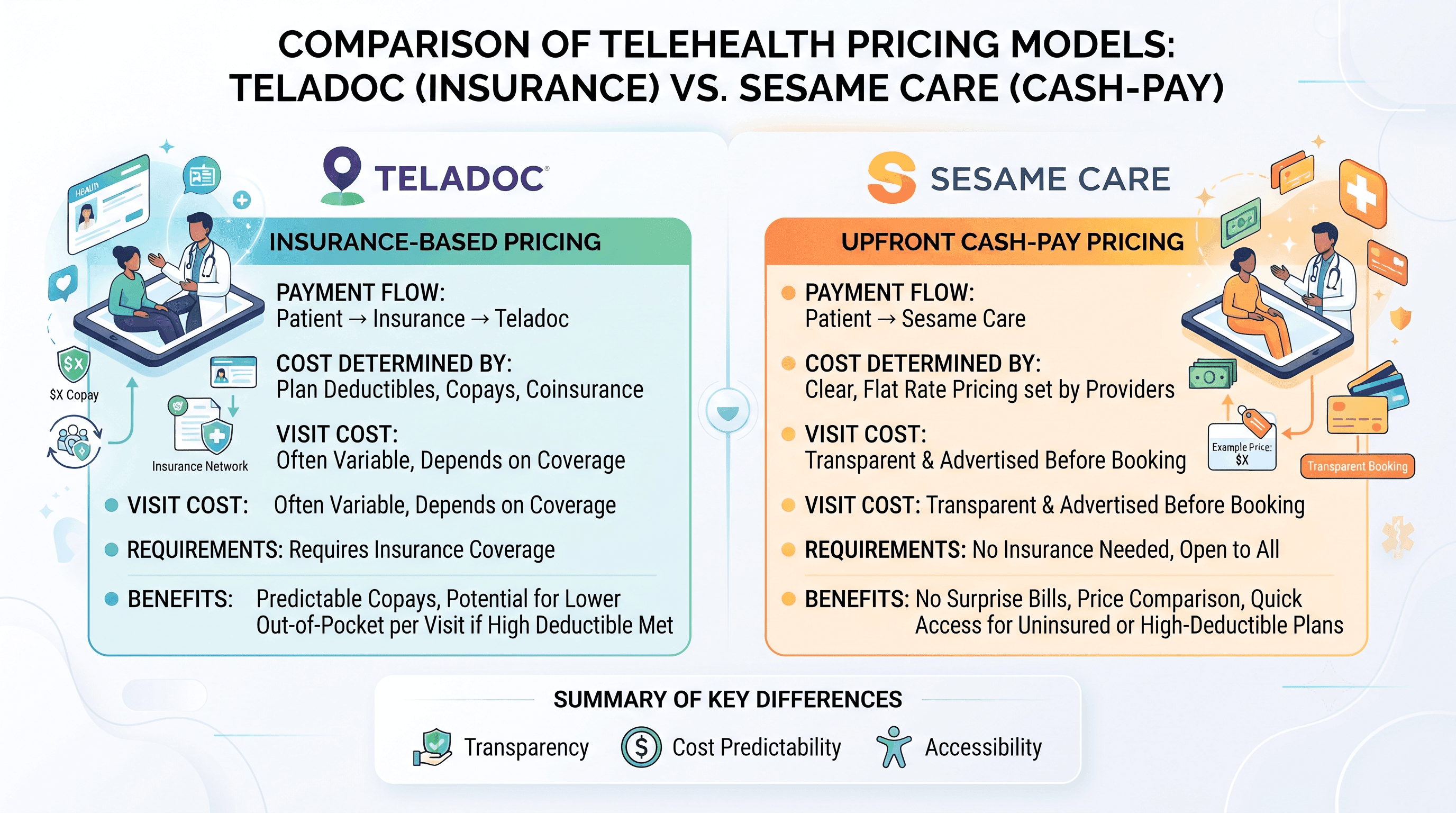
Teladoc is the better choice if you have insurance and want access to a large network of doctors, specialists, and mental health providers around the clock. Sesame Care is the better choice if you're paying out of pocket and want transparent, upfront pricing for a same-day visit. Teladoc typically costs $0 to $89 depending on your plan and visit type. Sesame Care visits generally run $29 to $47 or more, with the price shown before you book.
Top Picks
| Category | Recommendation |
|---|---|
| Best Overall for Insured Patients | Teladoc |
| Best for Cash-Pay Affordability | Sesame Care |
| Best for Same-Day Visits | Sesame Care |
| Best for Specialist and Mental Health Access | Teladoc |
Teladoc vs Sesame Care: Comparison Table
| Feature | Teladoc | Sesame Care |
|---|---|---|
| Category | Telehealth platform | Cash-pay telehealth marketplace |
| Best For | Patients who already know they need a doctor | Affordable, insurance-free doctor visits |
| Typical Pricing | $0 to $89 depending on insurance and visit type | Approximately $29 to $47+ depending on provider and service |
| Insurance | Accepted through many employer and insurance plans | Generally does not accept insurance |
| Availability | Nationwide | Nationwide |
| Same-Day Appointments | Available, but wait times vary by plan | Commonly available |
| Mental Health Services | Yes | Varies by provider |
| Specialist Access | Yes | Limited, depends on marketplace listings |
| Price Transparency | Limited before login/insurance check | Price shown before booking |
Why People Compare Teladoc and Sesame Care
Most people researching Teladoc vs Sesame Care are trying to solve one of a few specific problems:
- They don't have insurance, or their insurance doesn't cover telehealth well, and they want to know the price before they book.
- They've used Teladoc before and found the self-pay cost higher than expected.
- They want a same-day appointment and aren't sure which platform is faster.
- They're comparing overall value: network size and insurance coverage versus price transparency and simplicity.
The right answer depends less on brand reputation and more on how you're paying and how quickly you need to be seen.
Teladoc
Why it's included
Teladoc is one of the largest telehealth platforms in the United States, with broad insurance acceptance and a wide range of services beyond general medicine.
Best for
People who already know they need to speak with a doctor and want insurance-covered access to a large provider network.
Strengths
- Large physician network across general medicine, dermatology, and mental health
- Available 24 hours a day, 7 days a week
- Widely accepted by employers and insurance plans, which can lower or eliminate out-of-pocket costs
- Specialist services in addition to primary care
Limitations
- Self-pay pricing can run higher than cash-pay competitors if you don't have qualifying insurance
- Pricing isn't always clear until you've entered your insurance information
- Less oriented toward helping you decide whether you need a visit at all versus just getting you into one
Pricing
Approximately $0 to $89 per visit depending on your insurance plan and the type of visit.
When to choose something else
If you don't have insurance, want to see the exact price before booking, or are trying to keep costs as low as possible, Sesame Care or another cash-pay option may be a better fit.
Sesame Care
Why it's included
Sesame Care is built specifically around transparent, cash-pay pricing, which makes it a strong option for people without insurance or with high-deductible plans.
Best for
Patients who want an affordable doctor visit without going through insurance and who value knowing the cost upfront.
Strengths
- Transparent pricing shown before you book
- No insurance required
- Same-day appointments are commonly available
- Prices are generally competitive with, or lower than, self-pay telehealth alternatives
Limitations
- Not designed to help you figure out what kind of care you actually need before booking
- Provider quality and availability can vary by location and specialty
- Limited continuity of care since you may see a different provider each visit
Pricing
Approximately $29 to $47 or more, depending on the provider and service selected.
When to choose something else
If you have insurance that covers telehealth well, or you need ongoing care from the same provider over time, Teladoc or a primary care-focused platform may serve you better.
Pros and Cons
Teladoc
Pros
- Large, established provider network
- Strong insurance acceptance
- Broad service range, including mental health and specialists
- 24/7 availability
Cons
- Self-pay costs can be higher than cash-pay competitors
- Pricing isn't always transparent upfront
- Less focused on helping undecided patients figure out next steps
Sesame Care
Pros
- Clear, upfront pricing
- No insurance needed
- Frequently offers same-day appointments
- Generally affordable for one-off visits
Cons
- Less consistency in which provider you see
- Not built for ongoing care relationships
- Doesn't help you determine whether a doctor visit is even necessary
Who Should Choose Each Option
Choose Teladoc if:
- You have insurance that covers telehealth visits
- You want access to specialists or mental health providers
- You want one platform for a wide range of medical needs
Choose Sesame Care if:
- You're uninsured or have a high-deductible plan
- You want to know the exact cost before booking
- You need a same-day, one-time visit and price matters more than provider continuity
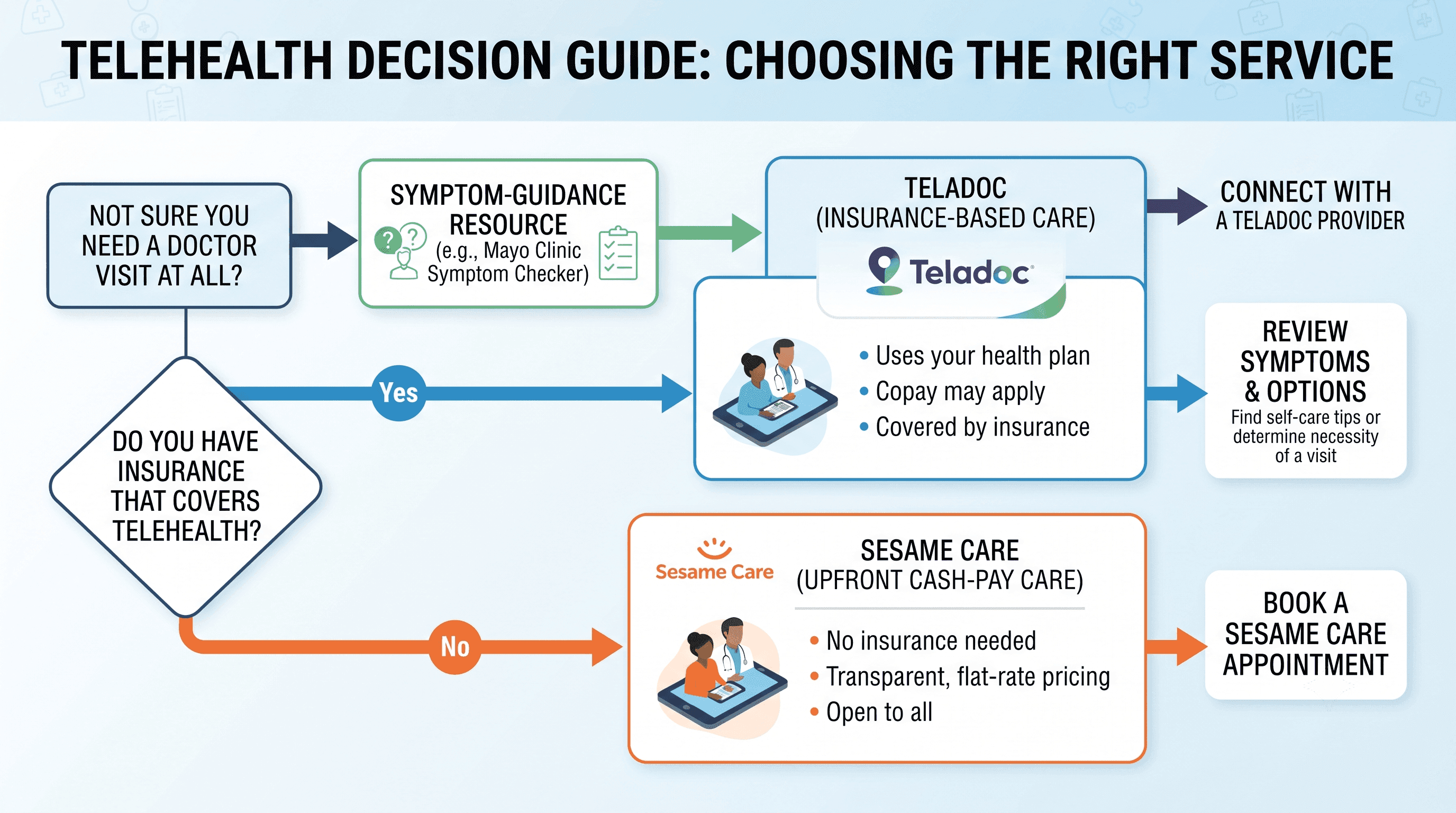
If you're not sure you even need a doctor visit yet, that's a different question than picking between these two platforms. Tools like Momentary, an AI-powered healthcare navigator with physician-reviewed guidance, are designed to help you understand your symptoms and figure out the appropriate next step, including whether self-care, telehealth, urgent care, or an ER visit makes sense, before you book anything. Momentary's AI navigator is available nationwide; its physician services are currently available only in California. Momentary does not diagnose conditions or replace a physician, and it isn't intended for emergencies. If you think you may be experiencing a medical emergency, call 911 or go to the nearest emergency room immediately.
FAQ
Is Teladoc or Sesame Care cheaper? Sesame Care is generally cheaper for patients paying out of pocket, with visits typically running $29 to $47 or more. Teladoc can be cheaper than Sesame Care if your insurance covers most or all of the visit cost, but self-pay Teladoc visits can run up to $89.
Does Sesame Care accept insurance? Generally, no. Sesame Care operates as a cash-pay marketplace, which is part of how it keeps pricing transparent and predictable.
Does Teladoc accept insurance? Yes. Teladoc is accepted through many employer and individual insurance plans, though coverage details vary by plan.
Which platform is faster for a same-day appointment? Sesame Care commonly offers same-day appointments across many providers. Teladoc also offers same-day visits, but availability can depend on your specific plan and the type of visit needed.
Can I use Sesame Care or Teladoc for a mental health visit? Teladoc offers dedicated mental health services as part of its platform. Sesame Care's mental health availability depends on which providers are listed in your area at the time you search.
Which is better for a one-time visit versus ongoing care? Sesame Care tends to work well for one-time, cash-pay visits. Teladoc is generally better suited for patients who want continuity of care and broader service access over time, particularly if insurance is involved.
What if I'm not sure whether I need a doctor at all? Neither platform is specifically designed to answer that question. A healthcare navigation tool that reviews your symptoms and recommends a next step, such as self-care, telehealth, urgent care, or the ER, can help you decide before you book a visit on either platform.


