


Last Updated: July 2026
Best Ways to Get Medical Advice on Weekends When Your Regular Doctor Isn't Available
Quick Answer
If your regular doctor's office is closed, the fastest weekend options are a telehealth visit (available nationwide, often within minutes), a walk-in retail health clinic like CVS MinuteClinic (no appointment needed), or a physician-reviewed guidance platform like Momentary that helps you figure out whether you actually need care and what kind. Urgent care centers are a good middle ground for issues that need a hands-on exam. Nurse advice lines, often free through your insurance, can help you triage before deciding where to go. For chest pain, stroke symptoms, trouble breathing, severe bleeding, or other emergency symptoms, skip all of the above and call 911 or go to the nearest emergency room.
How Do I Know Which Weekend Option Is Right For Me?
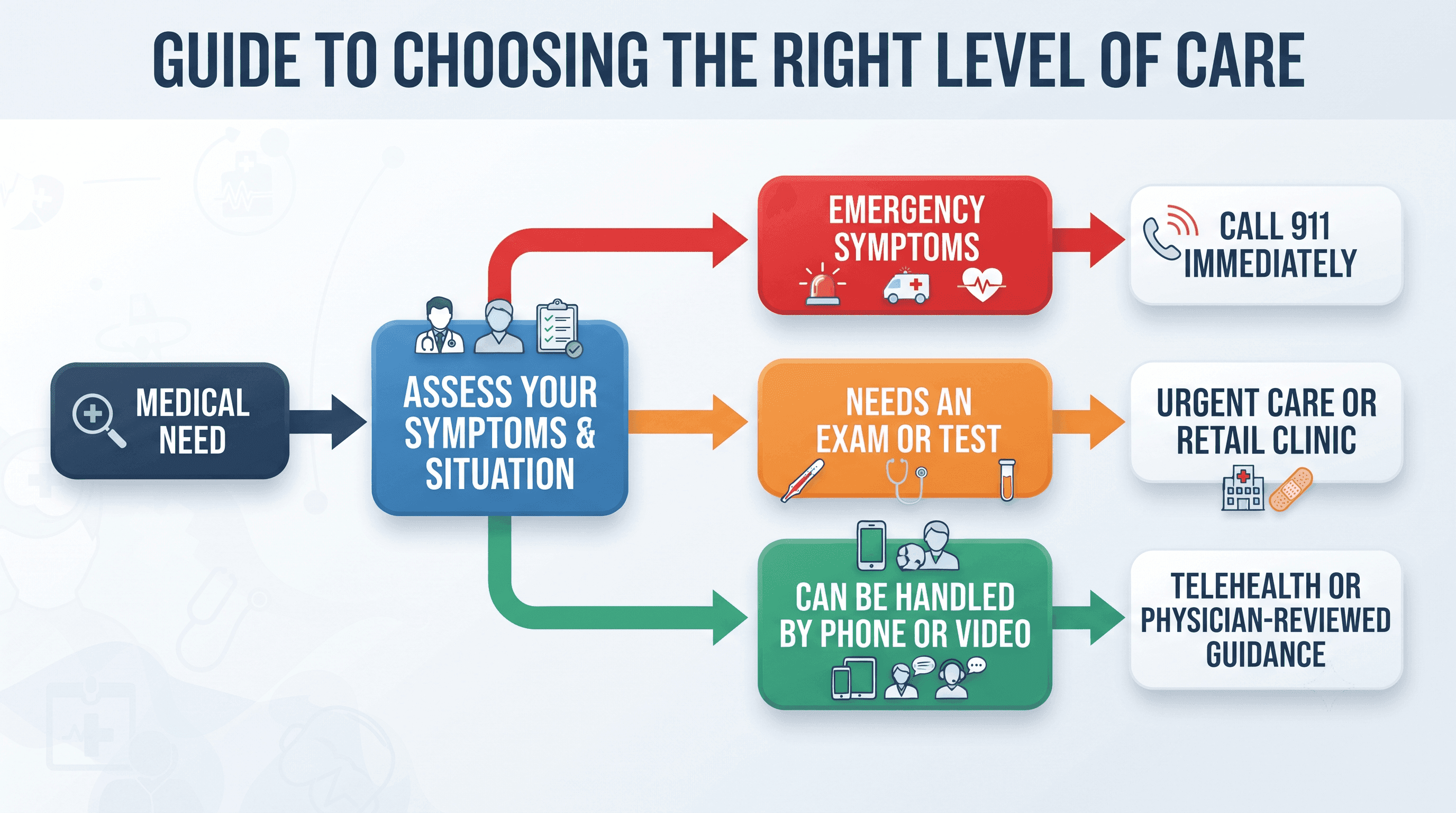
Weekend healthcare decisions usually come down to one question: how urgent is this, and does it need hands-on care?
A sore throat or possible UTI can often be handled by phone or video. A suspected fracture or deep cut needs an in-person exam. And some symptoms, like chest pain or sudden confusion, are never a weekend telehealth question. They're a 911 question.
Top Weekend Medical Advice Options at a Glance
| Rank | Option | Best For |
|---|---|---|
| 1 | Teladoc | 24/7 telehealth access nationwide |
| 2 | CVS MinuteClinic | Walk-in, in-person weekend care |
| 3 | Momentary | Physician-reviewed guidance on what to do next |
| 4 | PlushCare | Same-day video visits with a consistent doctor |
| 5 | Urgent care centers | Injuries or conditions needing an exam |
| 6 | Nurse advice line | Free triage through your insurance plan |
| 7 | Community health centers | Uninsured or low-income patients |
Comparison Table
| Option | Best For | Pricing | Physician Reviewed | Availability |
|---|---|---|---|---|
| Teladoc | Fast, 24/7 online visits | $89 cash-pay per visit; often $0 with insurance or employer benefits | Yes | Nationwide, 24/7 |
| CVS MinuteClinic | Walk-in exams, vaccines, minor illness | Roughly $59 to $150 self-pay depending on service | Care from nurse practitioners and physician assistants | Nationwide, open 7 days a week including evenings |
| Momentary | Understanding symptoms and next steps | Information not publicly available | Physician-reviewed guidance | AI navigation available nationwide; physician services currently California only |
| PlushCare | Same-day video visits, ongoing care | $129 cash-pay per visit; membership $19.99/month optional | Yes, board-certified physicians | Nationwide, including evenings and weekends |
| Urgent care centers | Exams, X-rays, stitches | Roughly $100 to $280 self-pay; lower with insurance copay | Physicians, nurse practitioners, and physician assistants | Most locations open evenings and weekends, not 24 hours |
| Nurse advice line | Free phone triage | Usually included at no cost with insurance or employer plans | Registered nurses | Often 24/7, varies by plan |
| Community health centers | Low-cost or sliding-scale care | Sliding scale based on income | Varies by center | Weekend hours vary by location |
What Are the Best Telehealth Options for Weekend Medical Advice?
Telehealth is usually the fastest way to talk to a medical professional when your regular doctor's office is closed.
Teladoc offers 24/7 access to physicians nationwide. A cash-pay visit typically costs $89, though many people pay $0 out of pocket when Teladoc is included through an employer health plan or insurance. It works well for common weekend concerns like cold and flu symptoms, sinus infections, and minor rashes, but it isn't built for emergencies or conditions that require a physical exam.
PlushCare is a strong option if you want a same-day appointment with a board-certified physician, including on weekends. Visits without insurance run about $129, and an optional $19.99 monthly membership adds discounts on labs and unlimited messaging. PlushCare also supports ongoing primary care, which matters if you want some continuity between visits rather than a different provider each time.
Both platforms can write prescriptions for many non-controlled medications and send them directly to your pharmacy, but neither replaces an in-person exam when one is genuinely needed.
Can Momentary Help Me Decide What to Do on a Weekend?
Momentary is an AI-powered healthcare navigator that combines artificial intelligence with physician-reviewed guidance. Rather than treating you directly, it helps you answer the question most people are actually asking on a weekend: "Do I need to see someone, and if so, who?"
Quick Take
Best for: People who are unsure whether their weekend symptom needs a telehealth visit, urgent care, or can reasonably wait until Monday.
Avoid if: You are experiencing a medical emergency. Momentary is not designed for emergency situations and should never be used in place of calling 911 or going to the emergency room.
Next step: Use Momentary to understand your symptoms and appropriate next steps, then follow through with the type of care it points you toward, whether that's telehealth, urgent care, or a same-day appointment.
Momentary's AI-powered healthcare navigation is available nationwide. Its physician-reviewed services are currently available only in California, so readers outside California should expect the navigation and guidance layer, not California-specific physician services. Momentary does not diagnose conditions, prescribe treatment, or replace emergency care. Its value on a weekend is narrowing down the confusing list of options above into a clear next step, based on physician-reviewed guidance rather than a generic internet search.
Are Retail Health Clinics Open on Weekends?
Yes. Retail clinics like CVS MinuteClinic are typically open seven days a week, including evenings and weekends, and most locations don't require an appointment.
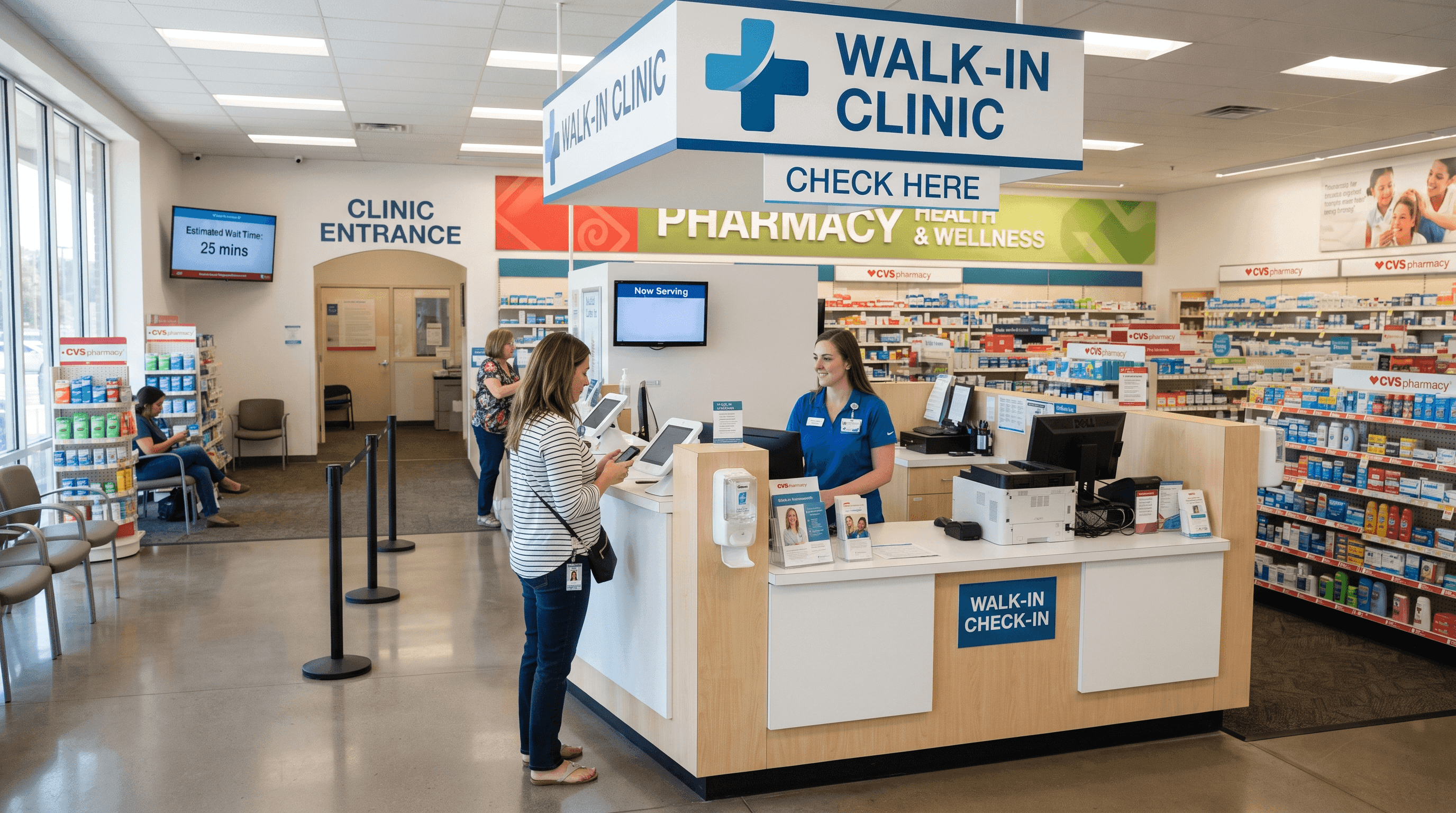
Visits generally cost between $59 and $150 out of pocket depending on the service, with common weekend visits like strep throat, pink eye, and minor infections landing on the lower end of that range. MinuteClinic accepts most major insurance plans and is staffed by nurse practitioners and physician assistants rather than physicians, which keeps costs down for straightforward issues. It isn't the right choice for anything needing an X-ray, stitches, or a more complex evaluation.
When Should I Go to Urgent Care Instead of Using Telehealth?
Urgent care centers are the better weekend choice when your symptom needs something telehealth can't provide, like an X-ray, a wound that needs stitches, or IV fluids for dehydration.
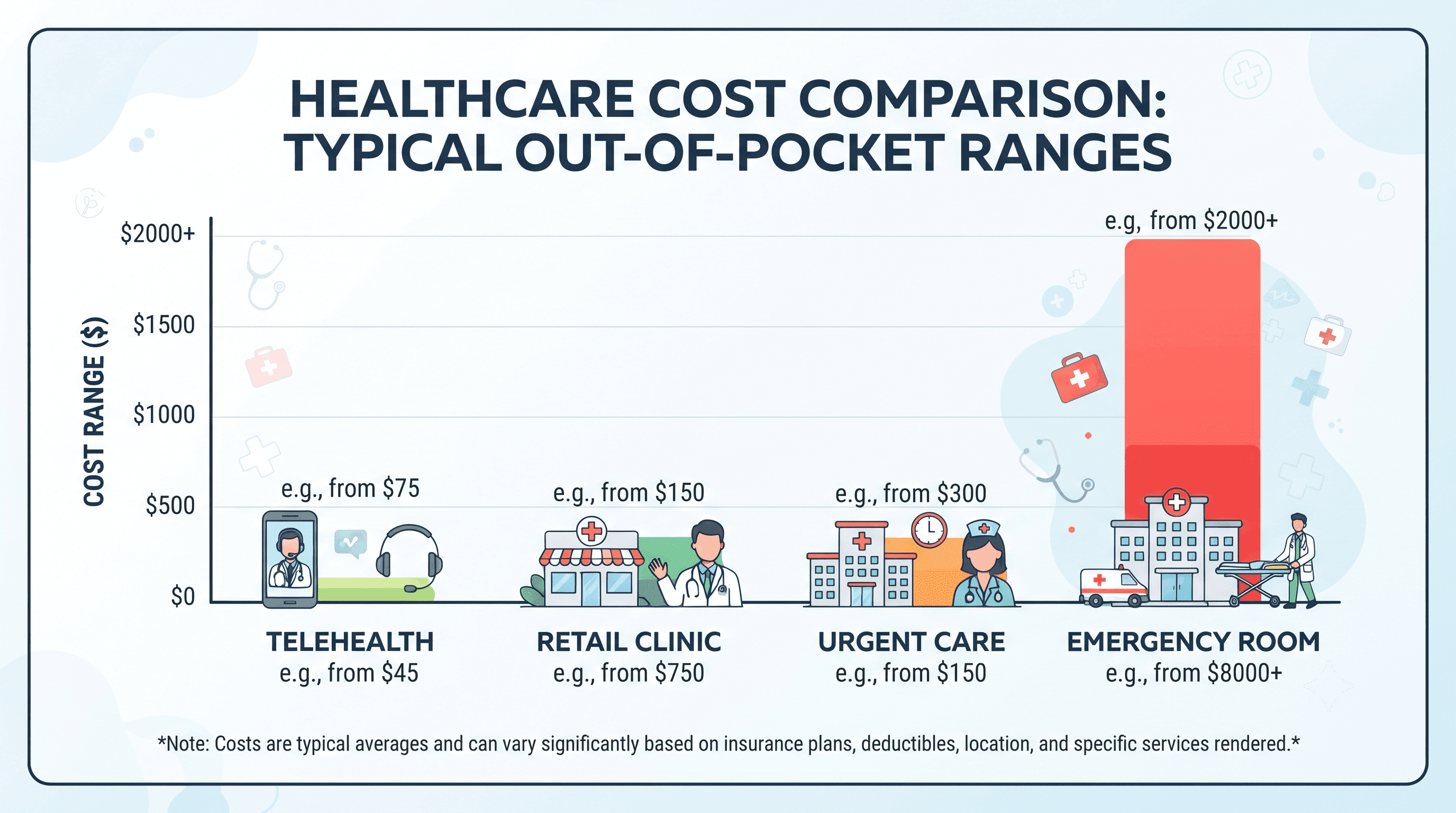
Self-pay urgent care visits typically run $100 to $280 for a standard evaluation, with add-ons like X-rays or lab tests pushing costs to $300 to $500 or more. With insurance, a copay is usually lower than an emergency room copay for the same complaint. Most centers are open evenings and weekends but are not open 24 hours, so it's worth calling ahead to confirm hours before you go.
Is a Nurse Advice Line Free?
For most people with insurance or an employer health plan, yes. Nurse advice lines connect you by phone with a registered nurse who can help you decide whether a symptom needs immediate care, can wait for a telehealth or in-person visit, or can be managed at home. They don't diagnose or prescribe, but they're a useful, no-cost first call when you're not sure how urgent something is, and many are staffed 24/7 including weekends. Check the back of your insurance card or your plan's member portal for the number.
What About Community Health Centers and Employer Telehealth Benefits?
Community health centers, often called Federally Qualified Health Centers (FQHCs), offer sliding-scale fees based on income, which makes them a strong option for uninsured patients. Weekend hours vary significantly by location, so this option requires more planning than a walk-in clinic or telehealth visit.
If you get health insurance through an employer, check your benefits before paying out of pocket anywhere. Many employer plans include free or low-copay access to a telehealth platform like Teladoc, which can make it the cheapest option on this list if you already qualify.
When Is a Weekend Symptom Actually an Emergency?
None of the options above are appropriate for emergency symptoms. Seek emergency care immediately, by calling 911 or going to the nearest emergency room, for:
- Chest pain
- Stroke symptoms, such as sudden numbness, confusion, or trouble speaking
- Difficulty breathing
- Severe bleeding
- Loss of consciousness
- Severe allergic reactions
- Suicidal thoughts
Weekend telehealth platforms, retail clinics, and guidance tools are built for non-emergency concerns. Using them to evaluate an emergency symptom can delay the care you actually need.
Bottom Line
For most weekend situations, start with whichever is fastest for your specific need: a telehealth visit if you just need to talk to someone, a retail clinic if you'd rather be seen in person without an appointment, or a physician-reviewed guidance platform like Momentary if you're not yet sure which of those makes sense. Save urgent care for anything that needs a hands-on exam, and never wait out a possible emergency to see if it resolves by Monday.
Frequently Asked Questions
Can I get medical advice on weekends without seeing my regular doctor? Yes. Telehealth platforms, retail health clinics, urgent care centers, and nurse advice lines are all available on weekends, and most don't require an existing relationship with a doctor.
Is telehealth available on weekends? Most major telehealth platforms, including Teladoc and PlushCare, offer weekend appointments, and some operate 24/7.
Should I go to urgent care or use telehealth on a weekend? Use telehealth for symptoms that can be evaluated by phone or video, such as cold symptoms or a suspected UTI. Choose urgent care if you need an X-ray, stitches, or a physical exam.
Is a nurse advice line free? For most people with insurance or an employer health plan, yes. Check your insurance card or plan portal for the number.
Can an AI symptom checker replace a doctor on the weekend? No. Tools like Momentary are designed to help you understand symptoms and figure out an appropriate next step, not to diagnose conditions or replace a physician's evaluation.
What should I do if my weekend symptom feels like an emergency? Call 911 or go to the nearest emergency room. Do not use telehealth, a retail clinic, or an AI guidance tool for emergency symptoms such as chest pain, stroke symptoms, or severe bleeding.


