
Your finger clip says 97%. But how much should you actually trust that number?
Pulse oximeters became household items during the COVID-19 pandemic, and they've stayed there. Millions of people now track blood oxygen daily, through bedside finger clip devices, Garmin watches, Apple Watches, and even free smartphone apps. Most people using these devices have no idea how wide the margin of error actually is, or which factors quietly distort the reading without any warning on the screen.
This guide pulls from FDA safety communications, peer-reviewed clinical studies, and the January 2025 draft guidance update to give you a straight, research-grounded answer. If you want help connecting with a clinician who can interpret your readings in context, find a doctor near you.
How Accurate Are Consumer Pulse Oximeters? FDA Data and Real-World Evidence
A pulse oximeter measures peripheral oxygen saturation (SpO2), the estimated percentage of hemoglobin in your blood that is carrying oxygen, by shining red and infrared light through your fingertip and measuring how much light passes through. Oxygenated hemoglobin absorbs light differently than deoxygenated hemoglobin, and the device calculates your saturation from that difference.
The key word is estimated. SpO2 is not a direct measurement. The true reference standard is an arterial blood gas (ABG) test, which samples blood directly from an artery and measures oxygen saturation in a laboratory (reported as SaO2). Pulse oximeters estimate SaO2 optically, which introduces inherent error.
The FDA Accuracy Threshold
The FDA requires cleared pulse oximeters to demonstrate an Arms (root mean square) accuracy of ±3% or better in the SpO2 range of 70–100%. In practical terms: if your oximeter reads 95%, the true arterial saturation could fall anywhere between 92% and 98%.
That range matters more at lower readings. A device reading 90% could reflect a true saturation as low as 87%, a clinically meaningful difference. Below 80% SpO2, accuracy degrades significantly, because most FDA clearance studies do not collect enough low-saturation data points to validate performance in that range.
OTC vs. Prescription Devices
The FDA distinguishes between prescription-grade and over-the-counter (OTC) pulse oximeters. Prescription devices must meet the clinical-grade ±3% ARMS standard and carry a cleared 510(k) designation. OTC consumer devices sold at pharmacies are held to less rigorous pre-market standards.
A 2016 study published in Anesthesia & Analgesia (Lipnick et al.) tested six inexpensive pulse oximeters not cleared by the FDA and found that several failed to meet accuracy standards at oxygen saturations below 90%. Some overestimated saturation by more than 4 percentage points, wide enough to mask genuinely low oxygen levels.
SpO2 Reading Interpretation at a Glance
| SpO2 Reading | General Interpretation | Suggested Action |
|---|---|---|
| 95–100% | Normal range for most adults | Routine monitoring |
| 91–94% | Below typical normal; warrants attention | Repeat reading; note symptoms; consult a doctor |
| 88–90% | Low; potentially significant | Contact a healthcare provider promptly |
| Below 88% | Clinically low | Seek medical evaluation |
Note: Normal ranges differ for people with COPD and other chronic lung conditions. A doctor can advise on what target range applies to your specific situation.
Are Cheap Pulse Oximeters Accurate Enough?
Price does not reliably predict accuracy in OTC pulse oximeters. FDA clearance is a stronger indicator than cost. Before purchasing, check whether the device carries a 510(k) clearance number, which you can verify on the FDA's device database. Devices without that designation have not been evaluated against clinical standards.
How Skin Tone Affects Pulse Oximeter Accuracy: The Evidence and What to Do
This is the most clinically significant accuracy gap in pulse oximetry, and it is documented at the highest levels of medical research.
Why Melanin Causes Overestimation
Pulse oximeters calibrate their light-absorption calculations based on assumptions about how much of the light scattering in the fingertip comes from hemoglobin versus surrounding tissue. Melanin, the pigment that determines skin color, absorbs some of the same infrared wavelengths used to measure oxygen saturation. Higher melanin concentrations interfere with that calculation, causing the device to report a higher SpO2 than actually exists.
This is not a flaw in any single product. It reflects how the physics of optical measurement interacts with biological variation, a limitation built into the measurement method itself.
What the Research Shows
A landmark 2020 study published in the New England Journal of Medicine by Sjoding et al. analyzed 10,789 paired pulse oximetry and arterial blood gas measurements from hospitalized patients. Black patients were nearly three times as likely as white patients to have occult hypoxemia, a true arterial oxygen saturation below 88% that the pulse oximeter missed, reading instead as 92–96%. The device appeared normal while the patient was actually hypoxic.
This finding has direct clinical consequences. During the COVID-19 pandemic, patients with darker skin tones who were hypoxic may not have met hospitalization criteria based on pulse oximetry readings that overestimated their actual oxygen levels. Physicians who relied solely on the device reading may have discharged patients who needed supplemental oxygen.
The January 2025 FDA Draft Guidance: What Is Changing
The FDA released draft guidance in January 2025 that substantially revises the standards for pulse oximeter testing. Key changes include:
- Participant minimum: Increased from 10 to at least 150 subjects per study
- Data points: Increased from 200 to a minimum of 3,000 paired measurements
- Skin tone classification: The FDA now recommends the Monk Skin Tone (MST) Scale and Individual Typology Angle (ITA) objective measurement as replacements for the older Fitzpatrick Scale, which clinical researchers had criticized as insufficiently granular for darker skin tones
- Distribution requirement: At least 25% of study participants must have darker skin tones as defined by MST and ITA thresholds
This guidance is currently in draft form and has not yet been finalized. Devices already on the market were cleared under the older, less rigorous standards. That means the pulse oximeter currently in your medicine cabinet, even if FDA-cleared, was not necessarily tested on a representative sample of skin tones.
What This Means for Darker-Skinned Readers Right Now
If you have a deeper skin tone, the practical takeaway is not to stop using a pulse oximeter. It is to interpret readings with appropriate caution:
- A reading of 95% or above on a consumer oximeter may be reliable; a reading in the 92–94% range deserves more scrutiny
- Pair the reading with how you actually feel: breathing effort, fatigue, confusion, and chest discomfort are symptoms that matter regardless of what the screen says
- If you are monitoring a chronic condition such as COPD, heart failure, or sleep apnea, a clinician familiar with your baseline is better positioned to interpret trends than the device reading alone
Does Nail Polish Affect Pulse Oximeter Readings? Which Colors Cause Problems?
The short answer: some colors cause measurable interference, but the clinical impact is usually small.
A study published in Anaesthesia (Harber et al., 2002) found that nail polish did not significantly affect pulse oximetry measurements in mildly hypoxic subjects. However, the study used a controlled clinical device, not an inexpensive consumer oximeter.
The color and finish of nail polish matter more than the presence of polish itself.
Which Nail Polish Colors Cause the Most Interference?
| Polish Type | Interference Level | Notes |
|---|---|---|
| Dark blue, black, dark purple | Moderate to high | Absorbs wavelengths used by oximeter |
| Green | Moderate | Similar absorption spectrum issue |
| Red, pink, clear | Low to minimal | Closest to the oximeter's reference calibration |
| Gel/acrylic overlays | Low to moderate | Thickness and opacity are the main factors |
| Glitter or metallic | Low to moderate | Reflective surfaces can scatter light |
If you get an unexpectedly low reading and are wearing dark nail polish, remove the polish from one finger, wait 30 seconds for the device to stabilize, and repeat the measurement. Alternatively, try the earlobe if your device has an earlobe probe, as earlobes are not affected by nail polish.
Can a Pulse Oximeter Detect Anemia or Carbon Monoxide Poisoning?
These are two of the most common misconceptions about pulse oximeters, and both carry real safety implications.
Anemia
A pulse oximeter cannot detect anemia. Anemia is a reduction in the total amount of hemoglobin in the blood, meaning fewer red blood cells or red blood cells carrying less hemoglobin. A pulse oximeter measures what percentage of available hemoglobin is carrying oxygen, not how much hemoglobin exists in total.
A person with severe anemia can show a SpO2 reading of 99% because nearly all of their (reduced) hemoglobin is fully oxygenated. The device has no way of knowing that the total oxygen-carrying capacity is significantly reduced. Diagnosing anemia requires a blood test, specifically a complete blood count (CBC).
Carbon Monoxide Poisoning
A pulse oximeter also cannot detect carbon monoxide (CO) poisoning, and this is an important safety limitation.
Carbon monoxide binds to hemoglobin to form carboxyhemoglobin (COHb). Standard pulse oximeters cannot distinguish between oxyhemoglobin and carboxyhemoglobin because both absorb light at very similar wavelengths in the red spectrum. A person with significant CO poisoning may show a falsely normal, or even elevated, SpO2 reading while their blood carries a gas with no usable oxygen.
Only specialized co-oximeters used in hospital laboratories can distinguish COHb from oxyhemoglobin. If you suspect CO exposure, do not rely on a pulse oximeter. Seek emergency care immediately.
Garmin Pulse Oximeter Accuracy: How Smartwatch SpO2 Compares to Medical Devices
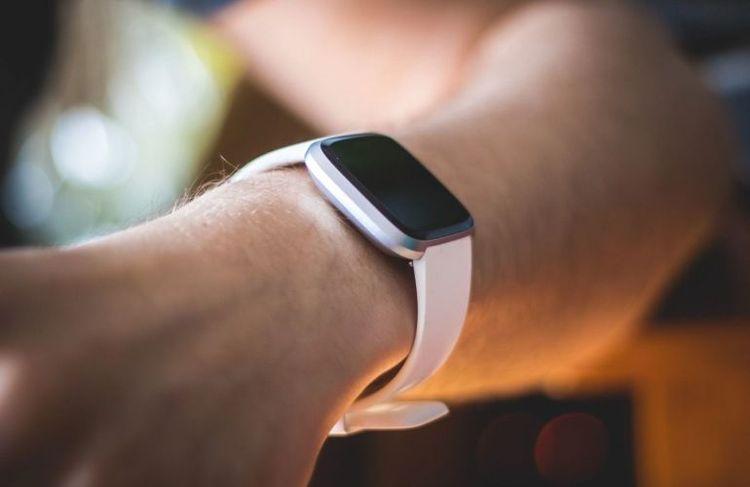
Garmin watches with pulse oximetry, including the Fenix, Forerunner, and Venu series, use a technology called reflectance photoplethysmography (PPG), which is fundamentally different from the transmission-based method used in finger clip oximeters.
Reflectance vs. Transmission: The Key Difference
Finger clip oximeters work by shining light through a thin, highly vascularized tissue (the fingertip) and measuring what reaches the other side. This transmission method provides a clean, high-fidelity signal.
Wrist-worn devices like Garmin, Apple Watch, and Samsung Galaxy Watch instead shine light into the wrist skin and measure the light that reflects back. The wrist is thicker, has less consistent vascularization, and sits on a bony surface, all of which reduce signal quality. Motion, sweat, and loose band fit compound the problem.
What the Research Shows on Smartwatch SpO2 Accuracy
Published research on wrist-worn SpO2 accuracy consistently finds limitations compared to fingertip transmission devices. Studies comparing reflectance PPG wearables to arterial blood gas reference measurements have found that consumer smartwatches tend to show adequate specificity for identifying normal readings but lower sensitivity for detecting true hypoxemia, meaning they can miss clinically low oxygen levels. Accuracy further declines with motion or poor peripheral circulation.
Garmin's own device documentation classifies its SpO2 feature as a wellness tool, not a medical device. The Garmin pulse oximeter is designed for altitude acclimatization tracking and general trend monitoring, not clinical-grade SpO2 measurement.
When a Smartwatch Reading Is Good Enough, and When It Is Not
| Use Case | Smartwatch SpO2 Reliable? |
|---|---|
| Altitude acclimatization hiking | Yes: trend direction is useful |
| Sleep tracking for general wellness | Yes: broad patterns, not precision |
| Monitoring post-exercise recovery | Caution: motion artifact distorts readings |
| Managing a chronic lung condition (COPD) | No: use an FDA-cleared fingertip device |
| Checking for suspected hypoxemia | No: verify with a clinical device |
| Overnight sleep apnea screening | No: clinical evaluation required for diagnosis |
For anything beyond general wellness tracking, a fingertip pulse oximeter with FDA clearance gives you a substantially more reliable reading than any current wrist-worn device. For continuous health monitoring without guesswork, clinically validated tools remain the standard.
Pulse Oximeter Apps on iPhone and Android: Do They Actually Work?
Free pulse oximeter apps that use your smartphone camera and flashlight are widely available on both the App Store and Google Play. The mechanism sounds plausible: the camera detects color changes in the capillaries of your fingertip as blood pulses through.
The evidence does not support their clinical use.
Smartphone camera sensors are not calibrated for SpO2 measurement. They were designed for photography. The light characteristics, sensor sensitivity, and calibration algorithms differ fundamentally from an optical oximeter. Published validations of these apps against arterial blood gas reference standards have found error margins that make them unreliable for any clinical interpretation.
The FDA has not cleared any free smartphone pulse oximeter app for medical use as of early 2025. A basic FDA-cleared fingertip pulse oximeter costs between $20 and $40 and provides substantially more reliable measurements.
Why Your Pulse Oximeter May Not Be Reading and How to Fix It
A pulse oximeter that displays no reading, or an intermittent, unstable one, is usually a fixable user problem rather than a device failure. Here are the most common causes and how to address each.
Step-by-Step: Getting a Reliable Reading
-
Warm your hands first. Cold fingers cause vasoconstriction (narrowing of the blood vessels), which reduces peripheral blood flow and makes it harder for the device to detect a signal. Run your hands under warm water or rub them together for 30 seconds before placing the device.
-
Sit still and hold the position. Motion is the single most common cause of inaccurate or absent readings. Rest your hand on a flat surface with your elbow slightly lower than your heart, and don't move for the full reading.
-
Wait 30 seconds before recording. Pulse oximeter readings need time to stabilize after device placement. Reading the first number that appears captures the device's initial calibration phase, not its settled estimate.
-
Try different fingers. The index and middle fingers typically provide the strongest signal. Ring and little fingers may give weaker readings. Avoid fingers with cuts, calluses, or very thick skin.
-
Remove nail polish or try a different finger. Dark nail polish on the target finger can interfere with the signal. Switch to an unpainted finger and repeat.
-
Check for correct placement. The finger should be fully inserted so the tip presses against the back of the probe. A partial insertion produces an incomplete reading.
-
Check device battery. Low battery is a frequent cause of dropped or unstable readings, even in devices that appear to be on.
When to Repeat, and on Which Finger
If a reading seems inconsistent with how you feel, take two additional readings on different fingers separated by 60 seconds each. If the readings vary by more than 3–4 percentage points, the device may have a signal quality problem. If you are monitoring ongoing illness, record the finger used each time so comparisons stay consistent.
Pulse Oximeter Accuracy in Special Populations
Standard pulse oximeter accuracy data is collected primarily in healthy adults at normal oxygen levels. Several populations fall meaningfully outside those conditions.
COPD and Chronic Lung Disease
People with chronic obstructive pulmonary disease (COPD) frequently have lower baseline SpO2 levels than the general population. A resting SpO2 of 88–92% may represent someone's stable chronic baseline rather than an acute drop. The standard "below 95% is concerning" threshold does not apply universally.
For COPD patients, the relevant questions are: What is your baseline? Has your reading dropped from that baseline? A doctor familiar with your lung function should establish your personal target range. Many COPD patients are prescribed supplemental oxygen at saturations below 88%, but the exact threshold differs by case.
Children and Infants
Pediatric pulse oximetry requires devices validated for smaller finger anatomy. Standard adult finger clip devices may not seat correctly on infant or toddler fingers, producing unreliable readings. Pediatric wrap-style probes designed for smaller digits are the appropriate tool for young children. Normal SpO2 in a healthy newborn stabilizes around 95–100% after the first few minutes of life, though the transition period requires clinical interpretation.
Athletes and Post-Exercise Readings
After intense exercise, peripheral vasoconstriction can temporarily produce lower readings that do not reflect true arterial saturation. Elite endurance athletes often train with protocols where resting SpO2 may run lower than average. A reading of 93% on a competitive swimmer immediately after a maximum-effort set is a very different clinical picture than the same reading in a resting adult.
When to Trust Your Reading, and When to Call a Doctor
A single pulse oximeter reading tells you less than you might think. Trends over time, combined with your symptoms, give a clearer picture.
The Reading + Symptoms Framework
The FDA recommends tracking oxygen saturation over time rather than relying on any single measurement. A reading of 94% with no symptoms, in someone who always runs around 94%, is less urgent than a reading of 96% in someone who normally reads 99% and is now short of breath.
Use this framework:
Seek emergency care if:
- SpO2 reads below 90% on repeated measurements, regardless of symptoms
- SpO2 reads 90–93% AND you have shortness of breath, confusion, or chest pain
- Your reading drops 4 or more points from your personal baseline with any respiratory symptoms
Contact a healthcare provider promptly if:
- SpO2 consistently reads 91–94% and this is lower than your usual baseline
- You feel short of breath and your reading does not explain it (possible CO poisoning or anemia, neither of which a pulse oximeter detects)
- Your device repeatedly fails to get a reading despite correct technique
Watchful waiting (monitor and reassess):
- SpO2 reads 95–100% with no respiratory symptoms
- A single low reading that returns to normal on a second measurement with correct technique
Signs That Your Reading May Be Inaccurate
The device may be giving you an unreliable number when:
- You have dark nail polish on the measured finger
- Your hands are cold or circulation is poor
- You moved during the reading
- You have a darker skin tone (possible overestimation)
- The device is an uncleared smartphone app or a wristwatch SpO2 feature
In any of these situations, the reading deserves less confidence than one taken under ideal conditions with a cleared fingertip device.
Frequently Asked Questions
How accurate are consumer pulse oximeters? FDA-cleared consumer pulse oximeters are required to meet an accuracy standard of ±3% ARMS in the 70–100% SpO2 range. In practice, a reading of 95% could reflect a true saturation between 92% and 98%. Accuracy decreases further at lower SpO2 values, and devices not cleared by the FDA may perform considerably worse.
Does nail polish affect pulse oximeter accuracy? Dark-colored nail polish, particularly black, dark blue, dark purple, and green, can interfere with the light wavelengths used to measure SpO2. The effect is generally small but may be relevant if baseline readings are already borderline. Removing polish from the measured finger or switching to an unpainted digit resolves the issue.
Does skin color affect pulse oximeter readings? Yes. A landmark NEJM study found that Black patients were nearly three times as likely to have occult hypoxemia, true low oxygen levels missed by pulse oximetry, compared to white patients. Melanin in the skin absorbs infrared light in the same spectrum used for SpO2 measurement, causing devices to overestimate oxygen saturation in people with darker skin tones.
Can a pulse oximeter detect anemia? No. A pulse oximeter measures what percentage of available hemoglobin is carrying oxygen, not how much hemoglobin exists in total. A person with severe anemia can show a perfectly normal SpO2 reading. Anemia requires blood testing for diagnosis.
Does a pulse oximeter measure blood pressure? No. A pulse oximeter measures oxygen saturation (SpO2) and pulse rate only. It does not measure blood pressure. Blood pressure is a separate physiological measurement that requires a cuff-based sphygmomanometer to detect resistance in blood flow.
This content is for general informational purposes only and does not constitute medical advice. Individual clinical decisions should be made in consultation with a qualified healthcare provider. Not sure where to start? Learn about virtual primary care or find a doctor near you to discuss your oxygen monitoring needs.