
Wrist blood pressure monitors are everywhere. They are compact, easy to store, and far more comfortable for many people than wrapping an upper-arm cuff. For people trying to understand their readings or figure out what high blood pressure actually feels like, having a reliable device at home matters. So it makes sense to ask: are wrist blood pressure monitors accurate enough to trust?
The answer depends on three things working together: the device meeting validated clinical standards, correct positioning technique, and an understanding of how wrist anatomy affects readings. When all three align, a wrist monitor can produce reliable results. When even one is off, readings can drift by 10 mmHg or more.
This guide covers what the clinical evidence says, why wrist readings commonly run higher than arm readings, how to use a wrist monitor correctly, and how to check whether a device has been formally validated.
At a Glance
| Topic | Key Facts |
|---|---|
| Gold standard for home monitoring | Upper-arm cuff monitor |
| AHA recommendation | Upper-arm preferred; wrist acceptable when arm cuff is not suitable |
| Typical home measurement error (wrist) | Up to +5.6 mmHg systolic / +5.4 mmHg diastolic vs. arm (when position is wrong) |
| Primary source of error | Incorrect wrist positioning relative to heart level |
| How to check validation | AMA Validated Device Listing at validatebp.org |
| Wrist monitors vs. smartwatches | Fundamentally different technologies; not interchangeable |
Wrist vs. Upper-Arm Blood Pressure Monitors: Key Differences
Both device types measure blood pressure using oscillometric technology, but they measure at different points in the arterial tree. An upper-arm cuff inflates around the brachial artery, which sits close to heart level and is large enough to produce a stable oscillometric signal. A wrist cuff measures at the radial artery, which is narrower, shallower under the skin, and positioned at a point where blood pressure values naturally differ from those at the brachial artery.
According to the American Heart Association, wrist and finger monitors are not recommended as primary devices because they give less reliable readings. That recommendation reflects real-world performance across a broad population, not a finding that wrist monitors are inherently broken. An upper-arm monitor is simply easier to position correctly, which makes consistent accuracy more achievable for most people.
The practical difference between the two comes down to positioning sensitivity. Upper-arm cuffs are forgiving because the brachial artery naturally sits near heart level when an arm rests on a table. Wrist cuffs require deliberate positioning because the radial artery can be anywhere from six to ten centimeters below or above heart level depending on how an arm is held, and every centimeter of height difference introduces measurable error.

How Accurate Are Wrist BP Monitors? What the Clinical Evidence Says
The clinical literature gives a nuanced picture. Wrist monitors can be accurate under controlled, supervised conditions. Under real-world home conditions, accuracy is often lower for most users.
A widely cited study published in Hypertension examined 721 unselected adults from the general population who measured their blood pressure at home using both an upper-arm and a wrist device. In a supervised office setting, wrist systolic blood pressure was 2.5% lower than the arm reading. At home without supervision, wrist systolic readings were on average 5.6% higher than arm readings, and diastolic readings were 5.4% higher. The driving factor was incorrect wrist positioning during unsupervised home use. (Casiglia E et al., Hypertension 2016, AHA Journals)
Stergiou GS, Palatini P et al., published in the Journal of Hypertension (2019), established that the accuracy of home blood pressure devices varies considerably depending on whether a device has been formally validated against a reference standard, and that user technique remains the dominant source of error in community settings.
A calibration study published in PMC found that a wrist cuff device iteratively calibrated against intra-arterial pressure measurements met clinical accuracy standards for systolic hypertension management, suggesting that device quality and calibration both matter considerably. (Inan OT et al., JMIR mHealth uHealth 2018, PMC)
The takeaway: validation status and user technique together determine whether a wrist monitor is reliable. A validated device used with correct technique can produce readings comparable to an upper-arm monitor used at home. An unvalidated device, or a validated one used with poor technique, cannot.
For people managing hypertension who want accurate at-home blood pressure tracking, device selection and consistent technique are not optional extras. It is also worth knowing that lifestyle adjustments, including some simple approaches to lowering blood pressure, can complement regular monitoring as part of a broader management plan.
Why Wrist Readings Run Higher: Position, Anatomy, and User Error
Three factors combine to explain why wrist readings are often elevated compared to arm readings.
The hydrostatic pressure effect
Blood pressure is sensitive to the height of the measurement point relative to the heart. When the wrist sits below heart level, the weight of the blood column between the heart and the measurement site adds to the recorded pressure, producing a falsely high reading. When the wrist sits above heart level, the reading can be falsely low. Research confirms that blood pressure changes by approximately 0.735 mmHg for every centimeter of height difference, meaning a 10 cm positional error translates to roughly 7 mmHg of reading error. (Hypertension Research, Nature 2024)
Research published in Hypertension quantified this in real-world conditions: the average level discrepancy between the heart and the wrist during unsupervised home measurement was approximately 10 cm, which corresponds closely to the observed measurement errors. (Casiglia E et al., Hypertension 2016, AHA Journals)
Wrist anatomy
The radial artery is narrower and sits closer to the skin surface than the brachial artery. This makes the oscillometric signal slightly less stable, which can introduce variability even when positioning is correct. Additionally, in some individuals, wrist and arm blood pressure values differ physiologically, meaning one is consistently higher or lower than the other independent of positioning errors.
User error in practice
Poor positioning is the most common and correctable source of error. The three positioning mistakes that appear most often in clinical assessments are resting the wrist on a desk (which places it below heart level), letting the arm hang at the side (wrist substantially below heart level), and bending the wrist during measurement. Each of these consistently elevates wrist readings.

Correct Wrist Cuff Placement and Technique for Accurate Readings
Correct technique is the single most controllable factor in wrist monitor accuracy. The steps below reflect guidance from the American Heart Association and clinical research on validated device usage.
Before the reading:
- Avoid caffeine, smoking, and exercise for at least 30 minutes beforehand
- Use the bathroom if needed; a full bladder can slightly elevate readings
- Sit quietly for five minutes without talking, texting, or watching television
- Sit with the back supported and feet flat on the floor, legs uncrossed
Positioning the cuff:
- Place the cuff directly on the wrist, not over clothing
- Position it at the radial pulse point as specified in the device's instruction manual (typically 1 to 1.5 cm above the wrist crease)
- With the elbow resting on a table, bend the arm so the wrist is level with the heart. One practical method: rest the wrist and hand lightly against the chest with the elbow supported on the table. This is the position recommended by the AMA for wrist monitors
- Keep the wrist straight throughout the reading; any flexion or extension changes the arterial compression
During the reading:
- Keep still and do not talk
- Take two or three readings one minute apart
- Record all readings; the average of the last two provides the most representative result
For long-term tracking:
- Measure at the same time each day, typically morning before medication and evening before dinner
- Keep a written log or use a device with memory storage and share it with a clinician
- If readings consistently differ by more than 10 mmHg from those measured at a medical office, bring the device to the appointment for side-by-side comparison
A clinically validated BP monitor used with this protocol gives results that can meaningfully contribute to hypertension management decisions alongside regular clinical assessments.
Best Wrist Blood Pressure Monitors in 2026: Omron, Care Touch, Equate Reviewed
The market for wrist blood pressure monitors spans a wide range of quality, price, and validation status. Only devices that have been independently tested and listed on a validated device registry should be considered for clinical use or ongoing hypertension monitoring.
Omron wrist blood pressure monitors (including the Omron Series 7 blood pressure monitor line) consistently appear on validated device listings and have been tested in multiple independent studies. Omron blood pressure monitor accuracy has been assessed under both supervised and unsupervised conditions, and the brand's devices tend to score well for oscillometric signal quality and feature sets including irregular heartbeat detection.
Care Touch digital wrist blood pressure monitors are available at accessible price points. Validation status varies by model; checking the current AMA Validated Device Listing before purchase is recommended regardless of brand.
Equate wrist blood pressure monitors (a Walmart house brand) and Walgreens wrist blood pressure monitors (Relion blood pressure wrist monitor included) are budget-accessible options. Some models have been validated; others have not. The brand name alone is not a reliable proxy for validation status.
Homedics Bluetooth wrist blood pressure monitor models offer app connectivity for tracking over time, but Bluetooth convenience does not imply clinical validation. Connectivity and accuracy are separate attributes.
The most accurate blood pressure monitor for any individual is the one that is validated, fits correctly, and is used with consistent technique.
What to look for regardless of brand:
- Appears on the AMA Validated Device Listing (validatebp.org) or the dabl Educational Trust database (dableducational.org)
- Meets AAMI/ESH/ISO accuracy standards
- Comes with clear positioning guidance
- Has a cuff that fits the wrist circumference as specified in the manual
If cost is a barrier, it is worth checking whether a free blood pressure monitor is available through insurance, a pharmacy program, or community health resources before purchasing out of pocket.
FDA-Validated Wrist Monitors: How to Check if Yours Qualifies
FDA-cleared and clinically validated are related but distinct concepts for blood pressure monitors in the US market.
FDA clearance (typically via the 510(k) pathway) confirms that a device is substantially equivalent to a legally marketed predicate device and is safe for use. It does not independently confirm that the device meets the accuracy thresholds set by clinical validation protocols such as the AAMI/ESH/ISO standard.
Clinical validation means the device has been tested in an independent study using a protocol such as the Universal Standard developed by Stergiou GS et al. and published in Hypertension (2018), which requires that device readings fall within 5 mmHg of a reference measurement for a defined percentage of test participants. The AAMI/ESH/ISO universal validation protocol sets the current benchmark for what constitutes a clinically validated device.
The practical way to check validation status in the US:
- Go to validatebp.org, the AMA's Validated Device Listing
- Use the filter to select "Wrist" as the cuff location
- Check whether the specific model (not just the brand) appears on the list
- Cross-reference with the dabl Educational Trust database for additional global validation data
A wrist blood pressure monitor FDA approved for sale in the US may not appear on these validation lists. Many commercially available devices have not been independently validated. That gap matters because unvalidated devices may show consistent offsets that affect how readings are interpreted over time.
If a currently owned device is not on either list, the practical option is to bring it to a clinical appointment for side-by-side comparison against a calibrated upper-arm device. A consistent directional offset (for example, always reading 8 mmHg higher than the arm) can be documented and factored into interpretation, though it does not substitute for using a validated device.
Blood pressure monitors can also lose calibration accuracy over time, particularly after three to five years of regular use or following physical impact. Annual calibration checks at a clinical appointment are a reasonable practice for any home monitor.
When to Choose Wrist vs. Arm: Use Cases, Pros and Cons
An upper-arm cuff is appropriate for most adults monitoring blood pressure at home. A wrist monitor may be the better choice in specific circumstances.
When a wrist monitor is medically appropriate
- The upper arm circumference exceeds the maximum cuff size available. Because wrist circumference varies much less across individuals, a single wrist cuff size accommodates most adults
- Lymph node removal from the axilla (armpit) on both sides makes upper-arm cuffing medically inadvisable
- Conditions affecting upper-arm skin integrity, wounds, dialysis access sites, or arteriovenous fistulas preclude upper-arm use
- Severe arthritis or upper-extremity mobility limitations make wrapping and positioning an upper-arm cuff impractical
When an upper-arm monitor is strongly preferred
- Active hypertension management requiring high-accuracy readings
- Atrial fibrillation or other significant arrhythmias; oscillometric devices at both locations can misread irregular rhythms, but upper-arm devices with validated arrhythmia-detection algorithms are more widely available
- Peripheral vascular disease affecting the radial artery
- Age-related arterial stiffness, which can amplify wrist-brachial pressure differences in older adults
Pros and cons at a glance
| Wrist Monitor | Upper-Arm Monitor | |
|---|---|---|
| Ease of cuffing | High | Moderate |
| Positioning sensitivity | High | Low to moderate |
| Cuff size variability | Low (one size fits most) | High (multiple sizes needed) |
| Typical real-world accuracy | Lower | Higher |
| Portability | Excellent | Good |
| Validated options available | Yes, but fewer | More widely available |
| Suitable for arrhythmia detection | Limited | More options available |
For people who want accurate at-home blood pressure tracking for hypertension management, an upper-arm monitor remains the first choice unless a clinical reason makes it unsuitable. A doctor consultation can help determine which device type is appropriate for individual circumstances.
Common Errors and How to Troubleshoot Inaccurate Readings
Readings that seem inconsistent, persistently elevated, or noticeably different from those recorded at a medical office usually have identifiable causes.
Reading is consistently higher at home than at the clinic
This is common and not always a sign of device error. White-coat hypertension (elevated blood pressure in a clinical setting) can make home readings appear lower, while masked hypertension (elevated blood pressure at home but normal in clinic) can make home readings appear higher. Other factors such as dehydration can also cause a temporary rise in blood pressure, which may show up on a home reading even when the device is working correctly. Consistently elevated home readings warrant a conversation with a clinician rather than immediate device replacement. If the wrist was not positioned at heart level during home readings, incorrect positioning is the more likely explanation and should be corrected first.
Reading varies widely between back-to-back measurements
Allow a full minute between readings and ensure complete stillness. Talking, movement, or muscle tension in the wrist and hand all affect oscillometric readings. Also verify that the cuff was not placed over clothing or positioned incorrectly.
Wrist reading is consistently 10 or more mmHg higher than a simultaneous upper-arm reading
First rule out positioning error. If readings were taken with the wrist confirmed at heart level and the discrepancy persists across multiple sessions, this may reflect a genuine physiological difference between radial and brachial pressure in that individual, or it may indicate the wrist device is not calibrated accurately. Bringing both devices to a clinical appointment for side-by-side comparison is the appropriate next step.
Device shows an error code or no reading
Irregular heartbeat detection on some devices will return an error or a flag symbol rather than a reading. This does not mean the device is broken; it means it detected an arrhythmia signal and could not confirm a stable reading. Repeat the measurement after resting and, if errors are frequent, discuss with a clinician.
The device has not been used in more than a year
Battery condition, cuff integrity, and calibration can all change over time. Replace batteries if needed, inspect the cuff for cracks or deformities, and perform a side-by-side check at the next clinical appointment.

A Note on Smartwatches and Cuffless Devices
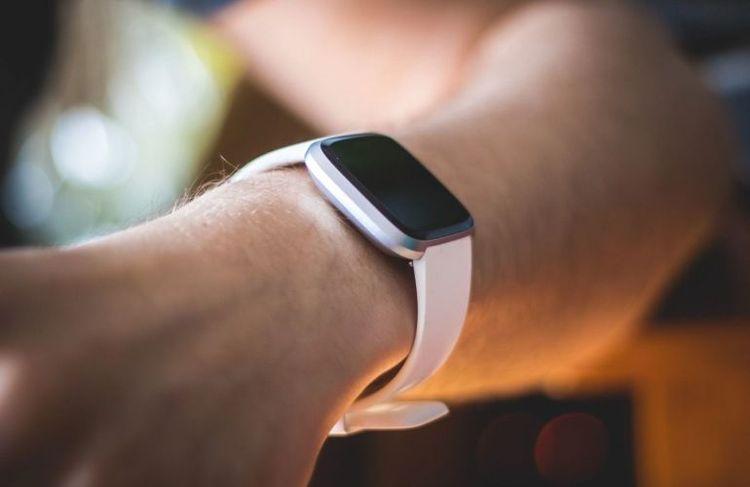
Smartwatches and fitness trackers that claim to measure blood pressure operate differently from dedicated wrist cuff monitors. Devices such as certain Samsung Galaxy Watch models and other wearables use photoplethysmography (PPG) or pulse wave analysis to estimate blood pressure indirectly. These technologies do not inflate a cuff, do not measure arterial compression directly, and are not yet validated against the AAMI/ESH/ISO standard for blood pressure measurement.
As of 2025, no major smartwatch sold in the US, including Apple Watch models, carries FDA clearance for blood pressure monitoring as a standalone clinical measurement. Some devices require periodic calibration against a validated cuff device and function as trend indicators rather than absolute measurements.
Research published in Hypertension Research (2025) summarizing the current state of wearable blood pressure monitoring concluded that while cuffless wearable technologies show promise for continuous monitoring, they are not yet interchangeable with validated cuff-based devices for diagnostic or treatment decisions. (Stergiou GS et al., Nature: Hypertension Research 2025)
Frequently Asked Questions
Are wrist blood pressure monitors as accurate as arm monitors?
Under controlled conditions with correct positioning and a validated device, wrist monitors can produce readings comparable to upper-arm monitors. In real-world home use, wrist monitors are generally less accurate because positioning errors are common and more consequential at the wrist. The American Heart Association recommends upper-arm monitors as the primary choice for home blood pressure measurement.
Why is my wrist blood pressure monitor reading higher than my arm monitor?
The most common reason is wrist positioning below heart level, which adds the weight of the blood column to the recorded pressure. A height difference of 10 cm translates to approximately 7 mmHg of additional reading. Correct the position so the wrist is at heart level and retake both readings. If the discrepancy persists with confirmed correct positioning, the two readings may reflect a genuine physiological difference between the radial and brachial arteries in that individual, or the wrist device may need calibration verification.
What is the correct wrist position for a blood pressure monitor?
With the elbow resting on a table and the arm bent, the wrist should be at the same height as the heart. One method is to hold the wrist and hand lightly against the chest while the elbow is supported. The cuff should be placed directly on the wrist (not over clothing), positioned at the radial pulse as specified in the device's manual, and the wrist should remain straight throughout the reading.
Are wrist blood pressure monitors FDA approved?
Most commercially sold wrist blood pressure monitors in the US have received FDA clearance through the 510(k) process, which confirms substantial equivalence to an existing device. FDA clearance is not the same as clinical validation against an accuracy standard. To verify that a specific model meets clinical validation criteria, check the AMA's Validated Device Listing at validatebp.org or the dabl Educational Trust database.
Which wrist blood pressure monitor is most accurate?
Accuracy varies by model, not just brand. Devices listed on the AMA Validated Device Listing (validatebp.org) and the dabl Educational Trust database have been independently tested against clinical accuracy standards. Among widely available brands, Omron wrist blood pressure monitor models frequently appear on validated lists and have been assessed in peer-reviewed research. Checking validation status for the specific model number before purchase is the most reliable approach.
References
- Stergiou GS et al. A Universal Standard for the Validation of Blood Pressure Measuring Devices. Hypertension. 2018. https://www.ahajournals.org/doi/10.1161/HYPERTENSIONAHA.117.10237
- Stergiou GS, Palatini P et al. Recommendations and practical guidance for performing and reporting validation studies according to the Universal Standard (AAMI/ESH/ISO). Journal of Hypertension. 2019. https://pubmed.ncbi.nlm.nih.gov/30299362/
- Casiglia E, Tikhonoff V, Albertini F, Palatini P. Poor Reliability of Wrist Blood Pressure Self-Measurement at Home. Hypertension. 2016. https://www.ahajournals.org/doi/10.1161/HYPERTENSIONAHA.116.07961
- American Heart Association. Understanding Blood Pressure Readings. https://www.heart.org/en/health-topics/high-blood-pressure/understanding-blood-pressure-readings
- AAMI/ESH/ISO Validation Protocol for BP devices. https://www.ncbi.nlm.nih.gov/pmc/articles/PMC6481562/
- dabl Educational Trust. Validated BP monitors list. https://www.dableducational.org/
- Inan OT et al. A Comparison and Calibration of a Wrist-Worn Blood Pressure Monitor. JMIR mHealth uHealth. 2018. https://pmc.ncbi.nlm.nih.gov/articles/PMC5943631/
- Stergiou GS et al. The quest for accurate wearable blood pressure monitors. Hypertension Research. 2025. https://www.nature.com/articles/s41440-025-02410-w
- Bilo G et al. Blood pressure measurement and nocturnal dipping patterns are heavily affected by body posture through changes in hydrostatic pressure. Hypertension Research. 2024. https://www.nature.com/articles/s41440-024-02056-0