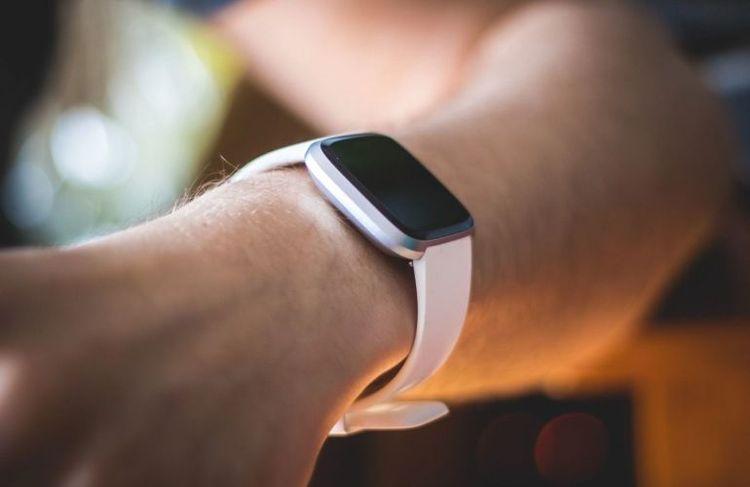

Shopping for a blood glucose monitor watch often feels promising. The ads show sleek wearables and real-time glucose graphs. The reality is more complicated. As of 2026, no standard smartwatch has FDA authorization to measure blood glucose on its own. What does exist, and what genuinely works, depends on understanding the difference between a watch that displays CGM data and one that claims to generate it independently.
This guide explains exactly what Apple Watch, Fitbit, Garmin, WHOOP, and budget glucose watch brands actually do, what the FDA has said about the category, and where the science stands on non-invasive monitoring for the future.
At a Glance: Blood Glucose Monitor Watches (2026)
| Device / Category | Glucose Capability | FDA Status | Best For |
|---|---|---|---|
| Apple Watch (all current models) | Displays CGM data via paired app (Dexcom, Libre) | No built-in glucose sensor authorized | CGM users who want wrist display |
| Fitbit Charge 6 | Manual glucose log + import from select meters/apps | Not a glucose sensor; logging only | Tracking alongside a finger-stick meter |
| Garmin (Venu, Fenix, etc.) | Manual glucose log; no sensor | Not a glucose sensor | Activity-focused users who self-log |
| WHOOP 4.0 | No glucose feature | Not applicable | Recovery and strain tracking only |
| FitSenso / Amazon budget watches | Claim non-invasive glucose sensing | Not FDA authorized | Not recommended for medical use |
| Dexcom G7 (CGM + phone/watch) | Real-time glucose via sensor on arm | FDA-cleared CGM; pairs with Apple Watch, Android | Insulin users needing clinical accuracy |
| Abbott FreeStyle Libre 3 (CGM) | Real-time glucose via sensor on arm | FDA-cleared CGM; pairs with iPhone | T1D and T2D management |
| Dexcom Stelo | Real-time glucose, OTC, no prescription needed | FDA-cleared for non-insulin adults 18+ | Non-insulin T2D, prediabetes, wellness |
Can a Smartwatch Really Monitor Blood Glucose?
No smartwatch currently sold on the mass market can independently measure blood glucose. The U.S. Food and Drug Administration (FDA) issued a formal safety communication warning consumers, patients, caregivers, and healthcare providers not to use smartwatches or smart rings that claim to measure blood glucose without piercing the skin. The FDA has not authorized, cleared, or approved any smartwatch or smart ring intended to measure or estimate blood glucose values on its own.
This distinction matters. There are two completely different things happening in this category:
- Display devices: A smartwatch that receives glucose data from an FDA-cleared CGM (like a Dexcom G7 or FreeStyle Libre 3) worn separately on the arm. The watch acts as a screen, not a sensor.
- Claimed non-invasive sensors: Watches, usually sold cheaply on Amazon or through social media ads, that claim to generate glucose readings from the wrist alone using optical sensors. None of these are FDA-authorized, and their readings have not been validated against clinical standards.
For people with diabetes who rely on accurate numbers to make medication or insulin decisions, the FDA notes that inaccurate blood glucose measurements from unauthorized devices can lead to serious errors in diabetes management. A doctor can advise on which monitoring approach is appropriate for an individual's situation.

Apple Watch Glucose Monitoring: What's Actually Possible in 2026?
The Apple Watch does not contain a blood glucose sensor. No current Apple Watch model, including the Series 10 and Ultra 2, has a built-in mechanism to measure blood sugar.
What the Apple Watch can do is display real-time glucose data from a separately worn CGM. Users with a Dexcom G7 can see live glucose readings directly on their Apple Watch face without needing an iPhone nearby, thanks to direct Bluetooth connectivity introduced with the G7. The Abbott FreeStyle Libre 3 pairs with the iPhone via the LibreLink app, and data can be forwarded to the Apple Watch through the Health app and compatible watch faces.
What Apple is developing: Apple has been researching non-invasive blood glucose monitoring for over a decade. Multiple Bloomberg and industry reports indicate the technology uses optical absorption spectroscopy, shining specific wavelengths of light through the skin to estimate glucose in interstitial fluid. As of 2026, the technology remains several years from commercial viability, with most independent analyst estimates placing a potential consumer-facing feature at 2027 or later, and only after FDA regulatory review. Apple has made no official announcement on timeline or target device.
What this means for users today: Anyone managing diabetes who wants to see glucose readings on an Apple Watch needs to wear a separate FDA-cleared CGM. The watch is a convenient companion display, not a glucose measuring device.
Fitbit & Fitbit Charge 6: Glucose Monitoring Claims Examined
The Fitbit Charge 6 does not have a glucose sensor. It cannot measure blood sugar from the wrist.
What it offers is a glucose logging feature within the Fitbit app. According to Fitbit's official support documentation, users can manually log glucose readings taken from a traditional finger-stick meter, set a target range, and track trends over time alongside sleep, activity, and stress data. The app also allows automatic import of glucose readings from select connected meters and apps, such as the OneTouch Reveal system from LifeScan.
Fitbit Premium subscribers get additional analytics, including 30-day range tracking and pattern analysis across glucose logs and other health metrics.
To be clear about what this is: it is a health journal with trend visualization, not a continuous glucose monitor. The Google Store's Fitbit Charge 6 product page explicitly notes the feature is "not a replacement for medical advice and not intended to diagnose or treat any medical condition."
For people who already use a glucose meter and want to correlate readings with lifestyle data in one app, the Fitbit logging feature adds organizational value. For people who need continuous, automatic glucose monitoring, a dedicated CGM is the appropriate tool.
Garmin, WHOOP & Other Wearables: Glucose Feature Status
Garmin offers glucose log entry in its Garmin Connect app across many of its watches (Venu, Fenix, Forerunner series). Like Fitbit, this is manual data entry from a meter, not sensor-based measurement. Garmin has not announced or released a device with blood glucose sensing capability as of early 2026. The watches are well-regarded for activity tracking, sleep, heart rate variability, and GPS performance, but glucose measurement is not part of the hardware.
WHOOP 4.0 has no glucose feature of any kind. The screen-free recovery band focuses on heart rate variability, sleep quality, respiratory rate, and strain data. WHOOP has not announced a glucose integration or sensing capability.
Samsung Galaxy Watch has been publicly developing non-invasive glucose monitoring technology and has shown prototypes. As of 2026, no Samsung watch has received FDA authorization for glucose sensing. Samsung may release something ahead of Apple in this space, but regulatory approval remains a requirement before it can be recommended for clinical use.
Budget watches on Amazon (including those marketed as "FitSenso" or similar): A growing number of low-cost smartwatches claim to monitor blood glucose using wrist-based optical sensors. The FDA safety communication cited earlier applies directly to these products. Because no such watch has passed the clinical validation required for FDA authorization, their glucose readings cannot be relied upon for medical decisions. A doctor or pharmacist can help identify which tools meet safety standards for a given patient's needs.

Dedicated Glucose Monitor Watches: FitSenso, Stelo & Others Reviewed
This section covers two distinct categories that are often conflated in product searches.
Non-Invasive Wrist-Based Glucose Watches (FitSenso and Similar)
The FitSenso TrackPro and similar devices sold on Amazon and through social media advertising claim to measure glucose non-invasively from the wrist using infrared LEDs and photodiodes. These claims are not supported by FDA authorization, and independent clinical validation for these specific devices has not been published in peer-reviewed literature.
A 2022 study published in Scientific Reports examined non-invasive glucose sensing using optical methods and found that while the approach holds theoretical promise, accuracy enhancement requires careful calibration, temperature control, and individual physiological compensation that current consumer wrist-based sensors do not provide. The gap between laboratory proof-of-concept and a reliable consumer device remains significant.
The FDA's position is clear: these watches are not authorized, and their glucose readings should not be used for medical decisions. For general wellness curiosity without insulin dosing implications, this is a personal decision, but a doctor should be consulted before incorporating any unvalidated glucose reading into a health routine.
Dexcom Stelo: The Over-the-Counter CGM Option
The Dexcom Stelo is an FDA-cleared glucose biosensor designed for adults 18 and older who do not use insulin. It became the first over-the-counter CGM available in the US without a prescription, making it a meaningful option for people with type 2 diabetes managed without insulin, those with prediabetes, or wellness-focused users curious about how food, activity, and sleep affect their glucose.
Stelo is worn on the back of the upper arm (the same position as a Dexcom G7) and transmits glucose readings every 15 minutes to a smartphone app via Bluetooth. It does not include the medical-grade alerts of a prescription CGM and is not intended for people with problematic hypoglycemia or those on dialysis. Wear time is 15 days per sensor.
Stelo is not a watch. It is an arm-worn sensor that sends data to a phone. Some smartwatches may display that data via the app, but the sensor itself is the measuring device.
Abbott Lingo
Abbott's Lingo CGM follows a similar over-the-counter positioning to Stelo and is designed for wellness users. It uses the Libre sensor platform and presents glucose trends through a simplified "Lingo count" metric. Like Stelo, it sends data to a smartphone and can surface readings on a compatible smartwatch display.
How Bluetooth CGMs Pair With Your Phone (Dexcom G7, Libre 3)
FDA-cleared CGMs like the Dexcom G7 and Abbott FreeStyle Libre 3 use Bluetooth Low Energy (BLE) to transmit glucose data from a small sensor worn on the back of the upper arm to a compatible smartphone or, in the case of the G7, directly to an Apple Watch.
Dexcom G7: The G7 sensor integrates the transmitter and sensor into a single small unit worn for up to 15 days. It connects via Bluetooth to the Dexcom app on iOS or Android and, uniquely, directly to Apple Watch via its own Bluetooth channel, bypassing the need for an iPhone to relay data during workouts or other phone-free moments. The ADA 2025 Standards of Care recommends CGM for all people with diabetes who use insulin, and the G7 is among the most widely used devices in this category.
Abbott FreeStyle Libre 3: The Libre 3 sensor is a compact, low-profile CGM sensor, roughly the size of two stacked pennies. It transmits glucose readings every minute to the LibreLink app on a compatible iPhone or Android device. Data can be passed to an Apple Watch via the Health app and third-party watch faces. The Libre 3 does not currently connect directly to Apple Watch the way the Dexcom G7 does; an iPhone must be within Bluetooth range.
Both systems are accessible through continuous glucose monitoring on the go via their respective apps, with data viewable on a wrist display when the phone setup is correctly configured. These FDA-cleared CGMs are currently the only validated route to accurate, continuous readings for people who want to avoid routine finger pricks. The arm sensor does the measuring; the watch or phone displays it.
What to Look for in a Glucose-Tracking Wearable (Accuracy, FDA Status)
Choosing a wearable for glucose tracking requires evaluating several factors that marketing language often obscures.
FDA authorization status: This is the single most important factor. Any device that claims to measure glucose should have an FDA 510(k) clearance or De Novo authorization for that specific function. The FDA's De Novo authorization pathway is one route manufacturers use for novel low-to-moderate risk medical devices, including new classes of non-invasive glucose monitoring devices if they ever meet required accuracy standards. If a product does not reference FDA clearance for glucose specifically, it does not have it.
MARD (Mean Absolute Relative Difference): This is the standard accuracy metric for CGMs. A lower MARD means higher accuracy. According to Dexcom's FDA clearance announcement, the Dexcom G7 15 Day has an overall MARD of 8.0%, making it the most accurate CGM cleared by the FDA for adults as of 2025. The FreeStyle Libre 3 performs comparably in clinical use. Wrist-based non-invasive watches have not published peer-reviewed MARD data.
Intended population: Some CGMs are designed for insulin users and include medical-grade high/low glucose alerts. Others (Stelo, Lingo) are designed for non-insulin users and wellness tracking. Using a wellness device when medical-grade alerts are clinically needed is a mismatch that a healthcare provider can help clarify.
Smartphone dependency: As of 2026, most CGM-to-watch setups still require a smartphone nearby, with the exception of the Dexcom G7 to Apple Watch direct connection. Anyone who wants truly phone-free wrist glucose display should confirm current compatibility before purchasing.
Battery and sensor life: CGM sensors typically last 10 to 15 days before replacement. The Eversense 365 implantable CGM is the exception, lasting up to one year. Sensor replacement cost is an ongoing expense that varies by insurance coverage and plan type.
If there is uncertainty about which setup is appropriate, consulting a doctor near you who specializes in diabetes management or endocrinology can help match the right monitoring approach to individual clinical needs.
Future of Glucose-Monitoring Smartwatches
The concept of a true blood glucose monitor watch, meaning one that measures glucose directly from the wrist without any external sensor, is scientifically feasible but not yet commercially available.
MIT's non-invasive imaging research: In December 2025, MIT researchers published findings showing that non-invasive imaging techniques could potentially replace finger-prick glucose testing for people with diabetes. The approach uses mid-infrared spectroscopy to detect glucose in tissue. The research represents a meaningful scientific step, but the team noted that miniaturization into a consumer device and regulatory validation are still ahead.
Apple's ongoing development: Apple continues developing optical spectroscopy-based glucose sensing through its Exploratory Design Group, with industry estimates pointing toward 2027 to 2030 as a realistic window for a consumer-facing feature, and then only after FDA review. Apple has not made any formal announcement.
Samsung and other manufacturers: Samsung has demonstrated non-invasive glucose sensor prototypes but has not received FDA authorization for any glucose-measuring wearable. The race involves significant engineering challenges around miniaturizing optics, accounting for individual physiological variation, and achieving the clinical accuracy standards that regulators require.
What "non-invasive" actually requires: A 2022 study in Scientific Reports on non-invasive optical glucose sensing found that accuracy improvements are achievable but depend on multi-wavelength approaches and individual calibration. Consumer-grade wrist sensors face the additional challenge of motion artifact, varying skin tone, hydration levels, and wrist anatomy, all of which affect optical readings. As of 2026, no non-invasive wrist-worn device has cleared the FDA's accuracy threshold for clinical glucose monitoring.
The path from research to an authorized blood glucose monitor watch involves solving physics, engineering, and regulatory challenges simultaneously. Progress is real, but the honest answer for anyone making health decisions today is that no watch can replace a validated CGM.
Frequently Asked Questions
Can a smartwatch monitor blood glucose? No smartwatch currently has FDA authorization to independently measure blood glucose. Some smartwatches can display glucose data received from a separately worn, FDA-cleared CGM (like Dexcom G7 or FreeStyle Libre 3) via Bluetooth, but the watch itself is not doing the measuring.
Does the Apple Watch have a glucose monitor? No. No current Apple Watch model contains a blood glucose sensor. Apple Watch can display CGM data from a paired Dexcom G7 directly on the watch face without a phone nearby. Apple is developing non-invasive glucose sensing technology, but it is not yet commercially available and has not received FDA authorization.
Does Fitbit have a blood glucose monitor? No. Fitbit devices, including the Charge 6, do not contain glucose sensors. The Fitbit app allows users to manually log glucose readings from a traditional meter and import data from select connected glucose apps. This is a tracking and logging feature, not a monitoring sensor.
What is the best smartwatch for blood sugar monitoring? The Apple Watch (Series 6 and later) paired with a Dexcom G7 is currently the most capable setup for seeing real-time CGM glucose data on a smartwatch, including direct-to-watch Bluetooth without needing a phone. For Android users, Samsung Galaxy Watch paired with the Dexcom app is a functional alternative. For non-insulin users who want OTC glucose tracking without a prescription, Dexcom Stelo or Abbott Lingo send data to a smartphone that can then surface on compatible watch faces.