At a Glance
| Topic | Key Facts |
|---|---|
| What this covers | Smartwatches vs. fitness trackers: features, health utility, cost, and who each suits best |
| Target audience | First-time wearable buyers choosing between device categories |
| Primary difference | Fitness trackers focus on health metrics; smartwatches add smartphone-level functionality |
| Average price range | Fitness trackers: $30–$250 |
| Battery life | Fitness trackers: 5–14 days |
| When to see a doctor | Wearable data does not replace clinical diagnosis. Bring device data to a physician for interpretation. |
Introduction: Two Devices, One Wrist, a Lot of Confusion
The global wearable technology market is growing fast, with smartwatches and fitness trackers leading adoption. The fitness tracker segment alone is projected to expand significantly through 2030, according to Grand View Research. Smartwatches are growing alongside them, now offered by major consumer electronics brands and healthcare-focused companies alike.
For a first-time buyer, this abundance creates a specific problem: the devices look similar, the feature lists overlap, and the marketing language rarely helps clarify which one is actually built for a given set of needs.
This guide separates them clearly. It covers what each device does well, where each falls short, and which type fits which lifestyle, based on peer-reviewed evidence, published specifications, and real-world use cases.
If you already know you want to track your health more closely, an AI healthcare navigator can help you understand which metrics matter most for your personal situation before you spend money on hardware.
What Is a Smartwatch? Key Features Defined
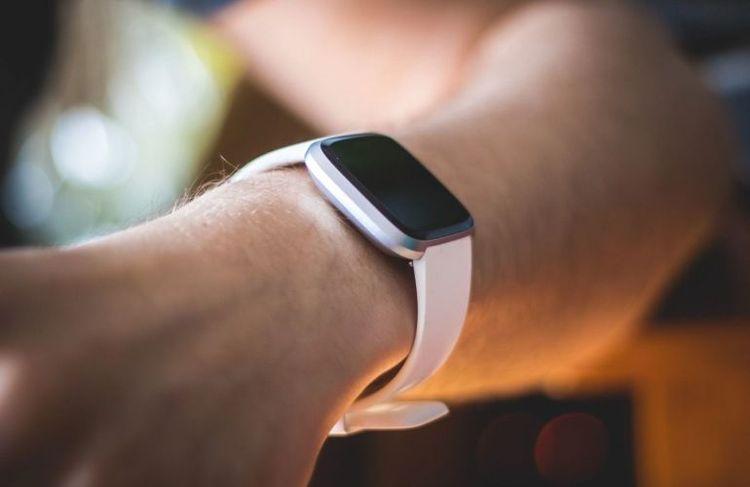
A smartwatch is a wrist-worn computing device that runs a full operating system and connects to a smartphone to extend its functionality to the wearer's wrist.
Core Capabilities
Smartphone integration. Smartwatches receive calls, texts, calendar alerts, and app notifications directly on the watch face. Some models with cellular chips can operate independently without a phone nearby, which is useful during runs or commutes.
Health and biometric sensors. Most modern smartwatches include optical heart rate sensors, blood oxygen (SpO2) monitors, accelerometers for movement detection, and skin temperature sensors. Higher-end models add electrocardiogram (ECG) capability, which can detect signs of atrial fibrillation, a heart rhythm irregularity associated with cardiovascular complications. It is worth noting that an ECG reading can appear normal even when chest symptoms are present, which is one reason clinical interpretation still requires a physician. Monitoring heart health and ECG readings has moved from clinical settings into consumer devices, but device-captured data is a starting point for conversation with a provider, not a standalone diagnosis.
App ecosystems. Smartwatches run third-party apps: navigation, music streaming, contactless payments, and fitness coaching platforms like Strava and Nike Run Club.
Fall detection and emergency SOS. Apple Watch Series 10, Samsung Galaxy Watch 7, and Google Pixel Watch 4 all include automatic fall detection and the ability to contact emergency services from the wrist, a feature that provides added safety for older adults and people with certain health conditions.
AI health coaching. As of 2026, several platforms offer AI-generated health insights on-device. Google Pixel Watch 4 integrates Gemini for workout coaching. Garmin's Venu 4 includes a Fitness Coach feature that generates adaptive training plans based on real-time biometric data.
What Smartwatches Do Not Do Well
Battery life is the main trade-off. Most smartwatches require charging every one to three days. Always-on displays and GPS tracking reduce that window further. For anyone wanting continuous, uninterrupted sleep tracking across multiple nights without charging interruptions, this is a real limitation.
What Is a Fitness Tracker? Key Features Defined
A fitness tracker is a wearable device designed specifically to monitor health metrics and physical activity. It prioritizes sensor accuracy, battery endurance, and wearability over smartphone-level functionality.
Core Capabilities
Passive activity monitoring. Fitness trackers record daily steps and calorie burn passively throughout the day without requiring manual input. This continuous background monitoring is where trackers outperform smartwatches in practical use; they are lighter, less intrusive, and rarely need to come off.
Sleep tracking. Fitness trackers generally produce more detailed and consistent sleep data than smartwatches. Devices like the Oura Ring 4 and Fitbit Charge 6 track sleep stages (light, deep, REM), heart rate variability (HRV), and respiratory rate through the night. Because most fitness trackers last five or more days on a single charge, they can collect uninterrupted multi-night data without the gaps that nightly charging creates.
Heart rate monitoring. Optical heart rate sensors in fitness trackers sample continuously and flag anomalies. A 2018 study published in JMIR by Henriksen et al. found that wearable trackers produced clinically useful heart rate and activity data, though accuracy varied by device and activity type.
Battery life. Fitness trackers typically last 5 to 14 days per charge. Screen-free options like the Oura Ring 4 reach up to 7 days. This longevity matters for health monitoring use cases that require uninterrupted data collection.
Physical activity promotion. A 2019 study in JMIR mHealth and uHealth by Brickwood et al. found that consumer-based wearable activity trackers increased physical activity in adult users, supporting their use as behavior change tools beyond simple data collection.
What Fitness Trackers Do Not Do Well
Fitness trackers do not receive smartphone notifications in a meaningful way. Most show limited text previews but cannot reply, take calls, or run apps. For users who want to stay connected to their phone from their wrist, a fitness tracker will feel limiting.

Head-to-Head Comparison: Smartwatch vs Fitness Tracker
| Feature | Smartwatch | Fitness Tracker |
|---|---|---|
| Health metrics | Heart rate, ECG, SpO2, skin temp, fall detection | Heart rate, SpO2, sleep stages, HRV, steps |
| Sleep tracking | Basic to moderate (daily charging disrupts continuity) | Advanced, continuous, multi-night |
| Battery life | 1–3 days (up to 7 with power-saving mode) | 5–14 days |
| Smartphone notifications | Full: calls, texts, apps, replies | Minimal: view only, no reply |
| GPS | Built-in on most mid-to-high models | Built-in on select models; connected GPS on others |
| ECG / AFib detection | Available on Apple Watch, Samsung, Pixel Watch | Limited to select premium trackers |
| App ecosystem | Full (WearOS, watchOS, Garmin OS) | Closed ecosystem, companion app only |
| Form factor | Watch-style: square or round face | Band, clip, or ring |
| Price range | $200–$800+ | $30–$250 |
| Accuracy | Good for most metrics; GPS and HR very reliable | Very good for steps, sleep, passive HR |
| OS compatibility | Apple Watch: iOS only; WearOS: Android; Garmin: both | Most work with iOS and Android |
| Subscription cost | Optional (Apple Fitness+: $10/mo; Garmin Connect: free) | WHOOP: $30/mo required; Fitbit Premium: $10/mo; Oura: $6/mo |
When a Fitness Tracker Is the Better Choice
A fitness tracker is likely the right device in the following situations.
Sleep is the priority. Fitness trackers do not require nightly removal for charging, which means they collect uninterrupted, multi-night sleep data. For anyone trying to understand sleep quality, identify patterns, or manage conditions linked to poor sleep, this continuity matters.
A longer charging cycle is preferred. Users who do not want a daily charging routine will get more consistent data from a tracker that lasts a week or more per charge.
The goal is health monitoring, not connectivity. People who want passive health data without the distraction of notifications, app alerts, and the full smartphone-on-your-wrist experience often report higher long-term satisfaction with trackers.
Budget is a firm constraint. Capable fitness trackers start around $30 to $50. A device like the Fitbit Inspire 3 ($99) covers all core health metrics without requiring an expensive platform commitment.
Discretion matters. Fitness trackers, particularly bands and rings, draw less attention than a large watch face. For professional environments or people who prefer minimal jewelry, this is a practical consideration.

When a Smartwatch Is the Better Choice
A smartwatch is likely the right device in the following situations.
Safety features are a priority. Automatic fall detection, emergency SOS calling, and cardiac event alerts like AFib detection are available on major smartwatch platforms as of 2026. For older adults, those with a cardiovascular history, or anyone who spends time alone in remote areas, these capabilities have meaningful real-world value.
Staying connected without a phone is useful. Users who exercise outdoors, commute actively, or want to leave their phone at their desk while remaining reachable benefit from smartwatch connectivity. Some models with cellular chips receive calls and messages independently, without any phone nearby.
Advanced health monitoring is the goal. ECG-capable smartwatches cleared for AFib detection, including Apple Watch Series 10 and Samsung Galaxy Watch 7, offer a level of cardiac monitoring not available in most fitness trackers. Data from these devices can be shared with a physician during check-ins. A doctor can advise on individual cases where device-captured health data should inform clinical decisions.
The user wants a single device. For people who currently wear a watch and want to consolidate time-telling, health monitoring, navigation, and communication into one device, a smartwatch reduces what they carry. Fitness trackers do not replace a watch for most users.
Productivity and app access matter. Running navigation apps, using contactless payment, or accessing calendar tools on the wrist are smartwatch-only capabilities.
Can Smart Rings Replace Both?
Smart rings are a third wearable category gaining traction in 2026. The Oura Ring 4 and Samsung Galaxy Ring are the two leading consumer options.
Smart rings prioritize health data and sleep tracking in a minimal, screenless form factor. They do not support notifications, apps, or GPS. Battery life ranges from 5 to 7 days. Their appeal is primarily for users who find wrist-worn devices uncomfortable or intrusive.
For most first-time buyers, smart rings are a supplementary or niche option rather than a direct replacement for either category. In terms of use case, they function closer to a premium fitness tracker, without the display.

Best Picks by Category for 2026
Product selections below are based on published specifications and editorial reviews from PCMag and The Verge. Prices are approximate and subject to change.
Best Fitness Trackers
| Device | Best For | Battery | Approx. Price |
|---|---|---|---|
| Fitbit Charge 6 | Android users wanting Google ecosystem integration | 7 days | $160 |
| Fitbit Inspire 3 | Budget-conscious beginners | 10 days | $100 |
| Garmin Venu 4 | Athletes wanting deep training analytics | 7–10 days | $400 |
| Oura Ring 4 | Sleep-focused users wanting no screen | 5–7 days | $300 + $6/mo |
| WHOOP 4.0 | Recovery-focused athletes | Up to 5 days | $0 + $30/mo required |
Best Smartwatches
| Device | Best For | Battery | Approx. Price |
|---|---|---|---|
| Apple Watch Series 10 | iPhone users, general health monitoring | 18 hours | $400 |
| Apple Watch SE (2nd gen) | iPhone users on a budget | 18 hours | $250 |
| Samsung Galaxy Watch 7 | Android users, ECG monitoring | 40 hours | $300 |
| Google Pixel Watch 4 | Android users wanting Fitbit + Google integration | 30 hours | $350 |
| Garmin Forerunner 970 | Serious runners and endurance athletes | Up to 7 days | $600 |
Frequently Asked Questions
Q1: Is a smartwatch better than a fitness tracker?
Neither is objectively better. A smartwatch is better for connectivity, safety alerts, and app access. A fitness tracker is better for sleep tracking, battery life, and passive health monitoring. The right choice depends on the specific use case.
Q2: Do I need a smartwatch or a fitness tracker?
People who primarily want to monitor health metrics, improve sleep, or track activity without smartphone distractions generally do better with a fitness tracker. People who want all-in-one connectivity, ECG monitoring, or safety features like fall detection are better served by a smartwatch.
Q3: Can a fitness tracker do everything a smartwatch can?
No. Fitness trackers cannot receive and reply to calls or messages, run third-party apps, or offer ECG and fall detection in the way smartwatches can. They are designed for health and activity monitoring, not smartphone extension.
Q4: Are smartwatches worth it if I already have a phone?
For many users, yes. The added value comes from safety features, convenience (contactless payment, navigation, leaving the phone behind), and health monitoring tools like ECG and SpO2 tracking. Whether that value justifies the cost depends on how often those specific features would be used. A doctor can advise on whether specific health monitoring features are relevant to an individual's situation.
Q5: What is the difference between a fitness band and a smartwatch?
A fitness band is a category of fitness tracker: a slim, band-style wearable focused on health metrics with a small or no display. A smartwatch is a full computing device worn on the wrist with a larger screen, OS, and app ecosystem. The key differences are functionality, battery life, and price.
Q6: Which is more accurate for health tracking, a smartwatch or a fitness tracker?
Accuracy varies by metric and device, not by category alone. Henriksen et al. (2018) found both device types can produce clinically useful data, with variation by use context. For sleep tracking specifically, dedicated fitness trackers and smart rings tend to produce more detailed data because they run continuously without the charging interruptions common to smartwatches. For ECG and AFib detection, Apple Watch and Samsung Galaxy Watch have received FDA clearance for specific cardiac monitoring functions. A doctor can advise on which specific metrics are worth prioritizing for health management.
Choosing Based on Your Lifestyle
The smartwatch vs. fitness tracker question ultimately comes down to two things: what health data you actually need, and how you want to interact with your phone.
For passive health monitoring, sleep improvement, and long battery life on a manageable budget, a fitness tracker covers the ground well. Brickwood et al. (2019) found that wearable trackers meaningfully increased physical activity in adult users, which supports the category's core promise.
For safety, connectivity, advanced cardiac monitoring, and all-in-one wearability, a smartwatch earns its price in ways that a fitness tracker cannot replicate.
There is also no rule against starting with a fitness tracker and upgrading later. Many users find that a year of health data, including steps, sleep, and resting heart rate trends, gives them a clearer picture of what they actually want from a more advanced device.
If you want help identifying which health metrics matter most given your health history, an AI healthcare navigator can help frame those questions before a physician appointment. To speak with a clinician directly, virtual primary care is one option, or find a doctor near you.
References
- Henriksen A, et al. "Using Fitness Trackers and Smartwatches to Measure and Influence Physical Activity." JMIR. 2018;20(3):e110. https://pubmed.ncbi.nlm.nih.gov/29567635/
- Brickwood KJ, et al. "Consumer-Based Wearable Activity Trackers Increase Physical Activity Participation." JMIR mHealth and uHealth. 2019;7(4):e11819. https://pubmed.ncbi.nlm.nih.gov/30973347/
- Grand View Research. "Fitness Tracker Market Size, Share & Trends Analysis Report 2024–2030." https://www.grandviewresearch.com/industry-analysis/fitness-tracker-market
- PCMag. "The Best Fitness Trackers for 2025." https://www.pcmag.com/picks/the-best-fitness-trackers
- The Verge. "The Best Smartwatches for 2025." https://www.theverge.com/21539407/best-smartwatch