


If you have ever walked out of a primary care appointment wondering whether your doctor has the authority to prescribe what you actually need, you are not alone. The short answer is yes: a primary care doctor can prescribe the vast majority of FDA-approved medications, including antibiotics, antidepressants, blood pressure drugs, diabetes medications, and in many cases, controlled substances. But the full picture is more layered than a simple yes or no, and understanding those layers can save patients real time, confusion, and out-of-pocket cost.
This guide covers what primary care physicians are legally and clinically authorized to prescribe, where the practical limits sit, how nurse practitioners and physician assistants fit in, and what the current telehealth rules mean for getting medications without an in-person visit.
At a Glance
| Topic | Key Facts |
|---|---|
| PCP prescribing authority | Full prescribing authority for most FDA-approved drugs under state licensure |
| Controlled substances | Allowed with DEA registration; some PCPs limit Schedule II prescribing by preference |
| Mental health meds | PCPs prescribe approximately 79% of all antidepressants in the US |
| GLP-1s (Ozempic, Wegovy) | PCPs can and do prescribe; insurance prior auth is the main practical barrier |
| Telehealth prescribing | Most non-controlled medications available; 2026 DEA rules apply to controlled substances |
| NPs and PAs | Can prescribe, including controlled substances, in all 50 states |
| Referral triggers | Specialist initiation required for some REMS drugs, complex biologics, and severe psychiatric cases |
Yes, Primary Care Doctors Have Broad Prescribing Authority
Primary care physicians hold full prescribing authority under U.S. law. A licensed MD (Doctor of Medicine) or DO (Doctor of Osteopathic Medicine) can prescribe any FDA-approved medication that falls within the scope of their clinical judgment, which in practice covers an enormous range of conditions and drug classes.
According to the Cleveland Clinic, primary care providers serve as the first point of contact for most health concerns and are trained to diagnose and manage a wide variety of acute and chronic conditions. That training includes the authority to prescribe.
What credentials give a PCP prescribing authority?
A PCP's prescribing authority flows from two sources. First, state medical licensure grants the right to practice medicine and prescribe medications. Second, DEA registration is required for prescribing controlled substances, a separate federal layer on top of state licensure. Most practicing PCPs hold both.
It is also worth knowing that nurse practitioners (NPs) and physician assistants (PAs) in the same primary care office also carry prescribing authority, including for controlled substances in all 50 states. The specific rules vary by state, but having an NP or PA write your prescription is a normal, safe, and legally sanctioned part of primary care today.
What Medications Do Primary Care Doctors Commonly Prescribe?
PCPs are the backbone of medication management in the US, prescribing across a wide spectrum of conditions. The categories below represent the most frequent prescribing territory for a typical family medicine or internal medicine physician.
Infections and acute illness
For most common infections, the PCP is the right prescriber. Antibiotics for urinary tract infections, ear infections, sinus infections, and skin infections are among the most frequently written prescriptions in primary care. Antivirals for influenza, short courses of oral steroids for acute inflammation, and prescription-strength antihistamines for allergic reactions also fall squarely in PCP territory.
Chronic disease management
PCPs are the primary long-term prescribers for the most prevalent chronic conditions in American adults. Statins for high cholesterol, ACE inhibitors and ARBs for hypertension, beta-blockers for heart rate control, Metformin and other oral diabetes agents for Type 2 diabetes, and levothyroxine for hypothyroidism are all medications a PCP initiates and refills routinely. According to AdventHealth, primary care providers manage the majority of chronic conditions for most American adults over the course of their lifetimes.
Mental health medications (anxiety and depression)
PCPs are front-line prescribers for mild to moderate mental health conditions. According to research published in JAMA, primary care physicians prescribe approximately 79% of all antidepressants in the United States. SSRIs such as sertraline (Zoloft) and escitalopram (Lexapro), SNRIs such as duloxetine (Cymbalta), and non-controlled anti-anxiety medications such as buspirone are all within the standard prescribing scope of most PCPs.
A PCP will typically refer to psychiatry when a patient is not responding to first-line treatment, has a complex psychiatric history, requires medication combinations that warrant specialist oversight, or presents with severe symptoms such as psychosis or bipolar disorder.
ADHD medications
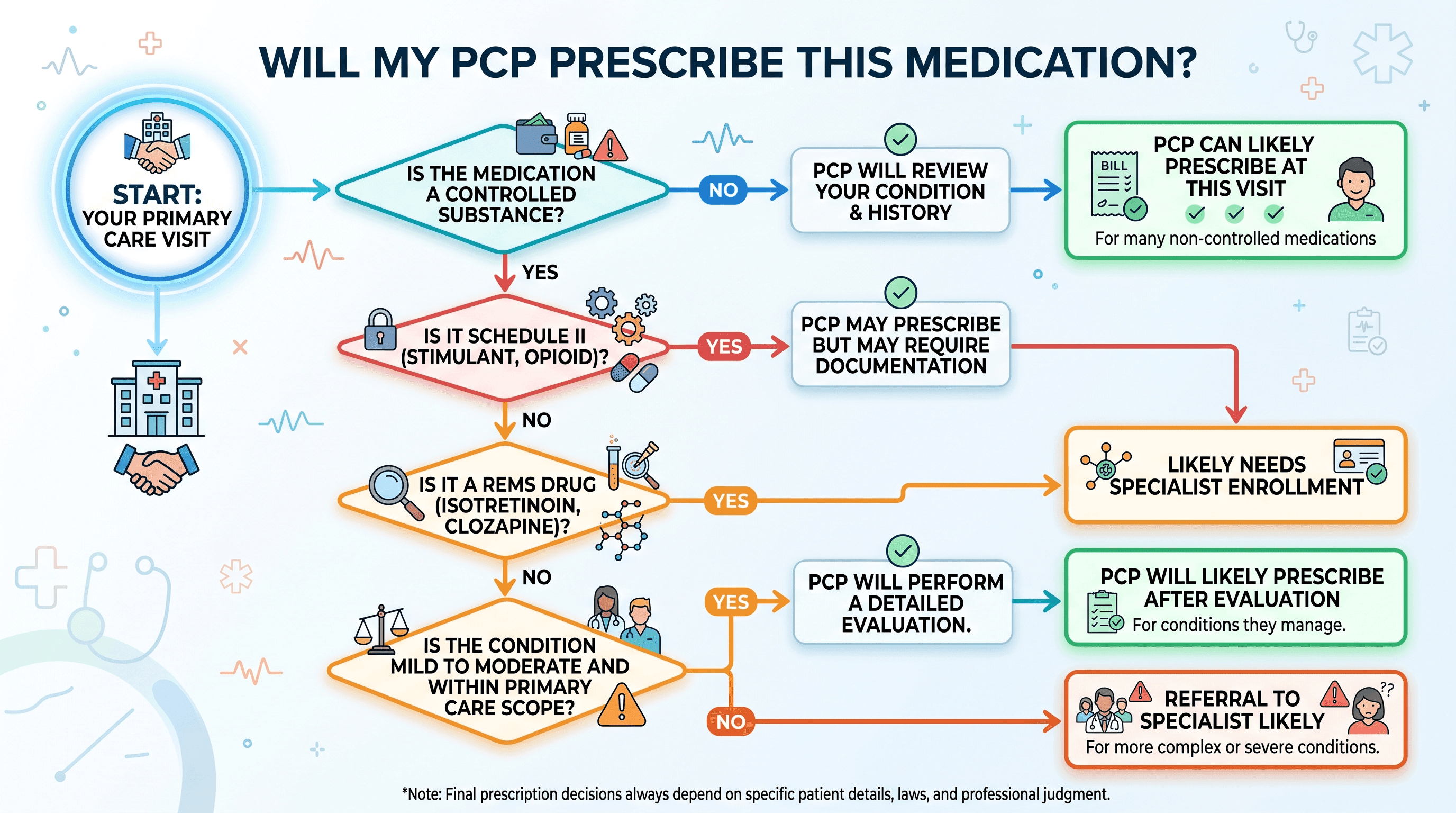
Can a primary care doctor prescribe Adderall or Vyvanse? Yes, in most states. ADHD stimulants are Schedule II controlled substances, which means they come with strict DEA rules: prescriptions cannot be refilled (each month requires a new prescription), transfers between pharmacies are not allowed, and prescribers must meet record-keeping requirements. Many PCPs prescribe stimulants comfortably for adults with an established ADHD diagnosis. Others prefer that a psychiatrist or neurologist initiate the prescription before they take over ongoing management, particularly for patients with comorbid psychiatric conditions. That preference is clinical, not a legal requirement.
GLP-1 medications (Ozempic, Wegovy, Mounjaro)
This is a category where patients are often surprised: yes, a primary care doctor can prescribe GLP-1 receptor agonists, including semaglutide (Ozempic for diabetes, Wegovy for weight loss) and tirzepatide (Mounjaro, Zepbound). PCPs have been doing so in large numbers as demand has surged. The practical barrier most patients run into is not the doctor's authority but insurance prior authorization requirements, which typically include BMI thresholds or documented comorbidities before coverage is approved. Telehealth prescribing of GLP-1s is also available through some virtual primary care services.

What Medications PCPs Are Less Likely to Prescribe, and Why
Very few medications are legally off-limits to a primary care physician. The realistic limits are practical, not statutory, and they fall into a few distinct categories.
REMS-restricted medications are drugs the FDA has determined carry serious risks that require a formal Risk Evaluation and Mitigation Strategy (REMS) program. Isotretinoin (Accutane) for severe acne, for example, requires enrollment in the iPLEDGE REMS program, which some PCPs do manage but many refer to dermatologists. Clozapine for treatment-resistant schizophrenia requires monitoring through the Clozapine REMS program and is almost exclusively managed by psychiatrists. Buprenorphine for opioid use disorder, while previously restricted by an X-waiver requirement, was opened to all DEA-registered providers under the FDA's 2023 policy change, making primary care a viable prescribing source for addiction treatment.
Specialist-initiated medications are drugs where insurers require documentation that a specialist has evaluated the patient before they will cover the medication. Complex biologics for autoimmune conditions such as rheumatoid arthritis or Crohn's disease, certain infused medications, and some advanced diabetes injectables may fall into this category. The PCP may be entirely capable of prescribing them clinically but the insurance authorization pathway requires the specialist to initiate.
Heavy narcotics for chronic non-cancer pain represent a category where many PCPs have pulled back by practice preference over the past decade, in part due to DEA scrutiny, prescriber monitoring programs, and the administrative burden of Schedule II documentation. Many prefer to co-manage chronic pain patients with a pain management specialist rather than serve as the sole opioid prescriber for complex cases.
Complex psychiatric medications including lithium for bipolar disorder, clozapine, and combination antipsychotic regimens are usually managed by psychiatrists, not because a PCP cannot legally prescribe them but because monitoring requirements and clinical complexity make specialist oversight the standard of care.
When a PCP declines to prescribe something, the most common next step is a referral to the appropriate specialist, not a dead end. That referral is the PCP exercising good clinical judgment, not a limitation of their license.
NPs and PAs in Your Primary Care Office Can Also Prescribe
Many patients are surprised to discover that the person who sees them in the exam room and writes their prescription is not always the physician listed on the practice. Nurse practitioners (NPs) and physician assistants (PAs) are fully authorized to prescribe medications, including controlled substances, in all 50 states.
The scope of that authority varies by state. Some states allow NPs to practice and prescribe completely independently, without any physician oversight requirement. Others require a collaborative or supervisory agreement with a physician. PAs generally operate under a similar collaborative model. The NCBI StatPearls reference on prescriptive authority provides a detailed breakdown of how these frameworks operate across different state structures.
For patients, the practical takeaway is that an NP or PA writing a prescription in a primary care office is a normal and safe part of how primary care functions in the US today. These are trained, licensed clinicians with prescribing authority commensurate with their scope of practice.
Can a PCP Prescribe Medication Through Telehealth?
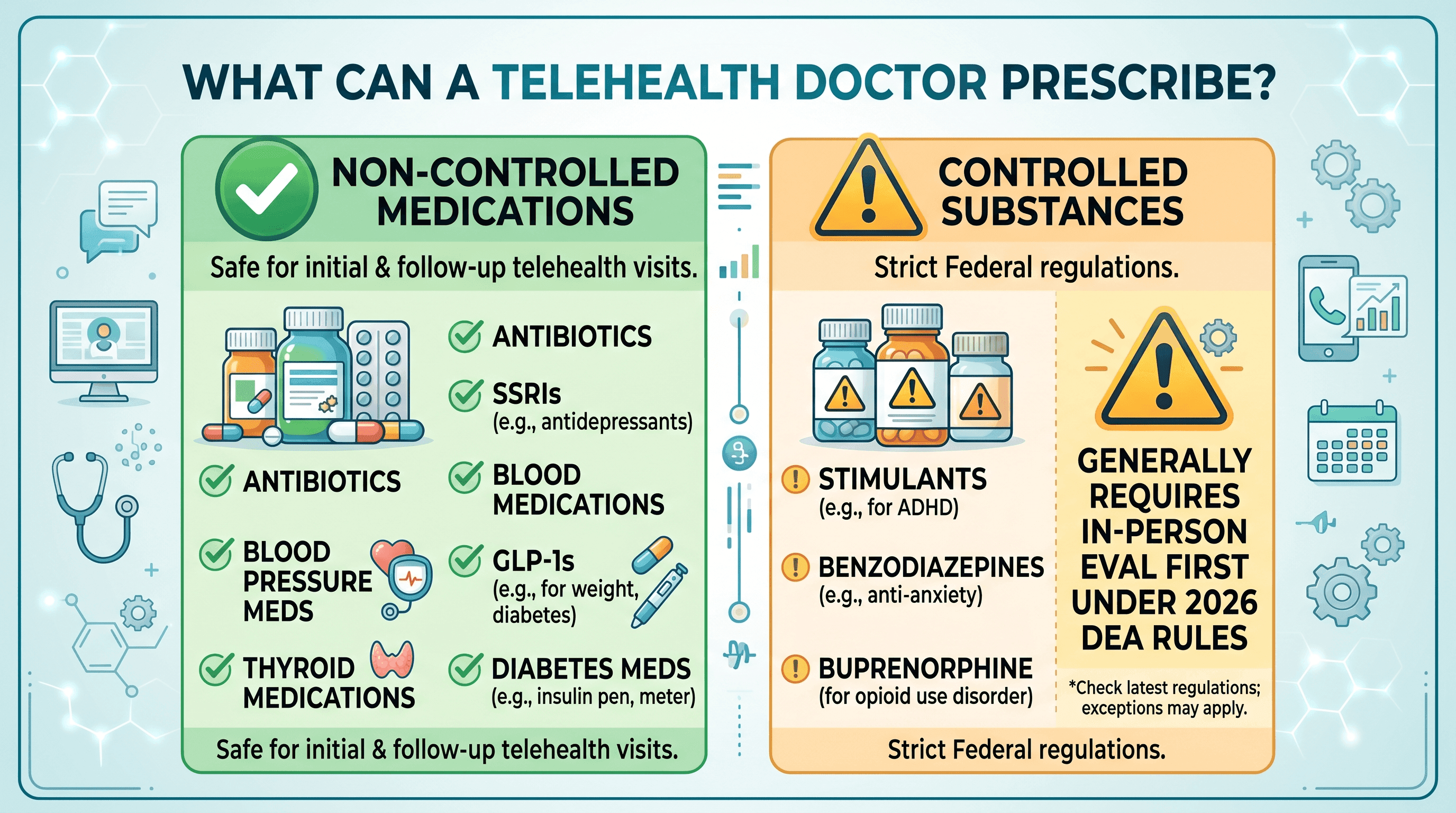
For the vast majority of medications, the answer is yes. Non-controlled medications, including antibiotics, SSRIs, blood pressure medications, thyroid medications, and most chronic disease drugs, can be legally prescribed via telehealth in all states. A patient who connects with a licensed primary care provider through a virtual visit for a sinus infection, a blood pressure check, or a refill on Metformin can receive a prescription without an in-person visit.
Controlled substances through telehealth have a more complicated recent history. During the COVID-19 public health emergency, DEA flexibilities allowed providers to prescribe Schedule II through V substances via telehealth without a prior in-person evaluation. Those flexibilities were extended through 2025, and updated 2026 DEA regulations now establish a framework that generally requires at least one in-person evaluation before a provider can prescribe controlled substances via telehealth for new patients, though there are nuances by substance class and patient circumstance. Anyone who currently receives a stimulant, buprenorphine, or benzodiazepine prescription through a telehealth provider should confirm their provider's current compliance with 2026 DEA rules.
If ongoing primary care or a specific prescription is something you need and getting to a clinic is a barrier, you can see a primary care provider online through Momentary, including for prescription management, refills, and new concerns that can be safely evaluated virtually.
What to Expect When Asking Your PCP for a Prescription
The appointment itself matters. Patients who walk in describing their symptoms clearly, including how long they have had them, what makes them better or worse, and what they have already tried, give their doctor the information needed to make a confident prescribing decision.
A PCP may not prescribe on the first visit for every condition. For mental health medications, the first appointment often focuses on gathering a full history, ruling out physical causes such as thyroid dysfunction for mood symptoms, and discussing the treatment landscape before arriving at a prescription. For ADHD, many PCPs want to review prior evaluations or documentation before prescribing a Schedule II stimulant. That caution reflects clinical diligence, not reluctance.
For ongoing medications, the routine is typically a combination of periodic office visits or telehealth check-ins, occasional lab work, and prescription renewals. Blood pressure medications, statins, and diabetes drugs all come with monitoring protocols. Understanding that relationship upfront makes the prescription process feel less like a gatekeeping exercise and more like collaborative management.
When asking about a medication, framing the conversation around symptoms and functional impact tends to be more productive than leading with the drug name. "I have been struggling to concentrate at work and it has been affecting my job for six months" opens a more useful clinical dialogue than "I think I need Adderall." The former invites a thorough evaluation; the latter can create a dynamic where the doctor is defending a formulary rather than solving a problem.
Questions worth asking at any prescription appointment: What is the expected timeline before noticing an effect? What side effects should prompt a call back? Are there alternatives if this does not work? Is there a generic version? How will we know if the dose needs adjustment?
Frequently Asked Questions
Can a primary care doctor prescribe controlled substances?
Yes. Primary care physicians with DEA registration can prescribe Schedule II through V controlled substances, including stimulants, opioids, and benzodiazepines. Some PCPs limit controlled substance prescribing by practice preference, particularly for complex chronic pain or ADHD cases, but there is no legal prohibition. Requirements vary by drug schedule, and Schedule II prescriptions require a new written prescription each month with no transfers.
Can a primary care doctor prescribe anxiety medication on the first visit?
It depends on the medication. Non-controlled options such as SSRIs and buspirone can often be prescribed at the first visit after a clinical evaluation. Benzodiazepines, which are Schedule IV controlled substances, are less commonly prescribed by PCPs on a first visit given the risk of dependence, and many providers prefer to start with non-controlled alternatives. In most cases, a first-visit conversation about anxiety will include a history-taking component before any prescription is written.
Can a primary care doctor prescribe Adderall or Vyvanse?
Yes, in most states. ADHD stimulants are Schedule II controlled substances, and most PCPs are DEA-registered and legally authorized to prescribe them. Some prefer that a psychiatrist or neurologist confirm the diagnosis before they take over ongoing management, and some states have specific telehealth rules for Schedule II prescribing. If a PCP in your area declines, asking for a referral to a psychiatrist who can initiate the prescription is a reasonable next step.
Can my family doctor prescribe Ozempic or another GLP-1 medication?
Yes. PCPs can prescribe GLP-1 receptor agonists such as semaglutide and tirzepatide for both Type 2 diabetes management and weight loss. The more common obstacle is insurance coverage, which often requires prior authorization based on BMI cutoffs, comorbidities, or documentation of prior weight management attempts. If coverage is denied, a PCP can help navigate the appeals process or discuss self-pay options.
What is the difference between what a PCP and a psychiatrist can prescribe?
Legally, not much. Both are licensed physicians with full prescribing authority. In practice, psychiatrists prescribe medications for complex or treatment-resistant psychiatric conditions, combination regimens, lithium for bipolar disorder, and medications requiring close psychiatric monitoring such as clozapine. PCPs typically manage first-line treatments for mild to moderate depression, anxiety, and in many cases ADHD. If a patient is not responding to initial treatment or has a complex psychiatric history, the PCP will generally refer to psychiatry.
Can a telehealth doctor prescribe controlled substances?
For existing patients with established care, telehealth prescribing of some controlled substances has been possible under extended pandemic-era rules. Under the 2026 DEA framework, new patients seeking controlled substance prescriptions via telehealth generally need at least one in-person evaluation first, depending on the drug class and individual circumstances. Non-controlled medications can be prescribed via telehealth without restriction in all states. If you are unsure about your situation, use Momentary's AI health navigator to explore your options and get guidance on appropriate next steps.
References
- Cleveland Clinic: Primary Care Physician — Overview of primary care physician roles and scope of practice.
- NCBI StatPearls: Prescriptive Authority — Framework for prescribing authority across provider types and state regulations.
- FDA: Primary Care Providers Can Prescribe with Confidence — FDA guidance on buprenorphine prescribing following X-waiver elimination in 2023.
- AdventHealth: 5 Things Your Primary Care Provider Can Treat — Practical scope of primary care treatment and management.
- PMC / BMC Primary Care: Anti-anxiety prescribing in primary care — Research on the prevalence of anti-anxiety medication prescribing in primary care settings.
- JAMA: Antidepressant prescribing patterns — Data on the proportion of antidepressants prescribed by primary care physicians in the US.

